
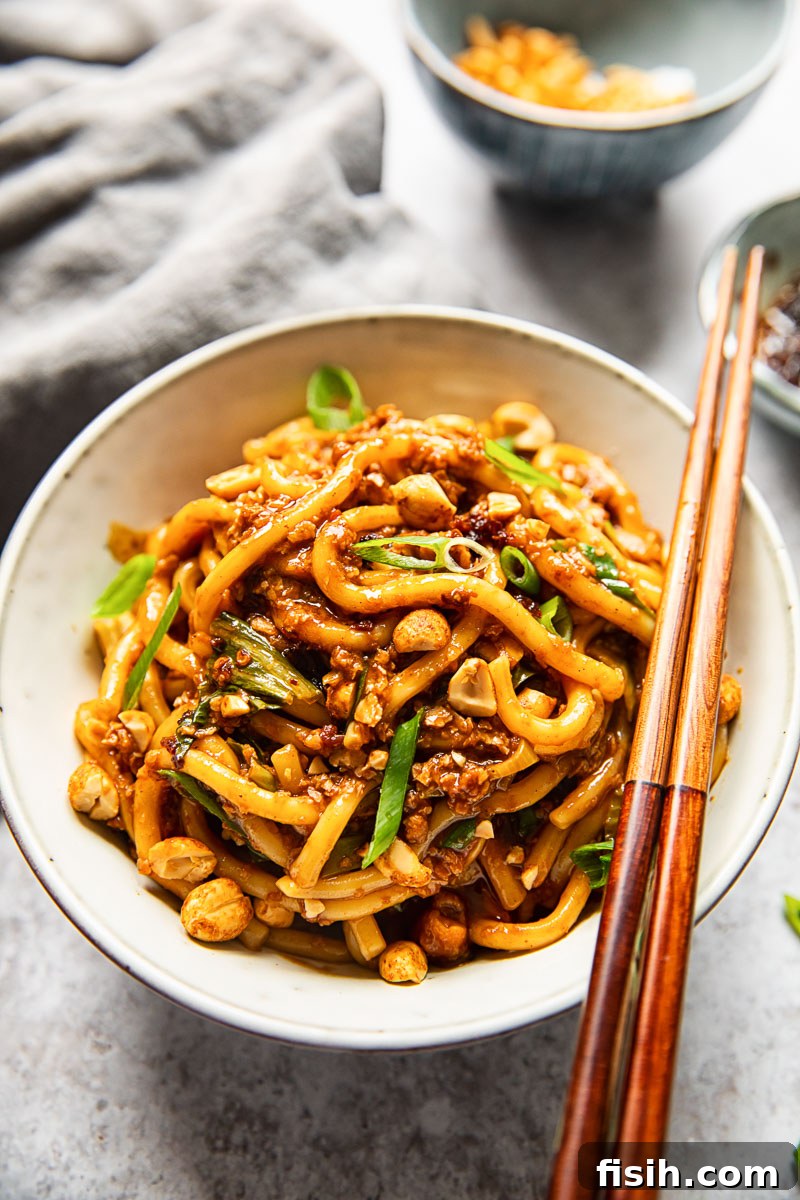
Embark on a culinary journey to the heart of Sichuan with this incredible vegan Dan Dan Noodles recipe. We’ve mastered the art of capturing every vibrant note of spice, umami, and nutty richness from the beloved takeout classic, all while using a delicious plant-based meat substitute. Forget complicated techniques or hard-to-find ingredients; this recipe is designed for home cooks seeking an authentic taste experience with effortless preparation. Get ready to create a truly irresistible, copycat-worthy dish that will tantalize your taste buds!
For those interested in the traditional, meat-inclusive version of this iconic dish, you can explore our Easy Dan Dan Noodles recipe, which features ground pork.
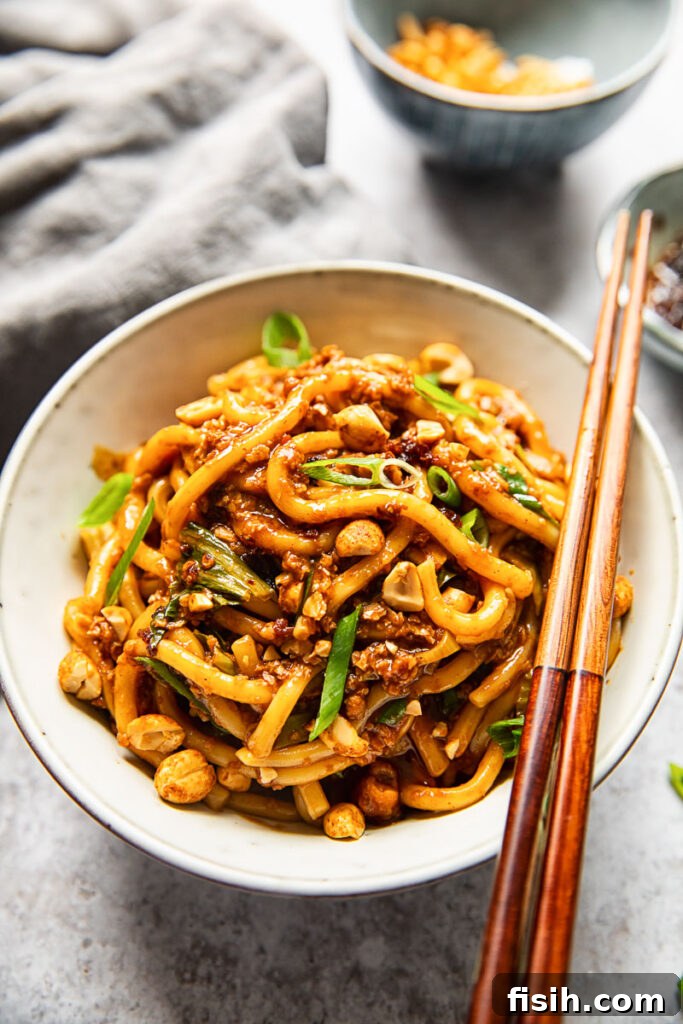
My first encounter with Dan Dan Noodles (also spelled Dandan noodles) was relatively recent, and I instantly regretted not discovering them sooner! This dish truly delivers an explosion of flavors, particularly when it strikes that perfect balance of heat, savory depth, and tantalizing numbing spice. While traditionally prepared with minced pork, the beauty of this recipe lies in its seamless conversion to a vegan delight. You’ll be amazed at how easily you can replicate the profound flavors without compromising on taste or texture, making it a fantastic plant-based alternative.
Unveiling the Legend: What are Dan Dan Noodles?
Dan Dan Noodles originate from the bustling street food scene of Sichuan province in China, a region renowned for its bold and intricate flavors. For generations, local vendors have delighted passersby with this iconic noodle dish, carrying their ingredients and cooking utensils in two baskets balanced on a “dan” – a carrying pole slung over their shoulders. This unique mode of transport is precisely where the dish gets its memorable name. From these humble street origins, Dan Dan Noodles quickly ascended to culinary fame, transcending regional borders to become a global favorite.
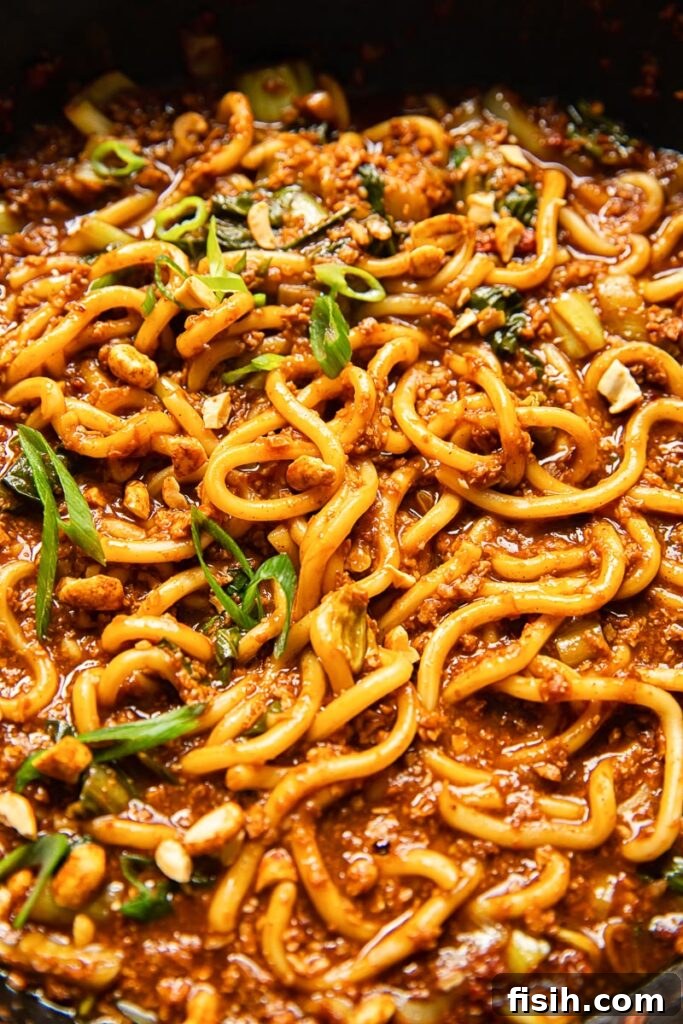
Over time, as with many beloved traditional dishes, the Dan Dan noodle recipe has evolved, giving rise to various interpretations. You’ll find versions that range from intensely spicy to subtly mild, and from a drier, saucy consistency to a more soupy broth. My personal preference leans towards a dish that offers a good kick of spice with a rich, less soupy sauce, allowing the complex flavors to cling beautifully to every strand of noodle. This recipe empowers you to easily adjust the spice levels and sauce consistency to perfectly match your palate.
The hallmark of traditional Dan Dan Noodles is often minced pork, which contributes a savory, textural element. To craft this truly outstanding vegan iteration, we’ve ingeniously incorporated a plant-based meat substitute. This substitute, when prepared correctly, mimics the texture and absorbs the robust flavors of the sauce exceptionally well, making it a fantastic and convincing alternative. Even if you’re not strictly vegan, this recipe is an excellent choice for entertaining guests, as the hearty plant-based mince and powerful, aromatic sauce ensure that everyone will enjoy a deeply satisfying and flavorful meal, often without even realizing it’s plant-based.
The essence of Dan Dan Noodles lies in its harmonious blend of diverse flavors and textures: chewy noodles, a rich and aromatic sauce, and a satisfying topping. The sauce typically boasts a delightful combination of chili oil for heat, Sichuan peppercorns for their unique “mala” (numbing and spicy) sensation, soy sauce for umami, and often a touch of nuttiness from sesame paste or peanuts. Garnishes like crisp greens and crunchy peanuts add further dimensions, elevating a simple bowl of noodles into an unforgettable culinary experience.
Mastering the Art: How to Make Vegan Dan Dan Noodles
Crafting Dan Dan Noodles might seem complex given their incredible depth of flavor, but the process is surprisingly straightforward and efficient. The key to success, as with most Asian stir-fries, is meticulous preparation, or “mise en place.” Begin by getting all your ingredients ready. Finely slice the green onions, carefully separating the white and green parts, as they’re added at different stages to maximize their distinct flavors. Roughly chop the bok choy and, for that essential crunch, roughly chop your roasted peanuts. Finally, crush the peppercorns using a pestle and mortar to release their aromatic oils and potent flavor. Having these components prepped will ensure a smooth and swift cooking process, allowing you to focus on building those amazing flavors.
For this recipe, we recommend using udon noodles, known for their delightful chewiness and quick cooking time. Boil them according to package instructions until al dente. Once cooked, immediately drain them and rinse thoroughly under cold water. This crucial step not only stops the cooking process but also removes excess starch, preventing the noodles from sticking together and ensuring a perfect texture. Set them aside while you prepare the rich, savory topping.
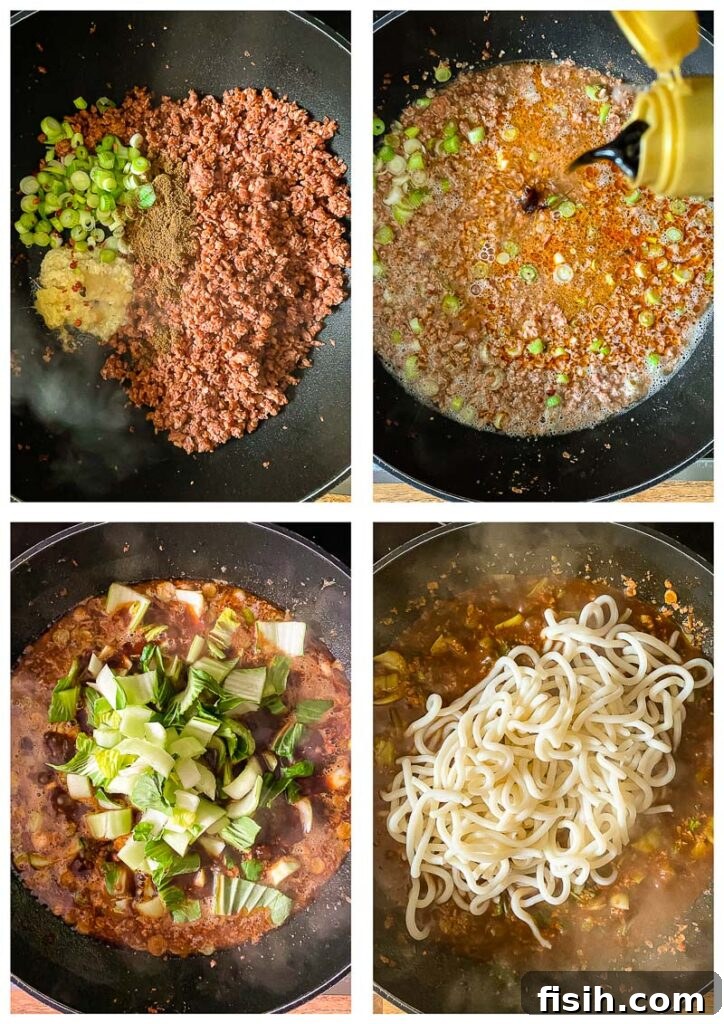
While your noodles are cooling, heat a wok or a high-sided frying pan over high heat until it’s sizzling hot. Add the sesame oil and let it shimmer before introducing your chosen plant-based meat substitute. Fry the mince, stirring frequently, until it’s thoroughly heated through and develops a beautiful, golden-brown crust, which should take approximately five minutes. This browning adds significant depth and umami to the dish. Next, add the aromatic ginger, garlic, the crushed peppercorns, and the fragrant Chinese five-spice powder. Stir well and continue to fry for another minute, allowing the spices to bloom and infuse the mince with their captivating aromas.
Now, it’s time to create the spectacular sauce. Pour in the vegetable stock, chilli oil, rice wine vinegar, and dark soy sauce into the wok. Bring the mixture to a gentle simmer, stirring frequently for about three to four minutes. You’ll notice the liquid reducing slightly, concentrating the flavors into a rich, savory broth. Add the roughly chopped bok choy and cook for another two to three minutes, just until it’s tender-crisp and vibrant green. Finally, return your prepared udon noodles to the wok. Toss everything together, ensuring the noodles are thoroughly coated in the glorious sauce and heated through. Once they reach your desired temperature, your delicious Vegan Dan Dan Noodles are ready to be served.
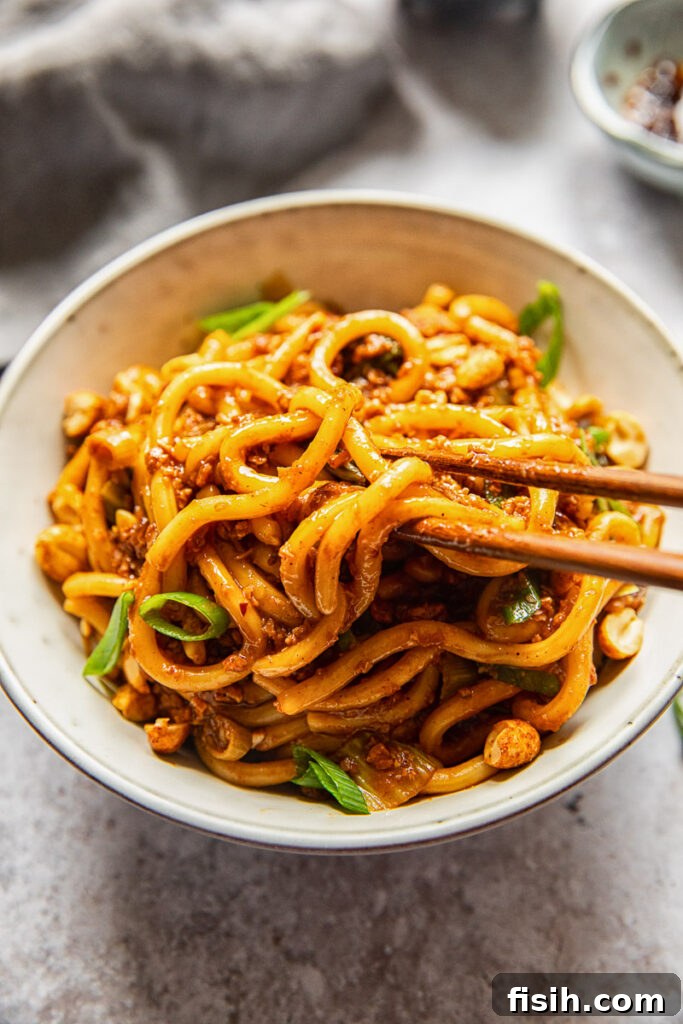
Divide the piping hot Dan Dan Noodles into individual bowls. For the perfect finishing touch, garnish generously with the crunchy chopped roasted peanuts and the vibrant green parts of the sliced green onions. The combination of textures and flavors in every mouthful is simply irresistible!
Expert Recipe Tips and Notes for Perfect Vegan Dan Dan Noodles
- While the ingredient list for Dan Dan Noodles might appear extensive, rest assured, this is a dish that comes together remarkably quickly. To ensure a stress-free cooking experience, I highly recommend adopting the “mise en place” approach: have all your ingredients prepped, measured, and ready before you even turn on the stove. This small step makes a huge difference in the flow and enjoyment of your cooking.
- If you prefer a thicker, richer sauce that clings even more luxuriously to the noodles, simply mix a small amount of cornstarch with an equal part of cold water to create a slurry. Stir this slurry into the sauce towards the end of the cooking process, allowing it to simmer for another minute or so until your desired consistency is achieved.
- The traditional recipe for Dan Dan Noodles often calls for authentic Sichuan peppercorns, known for their unique citrusy aroma and characteristic “ma la” (numbing and spicy) sensation. However, if these are difficult to find, feel free to substitute them with regular black or pink peppercorns, as I’ve done in this recipe. While the flavor profile will differ slightly, the dish will still be incredibly delicious.
- Don’t have bok choy on hand, or simply want to try a different green? Spinach, kale, or even thinly sliced cabbage can be excellent substitutes, adding their own unique textures and nutrients to the dish.
- Beyond plant-based meat substitutes, firm or extra-firm tofu is another fantastic vegan option for this recipe. Press the tofu well to remove excess water, then crumble or dice it before frying until golden and crisp. It will absorb the sauce beautifully and provide a wonderful texture contrast.
- Serving your Dan Dan Noodles topped with a generous sprinkle of chopped roasted peanuts is not strictly essential, but I truly believe it transforms the dish. They don’t just add a delightful crunch; they contribute a subtle, earthy nuttiness that brings a whole different dimension to the complex flavors of the sauce. Don’t skip them if you can help it!
- For an extra layer of flavor and heat, consider a drizzle of extra chili oil just before serving. Taste and adjust to your preferred spice level.
Serving Suggestions for Your Vegan Dan Dan Noodles
Vegan Dan Dan Noodles are a wonderfully complete meal all on their own – a true “one-pan” (or rather, one-wok) dinner that requires no additional accompaniments to feel fully satisfying. The rich combination of noodles, savory mince, vibrant greens, and explosive sauce ensures every nutritional and flavor need is met. I personally love to serve mine with an extra sprinkling of chopped roasted peanuts and perhaps some thinly sliced red chili peppers for an added visual pop and a fresh burst of heat, but these are entirely optional and can be adjusted to your liking.
However, if you’re hosting a feast or simply can’t imagine a meal without a delectable starter, sticking to a vegan theme would be perfect. Light and crispy appetizers pair wonderfully with the robust flavors of the noodles. Our recipe for Crispy Air Fryer Tofu Bites would be an absolutely perfect companion, offering a delightful textural contrast and a gentle preface to the main event.
Storage and Reheating Your Vegan Dan Dan Noodles
One of the many joys of cooking a flavorful dish like Dan Dan Noodles is enjoying the delicious leftovers. Any remaining portions will keep beautifully in the fridge for 2-3 days, provided they are stored in an airtight container. This ensures the noodles retain their texture and the sauce preserves its vibrant flavors.
The best way to reheat your Dan Dan Noodles is gently on the stovetop. Heat a small amount of oil in a pan over medium heat. Add the noodles and stir them frequently, allowing them to heat through completely without drying out or overcooking. Once piping hot, they’ll be ready for another wonderfully tasty meal, almost as good as fresh!
Explore More Asian Noodle Recipes
- Shrimp Chow Mein
- Chicken Yaki Udon
- Pancit Canton (Filipino Noodles)
- Singapore Noodles
- Beef Yakisoba
Vegan Dan Dan Noodles
Ingredients
- ▢ 500g / 1lb dried udon noodles
- ▢ 1 tbsp sesame oil
- ▢ 500g / 1lb plant based meat substitute
- ▢ 1 tbsp fresh ginger, peeled and grated
- ▢ 2 cloves garlic, crushed
- ▢ 4 green onions, finely sliced
- ▢ 2 tsp peppercorns, crushed (I used pink peppercorns)
- ▢ 1½ tsp Chinese five spice powder
- ▢ 375ml / 1½ cups vegetable stock
- ▢ 1-2 tsp chilli oil
- ▢ 1-2 tsp rice wine vinegar
- ▢ 3 tbsp dark soy sauce
- ▢ 3 baby bok choy, roughly chopped
- ▢ 60g / 4 tbsp roasted peanuts
Instructions
-
Cook the udon noodles according to the package instructions. Drain the noodles and run cold water over them to cool completely and set aside. The cold water prevents the noodles from sticking together.
-
At the same time, place a large wok or high-sided pan over high heat and add the sesame oil. Once the oil is heated, add the meat substitute until it is hot throughout, which should take about 5 minutes. Add the garlic, ginger, white parts of the green onions, peppercorns and Chinese five spice powder. Stir in well and fry for 1 minute.
-
Pour in the stock, chilli oil, vinegar and soy sauce. Cook for 3-4 minutes while stirring frequently, allowing the liquid to slightly reduce. Add the bok choy and cook for 2-3 minutes. Return the noodles to the wok, combining well, and allow to cook until the noodles have heated through.
-
Serve in bowls with a garnish of peanuts and the green end of the green onions.
Notes
Nutrition
Nutrition information is automatically calculated, so should only be used as an approximation.