
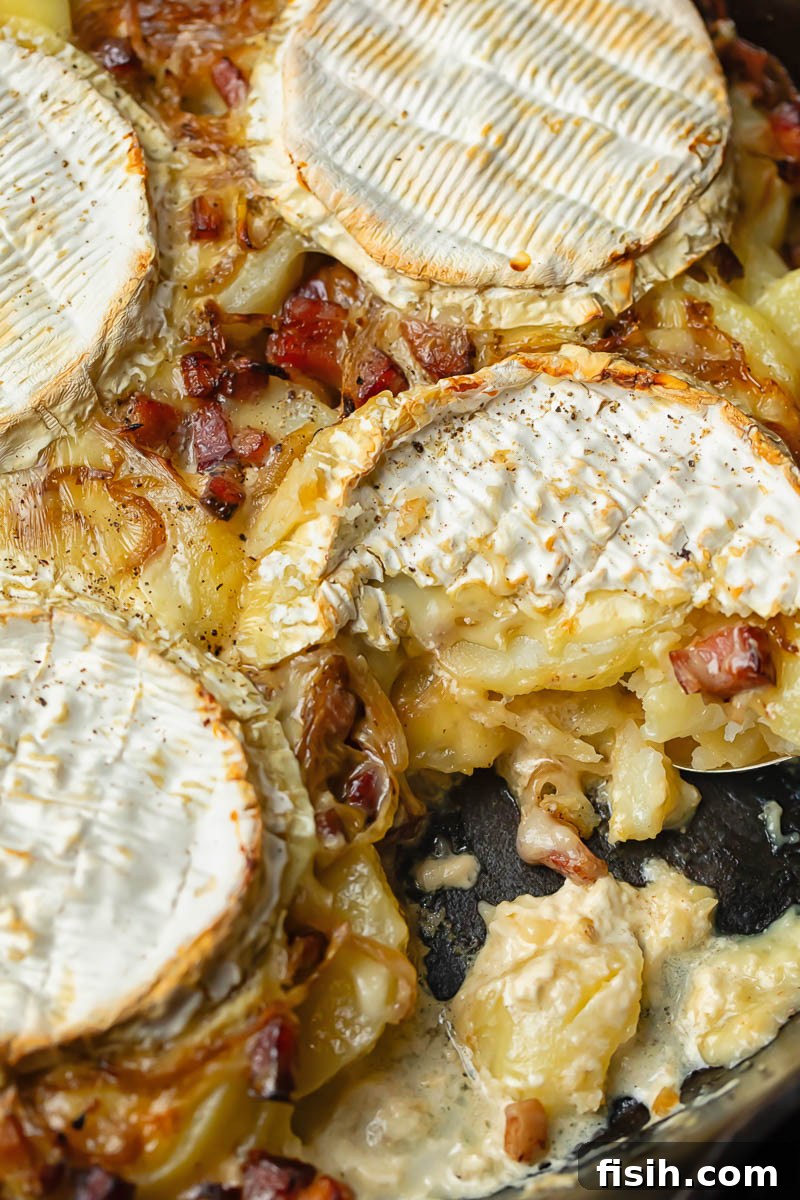
As winter’s embrace tightens and thoughts drift to snow-capped peaks and the warmth of a crackling fire, there’s one dish that perfectly encapsulates the cozy spirit of the French Alps: Tartiflette. This iconic gratin, a harmonious symphony of melted cheese, tender potatoes, savory bacon, and aromatic onions, is more than just a meal; it’s an experience. Imagine a luscious avalanche of rich, bubbly cheese cascading over perfectly cooked potatoes, interwoven with the salty crunch of bacon and the sweet depth of sautéed onions. Whether you envision it as a comforting main course after a day on the slopes or a show-stopping side dish for your next gathering, this Tartiflette recipe promises an authentic taste of Alpine indulgence.
The authentic soul of Tartiflette lies in Reblochon cheese, a ripe, soft, and distinctively fragrant cheese from the Haute-Savoie region. While Reblochon might be a treasure primarily found within France’s borders, fear not; delicious alternatives like creamy Camembert can achieve a similarly decadent melt. For those who prefer a milder flavor or a vegetarian option, a firm, yellow, and subtly aromatic Comté cheese can be used to create a delightful rosemary potato gratin, ensuring no one misses out on the blissful *après-ski* culinary experience.
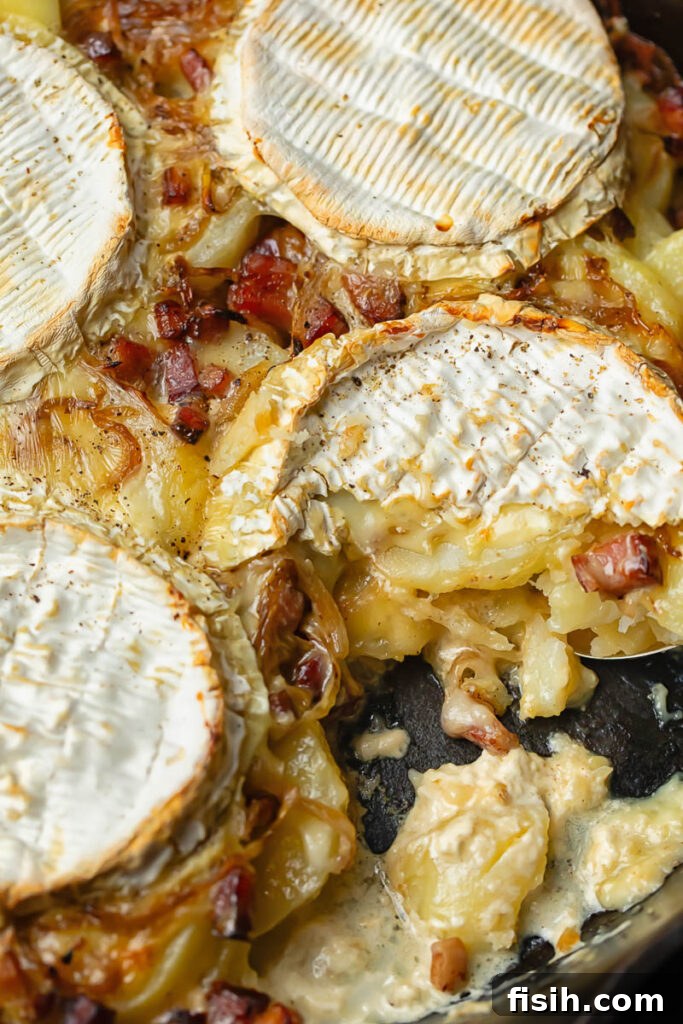
What is Tartiflette? A Culinary Journey to the French Alps
Tartiflette is the epitome of French comfort food, embodying a rustic elegance that’s both deeply satisfying and surprisingly straightforward. Hailing from the picturesque Savoy region in the French Alps, this celebrated dish has a rich history that spans more than three centuries. Its name itself, *tartiflette*, offers a charming linguistic clue, being derived from “tartifle,” an old local Savoyard word for ‘potato’. This humble origin hints at the dish’s foundation: potatoes, elevated to extraordinary heights with the addition of exquisite cheese and other savory elements.
At its heart, Tartiflette is a rich potato gratin, typically prepared with layers of thinly sliced potatoes, smoky lardons (bacon), caramelized onions, and a generous amount of Reblochon cheese, all baked until golden and bubbling. This dish was originally created by the Reblochon cheesemakers in the Thônes Valley to boost sales of their cheese, and it quickly became a local staple. Its appeal lies in its ability to deliver profound warmth and satiation, making it the quintessential meal after a brisk day exploring the Alpine mountains, whether skiing, hiking, or simply enjoying the crisp mountain air. Served with a crisp green salad, a robust red wine, and perhaps some crusty sourdough bread, it transforms a simple gathering into an authentic Alpine feast. While traditionally associated with ski season, Tartiflette’s undeniable allure means there’s no need to wait for winter to savor its delights!
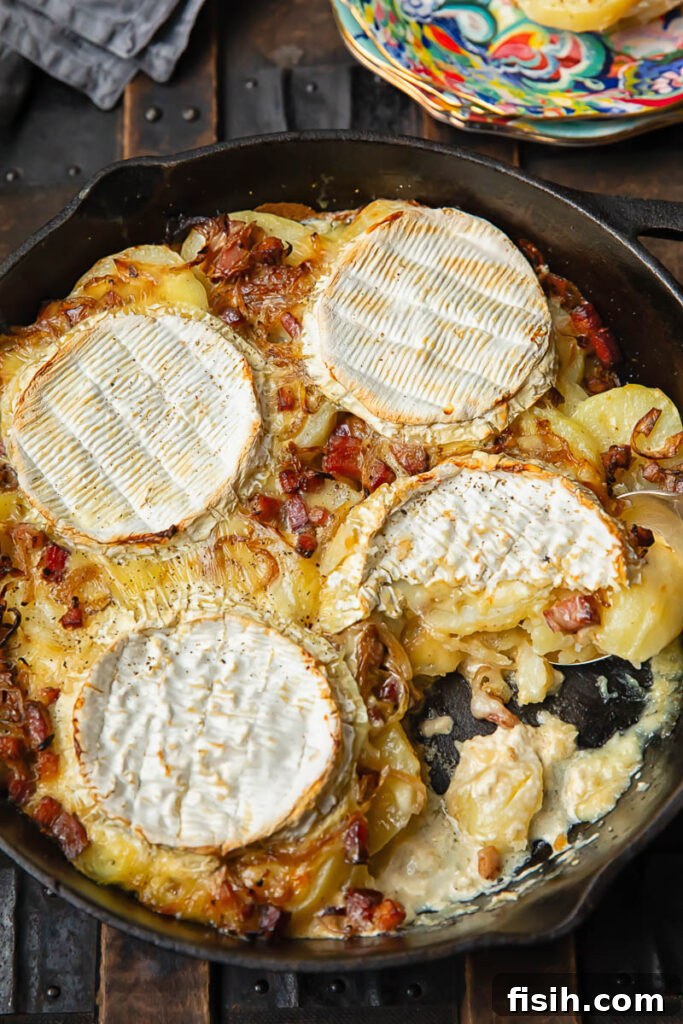
The Heart of Tartiflette: Key Ingredients Explained
Creating an authentic Tartiflette requires a handful of classic ingredients, each playing a crucial role in building its signature flavor profile. This dish is surprisingly simple in technique, making it accessible to home cooks of all skill levels, and can be ready to enjoy in approximately an hour. Let’s delve into the star players:
Cheese: The Melty Star
The soul of Tartiflette is undoubtedly the cheese. If you’re aiming for full French authenticity and can source it, a round, washed-rind Reblochon is the undisputed champion. This semi-hard, nutty, and slightly fruity cheese melts into a creamy, almost milky lava, imparting a unique depth of flavor. However, Reblochon can be elusive outside of France. My go-to substitute, and the one I’ve used here, is Camembert. While more buttery in flavor, it shares a similar shape and incredible melt, creating that essential oozy texture. Other excellent alternatives include Italian Taleggio, known for its pungent aroma and creamy interior, or a firmer Gruyère, which offers a delightful nutty complexity. Feel free to experiment with what’s available and appeals most to your palate.
Potatoes: The Sturdy Foundation
Choosing the right potato is critical for a successful Tartiflette. Opt for waxy varieties such as Charlotte (popular in the UK) or red potatoes (common in the US), as well as Yukon Gold. These potatoes hold their shape beautifully when cooked, maintaining a firm texture that won’t collapse into a mushy consistency under the weight of the cheese. Avoid floury or starchy potatoes like Russets, which can disintegrate and lead to a sludgy, unappealing gratin. The goal is distinct, tender potato slices enveloped in creamy goodness, not mashed potatoes.
Bacon: The Savory Twist
Bacon lardons, small cubes or strips of smoked pork belly, are ideal for Tartiflette. They are typically pre-chopped and possess the perfect fat-to-meat ratio, rendering beautifully to release flavorful fat that enriches the entire dish. As they cook, they become crisp and savory, dissolving seamlessly into the gratin to impart a delightful salty, smoky depth. If lardons are hard to find, good quality pancetta or thick-cut smoked bacon, diced, make excellent substitutes.
Aromatics: Onions and Garlic
As with many beloved French dishes, onions and garlic are non-negotiable. Caramelized onions provide a sweet counterpoint to the rich cheese and salty bacon, while minced garlic adds an essential pungent warmth that ties all the flavors together. They create the aromatic backbone of the dish, sautéed until tender and fragrant.
Butter: The French Touch
A knob of good quality butter is often used to sauté the aromatics or to enrich the pan if the bacon hasn’t rendered enough fat. It contributes to the overall richness and classic French flavor profile, adding a luxurious silky texture.
White Wine: The Deglazing Agent
A dry white wine, preferably a French varietal, is used to deglaze the pan after sautéing the bacon and onions. This step is crucial; it captures all the delicious browned bits from the bottom of the pan, adding a layer of acidity and sophisticated flavor that cuts through the richness of the cheese and potatoes. Choose a wine you’d enjoy drinking, as its flavor will concentrate in the dish.
Cream: The Optional Indulgence
While traditional Tartiflette recipes often omit cream, many contemporary versions, including mine, incorporate a drizzle for added silkiness and richness. Single (light) cream or crème fraîche can be used. There’s no need to drown the potatoes; just a modest amount is enough to enhance the dish’s luxurious texture and ensure the “slopes” remain deliciously slippery. Consider it a delightful, albeit untraditional, indulgence.
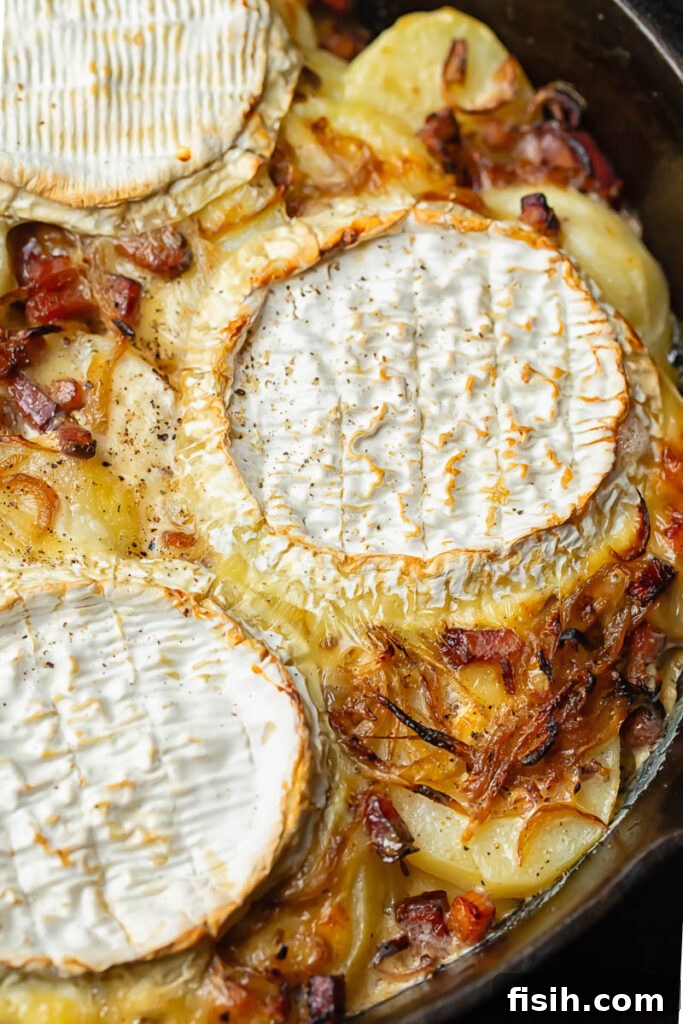
Expert Tips for Tartiflette Success
- Embrace the Cheese Challenge: As mentioned, authentic Reblochon cheese is the traditional choice, but it can be incredibly difficult to find outside of Europe, often appearing only in specialist *fromageries* at a premium price. Don’t let this deter you! Creamy Camembert is an excellent and widely available substitute, offering a similar appearance and luxurious melt. You can also explore other semi-soft, washed-rind cheeses for unique flavor profiles.
- Rind On, Flavor In: For cheeses like Reblochon or Camembert, there’s no need to remove the rind. It’s edible and contributes a depth of flavor and texture, becoming delightfully crispy and slightly darkened during baking. Who would ever leave those delicious crispy bits behind?
- Waxy is Wonderful: Always choose waxy potatoes for Tartiflette. Their lower starch content means they will hold their shape better, providing distinct layers and a satisfying bite rather than turning into a watery mash. Popular options include Charlotte, Red Bliss, or Yukon Gold.
- Salt Your Spuds: Don’t skip salting the water when parboiling your potatoes. Potatoes are flavor sponges and love salt, which will season them from the inside out and prevent them from tasting bland in the finished dish.
- The Traditional Touch (Optional): The classic Savoyard method often involves first boiling the potatoes and then pan-frying them in butter before assembly. While decadently rich, I find this step unnecessary for a home cook and it adds extra time. My recipe streamlines this by parboiling, then straight to assembly, for an equally delicious result without the overkill.
- Cream, If You Dare: The original Tartiflette recipe doesn’t traditionally include cream. However, adding a touch of single (light) cream or crème fraîche introduces an extra layer of richness and a smooth, velvety texture. There’s no judgment here; if you like it creamy, go for it! I certainly do.
- Personalize Your Gratin: While Reblochon is classic, feel free to experiment with other cheeses. Different cheeses will impart their unique character to the gratin, allowing you to tailor the dish to your preference. Think beyond the conventional and create your own signature cheesy potato bake.
- Pan Perfection: Using a heavy, oven-safe pan (like cast iron) for both sautéing and baking can make a big difference. It ensures even heat distribution, helping to create that perfect golden crust on the cheese and a wonderfully tender potato interior.
Serving Suggestions: Elevating Your Alpine Feast
Luxuriously cheesy and delightfully heavy with potatoes, Tartiflette is truly a food coma-inducing dish, designed to warm you from the inside out. While it often takes center stage as a hearty main course, its rich nature means it can also serve as an incredibly decadent and scene-stealing side dish for more delicate diners.
When served as a main course, Tartiflette truly shines when its richness is balanced with contrasting flavors and textures. Pair it with crisp, vinegary pickles, such as traditional cornichons, which offer a sharp, acidic bite to cut through the creaminess. A sturdy bitter leaf dressed salad, featuring greens like radicchio, frisée, or watercress, provides a refreshing counterpoint. For an even more authentic French experience, offer a selection of salty charcuterie alongside, such as dry-cured saucisson or ham. And of course, no Alpine feast is complete without hunks of crusty baguette, perfect for soaking up every last bit of gooey cheese and potato, like a delicious ski lift transporting flavors to your palate.
If you prefer to serve Tartiflette as a glorious side, it pairs exceptionally well with simply prepared pork or chicken dishes that won’t compete with its robust flavors. Consider a tender pork tenderloin alongside refreshing lemony green beans, or a classic roast chicken complemented by vibrant, bitey broccoli in vinaigrette. And, naturally, a glass of dry white wine remains the perfect accompaniment, enhancing every savory mouthful.
Storage and Leftovers: A Word of Caution
While Tartiflette is a supremely satisfying dish, there are some unspoken rules to truly enjoying this cheesy potato gratin:
- Serve Immediately: This dish is at its absolute best when served straight from the oven. The cheese will be at its peak of melted, bubbly perfection, and the potatoes will be perfectly tender.
- Optimal Ooziness: The magical ooziness of the melted cheese is fleeting. As it cools, the cheese will lose its creamy texture and solidify. Reheating, especially in a microwave, rarely revives that initial luxurious creaminess. The best advice? Eat it all up when you have the chance!
- Potato Texture Change: Remember, you’ve used waxy potatoes for this bake precisely because they hold their shape. This means that while delicious fresh, reheating leftovers might not yield the same delightful texture. They can become a bit dense or rubbery. While mashing the remains into tomorrow’s creamed potatoes might not work as seamlessly as with starchy varieties, we won’t tell if you try it!
In essence, Tartiflette is a dish to be savored in the moment, shared with good company, and enjoyed for its fleeting, comforting perfection.
More Side Dishes to Complete Your Meal
- Herb and Garlic Mashed Potatoes: A fragrant and creamy classic, perfect for any hearty meal.
- Hot Honey Baked Camembert in Bread Bowl: A delightful appetizer or side, offering gooey cheese with a sweet and spicy kick.
- Hasselback Potatoes with Gremolata: Elegant and flavorful, these thinly sliced potatoes offer crispy edges and a zesty finish.
- Walnut Beet Salad with Garlic Mayonnaise Dressing: A vibrant and earthy salad, adding a burst of color and unique flavors to your table.
Tartiflette
Julia Frey of Vikalinka
20 mins
40 mins
1 hr
8 people
Ingredients
- 1kg / 2 lbs waxy potatoes (4-5 medium), peeled and sliced thickly (such as Charlotte in the UK and red potatoes in the US)
- 150g / 5 oz bacon lardons
- 1-2 tbsp butter
- 1 large onion, or 2 small ones, diced
- 2 cloves garlic
- 80ml / 1/3 cup dry white wine
- 170ml / 2/3 cup single / heavy cream , or creme fraiche
- 500g / 18oz Reblochon cheese, or 2 Camembert cheese wheels, split in half lengthwise
Instructions
-
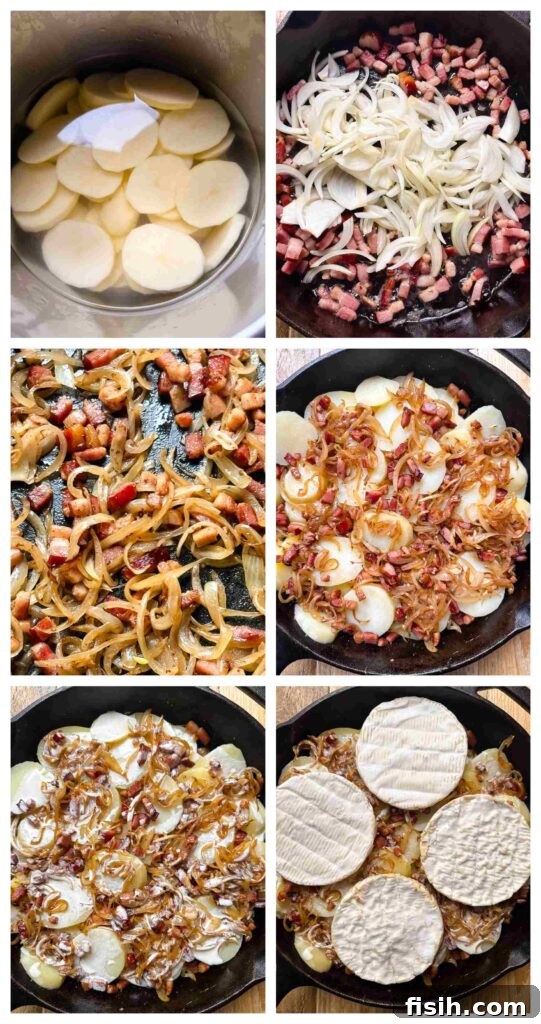
Peel the potatoes and slice them thickly. Parboil the potatoes in well-salted water for 3 minutes after boiling, drain and steam dry.
-
While the potatoes are cooking, sauté the bacon lardons over medium heat until the fat renders, then add the sliced onions and continue cooking over low heat until the onions are tender and turn golden. You might need to add 1-2 tbsp of butter to the pan if the bacon wasn’t fatty enough. Towards the end of the sautéing time, add the minced garlic and stir-fry for 30 seconds, then deglaze the pan with the white wine and cook it down until it evaporates.
-
Remove the bacon and onions from the pan and arrange par-boiled potato slices in the same pan. Season the potatoes with a pinch of salt. Then top them with a layer of the bacon and onions and drizzle the cream all over.
-
Split the cheese wheels in half lengthwise and arrange directly on top of the potatoes, bacon, and onion, cut side down.
-
Cook at 200C/400F for 20 minutes or until the cheese has melted into the potatoes and is golden and bubbly.
Nutrition
Carbohydrates: 21g |
Protein: 20g |
Fat: 29g |
Saturated Fat: 16g |
Polyunsaturated Fat: 2g |
Monounsaturated Fat: 9g |
Trans Fat: 0.1g |
Cholesterol: 87mg |
Sodium: 831mg |
Potassium: 767mg |
Fiber: 2g |
Sugar: 2g |
Vitamin A: 740IU |
Vitamin C: 11mg |
Calcium: 253mg |
Iron: 1mg
Nutrition information is automatically calculated, so should only be used as an approximation.