
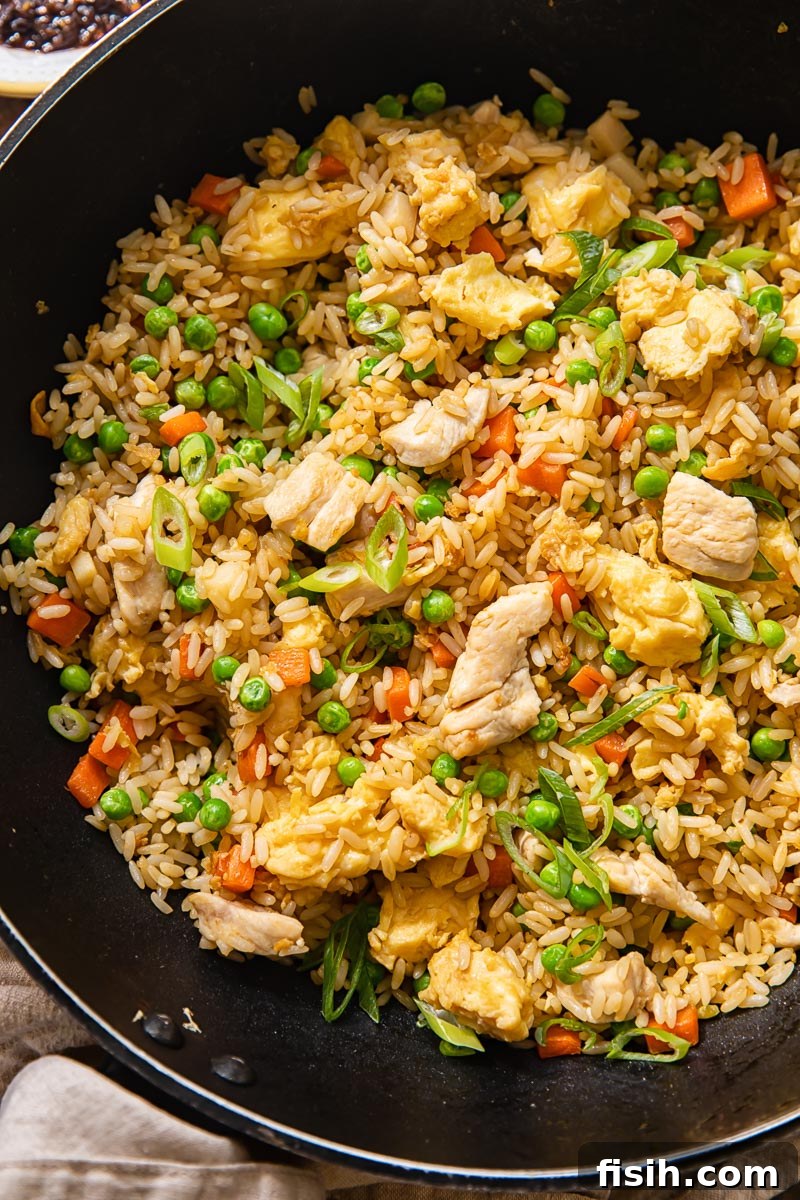
Mastering Homemade Chicken Fried Rice: Your Ultimate Guide to Takeaway Flavor at Home
If you’ve ever dreamt of recreating that irresistible, authentic Chinese takeaway flavor in your own kitchen, look no further. This incredible chicken fried rice recipe has become an absolute game-changer in our weeknight dinner rotation, and for good reason. It’s not just fast—ready in a mere 15 minutes—but it also delivers an unbelievably delicious taste that rivals your favorite takeout joint. I genuinely believe I’ve unlocked the secret to achieving that quintessential restaurant-quality fried rice right here at home.
While succulent chicken is a fantastic starting point for this beloved dish, it’s worth noting that shrimp fried rice is also a classic for a reason, offering a delightful seafood variation to explore once you’ve mastered the basics.
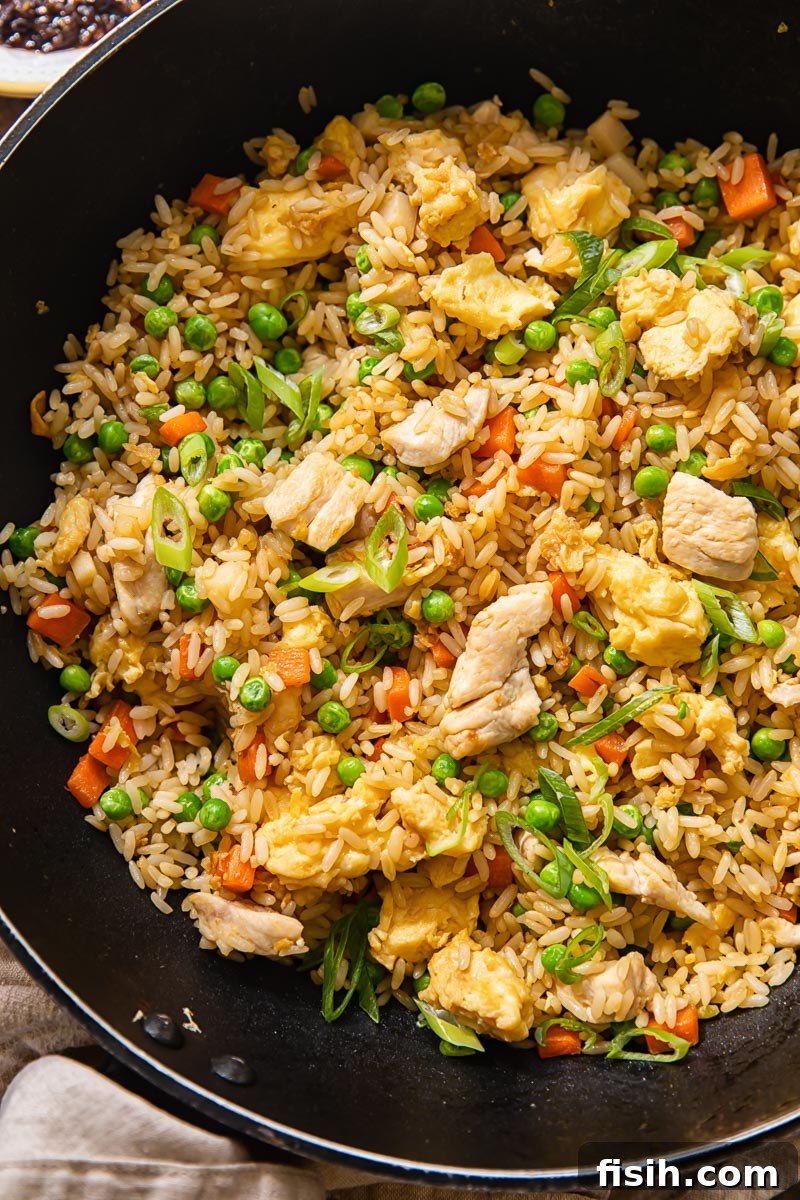
For many, fried rice is a non-negotiable item when ordering Chinese food. The good news is that while an occasional Asian takeout feast is a lovely treat, it can sometimes be heavy on both the stomach and the wallet. Thankfully, fried rice stands out as one of those incredibly versatile dishes that can be effortlessly replicated at home. You’ll be amazed at how few ingredients are required and how little special seasoning is needed to achieve spectacular results. It’s an economical, flavorful, and incredibly speedy meal solution, and I’m excited to walk you through my exact method.
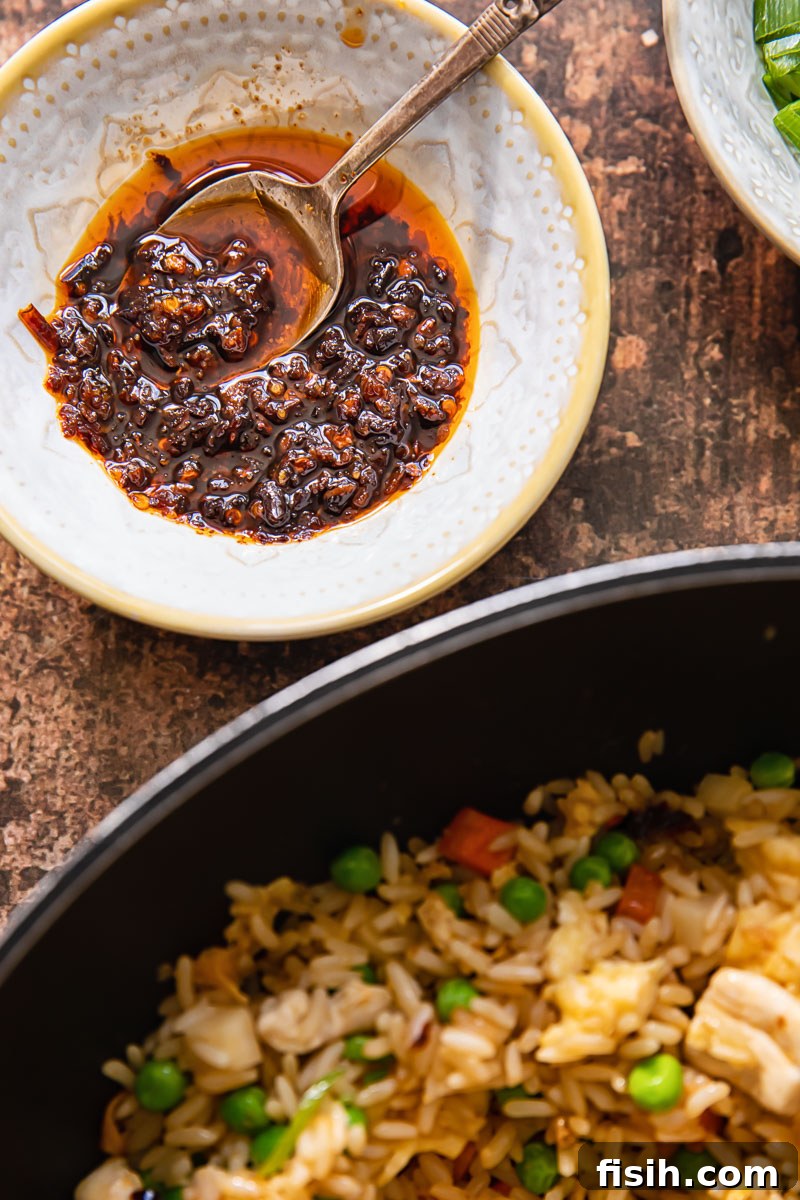
To truly elevate your homemade fried rice to a restaurant-worthy experience, don’t forget a generous drizzle of Chinese chilli oil before serving. It adds a layer of depth, heat, and aromatic complexity that transforms every bite into an absolute delight!
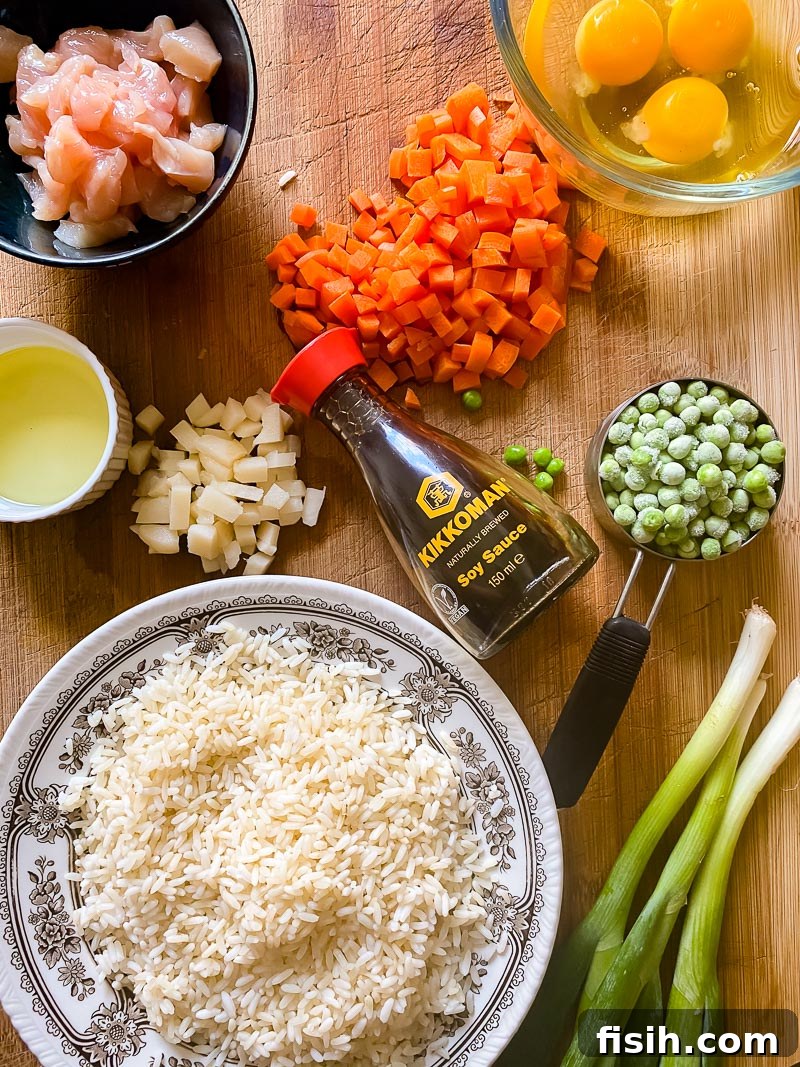
Essential Ingredients for Authentic Chicken Fried Rice
The beauty of fried rice lies in its adaptability; while ingredients can certainly vary from one recipe to another, certain staples are universally loved and form the backbone of a great dish. Feel empowered to adjust this recipe to your own taste and what you have on hand. After all, fried rice was originally conceived as a clever way to utilize leftover rice and vegetables, making it the ultimate clean-out-the-fridge meal.
A non-negotiable component for perfect fried rice is **day-old long-grain rice**. I cannot stress this enough, and I will delve deeper into why older rice is vastly superior to freshly cooked later in this guide. Beyond the rice, you’ll typically find fluffy scrambled eggs and a vibrant mix of vegetables. My personal favorites include sweet peas and crisp carrots, brightened by the addition of fresh green onions.
However, one of my lesser-known, yet incredibly impactful, secret ingredients is **water chestnuts**. These add an unexpected, delightful crispness and a subtly sweet, nutty flavor that truly elevates the texture profile of the dish. I urge you to give them a try; I am confident you will love them as much as my family and I do for that added layer of authentic complexity.
For the protein in this specific recipe, I’m using chicken breast, which cooks quickly and absorbs flavors beautifully. However, this recipe is highly versatile: shrimp or pork are also excellent choices, each offering a distinct flavor profile. Should you prefer a plant-based option, you can easily omit the chicken entirely and incorporate tofu, tempeh, or simply more vegetables to keep this recipe wonderfully vegetarian.
Achieving the Perfect Seasoning
The question of what seasoning to use in fried rice is often a topic of passionate debate among culinary enthusiasts. Many purists advocate for minimal seasoning, believing that the natural flavors of the ingredients and the “wok hei” (the smoky breath of the wok) should shine through. While I appreciate this philosophy, I find that a judicious touch of seasoning can significantly enhance the overall flavor without overpowering the delicate balance of the dish.
For me, the star of the seasoning is simply **light soy sauce**. It provides that essential umami depth and savory notes that are characteristic of authentic fried rice. I use just enough to season, not to drown the rice. Occasionally, to add an extra layer of aromatic richness, I’ll sprinkle a bit of toasted sesame oil at the very end of cooking. This is entirely your choice, but it imparts a wonderful nutty fragrance that many find irresistible.
Beyond these, a pinch of white pepper can add a subtle, bright warmth without the visual speckles of black pepper, maintaining the aesthetic of traditional fried rice. Some chefs might even add a tiny amount of sugar to balance the saltiness of the soy sauce, or a dash of oyster sauce for a richer, more complex umami, but for a simple, classic flavor, light soy sauce truly is all you need.
Expert Recipe Tips and Techniques for Flawless Fried Rice
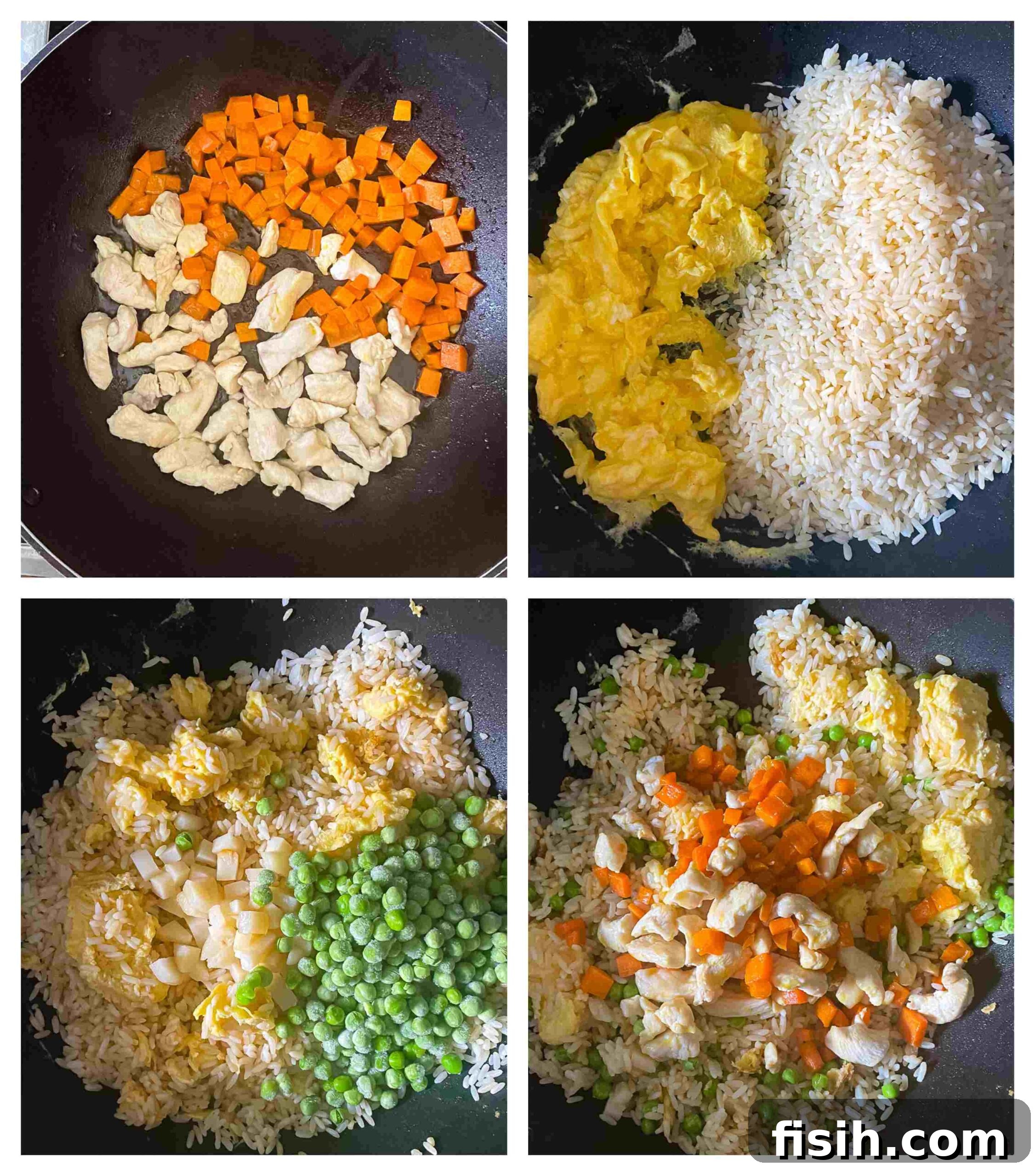
- This recipe involves cooking the chicken and eggs in stages before combining everything. While it sounds like extra steps, it’s a straightforward and quick process that ensures each component is perfectly cooked and retains its distinct texture and flavor.
- Preparation is Key (Mise en Place): Before you even think about turning on the heat, ensure all your ingredients are prepped, chopped, and measured, including your cooked rice. This style of cooking moves incredibly fast, so having everything ready prevents burning and allows for seamless execution.
- The Magic of Day-Old Rice: The single most crucial tip for perfect fried rice is to use day-old (or even two-day-old) cooked long-grain rice. Here’s why this seemingly minor detail makes all the difference:
- Dryer Texture: As rice sits in the refrigerator, it dries out significantly. This reduced moisture content is essential.
- Prevents Clumping: Dry rice grains separate beautifully during stir-frying, preventing the dreaded mushy, sticky texture often associated with freshly cooked rice. This results in the light, fluffy, individual grains you find in restaurant-style fried rice.
- Crispier Finish: Less moisture means the rice can get slightly toasted and caramelized, adding a subtle crispness and deeper flavor.
- Less Oil Needed: Drier rice requires less oil to achieve that perfectly separated, non-greasy finish.
If you only have freshly cooked rice, spread it out on a baking sheet and let it air dry for an hour, or even pop it in the freezer for 15-20 minutes to quickly dry it out.
- Choose the Right Rice: As much as I adore basmati rice for many dishes, its delicate, fragrant grains are not the best for fried rice. Opt for a sturdy, long-grain white rice like Jasmine or even American long-grain white rice for the best texture and bite. Their lower starch content helps them hold up well to stir-frying.
- Frozen vs. Fresh Vegetables: Using frozen peas and carrots is absolutely acceptable and incredibly convenient, especially for speed. I personally used fresh carrots because I don’t typically buy them frozen, but feel completely free to substitute. If you do use frozen carrots, simply add both frozen peas and carrots at the same time during Step 3 of the cooking process. If using fresh carrots, follow the recipe as written, adding them with the chicken to ensure they soften adequately.
- The Garnish: Don’t underestimate the power of fresh green onions! Sprinkling them liberally at the very end adds a crucial burst of fresh, pungent flavor and a vibrant splash of color that brightens the entire dish.
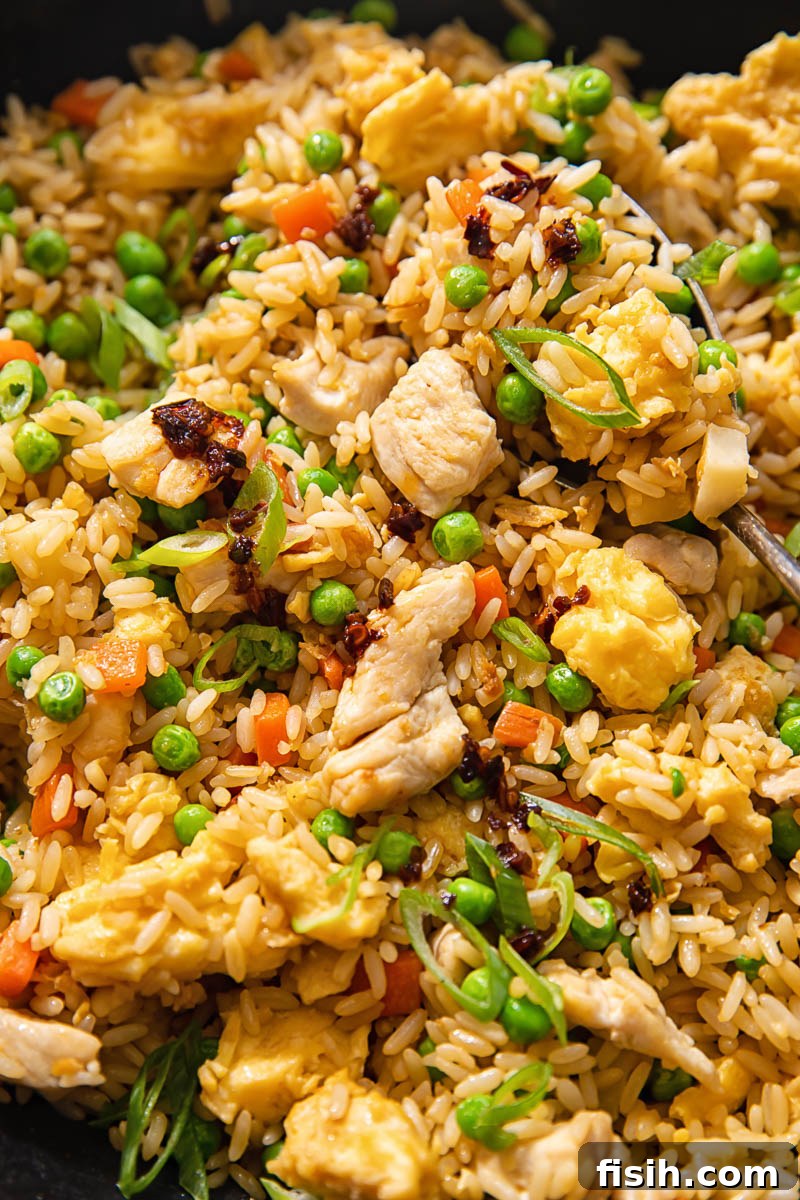
- The Finishing Touch: Finally, and this is a detail that truly sets homemade fried rice apart and elevates it to a restaurant-worthy experience, always serve your dish with a side of Chinese chilli oil. The spicy, aromatic oil adds layers of flavor and a gentle kick that is simply unbeatable. It’s all about these thoughtful details!
Serving Suggestions for Your Perfect Fried Rice
One of the many beautiful things about chicken fried rice is that it’s inherently a complete, satisfying one-pot meal. There’s truly no strict need to serve it with anything else, as it offers a balanced combination of protein, carbohydrates, and vegetables. However, for those occasions when you want to create a more elaborate feast, or simply add a little something extra to make the meal even more special, there are plenty of wonderful Asian-inspired accompaniments.
To complement this delicious rice, I often enjoy serving it alongside our 10 Minute Honey Garlic Shrimp, which makes a fantastic quick appetizer or a lighter main protein. Another excellent choice is our Salt and Pepper Shrimp, offering a different textural and flavor contrast. For more inspiration and a broader range of ideas, I encourage you to explore our extensive Asian recipe collection.
Regardless of what you choose to pair it with, one thing remains vitally important: always serve your fried rice hot, directly from the pan. Allowing it to cool down will diminish its vibrant flavors and enjoyable texture, doing absolutely no favors to your culinary efforts!
Storage and Reheating Leftovers Safely
Blessed with some delicious leftovers from your homemade chicken fried rice? Excellent! This dish stores surprisingly well, making it perfect for meal prepping or enjoying again later in the week. Properly stored, your fried rice can be kept safely in the refrigerator for 4-5 days. To ensure it retains its freshness and doesn’t absorb any other smells or flavors from your fridge, always store it in an airtight container.
When it’s time to reheat your leftovers, you have a couple of convenient options. You can either use a microwave for a quick warm-up, or for a more “freshly cooked” feel, return it to a frying pan over medium heat. Whichever method you choose, a small trick will help revive the rice and prevent it from drying out: add a splash of water (about 1-2 tablespoons per serving) before reheating. This adds back some moisture, helping to plump up the rice grains and restore that desirable soft-yet-chewy texture.
A crucial safety note regarding leftover rice: It is generally not recommended to reheat leftover rice more than once. Cooked rice, if not cooled and stored properly, can become a breeding ground for harmful bacteria (specifically Bacillus cereus), which can produce toxins. Reheating it multiple times increases this risk. Always ensure the rice is piping hot throughout (above 165°F or 74°C) when reheating, and if in doubt, it’s best to discard it.
Explore More Delicious Fried Rice Recipes
If you’ve fallen in love with making fried rice at home, there’s a whole world of variations to discover! Each offers a unique twist on this beloved classic:
- Indonesian Fried Rice Nasi Goreng: A spicy and flavorful version often served with an egg and various garnishes.
- Kimchi Fried Rice: A vibrant Korean-inspired dish featuring fermented kimchi for a tangy, spicy kick.
- Crab Fried Rice: A luxurious take on fried rice, highlighting the sweet and delicate flavor of crab meat.
Authentic Chicken Fried Rice Recipe
5 out of 5 stars (based on 3 votes)
Cook: 15 mins
Servings: 4
Print Recipe
Learn the secrets to the best Chinese chicken fried rice recipe! It comes together in just 15 minutes and will quickly become a new family favorite!
Ingredients
- 2 tbsp vegetable oil, divided
- 1 chicken breast, cut into small pieces
- Salt, to taste
- White pepper, or black pepper, to taste
- 400g / 3 cups day-old cooked long grain rice
- 4-5 canned water chestnuts, diced
- 1 carrot, diced
- 2 eggs, beaten with a pinch of salt and pepper
- 85g / 2/3 cup frozen peas
- 2 tbsp light soy sauce
- 1 tsp sesame oil, optional
- 2-3 green onions, sliced, for garnish
- Chinese chilli oil, to serve
Instructions
- Prepare all ingredients before starting to cook. Cut the chicken breast into small, bite-sized pieces and season them generously with salt and white pepper. Beat the eggs in a bowl with a pinch of salt and pepper, then set aside. Measure out the frozen peas, dice the carrots, and dice the water chestnuts. This “mise en place” step is crucial for fast stir-frying.
- Heat 1 tablespoon of the vegetable oil in a wok or a large, heavy-bottomed frying pan over high heat. Add the seasoned chicken pieces and diced carrots. Stir-fry for about 5 minutes, or until the chicken is fully cooked through and the carrots have softened slightly but still retain some crunch. Remove the chicken and carrots from the wok and set them aside on a plate.
- Add the beaten eggs to the now-empty (or mostly empty) wok and quickly scramble them into large, fluffy pieces. Once cooked, push the scrambled eggs to one side of the wok. Add the remaining 1 tablespoon of vegetable oil to the clear side of the wok. Bring the day-old cooked rice into the wok and stir-fry for a few minutes, breaking up any clumps, until the rice is thoroughly heated through and slightly toasted.
- Now, add the diced water chestnuts, frozen peas, and the light soy sauce to the wok. Continue to stir-fry vigorously for another couple of minutes, ensuring all ingredients are well combined and heated evenly. Finally, return the cooked chicken and carrots to the pan. Stir-fry everything together until all components are piping hot and coated in the soy sauce. Taste the fried rice and adjust seasoning with an additional touch of soy sauce if desired. Drizzle with the optional sesame oil for an aromatic finish, then top generously with sliced green onions before serving. Serve immediately with a side of Chinese chilli oil for an authentic restaurant-style experience.
Nutrition
- Calories: 383kcal
- Carbohydrates: 47g
- Protein: 21g
- Fat: 12g
- Saturated Fat: 7g
- Trans Fat: 1g
- Cholesterol: 118mg
- Sodium: 1197mg
- Potassium: 443mg
- Fiber: 3g
- Sugar: 3g
- Vitamin A: 2906IU
- Vitamin C: 11mg
- Calcium: 46mg
- Iron: 2mg
Nutrition information is automatically calculated and should only be used as an approximation.
Tried this recipe?
Let us know how it was! Your feedback helps us improve and inspires others to try this fantastic homemade chicken fried rice.