
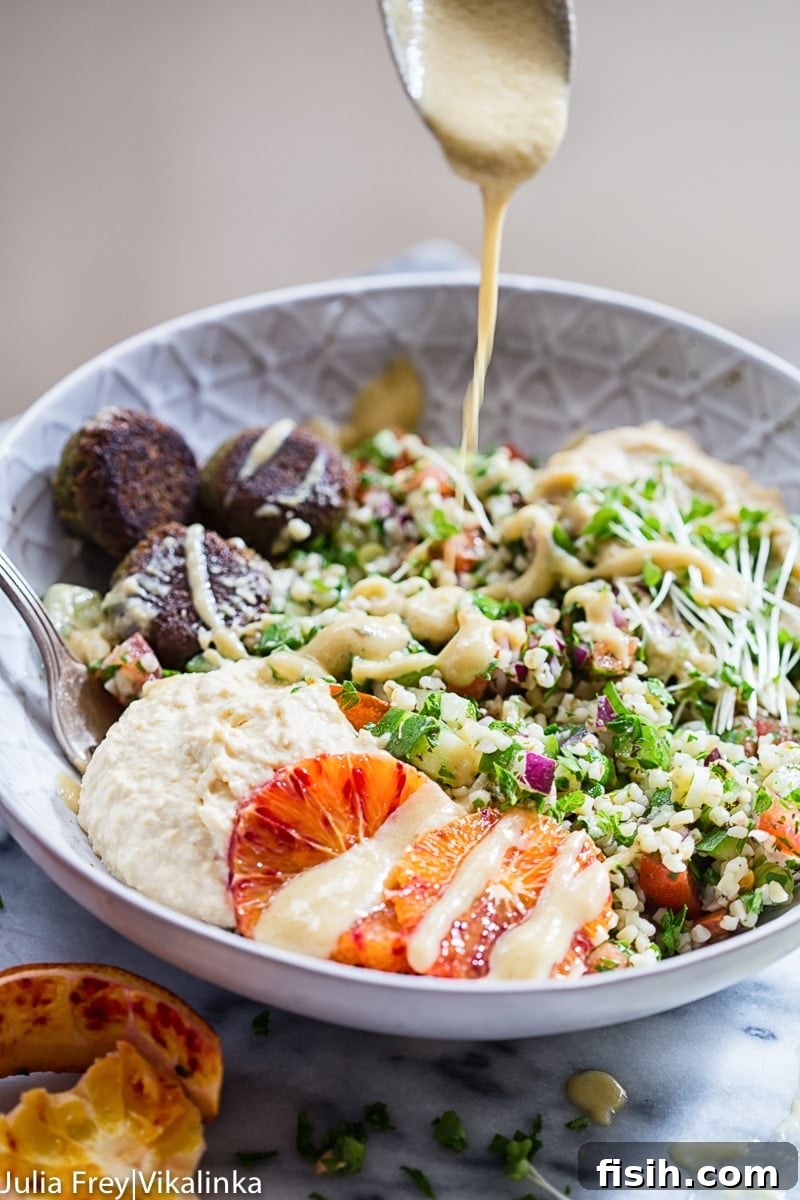
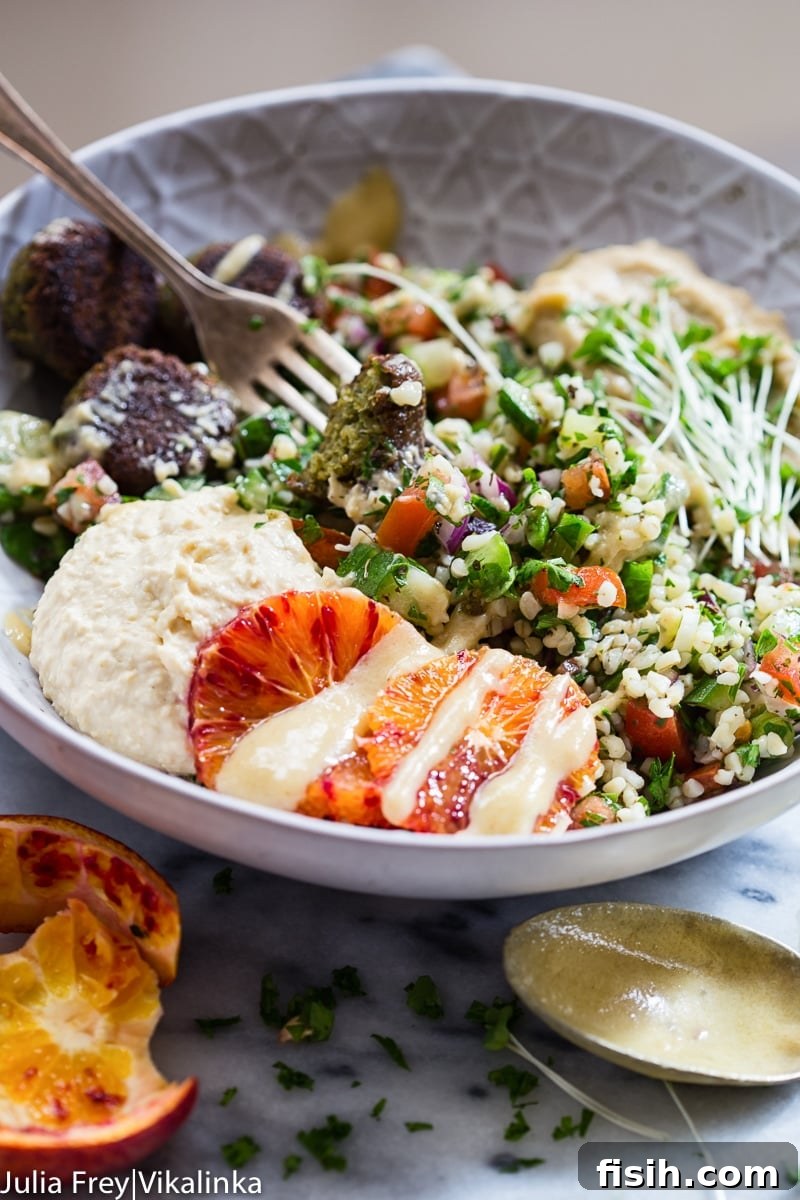
This Falafel with Tabbouleh Salad Bowl is truly a game-changer for anyone seeking a vibrant, healthy, and incredibly flavorful meal. It’s a delightful fusion of classic Middle Eastern flavors, combining fresh tabbouleh, rich hummus, and perfectly crispy falafel into one satisfying and wholesome dish.
Whether you’re planning a light yet fulfilling lunch or a hearty vegetarian dinner, this bowl is an exceptional choice. For an even more authentic and complete experience, consider serving it alongside our easy homemade flatbread, making for an unforgettable culinary journey right in your own kitchen.
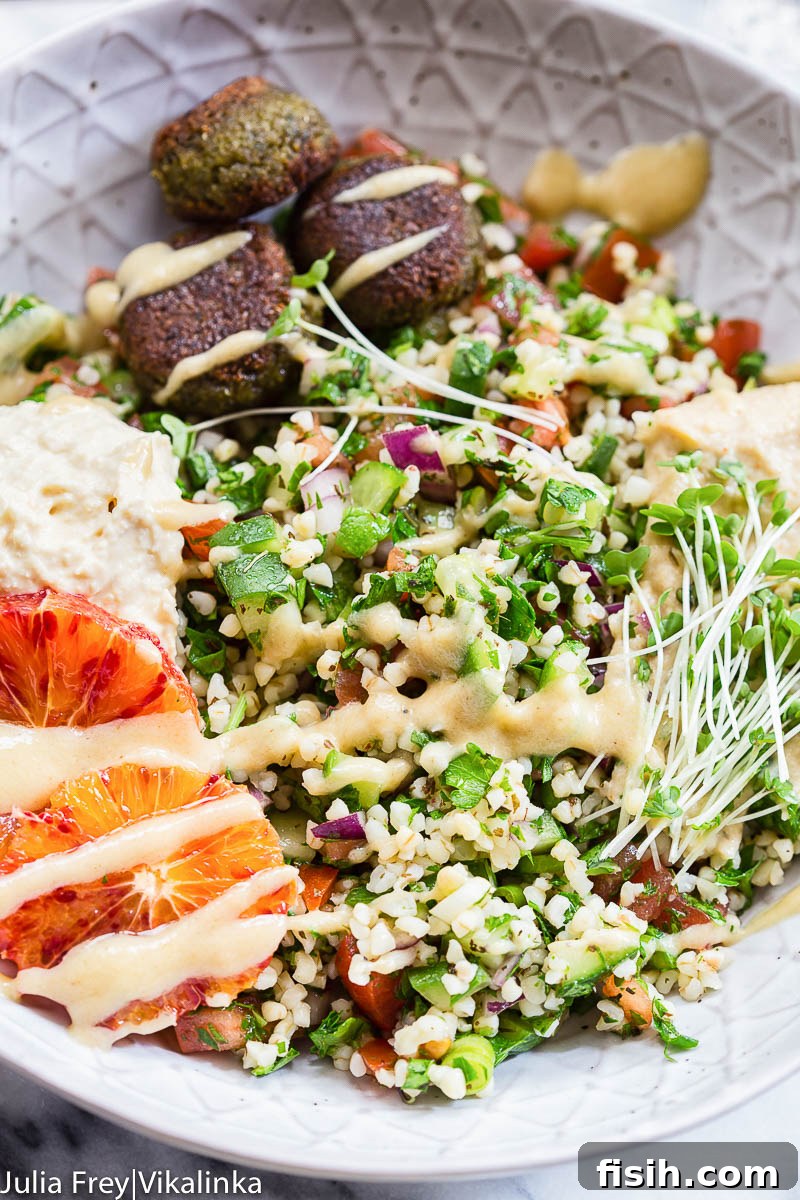
Elevating Your Everyday Meals with Unforgettable Flavor
What typically graces your lunch table? Many of us strive for healthy eating, often defaulting to salads as our primary choice. However, a common pitfall with many healthy salads is their perceived lack of exciting flavor. This can lead to culinary boredom and a struggle to consistently maintain a balanced and enjoyable diet. But what if health and extraordinary flavor could coexist harmoniously, delivering a meal that genuinely excites your palate every single time?
This Falafel Salad Bowl is the definitive answer to that craving for full-blown, robust flavor. It’s meticulously designed to prove that healthy eating doesn’t have to be bland, repetitive, or uninspiring. By artfully incorporating a medley of authentic and potent Middle Eastern ingredients, we unlock a world of taste that is both deeply nourishing and profoundly satisfying. This isn’t just a meal; it’s an experience that will redefine your perception of healthy eating, making it something you genuinely look forward to.
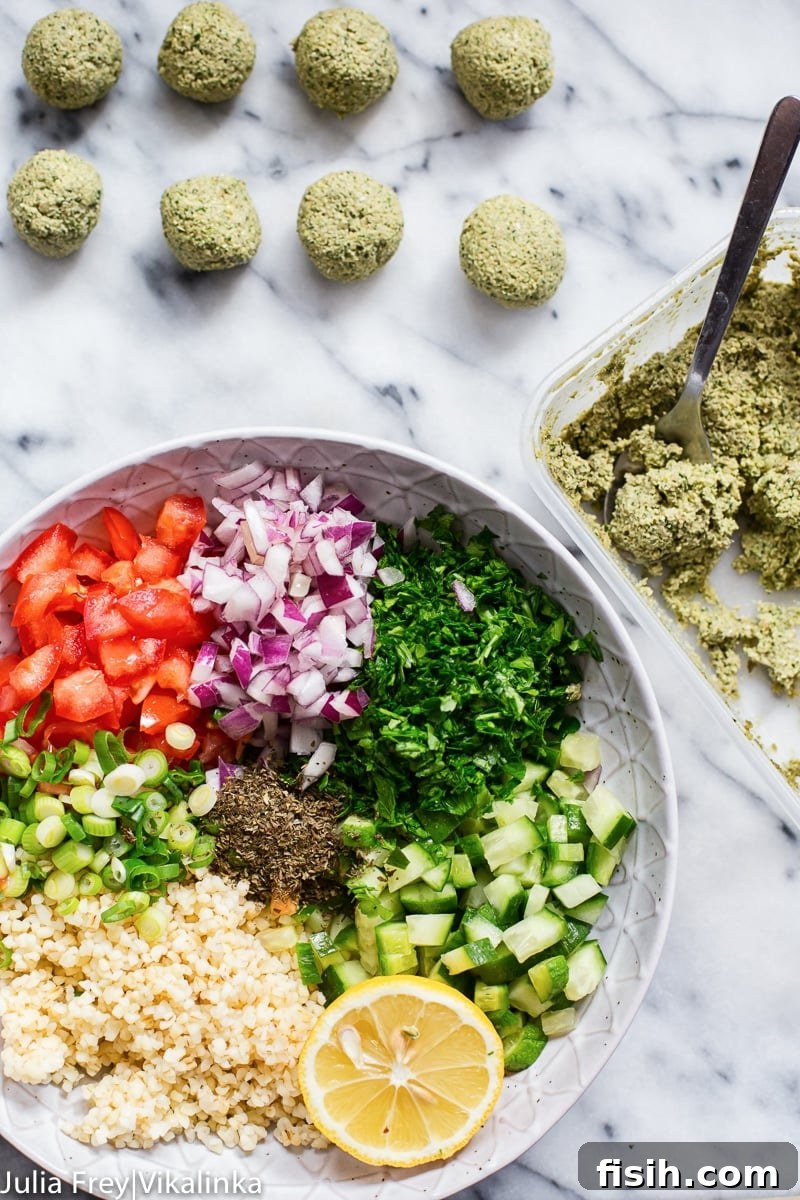
The Heart of Middle Eastern Cuisine: Unlocking Flavors in Your Salad Bowl
Envision a salad bowl brimming with an abundance of wholesome, crisp vegetables, generously topped with an authentic and aromatic tabbouleh, incredibly creamy hummus, perfectly oven-baked or pan-fried falafel with a golden crust, and a delightful serving of smoky baba ganoush. Each of these individual components offers a symphony of distinctive flavors and textures on its own. When thoughtfully brought together, they create a culinary masterpiece that is nothing short of sensational, transforming a simple meal into an extraordinary dining event.
This particular combination stands out as one of the most fulfilling and flavorful meals you could prepare for either a rejuvenating lunch or a satisfying dinner. The richness, depth, and complexity derived from these foundational Middle Eastern staples elevate the entire dish, ensuring every bite is a delightful revelation. Middle Eastern cuisine is celebrated for its liberal and artful use of fresh herbs, vibrant vegetables, and aromatic spices, which collectively result in dishes that are inherently bold, exquisitely vibrant, and utterly irresistible. This falafel bowl embodies all these characteristics, making it a true testament to the region’s culinary heritage.
For those who have a deep appreciation for this distinctive culinary style, you might also enjoy exploring a similar salad bowl that features succulent grilled chicken. This provides a fantastic, protein-rich alternative for meat-eaters or a wonderful option for adding diverse flavors to your weekly menu rotations. Another cherished and equally refreshing recipe is our delightfully tangy tomato and cucumber salad, brightened with a creamy buttermilk dressing and a hint of sumac. This classic dish is famously known as Fattoush Salad. Traditionally, this vibrant salad is served with crispy pieces of torn, grilled flatbread, which is surprisingly simple and quick to prepare right at home.
To craft a truly spectacular and expansive Middle Eastern feast, consider serving all these delightful recipes together. The interplay of flavors and textures across these dishes will create a memorable spread. And, of course, no Middle Eastern banquet would be complete without including a generous side of creamy tzatziki and a refreshing platter of crunchy fresh vegetables. These additions perfectly complement and round off your meal, ensuring a harmonious and richly satisfying dining experience. Each dish contributes a unique dimension, promising an exciting and diverse journey for your taste buds.
Mastering Your Meal Prep: Top Tips for Effortless Salad Bowls
The perceived complexity of creating a multi-component salad bowl, laden with fresh ingredients and various preparations, often deters even enthusiastic home cooks. However, the true secret to effortless and consistent meal preparation lies in one simple yet profoundly powerful strategy: batch cooking. This intelligent method not only dramatically simplifies your weekly meal planning but also guarantees that you always have an array of delicious, nutritious options readily available at a moment’s notice, eliminating last-minute cooking stress.
My highly effective approach involves dedicating a small, manageable amount of time, typically at the beginning of the week, to prepare several servings of key foundational components. These can then be expertly mixed and matched throughout the week to create diverse and exciting meals. Grains, for instance, are an absolutely essential foundation for any filling and wholesome salad, providing sustained energy and a wealth of vital nutrients. I consistently cook larger quantities of nutritious grains such as quinoa, buckwheat, farro, or, as is appropriate for this Middle Eastern inspired bowl, bulgur wheat. These cooked grains can be conveniently stored in airtight containers in the refrigerator, forming a versatile base for a variety of meals throughout your busy week.
Similarly, preparing or thoughtfully sourcing legumes, such as lentils or various types of beans, is another smart move. For ultimate convenience, high-quality canned varieties are a perfectly acceptable and time-saving shortcut, requiring minimal effort. Once these staples are handled, the focus shifts to what I affectionately refer to as “flavor makers” – those irresistible elements that transcend a simple salad into something truly special and memorable. This category includes whipping up a fresh batch of homemade hummus, having some rich, crumbled feta cheese readily on hand, preparing a versatile and zesty salad dressing (like our signature tahini dressing!), or pre-cooking a lean protein such as perfectly grilled chicken, savory ham, or flaky tuna. These versatile ingredients provide an almost endless array of possibilities for daily customization and culinary creativity.
With a well-stocked selection of prepped grains, legumes, and ready-to-use flavor makers, assembling a fresh, exciting, and satisfying salad bowl each day becomes an incredibly swift and enjoyable process. Simply combine your chosen grain base with a vibrant assortment of fresh, chopped vegetables according to your preference, add a generous dollop of a flavorful dip, and finish with a delectable drizzle of dressing. This highly efficient method makes your daily salads significantly more interesting and ensures they are effortlessly prepared, even the night before a particularly busy day. It’s a transformative approach for maintaining a healthy and diverse diet without ever feeling overwhelmed or sacrificing flavor.
The Zesty Drizzle: Crafting the Perfect Tahini Dressing
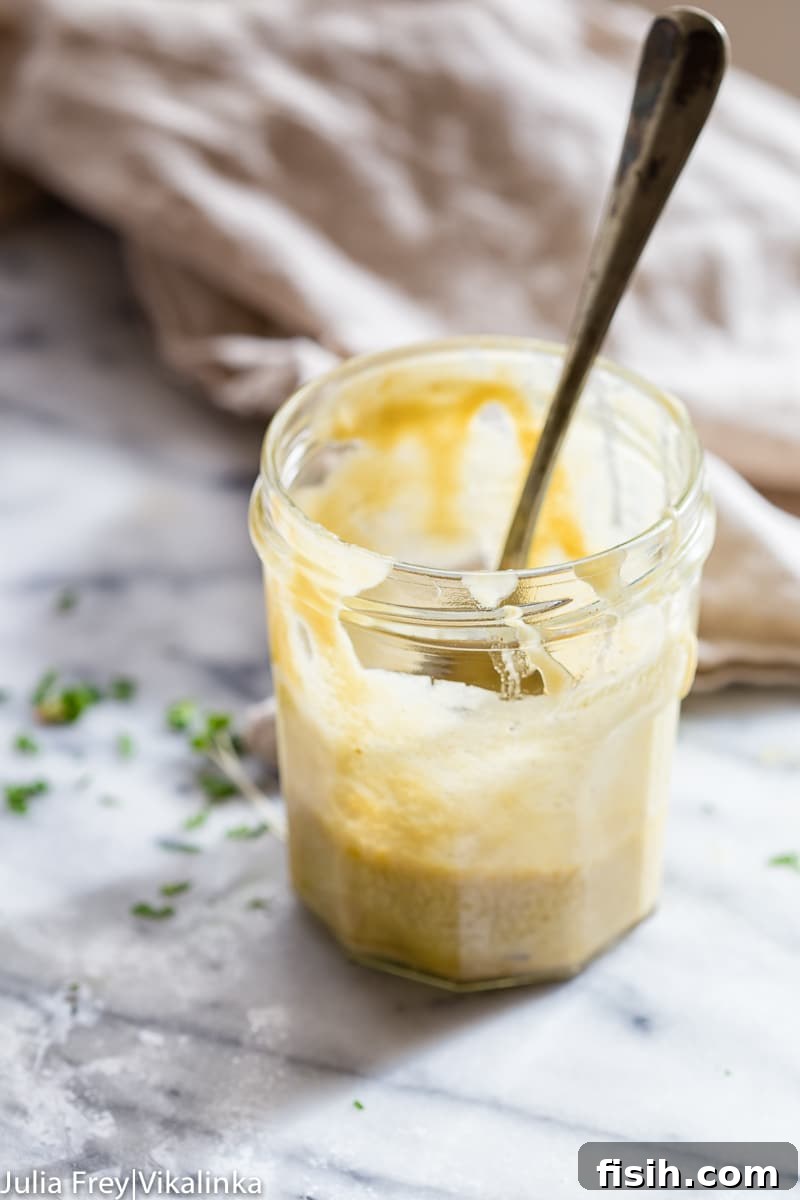
A truly exceptional salad bowl demands an equally outstanding dressing, and for this magnificent Middle Eastern feast, nothing less than a superb tahini dressing will suffice. I absolutely adore tahini sauce for its remarkable versatility, its incredible depth of flavor, and its capacity to elevate even the simplest ingredients. It perfectly complements the rich, earthy notes of falafel and the refreshing brightness of tabbouleh, creating a harmonious balance that is both comforting and invigorating. However, its culinary magic doesn’t stop there; this versatile dressing also works wonders with more unassuming dishes, such as plain roasted carrots, instantly adding a gourmet touch and a layer of sophisticated flavor to everyday vegetables.
For those who might be less familiar, tahini is a fundamental ingredient in Middle Eastern and Mediterranean cuisines. It is a thick paste meticulously made from ground sesame seeds, renowned for its distinctively nutty, subtly savory, and intensely rich flavor profile. It’s the essential, secret ingredient that imparts our beloved hummus with its characteristic taste and its wonderfully smooth, creamy texture. Fortunately, thanks to its growing popularity, this magnificent and versatile ingredient is now widely available in the international aisle of most major supermarkets, making it easily accessible to home cooks everywhere, allowing you to incorporate authentic Middle Eastern flavors into your cooking with ease.
Preparing the tahini dressing couldn’t be simpler, requiring minimal effort for maximum impact. All you need to do is combine the creamy tahini paste with freshly squeezed lemon juice and finely minced garlic. Gradually, and with continuous whisking, add a small amount of cold water until the mixture achieves a smooth, pourable, and emulsified consistency. The exact amount of water can be adjusted precisely to your personal preference – a slightly thicker dressing will beautifully cling to your ingredients, while a thinner one will drizzle elegantly over the entire bowl, creating a visual appeal. A final pinch of salt, adjusted to taste, will perfectly balance the flavors, bringing out the very best in this essential Middle Eastern condiment. This easy-to-make dressing is not merely an accompaniment; it is a star player, an integral component that ties all the vibrant flavors of this falafel salad bowl together.
Crafting the Perfect Falafel: Baked vs. Pan-Fried
Let’s delve into the art of making falafel, the undisputed, crispy-on-the-outside and tender-on-the-inside star of many Middle Eastern meals. I am a huge admirer of falafel in all its delicious forms, but when expertly combined with the refreshing, zesty tabbouleh, the luxuriously creamy hummus, the wonderfully smoky baba ganoush, and the bright, zesty tahini dressing in this vibrant bowl, it truly transcends into something extraordinary. The powerful synergy of these diverse components adds an incredible layer of complexity, texture, and profound satisfaction to every single bite, making it an unforgettable culinary experience.
Historically, I often found myself hesitating to embark on making my own falafel from scratch, primarily due to my strong aversion to the mess and oil associated with traditional deep-frying. The appealing idea of a healthier, oven-baked falafel was always intriguing, and I have indeed experimented with this method in the past, achieving decent and acceptable results. Baking falafel undeniably offers a lighter alternative to the more conventional deep-frying technique. However, my baking experiments often presented a frustrating compromise: either the exterior failed to achieve the desired golden, satisfying crispiness, or the interior unfortunately lacked the moist, tender, and succulent texture I so deeply craved. It’s a delicate and often challenging balance to strike when baking, as chickpeas, being naturally low in fat, can tend to dry out quickly in the oven.
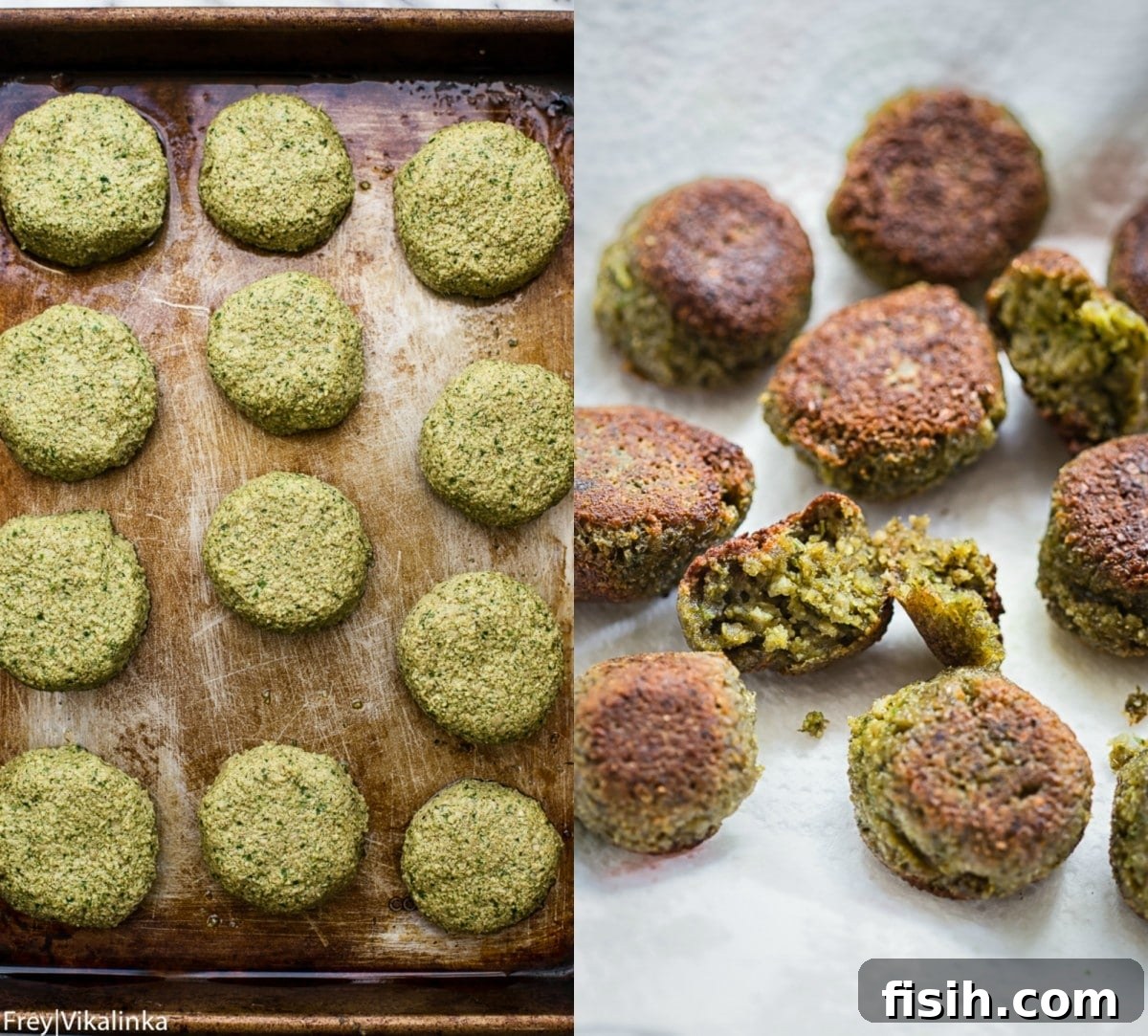
After continued experimentation and dedicated recipe testing, I enthusiastically discovered that pan-frying offers a fantastic “best of both worlds” solution, requiring surprisingly minimal oil. By carefully using just 2-3 tablespoons of good quality olive oil in a sufficiently hot skillet or frying pan, you can effortlessly achieve that coveted, irresistibly crispy, golden-brown exterior while simultaneously preserving a wonderfully moist, tender, and flavorful interior. This ingenious method provides an ideal middle ground, delivering much of the classic, authentic falafel experience without the fuss, excessive oil, and larger cleanup associated with traditional deep-frying. It’s a revelation for home cooks seeking both health and genuine flavor.
Should you still prefer the oven-baked route for your falafel, here’s a crucial tip for achieving the best possible results: Begin by preheating your oven to a precise 190°C (375°F). Lightly oil a sturdy baking sheet or tray, ensuring an even coating, and then carefully arrange your falafel patties on it, giving them enough space. Bake them for approximately 10 minutes on each side, being sure to gently flip them halfway through the cooking process. It is vital to keep a close eye on them to prevent any potential over-drying. While the comprehensive ingredient list for this entire, multi-component bowl might initially appear lengthy and daunting, rest assured that the actual hands-on cooking time is surprisingly minimal. Most of the components, such as the vibrant hummus and the fresh falafel mix, simply need to be efficiently blitzed or processed in a food processor. Moreover, the good news is that foundational elements like hummus and baba ganoush can be conveniently prepared several days in advance or, for ultimate ease, readily purchased from a reputable store, significantly reducing your active prep time on the actual meal day. This strategic approach makes the Falafel Salad Bowl a perfect and highly practical option for enjoying delicious, authentic, and homemade Middle Eastern meals even on your busiest weeknights.
Explore More Flavorful Salad Bowl Recipes
- Mediterranean Salad with Hummus and Fried Halloumi
- Italian Salad with Tuna, Corn and Mozzarella
- Cobb Salad with Chicken, Crispy Prosciutto, Egg and Avocado
Falafel Salad Bowl
Ingredients
For the falafel
- 250g / 1½ cups dried chickpeas, soaked in water
- 1 tsp ground cumin
- 1 tsp ground coriander
- 1 tsp baharat spice, optional
- 1 tsp salt
- 4 spring onions, chopped
- 4 garlic cloves
- 50g / 1 cup cilantro
- 25g / 1/2 cup parsley
- 1/2 tsp baking powder
- 2 tbsp olive oil
For the tabouleh
- 260g / 2 cups bulgur, cooked
- 3 medium tomatoes, diced
- 2 medium cucumbers, diced
- 1 red onion, diced
- 4 green onions, sliced
- 2 tsp dried mint
- 1 cup / 50g chopped parsley
- salt to taste
- Juice of 2 lemons
- 3-4 tbsp olive oil
For the baba ganoush
- 2 medium eggplants/aubergines
- 1 garlic clove
- 1 tbsp tahini
- Juice of 1 lemon
- 1-2 tbsp olive oil
- salt to taste
- 1 tsp smoked paprika
For the hummus
- 340g / 2 cups chickpeas
- 3 tsp cumin
- 2 cloves garlic
- 4 tbsp water
- ½ tsp salt
- Juice of 1 lemon
- 4 tbsp tahini
- 4 tbsp extra virgin olive oil
For the tahini dressing
- 1 tbsp tahini
- Juice of 1 lemon
- 2 tbsp olive oil
- 2 tbsp cold water
- salt to taste
- 1 blood orange, optional
- micro herbs like salad cress, optional
Instructions
For the falafel
- Soak dried chickpeas overnight, ensuring they swell significantly and become softer, similar in appearance to canned chickpeas but still firm. Drain thoroughly before use.
- In a food processor, combine all falafel ingredients (soaked chickpeas, cumin, coriander, baharat if using, salt, spring onions, garlic, cilantro, parsley, and baking powder). Process until you achieve a coarse, cohesive paste. Avoid over-processing to keep some texture.
- Roll the falafel mixture into small balls, approximately 2 inches in diameter, then gently flatten them into patties with your hand.
- Heat 2-3 tablespoons of olive oil in a large skillet over medium-high heat. Fry the falafel patties for approximately 3 minutes on each side, or until they are golden brown and crispy all around. Place on a wire rack lined with paper towels to drain any excess oil. Set aside. (Alternatively, see baking instructions in the article above).
For the tabouleh
- Cook bulgur according to package instructions (usually by soaking in hot water or boiling briefly, then letting it sit) until tender and fluffy. Once cooked, fluff with a fork and set aside to cool completely.
- Once the bulgur has cooled, combine it in a large bowl with all the diced vegetables (tomatoes, cucumber, red onion, green onions) and fresh herbs (parsley, dried mint).
- Dress the tabbouleh with freshly squeezed lemon juice and a generous drizzle of olive oil. Season with salt to taste, mixing gently to ensure all ingredients are well combined and coated.
For the baba ganoush
- Preheat your oven to the highest broil/grill setting. Position an oven rack approximately 6 inches away from the top heating element. Place two whole eggplants on an aluminum foil-lined shallow baking tray.
- Broil the eggplants for about 15-20 minutes, turning occasionally, until the skin is thoroughly charred, blistered, and smoky, and the inside has collapsed into a soft, mushy pulp. This charring is key for the smoky flavor.
- Once cooked, remove the eggplants from the oven and allow them to cool slightly until they are safe to handle. Carefully peel off and discard the burned skin, scooping out the soft flesh.
- In a food processor or blender, combine the eggplant flesh, sliced garlic, tahini, lemon juice, and smoked paprika. Process until the mixture is smooth and creamy. With the motor still running, gradually add 1-2 tablespoons of olive oil until the baba ganoush reaches your desired consistency. Taste and adjust with salt as needed.
For the hummus
- In a food processor, combine chickpeas, cumin, garlic cloves, water, salt, lemon juice, tahini, and extra virgin olive oil. Process until the mixture is completely smooth and creamy. If it’s too thick, add a tiny bit more water until desired consistency.
For the tahini dressing
- In a small jar with a tight-fitting lid, combine tahini, lemon juice, and olive oil. Secure the lid and shake vigorously until all ingredients are well emulsified and you have a smooth, homogenized dressing.
- Gradually add cold water, 1 tablespoon at a time, shaking well after each addition, until the dressing reaches your desired pourable consistency. Season with salt to taste. For an optional touch of elegance and flavor, add slices of blood orange and micro herbs like salad cress when serving.
Nutrition
Nutrition information is automatically calculated, so should only be used as an approximation.
Tried this recipe?Let us know how it was!