
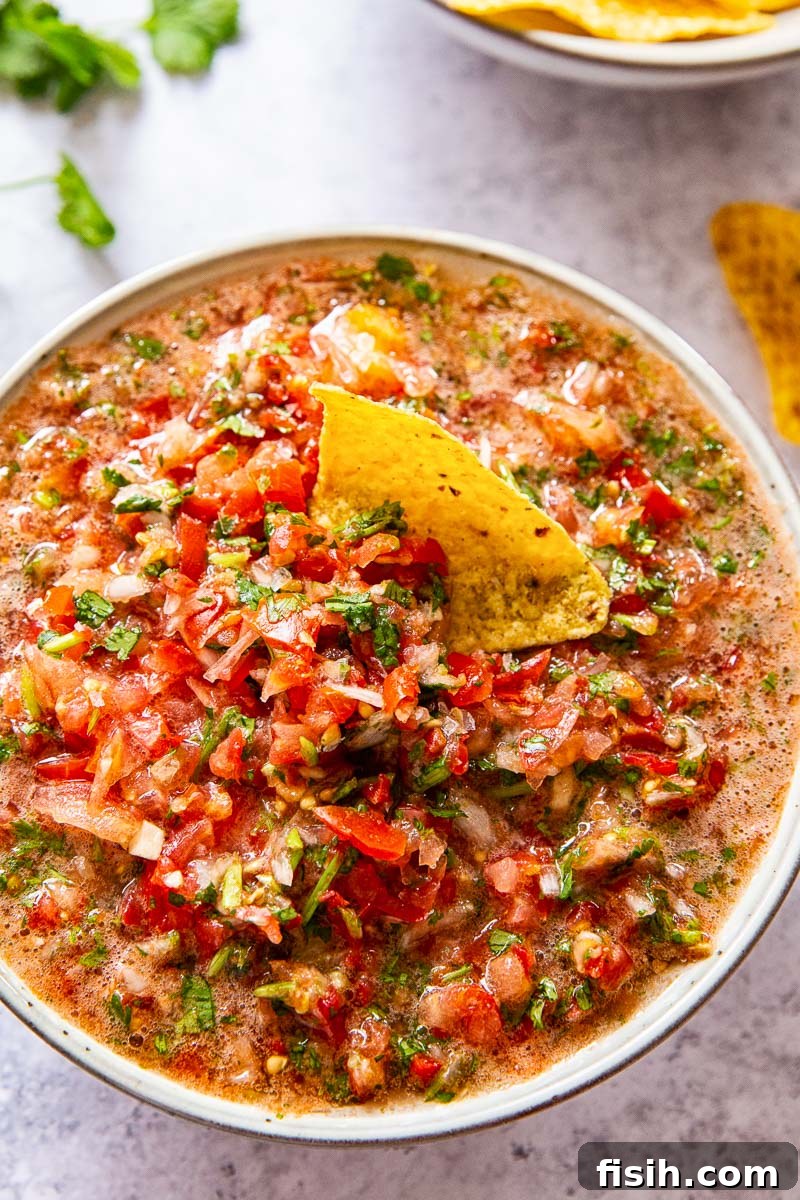
5-Minute Blender Salsa Fresca: Your Go-To Homemade Fresh Salsa Recipe
Get ready to revolutionize your snack game with this incredibly delicious and unbelievably easy homemade salsa fresca! Also known as fresh salsa, this vibrant condiment can be whipped up in just 5 minutes using your blender, eliminating the need for tedious fine dicing. It’s packed with the exhilarating flavors of ripe tomatoes, crisp onions, pungent garlic, spicy chilies, and aromatic cilantro. What makes this fresh salsa truly stand out is its pure, wholesome composition – it’s all vegetables, completely oil-free, making it a guilt-free pleasure you can enjoy generously.
Craving more delectable Tex-Mex creations to pair with your freshly made salsa? Don’t miss out on my Pork and Cheese Quesadillas for a truly satisfying meal!
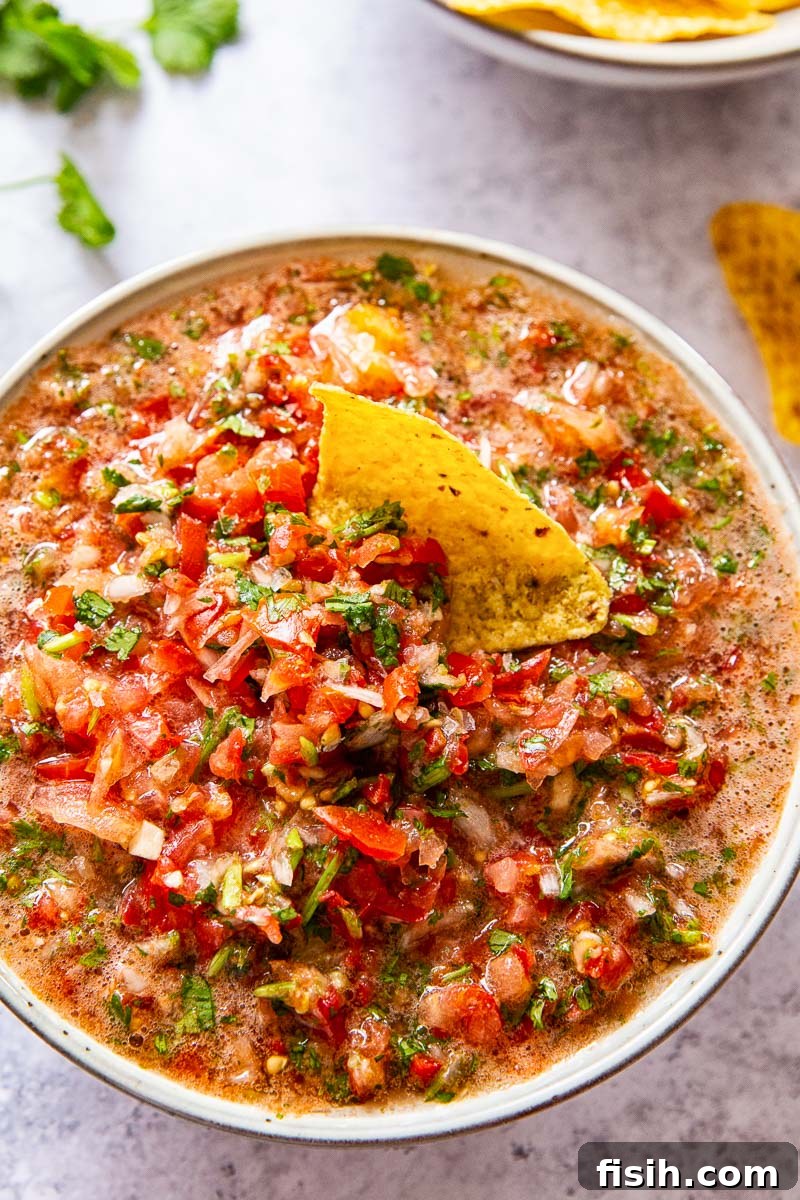
When it comes to effortlessly enjoyable summer entertaining, a classic pairing of crispy chips and zesty salsa is always my top choice. It’s a universally loved combination that requires minimal effort to prepare and serve, guaranteeing happy guests every time. While our North American friends might have an array of tempting supermarket salsa options, here in England, the choices have historically been somewhat limited. Often, you’re faced with salsas that either taste overwhelmingly like canned tomatoes or resemble a generic barbecue sauce, which simply doesn’t hit the mark for true fresh flavor.
Although supermarket selections may have expanded over the years I’ve resided in the UK, I can confidently say that nothing I’ve found on store shelves comes close to the homemade salsa fresca you’re about to discover. This recipe is the only one I would ever consider serving to my cherished family and esteemed guests, a testament to its unparalleled freshness and authentic taste. It’s a game-changer that brings restaurant-quality flavor right into your home, proving that fresh is always best.
The Essence of Freshness: Key Ingredients for Salsa Fresca
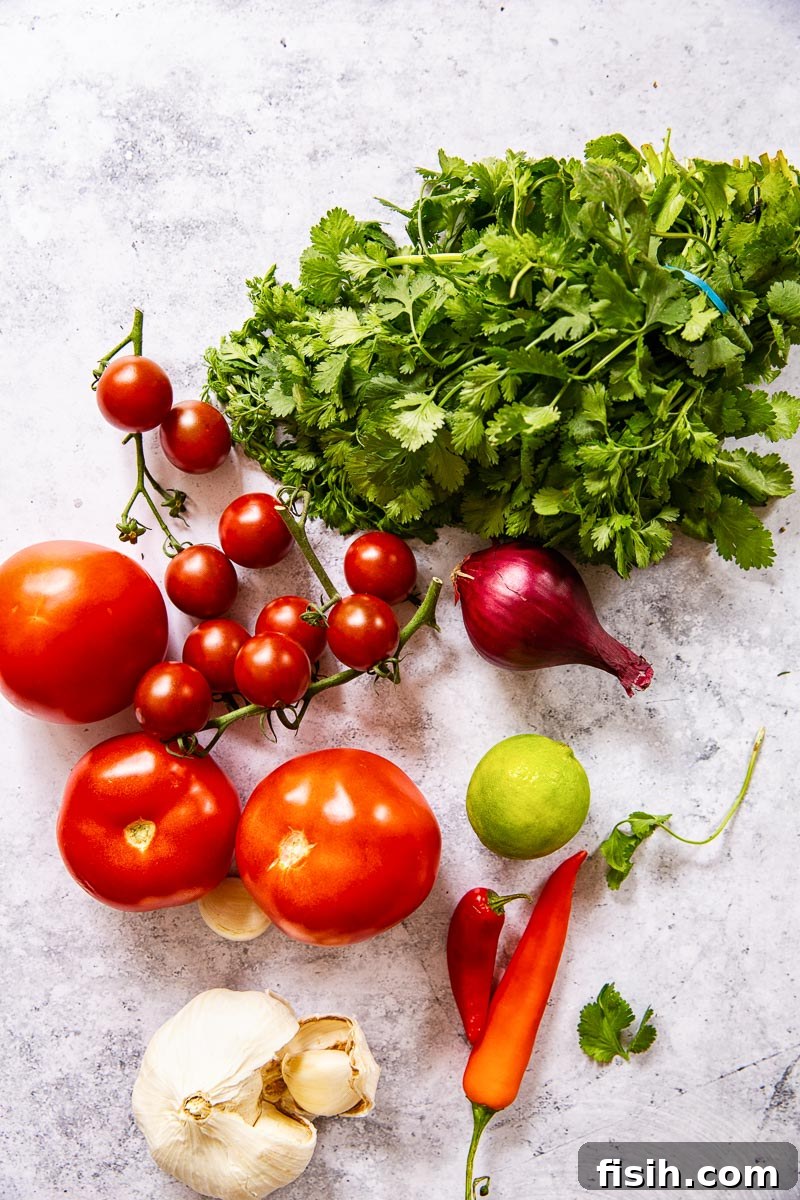
The very name “salsa fresca” (meaning “fresh salsa”) offers a clear hint about the ingredients at its core. This restaurant-style blender salsa relies exclusively on fresh vegetables, allowing their natural, vibrant flavors to shine through without any unnecessary additions. You won’t find a lengthy or exotic shopping list here; the beauty of this recipe lies in its simplicity and accessibility.
What You’ll Need for Your Blender Salsa:
- Ripe, Fresh Tomatoes: The foundation of any great salsa.
- White or Red Onions: Adding a crisp, pungent kick.
- Chili Peppers (e.g., Jalapeños): For that essential touch of heat.
- Garlic: Aromatic depth that elevates every bite.
- Fresh Cilantro/Coriander: The distinctive herb that defines fresh salsa.
- Fresh Lime Juice: Brightens and balances all the flavors.
- Salt: Crucial for enhancing and unifying the taste profile.
When selecting your tomatoes, prioritize freshness and ripeness for the best flavor. Look for ones that are slightly firm to the touch; this ensures they won’t turn into a watery mush when blended, contributing to the perfect salsa consistency. Over the years, I’ve meticulously refined this easy blender salsa recipe to perfectly suit our family’s preferences. However, personal tastes can vary significantly. I highly recommend trying the recipe as written initially, then don’t hesitate to adjust the ingredient quantities over time until it’s absolutely perfect for your palate.
Cilantro, in particular, is an ingredient that often sparks debate – some adore it, while others find its flavor polarizing. In my household, it’s a beloved herb, so I tend to use a generous amount. Feel free to adjust the quantity to your liking; if you’re not a huge fan, a little less will still provide that characteristic fresh aroma without overpowering the other ingredients. Conversely, if you’re a cilantro enthusiast, don’t shy away from adding a bit more!
Pico de Gallo vs. Salsa Fresca: Understanding the Difference
While both pico de gallo and salsa fresca are celebrated fresh tomato-based salsas that share similar core ingredients, they differ significantly in texture and preparation method. If you appreciate the bright, zesty flavors of one, you’re almost certain to enjoy the other. However, their distinct consistencies lead to different culinary experiences.
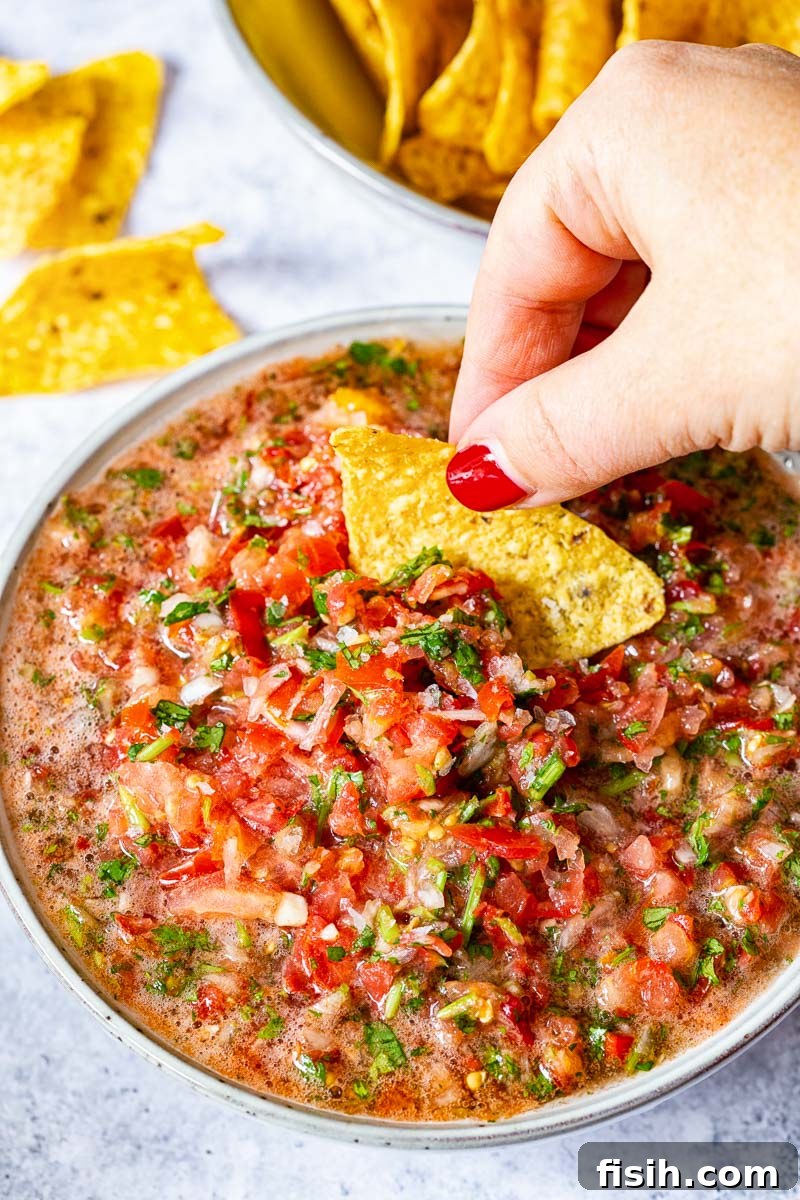
Salsa fresca, as highlighted in this recipe, is typically much smoother. It achieves its characteristic texture by being prepared in a blender or a food processor, where ingredients are pulsed to a desired consistency, ranging from chunky to almost puréed. This method allows for a more integrated flavor profile and a smoother mouthfeel, making it ideal for dipping with chips or drizzling over dishes.
Pico de gallo, on the other hand, is defined by its finely diced ingredients. Each component – tomatoes, onions, jalapeños, and cilantro – is meticulously chopped by hand, resulting in a chunkier, less uniform texture where individual ingredients are more distinct. This vibrant, “salad-like” salsa is often preferred as a topping for tacos and grilled meats, offering a fresh crunch with every bite.
But why limit yourself to just one? Both fresh salsa and pico de gallo offer unique pleasures and complement different dishes beautifully. There’s no judgment here – go ahead and make both for your next taco night! They truly go down differently, offering a delightful variety of textures and experiences.
A video showcasing the 5-Minute Blender Salsa Fresca preparation is typically embedded here.
Effortless Preparation: How to Make Blender Salsa Fresca
This salsa isn’t just my go-to recipe because it’s exceptionally flavorful; its incredible speed is a major factor. The entire process requires merely 5 minutes, making it perfect for busy weeknights, spontaneous gatherings, or whenever a craving for fresh, vibrant salsa strikes.
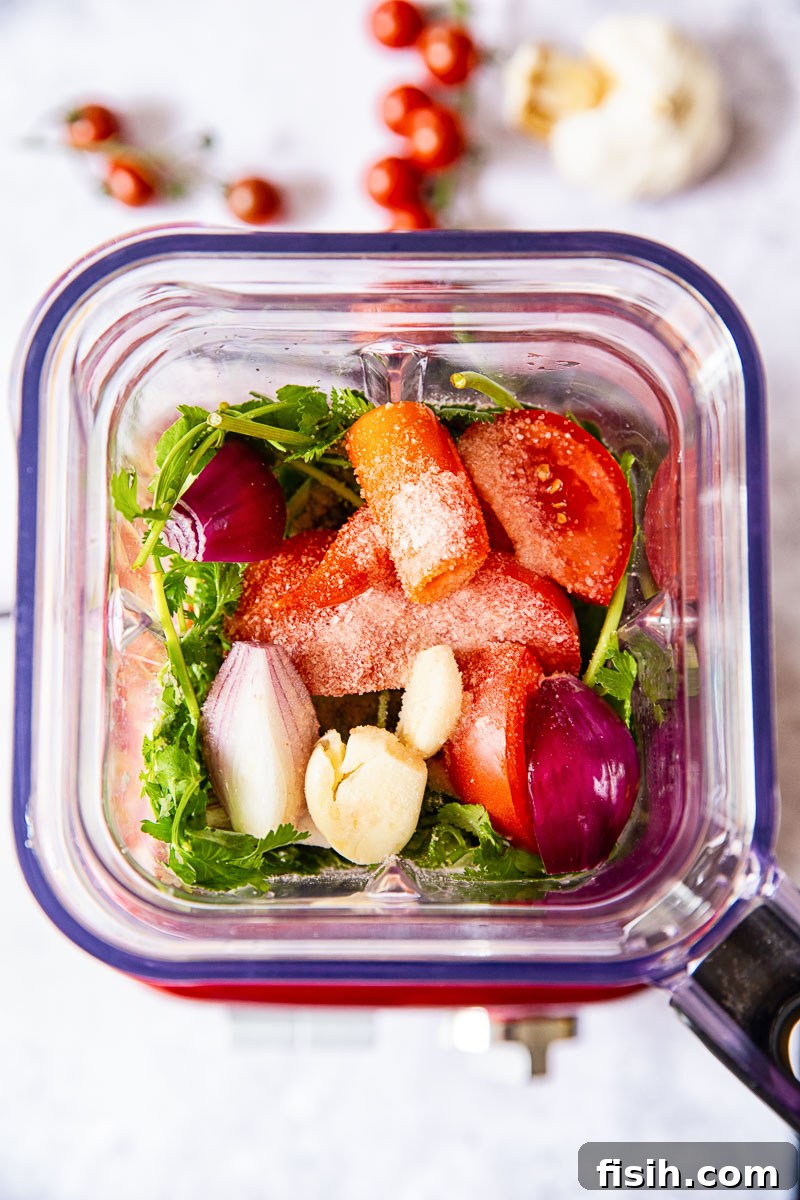
The method is delightfully straightforward: simply combine all your prepared ingredients into a blender or a food processor. Then, pulse for a few seconds until everything is roughly chopped and reaches your desired consistency. That’s it! It sounds almost too good to be true, but there truly isn’t anything more complex to it. This is a fantastic recipe that demands minimal effort yet consistently delivers a professional, restaurant-quality salsa right in your own kitchen. It’s the ultimate hack for fresh flavor without the fuss.
Expert Recipe Tips for Perfect Blender Salsa
- Avoid Over-Processing: This is arguably the most crucial tip! It’s important not to over-blend your salsa. If you do, especially with powerful blenders like a Blendtec or KitchenAid, you risk ending up with a watery, spicy tomato soup rather than a chunky salsa. Just a few short bursts on the pulse setting are usually all it takes to achieve the perfect texture. You want a rustic, slightly chunky consistency, not a smooth purée.
- Control the Heat: Love a fiery kick or prefer something milder? You are entirely in control of the spice level! We enjoy a bit of heat in our salsa, so I typically use ½ to 1 chili, depending on its size and type (jalapeños are a great starting point). I wouldn’t recommend using less than half a chili for a good flavor base, but don’t hesitate to add more if you crave extra spice! Remember to deseed chilies for less heat, and leave some seeds in for more.
- Taste and Adjust: Always, always taste your salsa before declaring it done! It’s essential to ensure there’s enough spice, garlic, salt, and lime juice to create a balanced and harmonious flavor profile. If you feel it’s lacking in any way, add a little more of the ingredient you think is missing. Because you want to avoid over-blending, it’s actually better to perform taste tests throughout the pulsing process, so you can make adjustments if needed before the texture is compromised. If adding extra salt or lime juice, gently stir these in by hand rather than putting the salsa back in the blender. This prevents further blending and maintains the ideal consistency.
Versatile Serving Suggestions for Your Salsa Fresca
The beauty of this simple, classic salsa fresca recipe lies in its incredible versatility. It can be served in countless ways, enhancing a wide array of dishes, making it impossible to list them all!
Naturally, it’s an absolute must-have accompaniment for tacos, burritos, enchiladas, and quesadillas. Its fresh, zesty flavor cuts through the richness of meats and cheeses, providing a welcome burst of brightness. But don’t stop there! Think beyond dinner: this vibrant salsa will even work wonders for breakfast. Imagine drizzling this homemade salsa fresca generously over your morning scrambled eggs or a breakfast burrito. YUM! The fresh kick is an amazing way to start your day.
However, my absolute favorite way to enjoy this salsa is as a simple dip with classic tortilla chips. For an extra layer of indulgence and flavor, pair it alongside creamy homemade guacamole. This combination is pure perfection: the fresh tang of the salsa, the rich creaminess of the guacamole, all contrasted by the glorious crunch of the chips. It’s the quintessential appetizer for any gathering, a game-day essential, or just a delightful treat for yourself.
Storage and Leftovers: Keeping Your Salsa Fresca Fresh
Because this salsa fresca is made with entirely fresh, unprocessed ingredients and contains no artificial preservatives, its shelf life is naturally shorter than store-bought varieties. This homemade gem will keep beautifully for up to 2-3 days when stored in an airtight container in the refrigerator.
Beyond three days, you might notice a slight change in flavor and texture; specifically, the lime juice can cause the tomatoes to take on a slightly “fizzy” or fermented taste, which isn’t ideal for optimal freshness. So, keep this in mind and aim to enjoy your freshly made salsa while it’s still at its peak flavor and vibrancy. Since it’s incredibly quick and effortless to prepare, I personally prefer making a fresh batch on the day I plan to serve it. This guarantees the absolute best taste and texture. I’m confident you’ll devour it long before any freshness concerns arise!
More Tex-Mex Recipes to Enjoy with This Fresh Salsa
- Chicken Fajita Bowl
- Chicken Chilaquiles with Warm Corn Salsa
- Lamb Birria Tacos
- Slow Cooker Pulled Pork Tacos
5-Minute Blender Salsa Fresca Recipe
Print Recipe
Ingredients
- 1 medium onion, quartered
- 1/2-1 red chili (such as jalapeño), deseeded for less heat
- 25g-35g / ¼-⅓ cup fresh cilantro/coriander, leaves and stems
- 2 cloves garlic
- Juice of 1 lime
- 4 large ripe tomatoes, quartered
- 1/4 tsp salt (or to taste)
Instructions
- Add the quartered onion, garlic, cilantro, and a fresh, deseeded chili to the bowl of a blender or food processor. Pulse a few times until roughly chopped.
- Add the quartered tomatoes, salt, and lime juice to the blender. Pulse until you reach your desired consistency – from chunky to slightly smoother. Be careful not to over-blend.
- Taste and adjust seasonings as needed, adding more salt, lime juice, or chili if desired. Serve immediately or chill for later.
Notes
- Be careful not to over-process this salsa, or it can turn into a thin tomato soup. This is especially true if you are using a powerful blender. Just a few pulses are usually enough for the perfect chunky texture.
- You are in control of how spicy this salsa is! I like a little spice, so I use 1/2-1 chili, depending on its size and type. I wouldn’t use less than 1/2 of a chili for flavor, but you can definitely use more for extra heat!
- Always give the salsa a taste test before serving. Make sure there is enough of each ingredient and that the salsa has a good balance of flavors. It’s easy to add more spice, garlic, salt, and lime juice if needed.
- Remember that you don’t want to over-blend the salsa, so check the taste before it is fully blended in case you need to add anything. If you need to add salt or lime juice, I recommend mixing these in by hand rather than putting the salsa back in the blender to preserve texture.
Nutrition
Carbohydrates: 10g |
Protein: 2g |
Fat: 1g |
Saturated Fat: 1g |
Sodium: 159mg |
Potassium: 415mg |
Fiber: 3g |
Sugar: 5g |
Vitamin A: 1922IU |
Vitamin C: 33mg |
Calcium: 32mg |
Iron: 1mg
Nutrition information is automatically calculated, so should only be used as an approximation.
Let us know how it was! Share your feedback in the comments below.