
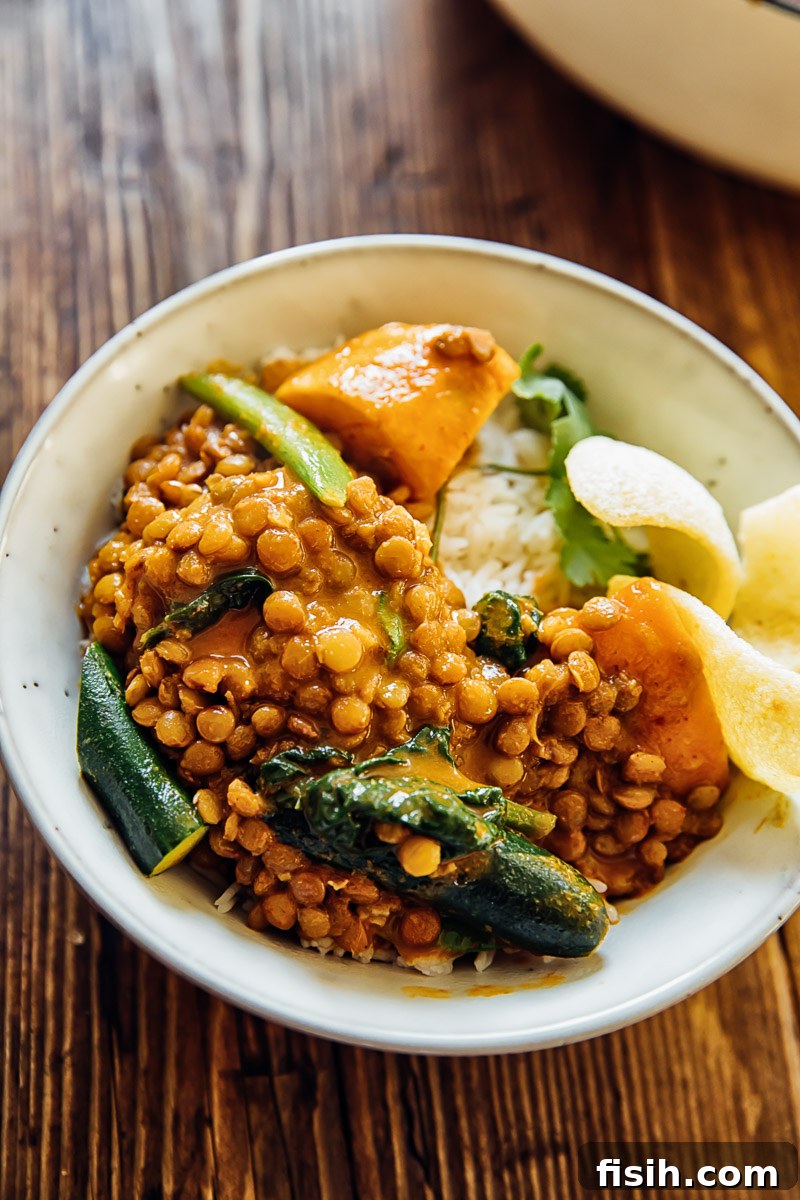
Experience the ultimate comfort food with a burst of fresh flavors in this incredible Sweet Potato and Lentil Curry! Imagine hearty, nutty lentils, naturally sweet potatoes, and rich, creamy coconut milk mingling together in a fragrant, warming dish. This recipe isn’t just a meal; it’s an experience you’ll crave again and again, proving that truly satisfying plant-based cuisine is both accessible and deeply delicious.
Craving another wholesome lentil and coconut milk curry? Be sure to explore our Easy Coconut Lentil Curry with Butternut Squash for another delightful vegetarian option!
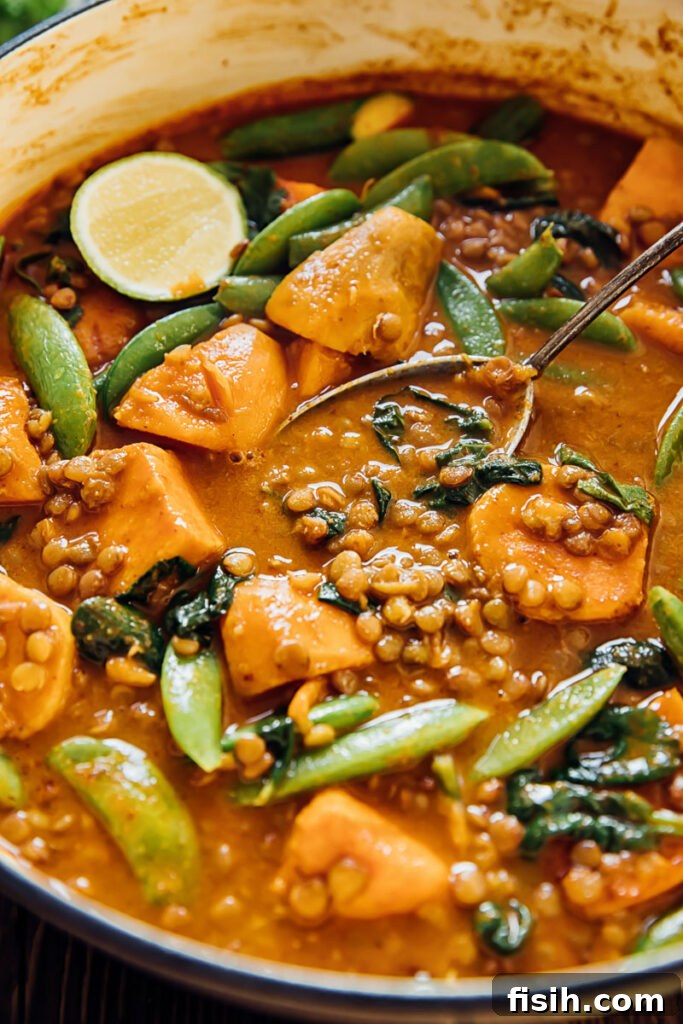
For many years, curries have held a cherished place at our dinner table, and it’s easy to see why. Their incredible versatility means they can be adapted to any season, offering warmth and comfort in colder months, and bright, refreshing flavors when the weather turns warmer. They provide an endless canvas for culinary creativity, allowing for countless ingredient combinations and spice levels.
A well-crafted curry, particularly one drawing inspiration from the vibrant traditions of Thai cuisine, is truly something special. These dishes masterfully combine the comforting qualities of a hearty stew with an abundance of fresh, invigorating ingredients. The result is a meal that feels both wholesome and exciting, nourishing the body while tantalizing the taste buds.
This particular sweet potato curry recipe is a prime example of this perfect balance. It features tender baby zucchini and crisp sugar snap peas, providing delightful texture and a fresh “pop” that brightens the entire dish. At its core, the earthy, nutty notes of lentils contribute a deep, satisfying flavor, beautifully counterbalanced by the natural sweetness of the sweet potatoes. Together, these ingredients create a substantial, filling curry that leaves you feeling completely satisfied and deeply nourished, making it an ideal choice for a healthy, plant-based meal.
What makes this sweet potato and lentil curry truly exceptional is its harmonious blend of diverse flavors and textures. Every spoonful offers a perfect balance, from the creamy coconut base to the tender vegetables and robust lentils. This nutritious curry is more than just a meal; it’s a flavorful journey and an absolute dream for anyone seeking a wholesome and delicious culinary experience.
The Essence of Thai Curry
Thai cuisine is celebrated for its incredible diversity and intricate flavors, with curries playing a truly central role. While the term “Thai curry” might suggest a singular style, it actually encompasses a vast and exciting spectrum of dishes, each with its own unique blend of ingredients, techniques, and regional influences. One common thread that often runs through these delicious creations is the liberal use of creamy coconut milk, which forms the luscious base for many popular varieties.
The distinctive red and green hues of Thai curries are derived from the specific selection of chilies and other ingredients used in their paste. Red curries typically feature a generous amount of red chilies, giving them a vibrant color and a generally spicier profile. Green curries, on the other hand, incorporate green chilies, kaffir lime, and fresh herbs, resulting in a fresher, often slightly milder, and more aromatic flavor. To simplify the process and ensure an authentic taste without needing a mortar and pestle for every meal, a high-quality curry paste is your best friend. It masterfully combines the right balance of chilies, lemongrass, galangal, and other essential spices, bringing the true essence of Thai flavor directly to your kitchen.
Given the pivotal role curry paste plays in the final flavor of your dish, it’s crucial not to compromise on quality here. A subpar curry paste can unfortunately undermine even the best intentions and freshest ingredients. Invest in a reputable brand to guarantee a rich, complex, and aromatic foundation for your curry. Additionally, if you are preparing a vegetarian or vegan curry, always scrutinize the ingredient list of your chosen paste. While many excellent brands offer vegan-friendly options, some traditional pastes may contain fish sauce or shrimp paste, so a quick check is always recommended to ensure your dish aligns with your dietary preferences.
This particular recipe elegantly utilizes red curry paste. Red curry paste is generally known for being slightly spicier and more robust than its green counterpart. Its flavor profile is also wonderfully versatile, making it an excellent choice for a wide array of dishes and pairing well with various vegetables and proteins, including the sweet potatoes and lentils featured here. This flexibility allows the other fresh ingredients to shine while providing a deeply satisfying and warming base.
Effortless Preparation: How to Make This Curry
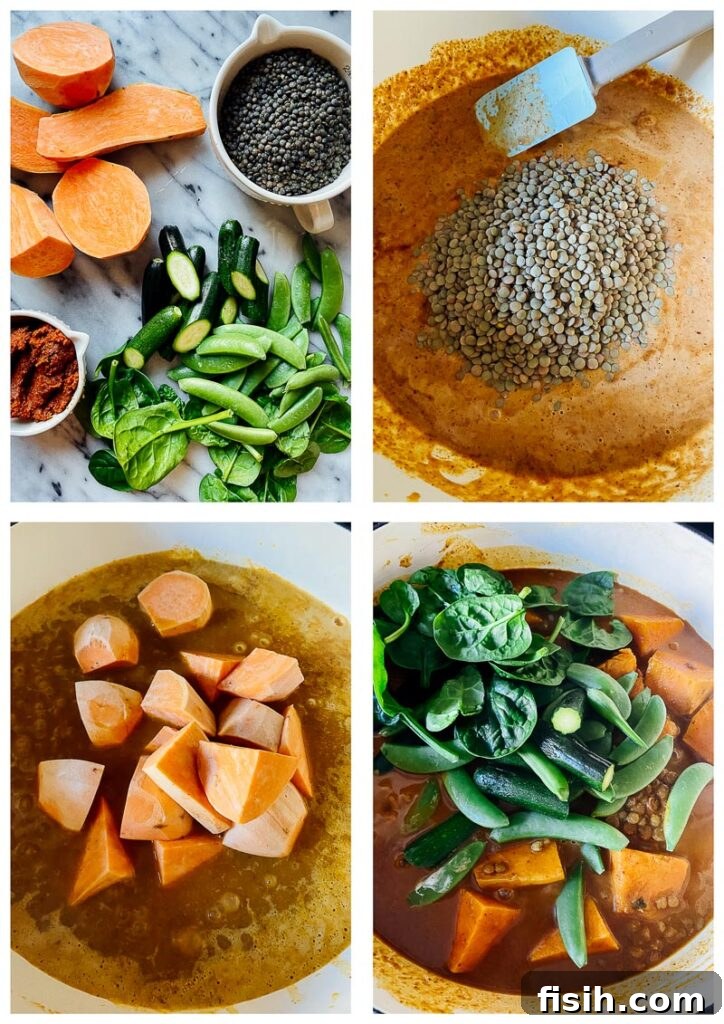
Crafting this delightful sweet potato and lentil curry is a straightforward process, promising a gourmet experience with minimal fuss. Begin by heating your pan over medium heat. The first crucial step is to “bloom” the Thai red curry paste. Add a small portion of the coconut milk to the pan along with the curry paste. Stir continuously for a couple of minutes until the paste becomes fragrant and slightly darkened, releasing its incredible aromatic oils. This step is essential for developing the full depth of flavor in your curry.
Next, introduce the green lentils, vegetable stock, and the remaining coconut milk to the pan. Bring the mixture to a gentle boil, then reduce the heat to a simmer. Allow everything to cook together for approximately ten minutes. This initial simmer gives the lentils a head start, ensuring they become tender and absorb the wonderful flavors of the curry base.
Once the lentils have had their initial cooking time, it’s time to add the star ingredient: the sweet potatoes. Carefully add the cubed sweet potatoes to the pot and continue to simmer for another ten minutes. The sweet potatoes will soften beautifully, adding their natural sweetness and creamy texture to the curry. Finally, incorporate the delicate baby zucchini, crisp sugar snap peas, and fresh spinach. Simmer for just another 5-7 minutes. This shorter cooking time ensures that these tender vegetables retain their vibrant color and a slight bite, preventing them from becoming overcooked and mushy.
To finish, at the very end of the cooking process, stir in the palm or brown sugar. This touch of sweetness helps to balance the spices and acidity, creating a well-rounded flavor profile. If you choose to use fish sauce (or a vegetarian alternative), add it at this stage. Remember, fish sauce is quite potent, so taste and adjust to your preference. This final adjustment ensures your curry achieves the perfect blend of sweet, spicy, salty, and savory notes, ready to be enjoyed.
Recipe Tips and Notes for Perfection
- Embrace Quality Curry Paste: While it’s possible to blend your own spices, a good quality curry paste is the most convenient and effective way to infuse your dish with authentic, complex flavors. It’s designed to deliver the right combination of aromatics and heat, making it an indispensable shortcut for a wide range of curries. Don’t be shy about exploring different brands to find your favorite.
- Sweet Potato Alternatives: I am a huge enthusiast of sweet potatoes, which lend a wonderful creaminess and sweetness to this recipe. However, if you’re looking for an alternative, butternut squash makes a fantastic substitute. Just be aware that butternut squash typically requires a slightly longer cooking time, so you’ll want to add it a couple of minutes earlier than the sweet potatoes to ensure it softens perfectly.
- Vegetable Variations: This recipe is incredibly adaptable! Feel free to experiment with other vegetables. Green beans are an excellent addition and can be used interchangeably with or in addition to the snow peas, offering a similar crunch and vibrant color. Other great options include bell peppers, broccoli florets, or even mushrooms.
- Coconut Milk Choice: When it comes to coconut milk, the choice between light and full-fat can impact both the texture and richness of your curry. While light coconut milk can be a good option for reducing calories, full-fat coconut milk truly delivers the most luxurious, creamy texture and a deeply satisfying flavor. For me, the rich indulgence of full-fat is worth it, but ultimately, it comes down to personal preference.
- Stock vs. Water: While vegetable broth or stock is recommended for its flavor-enhancing properties, water can certainly be used as a substitute. The broth will contribute an extra layer of savory depth to your curry, but if you’re short on stock, water will work perfectly fine without compromising the core taste of the dish.
- Seasoning with Fish Sauce (or not): Fish sauce adds a unique umami depth and saltiness that is characteristic of many Thai dishes. However, it is quite salty, so if you opt not to use it (for vegetarian reasons, or simply preference), remember to adjust the salt content of your curry accordingly. Start by adding a pinch or two of salt, then taste and adjust until you reach your desired seasoning level. A vegetarian fish sauce substitute is also a great option to maintain that umami profile.
Perfect Serving Suggestions
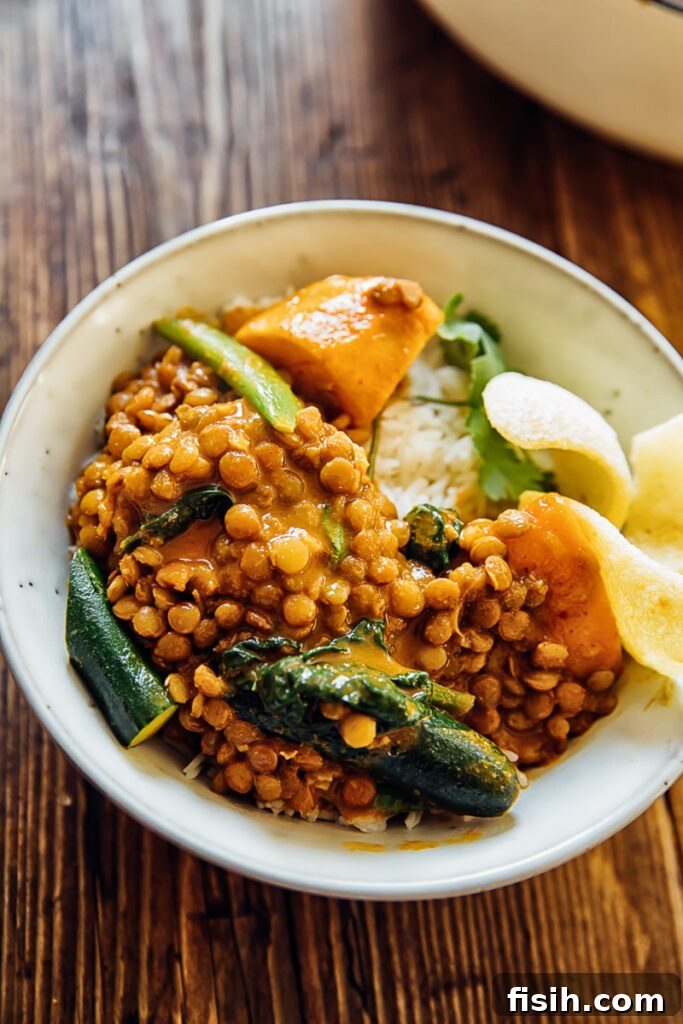
Keeping things delightfully simple is often the best approach when serving this flavorful sweet potato and lentil curry. The curry itself boasts such a rich tapestry of flavors that it doesn’t require complex accompaniments. Serving it over a bed of fluffy white or brown rice is a classic choice, allowing the rice to absorb all the delicious sauce and provide a neutral canvas for the curry’s robust profile.
However, if you’re inclined to elevate your meal with a touch more creativity, consider pairing it with a fragrant coconut rice. The subtle sweetness and aroma of coconut rice perfectly complement the creamy base and vibrant spices of the curry, creating a truly harmonious dining experience. For an added burst of freshness and a beautiful garnish, sprinkle generously with freshly chopped coriander (cilantro) or a squeeze of fresh lime or lemon juice just before serving. These bright notes cut through the richness of the curry, awakening the palate and enhancing the overall flavor. For those who enjoy a bit more heat, a sprinkle of chili flakes can also add a pleasant kick. Don’t hesitate to serve it with warm naan bread or roti for scooping up every last drop of the delicious sauce.
Storage and Leftovers: Easy Meal Prep
One of the many virtues of this sweet potato and lentil curry is how wonderfully it keeps, making it an excellent candidate for meal prep or enjoying convenient leftovers. When stored in the fridge in an airtight container, your curry will remain fresh and delicious for 3-4 days. In fact, many believe that the flavors in curry deepen and meld even further overnight, resulting in an even more delicious dish the next day. So, don’t be surprised if you find yourself loving it even more on day two!
For longer storage, this curry freezes beautifully for up to three months when kept in an airtight, freezer-safe container. This makes it an ideal option for preparing meals in advance, ready to be pulled out on those hectic weeknights when you need a healthy and satisfying dinner without the effort. If you plan to freeze, consider making a double batch to stock your freezer with future quick meals. When you’re ready to enjoy, simply thaw the frozen curry completely in the refrigerator overnight before reheating. Once thawed, aim to consume it within 48 hours for the best quality and safety.
Reheating leftovers is simple. You can gently warm the curry in a saucepan over medium-low to medium heat on the stovetop, stirring occasionally until heated through. Alternatively, a microwave works perfectly for a quicker reheat. If you find the curry has thickened slightly upon reheating, add a splash of water, vegetable stock, or even a little extra coconut milk to achieve your desired consistency. Stir well to combine and ensure even heating.
Explore More Lentil Recipes
If you’ve enjoyed the wholesome goodness of lentils in this curry, you’ll be delighted to discover their versatility in other dishes:
- Veggie Lentil Moussaka
- Mulligatawny Soup
- Dal Makhani
- Vegetarian Lentil and Butternut Squash Chili
Sweet Potato and Lentil Curry
By Julia Frey of Vikalinka
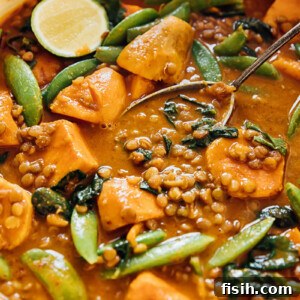
A warming red curry featuring a delicious medley of vegetables and nutty lentils, perfect for a comforting and nutritious meal.
Ingredients
- 50g / 3.5 tbsp Thai red curry paste
- 400ml / 14oz coconut milk
- 250ml / 1 cup vegetable stock
- 200g / 1 cup green lentils
- 2 medium sweet potatoes, peeled and cubed
- 5 baby zucchini, trimmed and sliced
- 80g / 1 cup sugar snap peas
- 30g / 1/8 cup spinach
- 1 tsp palm or brown sugar
- 1 tsp fish sauce, optional (use vegetarian alternative for vegan/vegetarian)
Instructions
- Heat your pan over medium heat. Add the Thai red curry paste along with a couple of tablespoons of the coconut milk. Stir constantly for about 2 minutes until the aroma is released and the paste darkens slightly. This “blooming” process enhances the flavor.
- Next, add the green lentils, vegetable stock, and the remaining coconut milk to the pan. Bring the mixture to a simmer, then reduce the heat to low and let it cook for 10 minutes, allowing the lentils to begin softening.
- Add the cubed sweet potatoes to the pot and continue to simmer for another 10 minutes, or until the sweet potatoes are tender.
- Finally, stir in the baby zucchini, sugar snap peas, and spinach. Continue to simmer for 5-7 minutes, just until the vegetables are tender-crisp and the spinach has wilted.
- At the very end of the cooking time, stir in the palm or brown sugar to balance the flavors. If you are using fish sauce (or a vegetarian fish sauce substitute), add it now and stir well to combine. Taste and adjust seasoning as needed.
Notes
- A vegetarian fish sauce substitute can be used to keep the recipe suitable for vegetarians and vegans while still adding umami depth.
- Green beans can be added or used in place of sugar snap peas for a similar crunchy texture.
- Water can be used in place of vegetable broth or stock if necessary, though broth will contribute more flavor.
- Fish sauce is quite salty. If omitting it, you will need to add salt to taste. Start with a pinch or two and adjust as desired.
- For the creamiest texture and richest flavor, use full-fat coconut milk. Light coconut milk can be used for a lower-calorie option, but it will result in a less rich curry.
Nutrition
Calories: 316kcal | Carbohydrates: 44g | Protein: 16g | Fat: 10g | Saturated Fat: 8g | Polyunsaturated Fat: 1g | Monounsaturated Fat: 1g | Sodium: 303mg | Potassium: 1467mg | Fiber: 15g | Sugar: 6g | Vitamin A: 13515IU | Vitamin C: 69mg | Calcium: 106mg | Iron: 6mg
Nutrition information is automatically calculated and should only be used as an approximation.
Tried this recipe?Let us know how it was!