
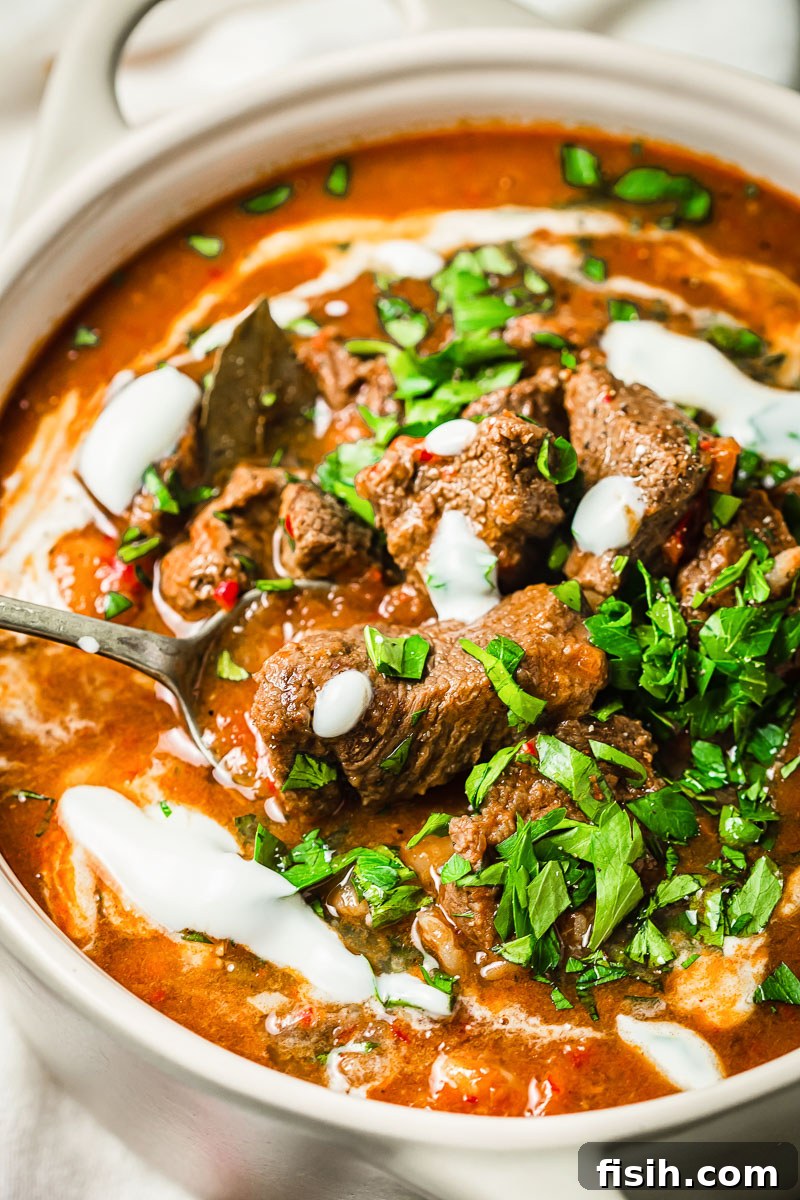
Embrace the depths of winter with a bowl of soul-warming Beef Goulash. This classic dish features unbelievably tender chunks of beef bathed in a rich, deeply flavorful gravy sauce, infused with the aromatic essence of paprika. It’s the ultimate comfort food, perfectly designed to chase away the chill and nourish you from the inside out. Dive into my cherished recipe for this truly satisfying winter warmer.
To elevate your goulash experience and transport your taste buds straight to Eastern Europe, I highly recommend serving this wonderful stew with a hearty slice of my homemade rye bread, ideal for soaking up every last drop of the delectable sauce.
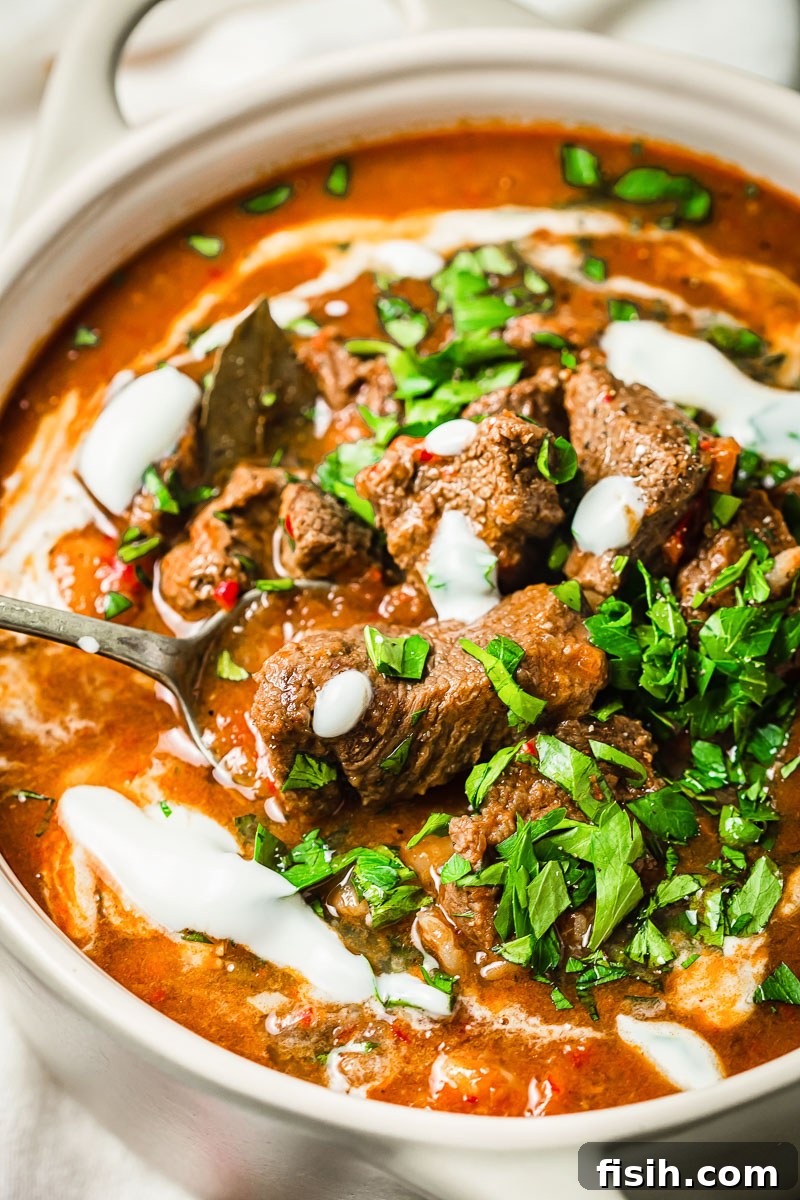
As the days grow shorter and the mercury drops, the arrival of true winter demands dishes that offer both sustenance and solace. In England, the cold has truly settled in, signaling the perfect time for hearty, warming meals. For me, the severity of the season is often measured by the necessity of a hat – and indeed, it’s hat season!
Whenever the biting cold makes its presence known, my cravings invariably turn to something profoundly warm and satisfying. It’s in these moments that a fantastic beef goulash doesn’t just sound good, it becomes an absolute necessity. It’s more than just food; it’s a culinary embrace that brings warmth and joy.
I understand what you might be thinking: a delicious, paprika-infused Hungarian stew like this doesn’t simply appear. Achieving those deep, complex flavors and transforming beef into melt-in-your-mouth tender morsels of joy certainly takes time for all the ingredients to meld beautifully. You’re absolutely right!
However, despite the hours required for proper cooking, the actual hands-on preparation for this stew is remarkably straightforward. Most of the magic happens unattended, as it simmers slowly, allowing the flavors to deepen and the meat to become exquisitely tender. It’s a labor of love that rewards patience with incredible taste.
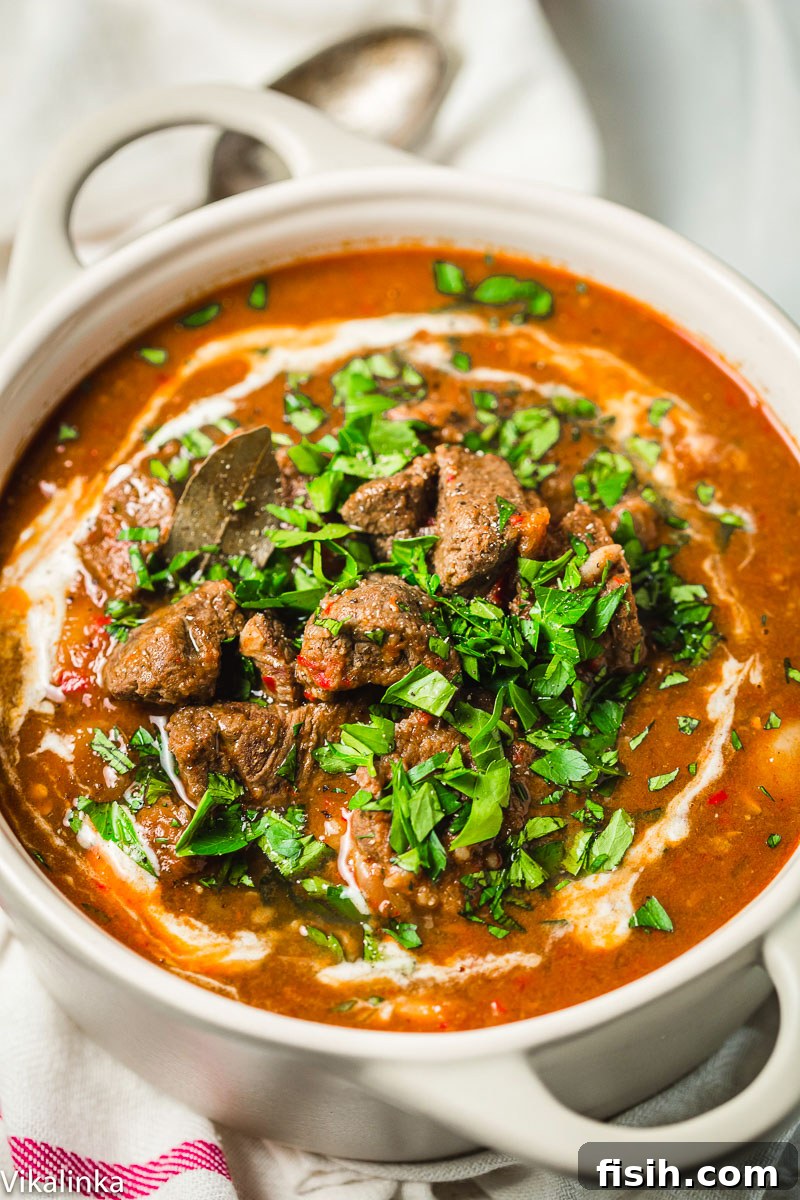
What is Beef Goulash? The Heart of Hungarian Cuisine
Beef Goulash, or Gulyás, as it’s known in its native land, is a culinary cornerstone of Hungary. This iconic dish has a rich history rooted in the traditions of Hungarian herdsmen, who prepared simple, hearty stews in cauldrons over open fires. While its origins are undeniably Hungarian, its comforting appeal has spread widely, making it nearly as popular in many neighboring countries across Central and Eastern Europe. You’ll frequently find it proudly featured on menus in charming restaurants throughout Prague, Vienna, and countless other vibrant cities in the region.
While many of us recognize goulash as a thick, hearty stew, its original Hungarian form often had the consistency closer to a robust soup. Regardless of whether you prefer a thick, rich stew or a slightly thinner, more soup-like consistency, the defining ingredient that truly sets goulash apart from other beef stews is, without a doubt, paprika. This vibrant spice is not just for color; it’s the very soul of goulash, imparting its signature flavor and aroma.
To truly capture the most authentic and deep flavors of traditional Hungarian goulash, it’s highly recommended to seek out the best quality sweet Hungarian paprika you can find. Its sweet, robust notes are irreplaceable. For those who enjoy a bit more depth and a bolder taste, don’t hesitate to experiment with smoky paprika – it adds an intriguing layer of complexity to the dish.
Beef Goulash today often includes tomatoes, contributing a lovely acidity and subtle sweetness. Interestingly, tomatoes were not part of the original ingredients when goulash first emerged. However, I personally adore the sweet and slightly tangy taste that crushed tomatoes bring to this stew, adding a fantastic dimension to its flavor profile!
If you’re captivated by these flavors but find yourself leaning towards poultry, you must explore our classic Chicken Paprikash recipe, a delightful dish that also champions the magic of paprika with tender chicken.
Mastering Your Beef Goulash: Essential Recipe Tips and Notes
- As I’ve highlighted, while the recipe itself is remarkably easy to follow, the key to truly exceptional goulash lies in patience and time. The optimal cooking duration of approximately 2.5 hours in the oven is what consistently yields the most tender beef and the richest, most developed flavors. Resist the urge to rush this process; the slow simmer is where the magic truly happens.
- One of the most frequently asked questions regarding stews is about the best type of beef to use. For this goulash, I wholeheartedly recommend stewing beef. It’s often conveniently sold pre-diced into bite-sized pieces, saving you prep time. This cut, typically from tougher parts of the animal, is perfectly suited for long, slow cooking. After hours of simmering in the flavorful sauce, the beef transforms into beautifully tender, succulent, and intensely flavorful morsels.
- The quality and freshness of your paprika are paramount. It is the heart of goulash, so ensure you use the best quality you can reasonably afford, and always check its freshness. Before adding it to your stew, take a moment to smell it. It should have a vibrant, pleasant aroma. If it smells faint or bland, it’s likely past its prime and won’t impart the depth of flavor your goulash deserves. Fresh paprika makes all the difference!
- For those seeking a truly authentic Eastern European flavor, a small pinch of caraway seeds is a traditional addition to many goulash recipes. Caraway has a distinct, strong flavor that might be a bit surprising for palates not accustomed to it. While I personally omit it from my recipe to maintain broader appeal, if you are adventurous and keen to experience the most traditional taste, I encourage you to give it a try!
- Do not forget the finishing touch! Just before serving, a generous dollop of full-fat sour cream or thick plain yogurt is essential. Not only does it add a wonderfully rich and creamy texture to the goulash, but it also subtly mellows the intensity of the paprika, creating a beautifully balanced and smooth flavor profile.
- **The Perfect Pot**: A heavy-bottomed Dutch oven or a substantial cast-iron pot is ideal for making goulash. Its excellent heat retention ensures even cooking and prevents scorching, leading to a consistently delicious stew.
- **Browning the Beef**: Don’t skip the step of browning the beef before simmering. This crucial process creates a rich, caramelized crust on the meat, which locks in flavor and adds incredible depth to the final gravy through the Maillard reaction. Do it in batches to avoid overcrowding the pan, which can steam the meat instead of browning it.
- **Deglazing for Flavor**: After browning the beef and sautéing the onions, you’ll likely have flavorful browned bits (fond) stuck to the bottom of your pot. Deglazing with a splash of beef stock or wine (if you choose to add it) scrapes up these bits, incorporating all that concentrated flavor into your sauce.
- **Patience with Onions**: Allow the onions to cook down slowly until they are translucent and very tender, even slightly caramelized. This step builds the foundational sweetness and depth of the goulash’s base. Rushing it will result in a less flavorful stew.
- **Adjusting Consistency**: If your goulash is too thick, simply add a bit more beef stock or water until it reaches your desired consistency. If it’s too thin, you can simmer it uncovered for a longer period to reduce it, or use the butter bean method mentioned in the notes for a gluten-free option.
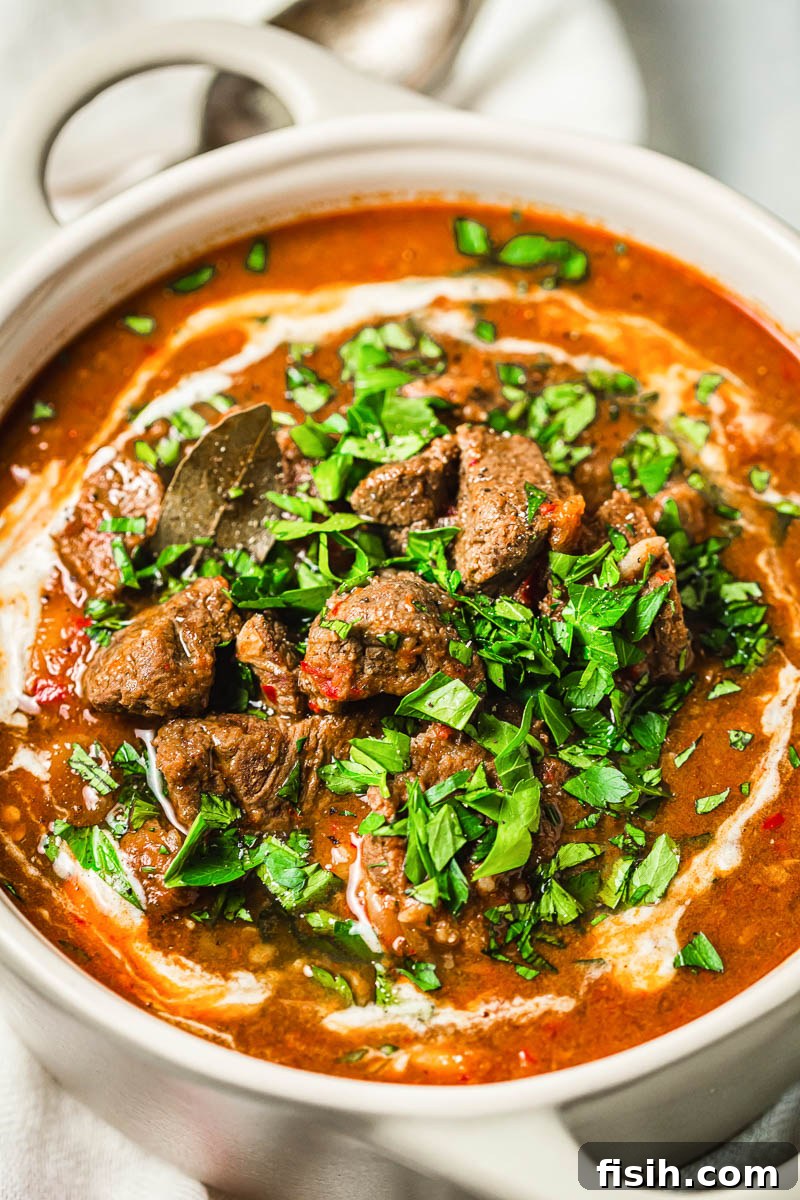
Elevate Your Goulash: Perfect Serving Suggestions
This rich and robust Beef Goulash pairs beautifully with a variety of classic accompaniments. For a truly satisfying meal, serve it piping hot over a bed of tender egg noodles, soft and fluffy dumplings, or creamy mashed potatoes. The subtle flavors of these sides perfectly complement the bold taste of the goulash. I also have a personal favorite: eating it with generous slices of crusty sourdough bread, which is absolutely perfect for soaking up every last drop of that incredibly delicious broth.
To enhance both its creamy texture and tangy flavor, don’t forget to swirl in a spoonful of full-fat sour cream or plain yogurt into your beef goulash just before serving. This not only adds a delightful richness but also provides a lovely cooling contrast to the savory stew. For a final flourish and a burst of freshness and color, I always recommend sprinkling generously with freshly chopped flat-leaf parsley.
Consider serving a light green salad with a simple vinaigrette on the side to cut through the richness of the stew, or even a side of roasted root vegetables for added earthy flavors and textures. A robust red wine, such as a Cabernet Sauvignon or a Merlot, would also make an excellent pairing, complementing the deep flavors of the beef and paprika.
Storage and Leftovers: Enjoying Goulash for Days
One of the many wonderful qualities of Beef Goulash, like most hearty stews, is that it often tastes even better the day after it’s made. The flavors have more time to meld, deepen, and intensify, creating an even more satisfying culinary experience. It’s truly a dish that improves with age!
For convenience, leftovers can be stored in an airtight container in the refrigerator for 3-4 days. If you’ve made a large batch and wish to enjoy it much later, goulash freezes exceptionally well. Simply transfer cooled goulash to freezer-safe containers or heavy-duty freezer bags and freeze for up to three months. To reheat, thaw overnight in the refrigerator (if frozen) and then gently warm in a microwave or, ideally, in a saucepan over medium-low heat on the stovetop. Add a splash of water or beef stock if the goulash appears too thick after reheating, stirring until it reaches your desired consistency.
If you anticipate having leftovers and plan to store a portion, it’s best to add sour cream or yogurt to individual servings rather than directly into the main pot of goulash. Dairy products like cream don’t tend to keep as well when reheated multiple times and can sometimes separate or alter the texture of the stew. Keeping them separate ensures optimal freshness and taste for your stored goulash.
More Comforting Stew Recipes to Explore
If you’re a fan of comforting, slow-cooked meals, you’ll love these other hearty stew recipes that are perfect for any season:
- Slow Cooker Campfire Stew
- Classic Irish Beef Stew
- Russian Beef Stew Solyanka: A Sweet and Sour Delight
- Slow Cooker Italian Beef Stew
Classic Beef Goulash
Ingredients
- 1kg / 2 lbs stewing beef, cut into 1-inch cubes
- 2 medium onions, chopped
- 4 garlic cloves, minced
- 1 large red pepper, diced
- 2 tbsp plain flour (omit for gluten-free)
- 2 tbsp olive oil
- 3 tsp sweet paprika, or smoked paprika for a bolder flavor
- 2 bay leaves
- 400g / 14 oz crushed tomatoes, or canned diced tomatoes
- 750ml / 3 cups beef stock
- salt to taste
- freshly ground pepper to taste
- flat leaf parsley , chopped, for garnish
- sour cream or plain yogurt, to garnish
Instructions
-
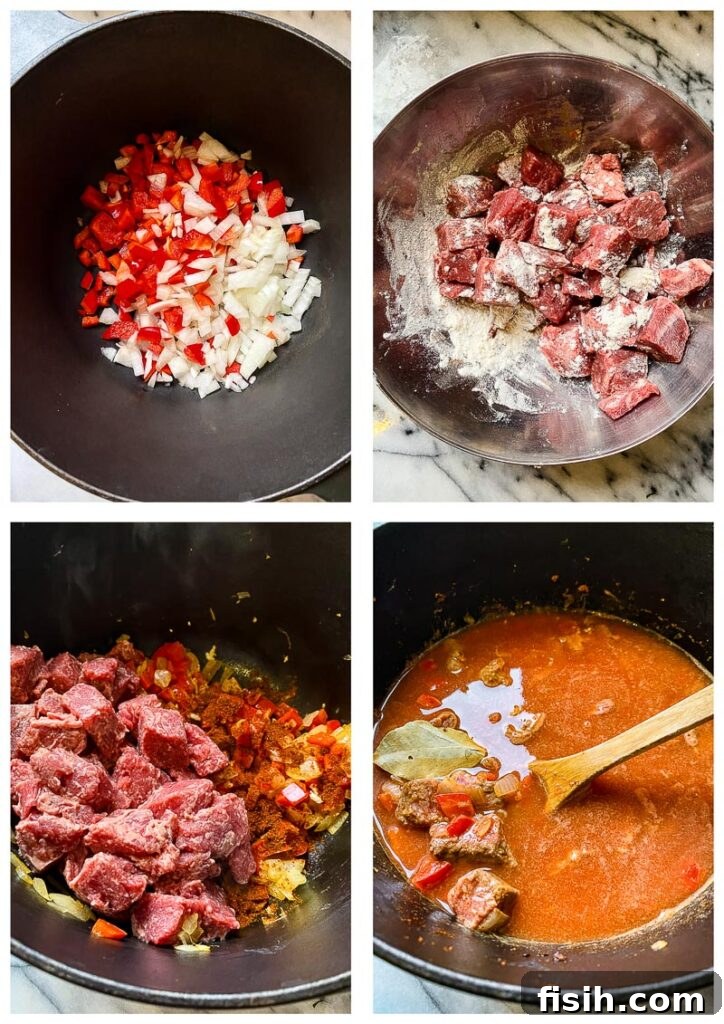
Begin by preparing your vegetables: peel and finely chop the onions, mince the garlic cloves, and dice the red pepper. Next, take your stewing beef, pat it dry, and lightly coat the pieces evenly in the plain flour. This step helps to create a beautiful crust and slightly thickens the sauce.
-
Heat the olive oil in a large Dutch oven or a deep, heavy-bottomed pan over medium-low heat. Add the chopped onions and diced red pepper and cook gently for 7-10 minutes, stirring occasionally, until they have softened and become translucent. Stir in the minced garlic and cook for just 1 minute longer until fragrant. Be careful not to burn the garlic. Now, add the paprika and the floured beef to the pot. Cook for 2-3 minutes, stirring to ensure the beef is lightly browned on all sides and coated in the spices.
-
Pour in the crushed tomatoes and beef stock. Add the bay leaves, a generous pinch of salt, and freshly ground pepper to taste. Bring the mixture to a gentle boil over high heat, then immediately reduce the heat to low. Cover the pot tightly with a lid and let it simmer for 1 hour and 30 minutes. After this time, remove the lid and continue to cook, uncovered, for an additional 1 hour. This allows the sauce to thicken and the flavors to concentrate. Alternatively, you can cook this in a preheated oven at 300°F (150°C). Bake covered for 1 hour 30 minutes, then uncovered for 1 more hour until the beef is incredibly tender.
-
Once cooked, remove the bay leaves. Serve your rich and tender beef goulash immediately with your choice of hot noodles, dumplings, or creamy mashed potatoes. For an added touch of creamy texture and to balance the paprika flavor, swirl in a dollop of sour cream or plain yogurt into each serving. Garnish with fresh chopped flat-leaf parsley for a vibrant finish.
Notes
- For a gluten-free version of this recipe, simply omit the flour in step 1. To thicken the sauce, you can use 1 can of blended butter beans. Add the pureed beans approximately 30 minutes before the goulash finishes cooking, allowing them time to meld and thicken the stew beautifully.
- For a touch of authentic Hungarian tradition, consider adding a teaspoon of caraway seeds along with the paprika in step 2. This will impart a distinctive, earthy aroma that is classic in many regional goulash variations.
- Don’t be afraid to adjust the seasoning to your preference. Taste the goulash towards the end of the cooking process and add more salt or pepper if needed. A pinch of sugar can also help balance the acidity of the tomatoes if desired.
Nutrition
Nutrition information is automatically calculated and should only be used as an approximation. Individual results may vary based on exact ingredients and preparation methods.
Tried this recipe?Let us know how it was!