
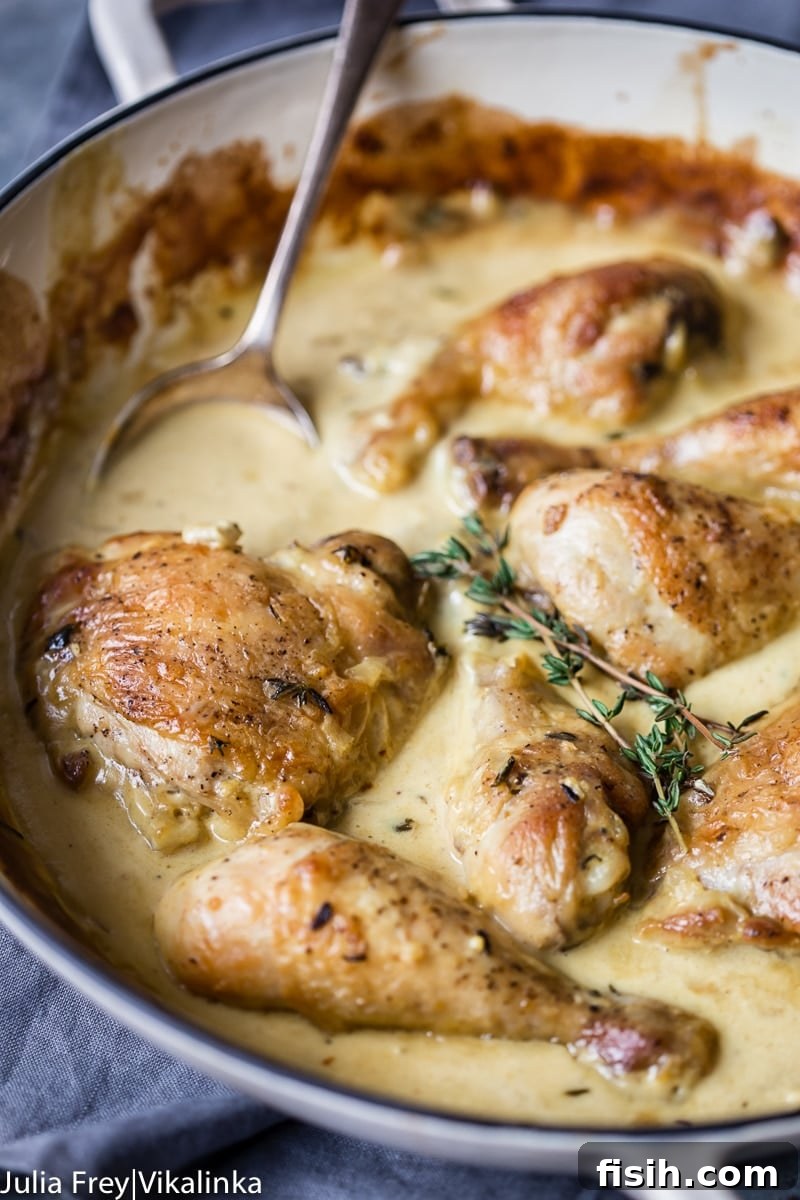
Mastering Chicken in Wine and Mustard Sauce: A French Culinary Delight
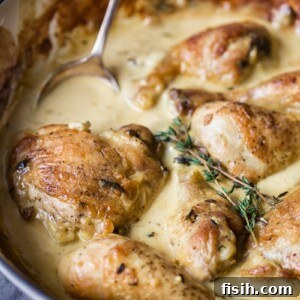
Escape the ordinary and embark on a flavorful journey with this exquisite Chicken in Wine and Mustard Sauce! Experience the succulent tenderness of chicken thighs and legs, perfectly browned and then slowly braised in a luxurious white wine and Dijon mustard sauce, enriched with a delicate touch of cream. This dish promises to elevate your home cooking, bringing a touch of French bistro elegance straight to your table.
If you savor the rich flavors of classic French cuisine, be sure to explore another timeless favorite: Cod with Mustard Sauce.
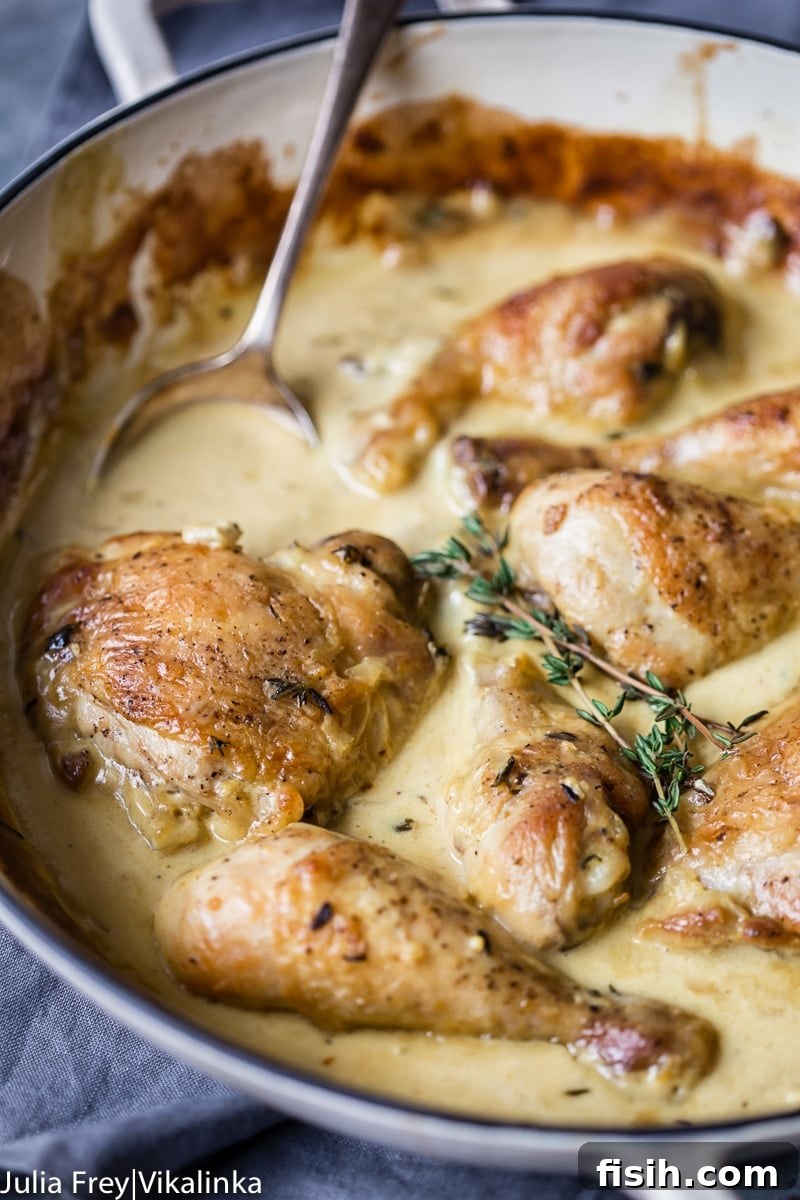
The Allure of Chicken Dijon: A Taste of French Elegance
The inspiration for this magnificent Mustard Chicken recipe blossomed during a memorable visit to a charming French restaurant in picturesque Prague. The moment I tasted their rendition, I knew I had to recreate that sublime experience in my own kitchen. What followed was a delightful culinary quest to capture the essence of that unforgettable dish, resulting in this perfected recipe that I’m thrilled to share with you.
Our journey to culinary perfection begins with chicken pieces expertly seared to achieve a beautiful golden and irresistibly crispy skin. This crucial step locks in flavor and adds a delightful textural contrast. Following the initial sear, the chicken is slowly braised to tender perfection in the oven, immersed in a rich and aromatic This is an affiliate link.Dijon mustard sauce. Just as the cooking time draws to a close, a delicate touch of cream is introduced. This final addition isn’t merely for richness; it gently mellows the piquant notes of the mustard, creating a velvety, luxurious sauce that perfectly complements the tender chicken.
This method ensures not only incredibly tender and moist chicken but also yields a sauce so intensely flavorful and creamy that you’ll want to drizzle it over everything on your plate. Make sure to have plenty of crusty bread on hand to soak up every last drop of this exquisite sauce!
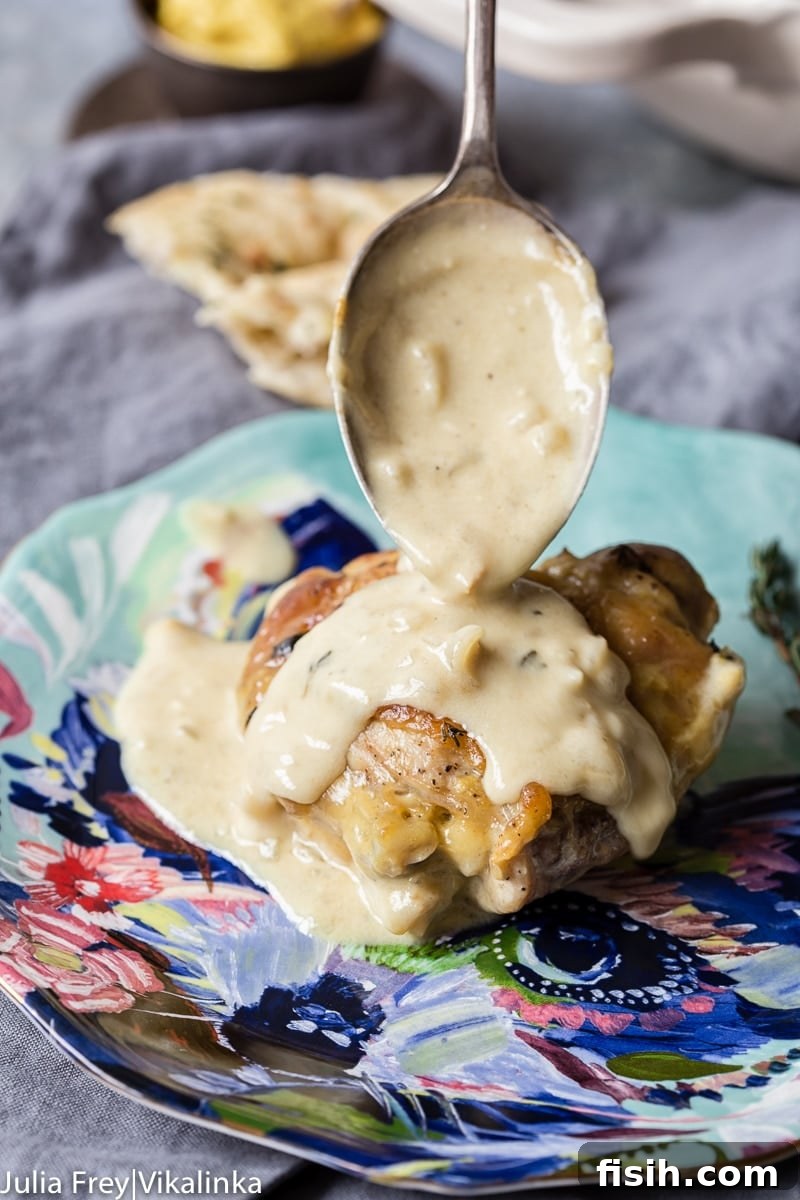
Crafting the Perfect Creamy Mustard Sauce for Chicken
Many might wonder how a sauce, seemingly so simple and without the richness of cheese, can be so profoundly addictive and utterly delicious. The answer, my friends, lies unequivocally in the quality of the mustard. While I am well-acquainted with a myriad of cream-based sauces, often flavored with a symphony of wine and herbs, this particular recipe presented a unique challenge: creating a sauce where the mustard’s essence alone carried the primary flavor. I recall my initial hesitation, questioning whether such a prominent mustard flavor would truly appeal.
Mustard, a surprisingly complex and heady ingredient, is undoubtedly the star of this dish. Its pungent, tangy, and often subtly sweet notes transform beautifully when cooked slowly, melding with the other ingredients to create an extraordinary depth of flavor. It’s not just a condiment here; it’s the very foundation of this incredible sauce. This culinary experiment proved to be a resounding success, demonstrating that a well-chosen mustard can elevate a simple chicken dish to gourmet status.
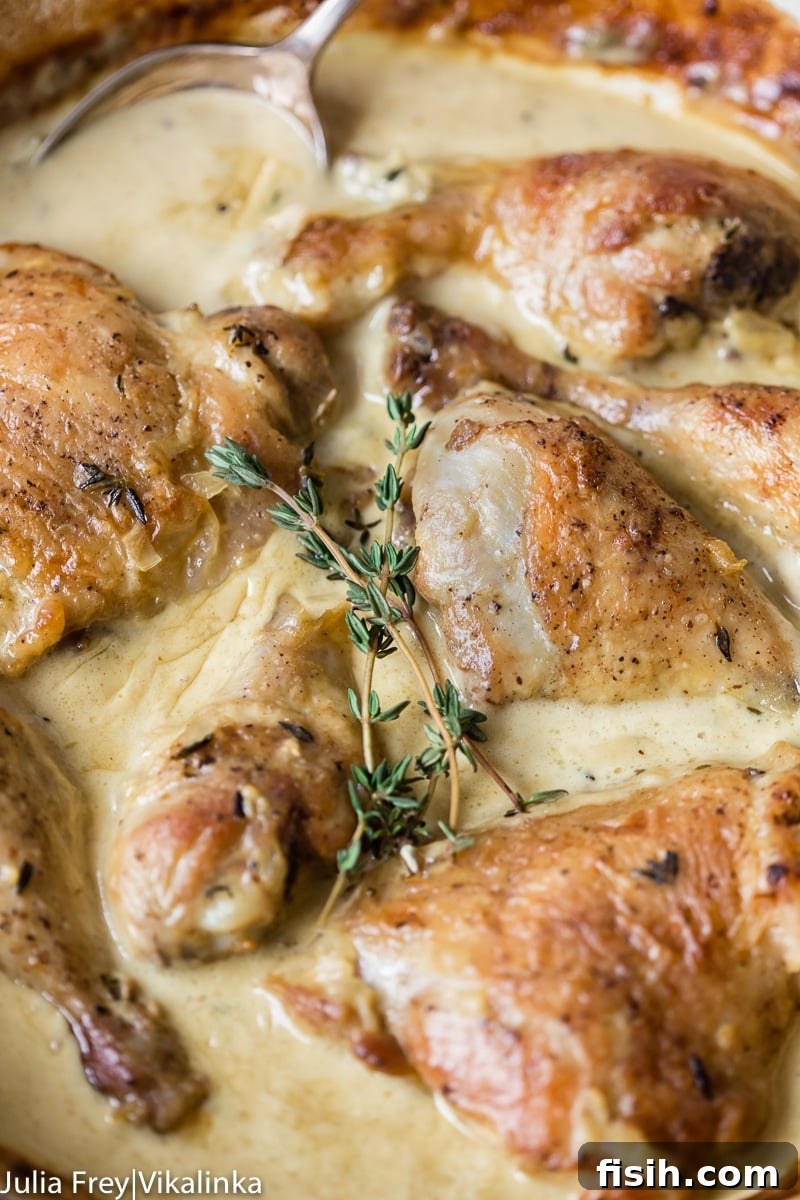
Choosing Your Mustard: The Secret to an Exceptional Dish
Through my extensive kitchen experiments, I’ve gleaned a crucial insight: your enjoyment of the sauce directly correlates with your enjoyment of the raw mustard itself. If a particular mustard doesn’t tantalize your taste buds on its own, it’s highly improbable it will enhance your sauce. Therefore, the cardinal rule is to select a mustard that you genuinely appreciate, and always opt for the finest quality your budget allows. This single choice can dramatically impact the final flavor profile of your dish.
For those new to cooking with mustard as a primary flavor, I recommend beginning with milder varieties to understand their impact before venturing into bolder, more assertive profiles. My personal preference leans towards authentic French Dijon mustard, renowned for its smooth texture and sharp, yet balanced, flavor. However, a good quality This is an affiliate link.wholegrain mustard, with its appealing texture and slightly coarser bite, also performs beautifully in this recipe, adding another layer of complexity. Its rustic charm complements the tender chicken wonderfully. What you absolutely must avoid is American yellow mustard. Its overly sweet and vinegary profile will overpower and ultimately sabotage the delicate balance of this refined French-inspired sauce. Choose wisely, and your palate will thank you.
The Sophistication of White Wine in Mustard Sauce
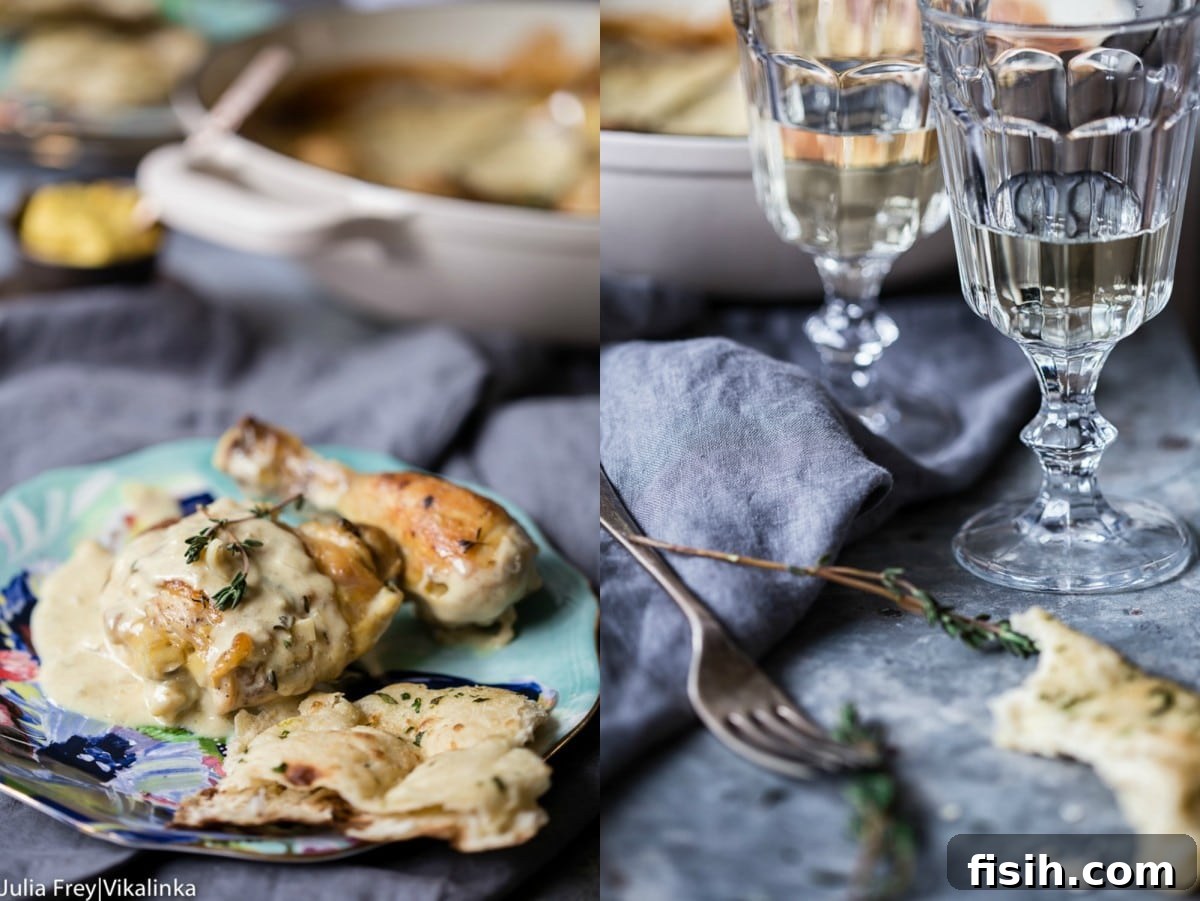
For me, wine stands as an indispensable ingredient in the kitchen, capable of imparting profound flavor with minimal effort. In this particular recipe, white wine plays a pivotal role, adding a critical layer of acidity that expertly balances the richness of the cream sauce. Beyond mere acidity, it contributes a nuanced complexity and depth, elevating the overall taste profile of this creamy mustard sauce to something truly extraordinary. As the wine simmers, its alcohol evaporates, leaving behind only its concentrated essence and aromatic compounds that marry beautifully with the mustard and chicken.
Choosing the right wine is key; opt for a dry white wine like Sauvignon Blanc, Pinot Grigio, or even an unoaked Chardonnay. These varieties will complement the dish without adding unwanted sweetness. If, for any reason, you prefer to omit alcohol from your cooking, a simple and effective substitution is readily available. Replace the specified amount of white wine with an equal quantity of good quality apple juice, then incorporate one tablespoon of white wine vinegar. This combination mimics the necessary acidity and a touch of fruitiness, ensuring your sauce retains its vibrant character and balanced flavor without the alcohol.
The culmination of these carefully selected ingredients and cooking techniques is a sauce that achieves a remarkable creamy texture without ever feeling heavy or bland. Instead, it bursts with a vibrant and exciting flavor that dances on the palate. I can confidently say that if I were ever to be marooned on a desert island, this mustard sauce would undoubtedly secure its place among my top five essential foods for the rest of my days. It’s truly that good.
Dark Meat vs. White Meat: The Best Chicken for Braising
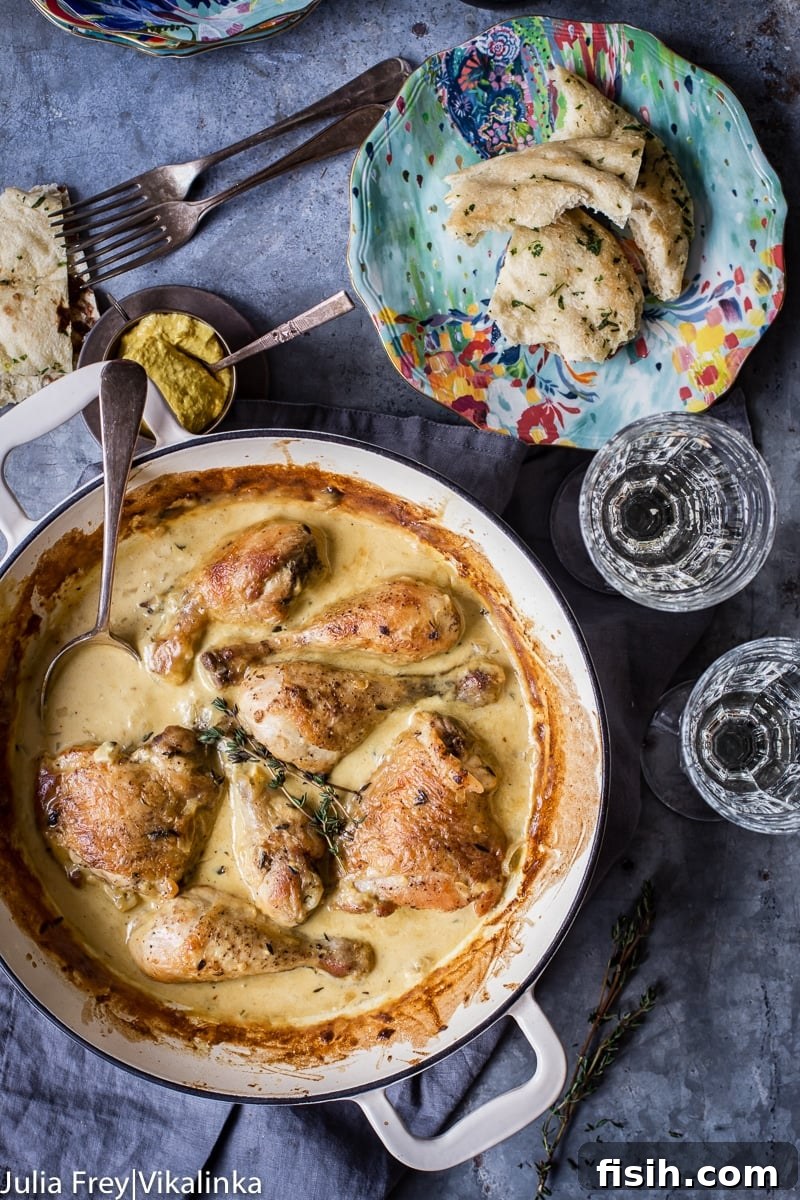
In most of my chicken recipes, I consistently lean towards using chicken thighs and legs, and there are several compelling reasons for this preference. Firstly, dark meat cuts are typically more affordable, offering excellent value without compromising on quality. Secondly, and perhaps more importantly, they are inherently more flavorful and tend to remain significantly juicier throughout the cooking process, especially when braising. My daughter wholeheartedly agrees with this culinary philosophy, a true connoisseur of tender, flavorful dark meat. However, I must admit, my son and husband remain steadfast members of the chicken breast camp—a classic family culinary divide!
I frequently receive inquiries about substituting chicken breasts in my recipes, and my answer is always a qualified yes. While it is certainly possible, it’s crucial to understand that chicken breasts, being leaner, require careful adjustment to the cooking time to prevent them from drying out. They cook faster and can become tough if overdone. For successful substitution, you’ll need to reduce the cooking duration to ensure they remain succulent and moist. For more detailed guidance on how to make this substitution work flawlessly, please refer to the comprehensive tips and notes provided below. With a few simple adjustments, you can still enjoy this incredible sauce with your preferred cut of chicken.
Expert Recipe Tips for Chicken in Wine and Mustard Sauce
- **Adjusting for Chicken Breasts:** If you opt for boneless, skinless chicken breasts, significantly reduce the cooking time by at least 20 minutes. Keep a close eye on them to prevent overcooking, which can lead to dry, tough chicken. You might even consider cutting larger breasts in half horizontally to ensure even cooking and quick absorption of flavor.
- **The Art of Browning:** Whether you choose chicken thighs and legs or breasts, thoroughly browning the chicken pieces until they achieve a rich, golden hue is paramount. Pale and soggy chicken skin is, without exaggeration, one of the gravest culinary missteps! Proper browning not only renders some of the fat, leading to a crisper skin (if left on) but also develops a profound depth of flavor through the Maillard reaction, which is essential for the base of your sauce.
- **Sauce Consistency:** Bear in mind that classic French sauces are often not overtly thick, designed to coat rather than cloy. Our sauce will have a beautiful, elegant fluidity. However, if your preference leans towards a thicker sauce, you can easily achieve this. Simply add 1 tablespoon of all-purpose flour in step 3, stirring it into the shallots and garlic mixture, right before you introduce the wine, mustard, and chicken stock. Cook for a minute or two to cook out the raw flour taste, then proceed with the liquids. This will provide a subtle, yet effective, thickening agent.
What to Serve with Your French Mustard Chicken
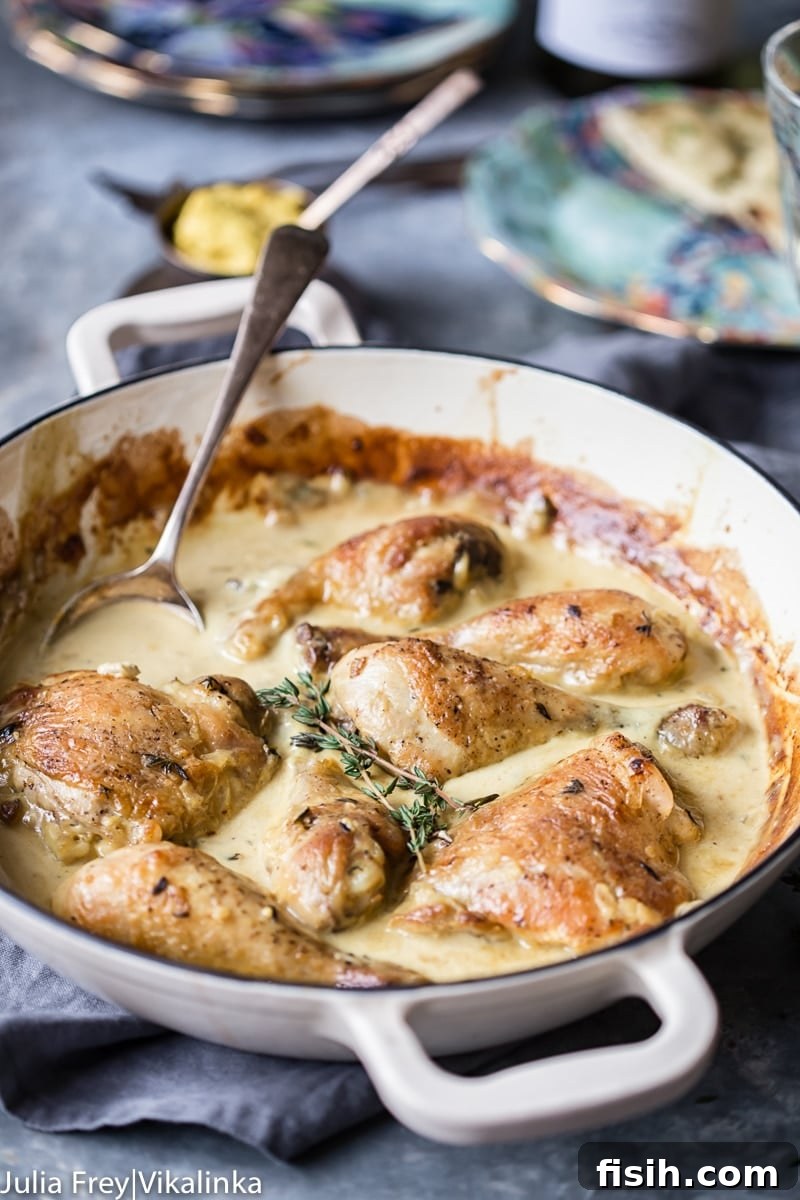
A dish as rich and flavorful as this French mustard chicken demands the perfect accompaniment to capture every drop of its incredible sauce. My go-to choices almost always include a generous portion of delicious, crusty sourdough bread, ideal for mopping up every last bit of that creamy goodness. Complementing this, a heap of fluffy mashed potatoes, perhaps infused with garlic for an extra layer of flavor, provides a comforting and absorbent base. For those who prefer a crisper texture, perfectly roasted potatoes are also an outstanding option, offering a delightful contrast to the tender chicken.
To round out the meal and add a touch of freshness, I also love incorporating a tasty roasted vegetable. The beauty of this dish is its versatility; almost any roasted vegetable will pair wonderfully. Consider vibrant Brussels sprouts and carrots for a touch of sweetness and earthiness, or delicate Tenderstem broccoli, lightly roasted with lemon and garlic, to add a bright, green note. These additions not only enhance the nutritional value but also complete the meal, making it truly balanced and satisfying for any weeknight dinner or special occasion.
Storage and Leftovers: Chicken in Wine and Mustard Sauce
One of the many advantages of this delectable chicken dish is how well it holds up as leftovers. You can comfortably store any remaining portions in the refrigerator for up to 5 days. For optimal freshness and to prevent any odors from permeating other foods, ensure it’s kept in an This is an affiliate link.airtight container.
While reheating in a microwave is certainly an option for convenience, I personally find that the stovetop method yields superior results, preserving the texture of the chicken and the integrity of the sauce. To reheat on the stovetop, transfer the chicken and sauce to a pan and gently warm over medium-low heat. You might notice the sauce has thickened slightly in the fridge; if so, simply add a splash of water or a little extra chicken stock to restore it to its desired consistency. Cover the pan with a lid or foil to prevent the chicken from drying out, and allow it to heat through for approximately 15 minutes, or until it is piping hot throughout. This gentle reheating ensures your leftovers taste almost as good as the freshly made dish, making it perfect for meal prep!
Explore More French Chicken Recipes
If you’ve fallen in love with the flavors of this French-inspired chicken, I encourage you to delve deeper into the world of classic French poultry dishes with these other fantastic recipes:
- Hearty Chicken Casserole Recipe
- Bright and Aromatic Chicken Provencal
- Coq au Vin: The Ultimate One-Pot Dinner
- French Chicken Casserole a la Normande
- Flavorful Chicken with 40 Cloves of Garlic
Chicken in Wine and Mustard Sauce
Pin
Ingredients
- 1 tbsp This is an affiliate link.olive oil
- 1kg/2 lbs chicken legs and thighs
- salt and pepper
- 2 shallots, diced
- 2 garlic cloves
- 3-4 thyme sprigs
- 3 tbsp This is an affiliate link.dijon mustard
- 1/2 cup /125ml white wine
- 1 cup /250ml chicken stock
- 1/2 cup /125ml light cream/single cream, 18% fat content
Instructions
-
Preheat the oven to 350F/180C. This ensures the oven is at the correct temperature for even cooking once the chicken is transferred.
-
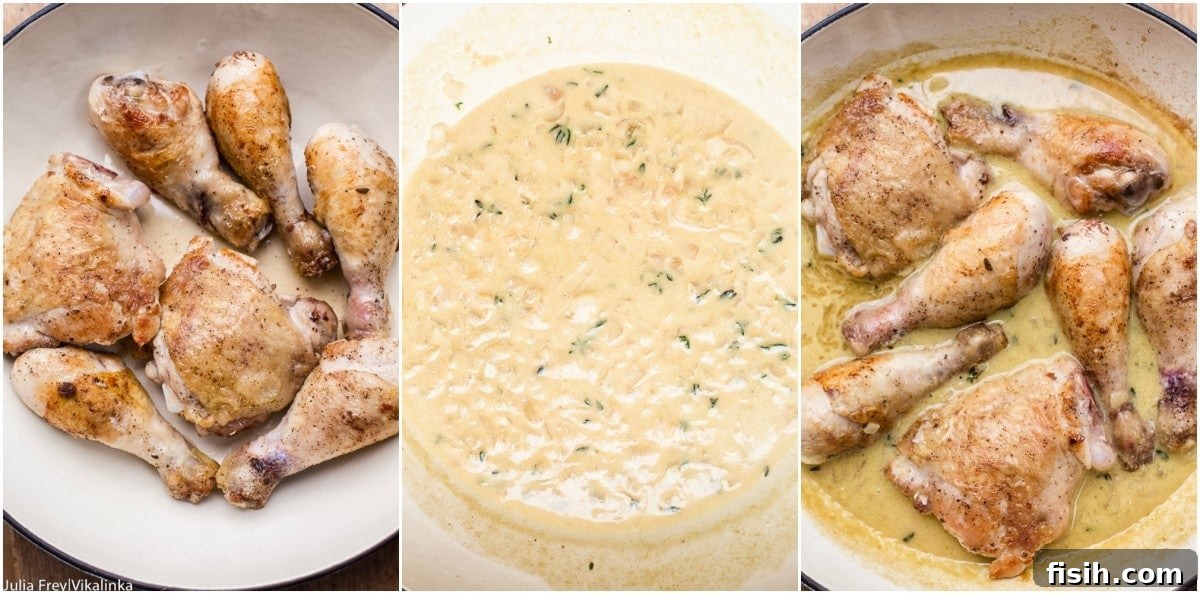
In a large, oven-safe frying pan (or Dutch oven) with a lid, heat one tablespoon of olive oil over medium-high heat. Season the chicken pieces (legs and thighs) generously with salt and pepper. Carefully place them in the hot pan, skin-side down first if applicable, and brown thoroughly on each side until golden and crispy. The goal here is color and flavor development, not to cook them through. Once beautifully browned, remove the chicken to a plate and set aside.
-
Reduce the heat to low. To the same pan (don’t clean it, those browned bits are flavor!), add the diced shallots, minced garlic, and fresh thyme leaves. Sauté gently for about 5 minutes, stirring occasionally, until the shallots are softened and translucent, ensuring they do not brown. This slow cooking extracts maximum sweetness and aroma. Pour in the white wine, Dijon mustard, and chicken stock. Stir vigorously, scraping up any delicious browned bits from the bottom of the pan, and bring the mixture to a gentle boil. Once boiling, return the browned chicken pieces to the pan, nestling them into the sauce. Spoon some of the flavorful sauce over each piece of chicken.
-
Transfer the pan to the preheated oven, uncovered, and braise for 45 minutes. Leaving it uncovered allows for some reduction of the sauce and helps develop a richer flavor.
-
Carefully remove the pan from the oven. Stir the light cream (18% fat content) into the sauce, mixing it thoroughly until well combined and smooth. Once again, baste the chicken in the creamy sauce to ensure it’s fully coated. Return the pan to the oven for an additional 10 minutes to allow the flavors to meld and the sauce to slightly thicken.
-
Serve your exquisite Chicken in Wine and Mustard Sauce immediately. It pairs beautifully with classic accompaniments such as fluffy rice, creamy mashed potatoes, or your favorite roasted vegetables. Enjoy this comforting and elegant French-inspired meal!
Video
Notes
Nutrition
Nutrition information is automatically calculated, so should only be used as an approximation.
Tried this recipe?Let us know how it was!