
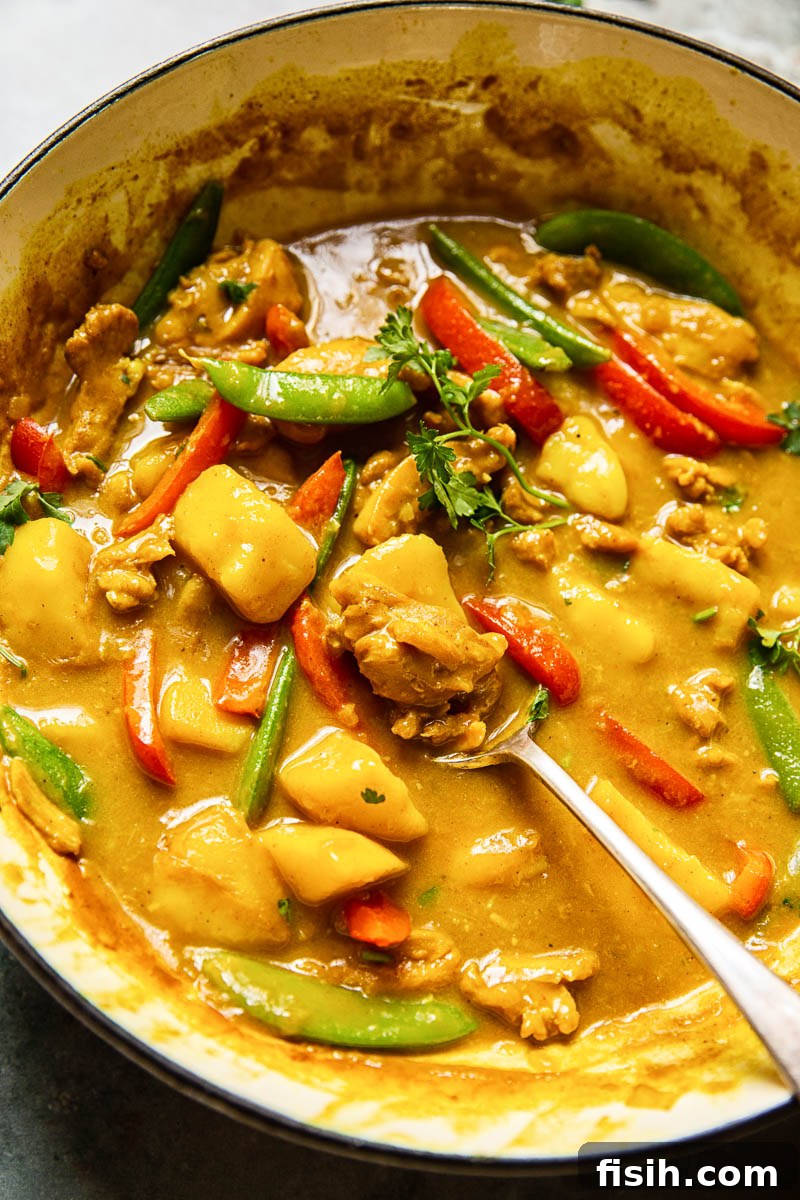
Authentic & Quick Chinese Chicken Curry: Your New Go-To Takeout Alternative
Forget the long waits and questionable ingredients of your usual takeout! This homemade Chinese Chicken Curry recipe is incredibly quick to prepare, bursting with authentic flavors, and remarkably satisfying. In just 35 minutes, you can enjoy a healthier, more delicious version of a beloved classic, making it the ultimate comfort food for any night of the week.
For those seeking more wholesome and delightful Chinese-inspired dishes, be sure to explore our Speedy Sesame Shrimp Stir Fry – another fantastic recipe that brings restaurant-quality taste right into your kitchen.
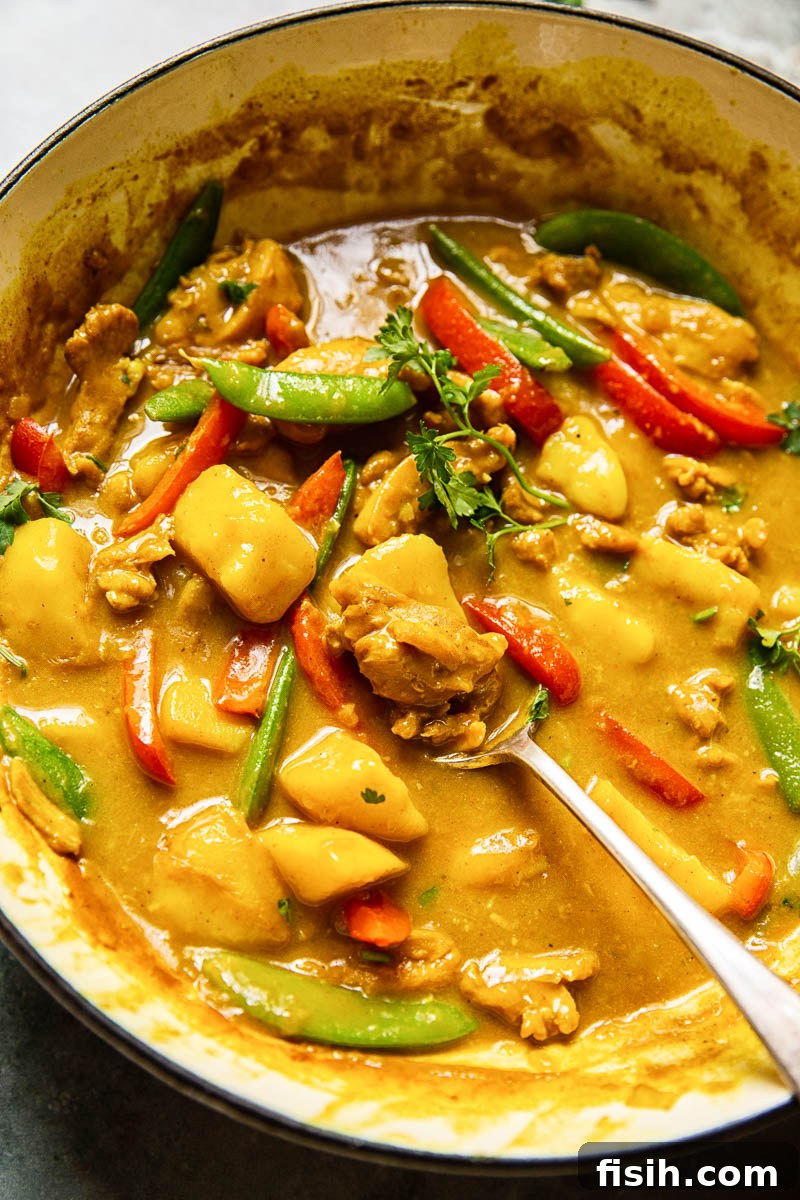
We all have those days – moments when the sheer thought of cooking after a long day feels like an insurmountable task. In those instances, the siren call of takeout, or “takeaway” as it’s often known here in Britain, becomes almost irresistible. There’s an undeniable ease and a sense of treating oneself that comes with ordering in, and frankly, both of those feelings are perfectly valid and wonderful.
However, the convenience often comes with a significant trade-off: the escalating cost and the typically high caloric content. For anyone striving to maintain a balanced lifestyle, these two factors can be hard to reconcile. But what if you could recreate that comforting takeout experience at home, complete with rich flavors and satisfying textures, without the hefty price tag or the calorie overload?
This is precisely where our homemade Chinese Chicken Curry recipe becomes your culinary hero. In our household, whenever the idea of takeout surfaces, Chinese food is consistently the top request from my children. It’s a bit of a mystery why, given how rarely we actually indulge! My personal experience with many Westernized Chinese takeout meals often leaves me feeling heavy and sluggish.
My culinary adventures in China, however, offered a completely different perspective. The authentic Chinese cuisine I encountered there was a revelation – built on fresh, wholesome, and nutritious ingredients, a stark contrast to the deep-fried, sugar- and salt-laden dishes often found in many international Chinese restaurants. This recipe aims to bridge that gap, bringing the vibrant, balanced flavors of authentic Chinese cooking directly to your dinner table.
Understanding Chinese Chicken Curry: A Distinct Flavor Profile
For many, the term “curry” immediately conjures images of rich, aromatic Indian dishes. While India is widely considered the birthplace of curry, this versatile dish has been embraced and adapted by countless Asian countries, each infusing it with local ingredients and culinary traditions. China is certainly no exception.
The beauty of “curry” lies in its broad definition: essentially, it refers to any saucy dish flavored by a blend of ground spices. While common spices like turmeric and cumin often make an appearance across various curries, the specific ratios and additional spices create vastly different flavor experiences. This is particularly evident when comparing Chinese chicken curry to its Indian counterparts.
A key differentiator is often the consistency of the sauce. Traditional Chinese curries tend to be a bit lighter and more fluid than many Indian curries, which frequently utilize tomatoes or creamy bases for natural thickening. This often results in a delicate balance of flavors that doesn’t overwhelm the palate, allowing individual ingredients to shine. Of course, the global curry family is vast, with fervent lovers of Thai curries (like our flavorful Yellow Chicken Curry) also attesting to the incredible diversity within this culinary category!
While neither authentic Indian nor traditional Chinese curries typically rely on corn starch for thickening, Western palates often prefer a heartier, thicker sauce. To achieve this desired consistency in my recipe while staying true to the overall flavor profile, I’ve incorporated a touch of corn starch. This ensures a velvety sauce that coats your chicken and vegetables beautifully. For those mindful of carbohydrate intake, xanthan gum can be used as an excellent low-carb alternative for thickening the curry sauce.
The spice blend itself also marks a significant departure. In Chinese curry, the foundation typically involves a more subtle application of curry powder and turmeric, which serve as prominent anchor flavors in Indian curries. Instead, Chinese versions often highlight a complex interplay of spices like coriander, star anise, cinnamon, and cloves, frequently found in Chinese Five-Spice powder, alongside the savory depth of soy sauce. This creates a uniquely aromatic and savory profile that is distinctly Chinese.
Choosing Your Chicken: Breasts, Thighs, and Beyond
For this recipe, I personally prefer using skinless, boneless chicken thighs. They are not only more economical but also deliver a richer, more succulent flavor and tender texture that stands up beautifully to simmering in the curry sauce. Thighs are more forgiving and less prone to drying out, ensuring a consistently juicy result.
However, taste preferences vary greatly, and both skinless, boneless chicken breasts or thighs (with any visible fat trimmed) will yield excellent results. If using chicken breasts, cut them into slightly larger pieces to help them retain moisture. The cooking time might also need a slight adjustment to prevent them from becoming tough. The goal is perfectly tender chicken that soaks up all the incredible flavors of the curry.
Beyond chicken, this versatile curry base can be adapted to other proteins. For an equally delicious and authentic experience, consider substituting the chicken with firm white fish, succulent shrimp, or even hearty tofu for a vegetarian twist. Simply adjust cooking times accordingly to ensure your chosen protein is cooked through but not overdone.
The Best Vegetables for Chinese Chicken Curry
Traditionally, Chinese chicken curry often features green peppers and potatoes, along with a variety of other seasonal vegetables. In the popular British takeaway versions, you’ll almost always find the addition of vibrant green peas, which add a touch of sweetness and color.
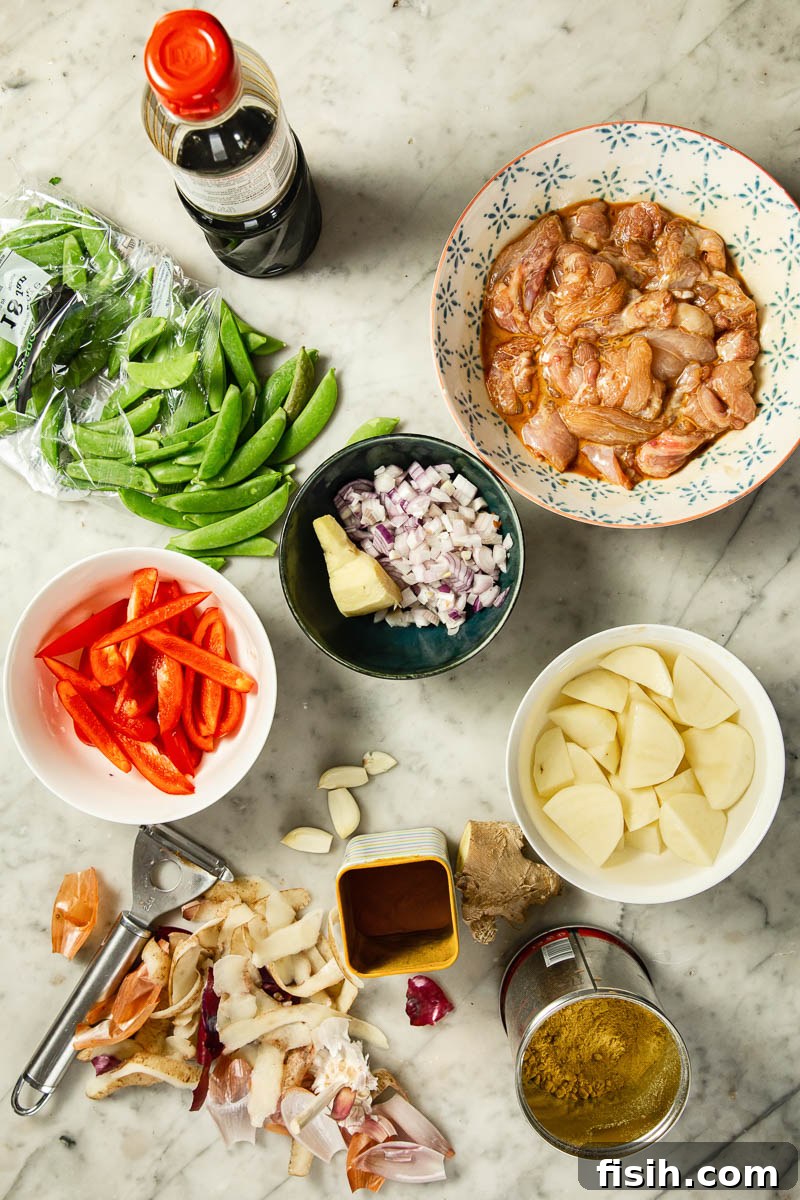
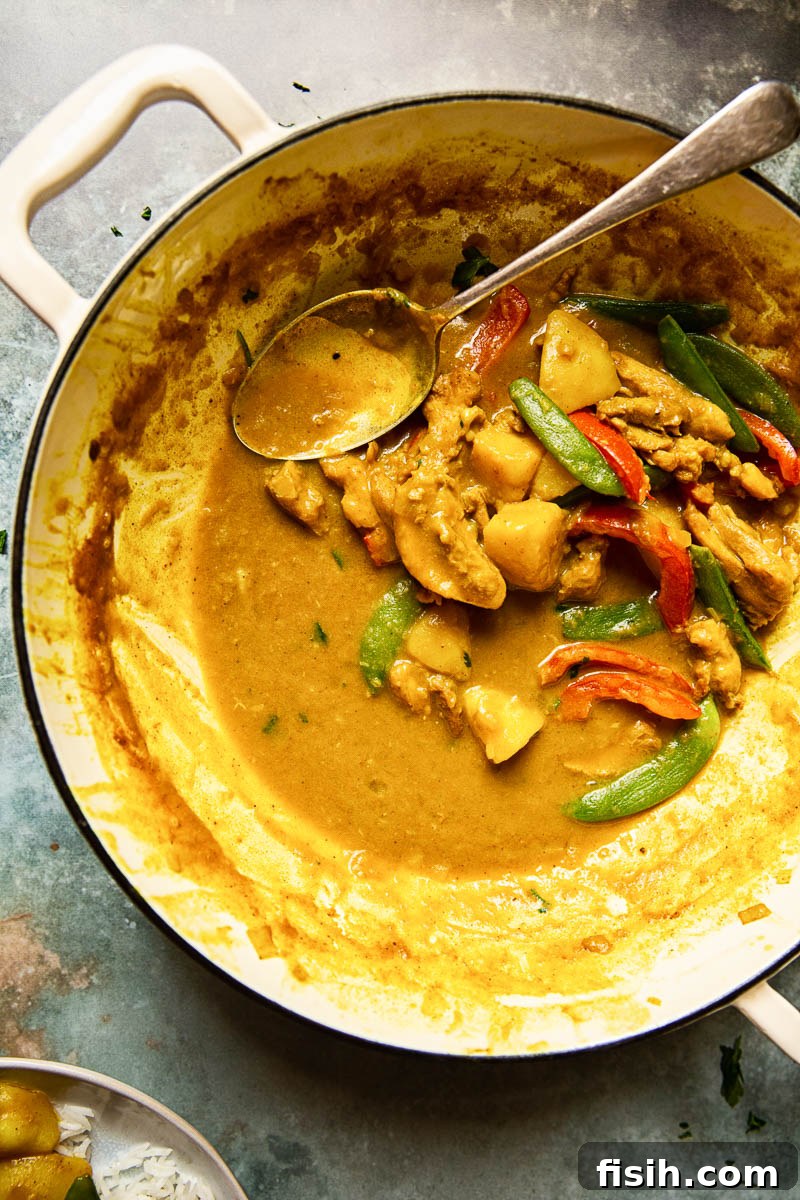
For my recipe, beyond the essential aromatic base of onions, garlic, and ginger, I’ve chosen to include sweet red peppers for their color and mild flavor, crunchy sugar snap peas for a delightful textural contrast, and hearty potatoes for substance and to help naturally thicken the sauce as they cook down. Waxy potatoes, like Charlotte or red potatoes, are ideal as they tend to hold their shape better during simmering.
One of the true joys of cooking curry, however, is its incredible flexibility. This dish is perfect for a freestyle approach, allowing you to use whatever fresh vegetables you have on hand. Feel free to incorporate carrots, broccoli florets, mushrooms, bamboo shoots, or even leafy greens like spinach or bok choy. The key is to add vegetables at appropriate stages to ensure they are cooked to your desired tenderness without becoming mushy.
A video showcasing the preparation of this delicious Chinese Chicken Curry would go here. For example:
You can find a video on making chicken souvlaki on Vikalinka.
Recipe Tips for Perfection
- **Potato Choice:** Avoid cutting your potatoes too small, as they can disintegrate into the sauce. Waxy potato varieties, such as Charlotte or red potatoes, are ideal for holding their shape. If you only have floury potatoes (like Maris Piper or Russet), embrace their tendency to break down slightly; they will naturally contribute to a thicker, creamier sauce.
- **Chicken Variation:** Both skinless, boneless chicken thighs and breasts work well. Thighs are often preferred for their richer flavor and juiciness, and they are generally more budget-friendly.
- **Alternative Proteins:** For a delightful variation, substitute chicken with shrimp, fish, or even firm tofu to create a fantastic seafood or vegetarian curry. Adjust cooking times as needed.
- **Garlic Care:** When adding garlic with the onions, be very careful not to burn it. Burnt garlic quickly turns bitter, and that unpleasant taste can easily permeate and ruin the entire dish. Sauté it for just a few seconds until fragrant.
- **Taste and Adjust:** Always taste your curry before serving. Season with a pinch of salt if needed, and feel free to add more spices like chili flakes for extra heat or a touch of sugar for balance, according to your preference.
Serving Suggestions for Your Chinese Chicken Curry
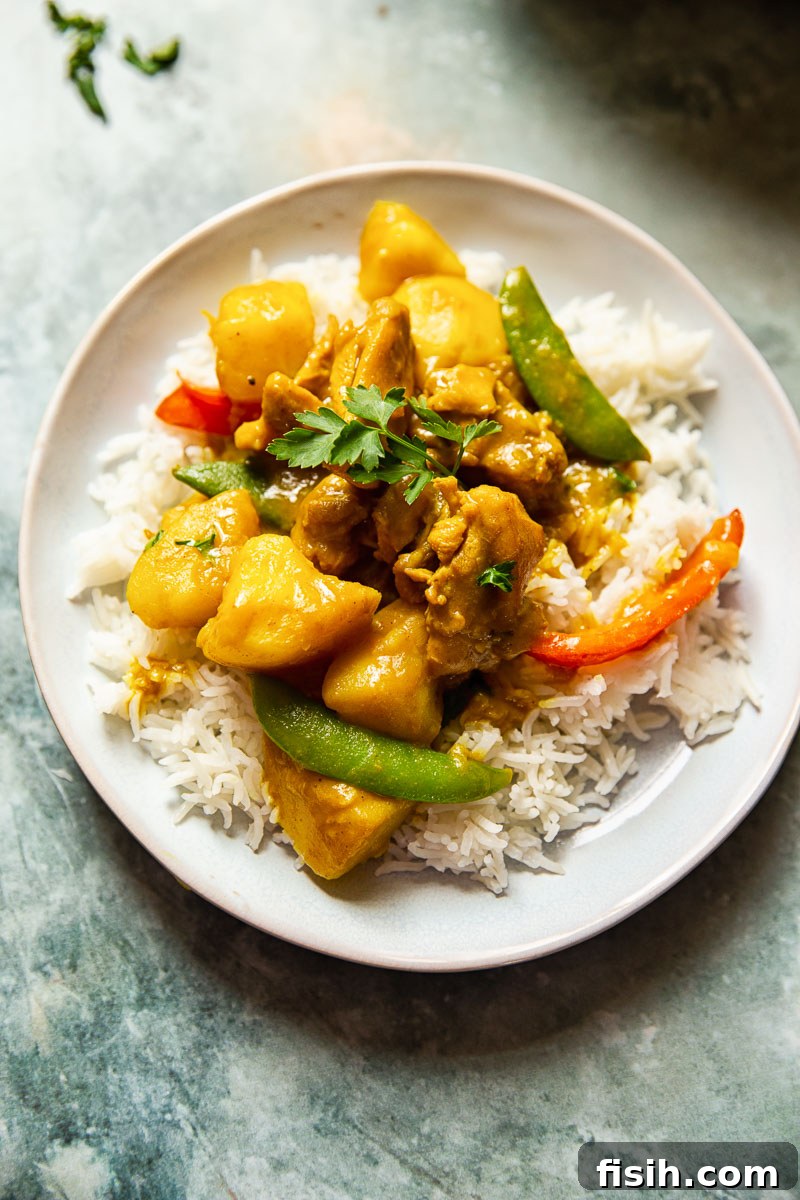
This Chinese Chicken Curry is absolutely phenomenal served simply over perfectly steamed white rice, allowing the vibrant flavors of the curry to take center stage. However, if you’re a noodle enthusiast, who am I to dissuade you? A bed of soft egg noodles or rice vermicelli would also make a delightful pairing, soaking up every last drop of that savory sauce.
Personally, I believe the accompaniment deserves as much attention as the main dish. Since rice is such an integral part of this meal, I love to give it a bit of flair. My absolute favorite pairing with this Chinese chicken curry is aromatic coconut rice. It’s incredibly easy to prepare, whether you use an Instant Pot or a traditional rice cooker, and its subtle sweetness perfectly complements the savory depth of the curry. Garnish with fresh chopped cilantro and sliced green onions for a burst of freshness and color.
Storage and Leftovers: Enjoying Your Curry Later
One of the many advantages of this Chinese Chicken Curry recipe is how wonderfully it handles storage. This curry freezes exceptionally well and reheats beautifully, making it an ideal candidate for meal prepping. Feel free to double the recipe, enjoy half now, and freeze the other half for those evenings when cooking truly feels impossible. Having a homemade, delicious meal ready to go is a game-changer!
To reheat, you can use either a microwave or a stovetop. If using a microwave, heat in intervals, stirring occasionally, until thoroughly warmed through. On the stovetop, warm over medium-high heat, stirring frequently. If the sauce appears a bit too thick after reheating, simply add a splash of water or chicken stock to achieve your desired consistency.
More Delicious Curry Recipes to Explore
- Butter Chicken Curry
- Thai Red Curry with Shrimp and Snow Peas
- Chickpea and Butternut Squash Curry
- Chicken Katsu Curry
Chinese Chicken Curry
Julia Frey of Vikalinka
10 mins
25 mins
35 mins
4
Equipment
-
Mixing bowls
-
Wok
Ingredients
- 4 skinless, boneless chicken thighs, cut in bite sized pieces
- 1 tsp soy sauce
- 2 tsp corn starch
- 1 tbsp vegetable oil
- 1 onion, chopped
- 1 tbsp grated ginger
- 2-3 cloves garlic, minced
- 1 tbsp curry powder
- 1 tsp turmeric
- 1/2 tsp Chinese 5 spice powder
- 400ml / 1½ cup chicken stock
- 2 potatoes, medium, peeled and cut into chunks
- 1 red pepper, sliced
- 150g / 1 cup sugar snap peas
- salt to taste
- chopped cilantro/coriander for serving
- sliced green onions for serving
Instructions
-
In a medium bowl, combine the soy sauce with the corn starch. Add the chicken pieces and toss to coat evenly. Set aside to marinate while you prepare the vegetables.
-
Prepare all your vegetables: chop the onion, peel and grate the ginger, peel and cut the potatoes into medium chunks, and mince the garlic. This mise en place ensures a smooth cooking process.
-
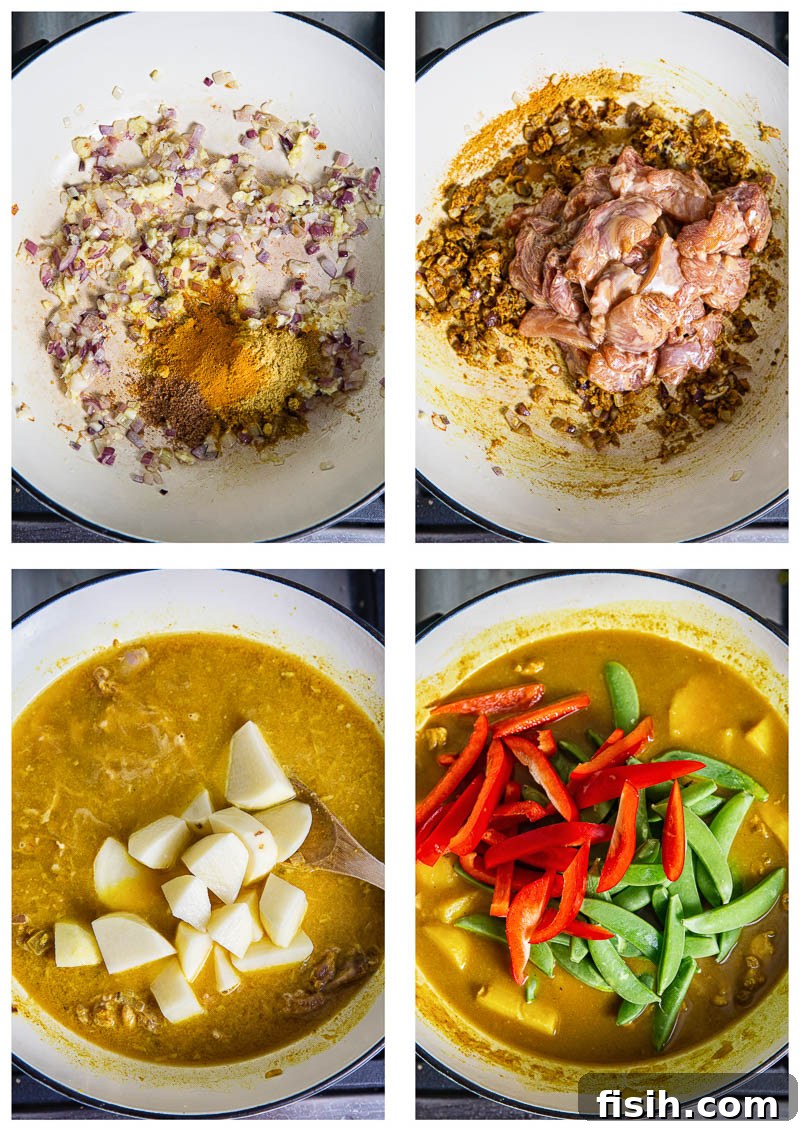
Heat 1 tablespoon of vegetable oil in a deep frying pan or a wok over medium heat. Add the chopped onions and grated ginger and cook for about 5 minutes until softened and fragrant. Then, add the minced garlic and cook for an additional 30 seconds, being careful not to burn it (burnt garlic can taste bitter).
-
Stir in the curry powder, turmeric, and Chinese 5 spice powder. Cook for another minute, stirring constantly, until the spices are fragrant. Add the marinated chicken along with any remaining marinade and cook for a few minutes, stirring, until the chicken pieces are sealed and lightly browned on the outside, but not fully cooked through.
-
Pour in the chicken stock and deglaze the pan by scraping any flavorful bits stuck to the bottom with a wooden spatula. Add the potato chunks, bring the mixture to a boil, then reduce the heat to a simmer. Let it cook uncovered for 15 minutes, allowing the potatoes to soften and the flavors to meld.
-
Finally, add the sliced red pepper and sugar snap peas. Continue to cook for another 5 minutes, or until the vegetables are tender-crisp. Taste the curry and add a pinch of salt if necessary. Serve hot over steamed white or brown rice, garnished generously with fresh chopped cilantro and sliced green onions.
Video
A video tutorial for this recipe could be embedded here. For demonstration, here’s a placeholder:
Watch how to make delicious Chicken Souvlaki here!
Notes
- If potatoes are cut too small, they may fall apart during cooking. Waxy potato varieties are more likely to retain their shape than floury types.
- Either skinless, boneless chicken breasts or thighs can be used. Thighs often provide more flavor and are typically more affordable.
- For extra heat, add a pinch of chili flakes or a dash of hot sauce to the curry.
Nutrition
Carbohydrates: 30g |
Protein: 29g |
Fat: 9g |
Saturated Fat: 4g |
Cholesterol: 110mg |
Sodium: 343mg |
Potassium: 1037mg |
Fiber: 5g |
Sugar: 5g |
Vitamin A: 1380IU |
Vitamin C: 75.2mg |
Calcium: 81mg |
Iron: 6.4mg
Nutrition information is automatically calculated and is an approximation based on the ingredients and serving size provided. Actual values may vary.
Tried this recipe?
Let us know how it was!