
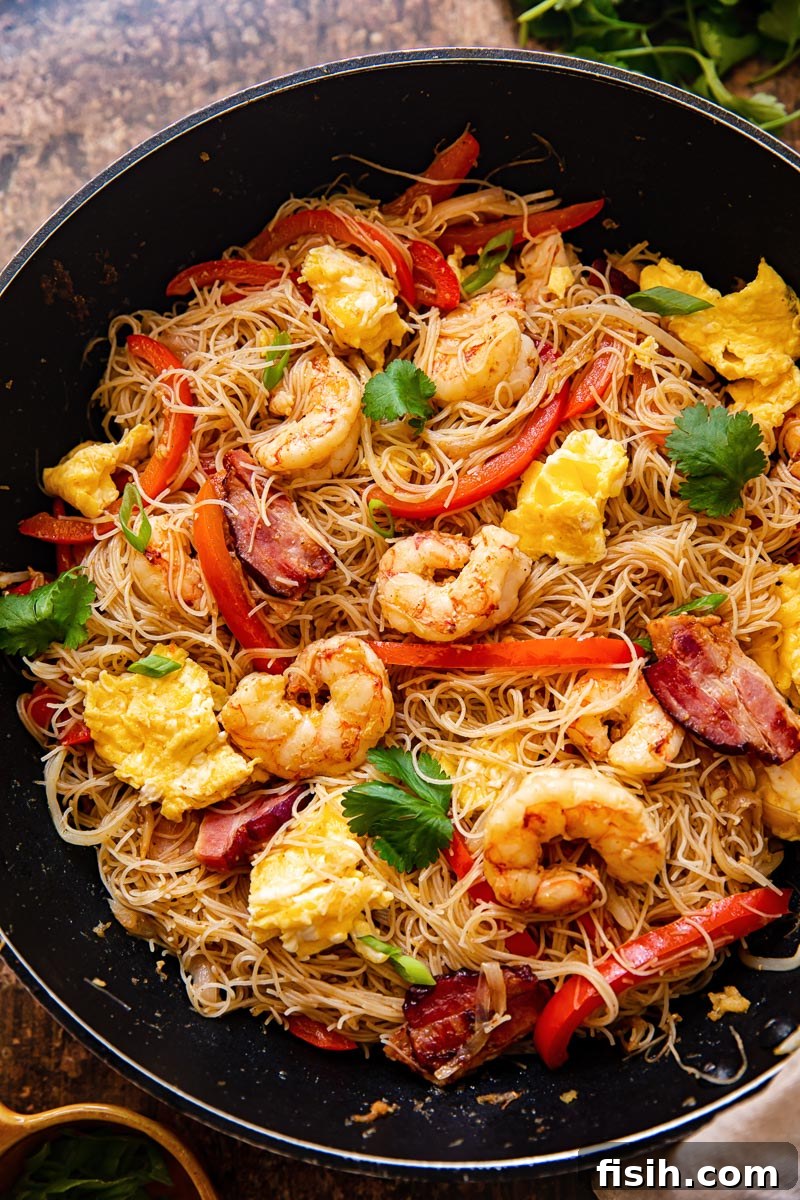
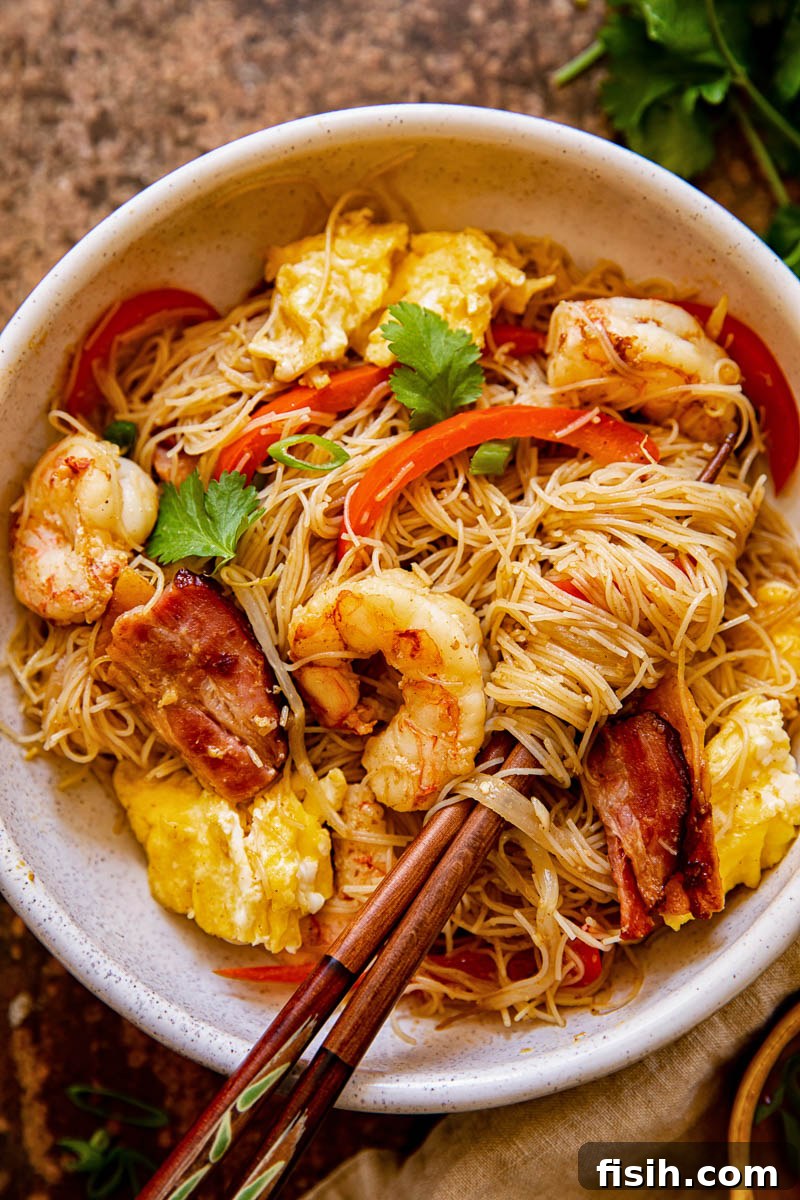
Embark on a culinary adventure with this vibrant Singapore Noodles recipe, a harmonious blend of tender rice vermicelli, succulent prawns, savory pork, fluffy eggs, and crisp vegetables, all brought to life by the exotic warmth of curry powder. This dish promises an explosion of flavors that will transport your taste buds straight to the bustling streets of Asia.
If these exciting flavors intrigue you, be sure to explore our equally delightful and simple recipe for Shrimp Chow Mein, another classic that’s quick to prepare and incredibly satisfying.
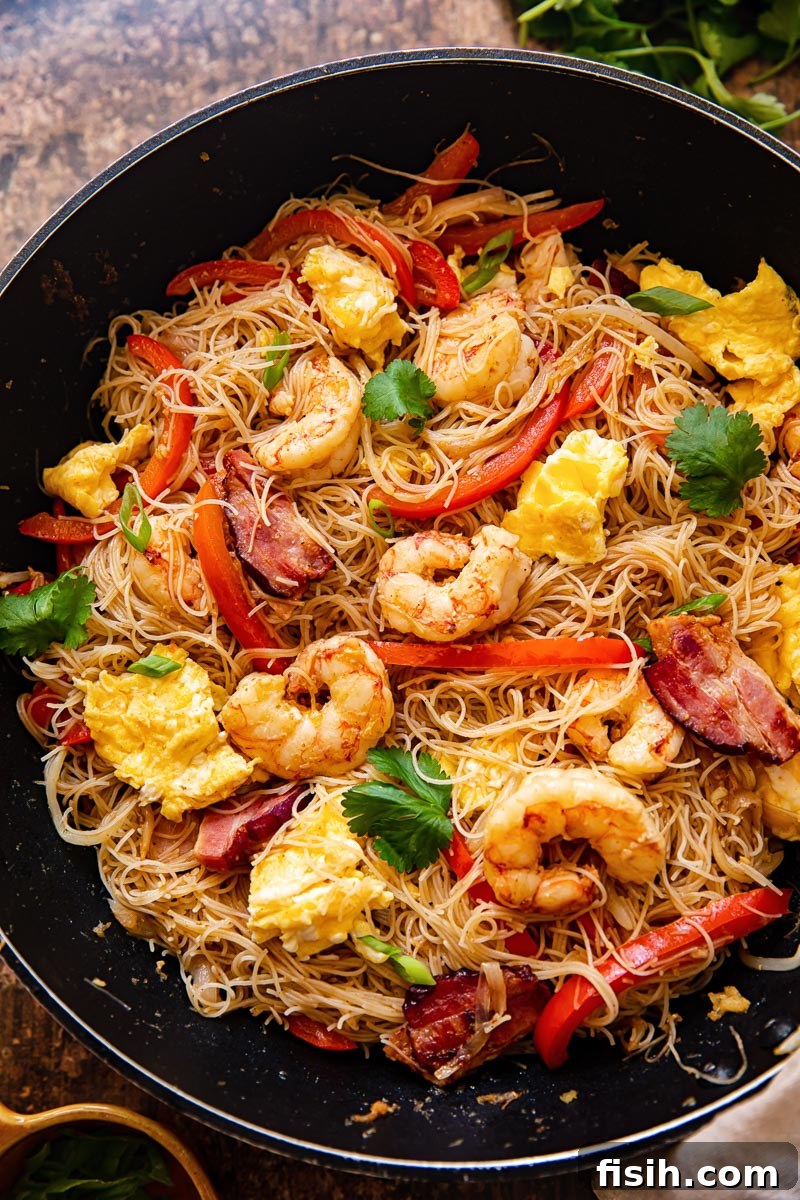
Discovering the Magic of Singapore Noodles: A Takeout Classic at Home
For those unfamiliar with Singapore Noodles, prepare to meet your new favorite Chinese takeout dish! This culinary gem is renowned for its delightful, full-on flavor profile while remaining surprisingly light and satisfying. It’s a versatile stir-fry that brings together a medley of ingredients, all coated in a signature curry-infused sauce that makes it truly unforgettable.
The Intriguing Origin: Not Quite from Singapore
Despite its evocative name, Singapore Noodles don’t actually hail from Singapore. This might come as a surprise, but the popular theory suggests this iconic dish was born in the bustling kitchens of Hong Kong. Legend has it that a clever Hong Kong chef created the dish and, perhaps to add an exotic allure and appeal to international palates, bestowed upon his stir-fried creation the captivating name of “Singapore Noodles.” It’s a testament to how culinary names can transcend geographical boundaries and become synonymous with a particular style or flavor.
The Distinctive Flavor: A Curry Twist in Chinese Cuisine
The most distinctive feature, and arguably the secret to its widespread appeal, is the inclusion of curry powder in the sauce. While curry might typically be associated with Indian or Southeast Asian cuisine, its presence in a “Chinese” noodle dish is a fascinating historical footnote. This unique fusion can be traced back to the British colonial era, which saw both Hong Kong and India under British rule. This facilitated the abundant supply and exchange of Indian spices, including curry powder, into Hong Kong’s culinary landscape, leading to innovative dishes like Singapore Noodles.
Singapore Noodles aren’t an isolated example of this intriguing spice integration. Another popular Chinese dish that showcases the use of curry powder is the Chinese Chicken Curry, an absolute staple found in nearly every Chinese restaurant across the UK. Our homemade version of this curry is a reader favorite, celebrated for its authentic taste and incredible ease of preparation – a perfect introduction to these unique flavor pairings.
Key Ingredients for Authentic Singapore Noodles
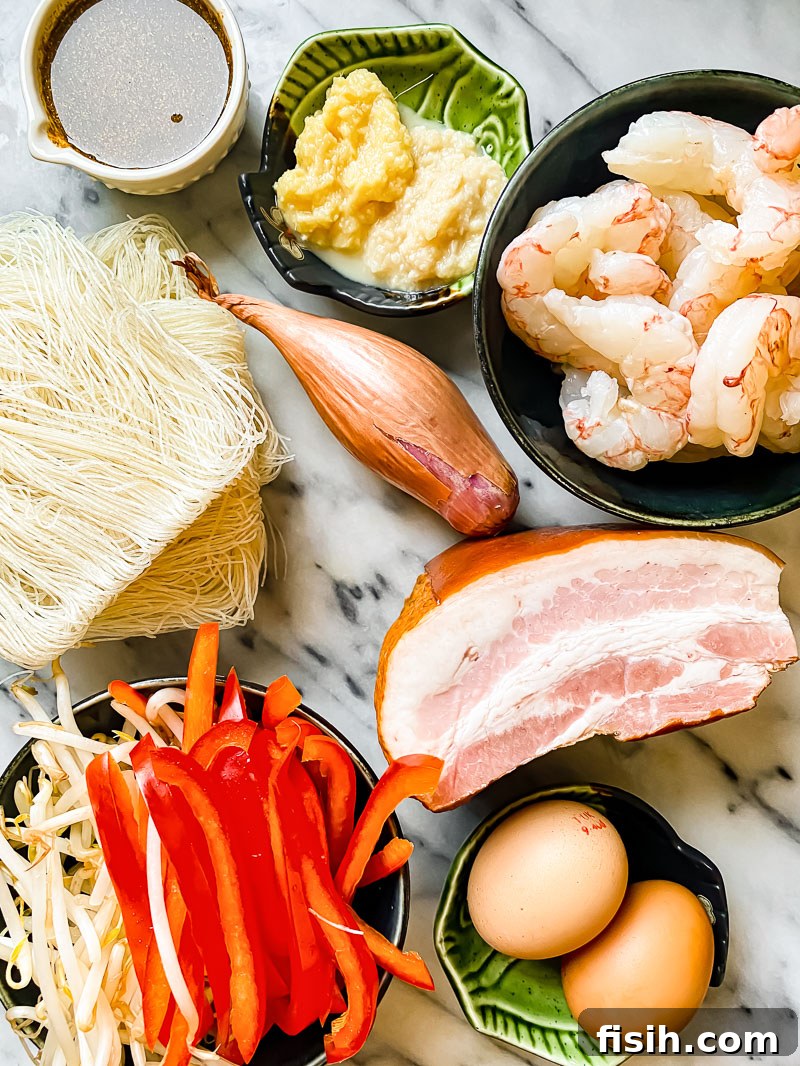
Beyond the vibrant curry powder, the choice of noodles is paramount to the authentic character of Singapore Noodles. This dish traditionally features thin rice noodles, often referred to as rice vermicelli. These delicate strands boast a subtle chewiness and absorb flavors beautifully. Their fine texture means they require only a quick soak in hot water, rather than boiling, making them incredibly convenient and quick to prepare.
Rice vermicelli are a common and beloved ingredient across Southeast Asia, which further supports the theory of a Hong Kong chef drawing inspiration from regional ingredients. For another example of these versatile noodles in action, check out our rendition of the popular Indonesian Mee Goreng (Fried Noodles), where they shine just as brightly.
While the noodles and curry powder are non-negotiable, the remaining ingredients offer room for customization based on preference and availability. Here’s a breakdown of the components in our delicious version, along with potential substitutions to fit your dietary needs or pantry staples:
Choosing Your Proteins: Prawns and Pork Perfection
We love using a combination of plump, juicy prawns (or shrimp) and savory pork belly in our Singapore Noodles. Traditionally, barbecued pork, known as Char Siu, is a popular choice. However, for most home cooks outside of Chinese households, Char Siu isn’t typically something you’d have readily available. And honestly, who has time to make it from scratch every time?
That’s why our recipe cleverly uses cured pork belly – essentially a high-quality slab of bacon. This provides a fantastic depth of flavor and a satisfying texture. If pork belly isn’t your preferred choice, feel free to substitute with regular bacon, lean pork loin steaks, or even chicken breast or thighs sliced thinly. For a truly healthy version, omitting the pork belly altogether significantly reduces the calorie count. And for those seeking a plant-based option, pressed tofu or tempeh makes an excellent vegetarian or vegan substitute, absorbing all the wonderful curry flavors.
The Essential Egg Element
Scrambled eggs are another nearly indispensable ingredient in most Singapore Noodles recipes. The eggs are cooked separately, scrambled into large, fluffy pieces, and then gently folded into the noodles at the very end. This technique is remarkably similar to how eggs are incorporated into classic Fried Rice dishes, adding richness, texture, and a touch of protein to every bite.
Vibrant Vegetables: Color, Crunch, and Nutrients
Our recipe features a colorful combination of sliced red peppers and crisp bean sprouts. These not only add wonderful flavor and texture but also a dose of essential nutrients. However, the beauty of a stir-fry lies in its adaptability. Feel free to customize your vegetable medley with whatever you have on hand or what’s in season. Other fantastic options include thinly sliced cabbage, tender bok choy, vibrant green beans, florets of broccoli, snow peas, or even carrots. The goal is to choose vegetables that cook relatively quickly and add a pleasant crunch to the dish.
Expert Tips for Perfect Singapore Noodles
- Mise en Place is Key: This recipe involves several components that cook very quickly. To ensure a smooth and successful stir-fry, it is highly recommended to prepare all your ingredients beforehand. Chop all your vegetables, slice your meats, mince your garlic and ginger, and measure out your sauce components before you even turn on the heat. This will prevent you from feeling rushed or overwhelmed during the cooking process.
- Pre-Mix Your Sauce: Take another step to streamline your cooking by measuring and mixing all the sauce ingredients (Shaoxing wine, soy sauce, curry powder, white pepper, salt, and honey) in a small bowl ahead of time. This way, it’s ready to pour when the moment is right.
- Noodle Choice Matters: While variations exist, two things are consistent across authentic Singapore Noodles: the use of thin rice vermicelli for its delicate texture, and a hot curry powder to impart that characteristic spicy kick. Don’t shy away from the heat!
- Thinly Slice Meats: If using pork, chicken, or any other meat, ensure it is sliced very thinly. This not only contributes to the authentic texture of the dish but also guarantees that your meat will cook perfectly within a couple of minutes in a hot wok, preventing it from drying out.
- Scramble Eggs in Large Pieces: When scrambling your eggs, aim for larger, fluffier pieces rather than a fine scramble. These larger pieces will naturally break down a bit when mixed into the noodles, but starting with them larger prevents them from turning into a mushy texture.
- Garnish for Freshness: Don’t underestimate the power of a good garnish! Finishing your cooked noodles with freshly sliced green onions (scallions) and vibrant cilantro adds a burst of fresh flavor, a hint of aroma, and significant visual appeal.
Serving Suggestions for Your Singapore Noodles
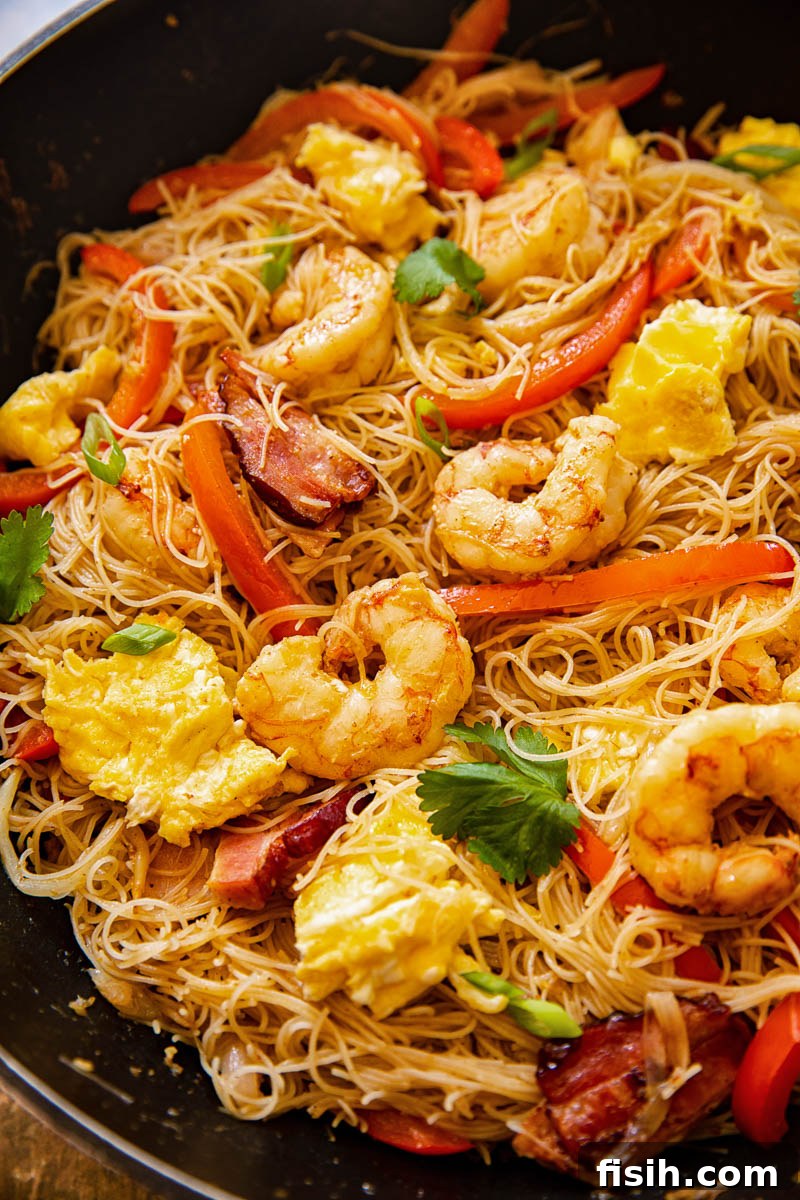
The true brilliance of a stir-fry, and particularly Singapore Noodles, is that it functions as a complete, one-pan meal. It inherently contains all the necessary components for a balanced and flavorful dinner: protein, carbohydrates, and vegetables. However, there are always ways to elevate the experience, tweak the flavors, and add even more exciting textures.
Whenever we serve a stir-fry, a generous sprinkling of chopped green onions (spring onions) is an absolute must. Their mild oniony flavor and crisp texture provide a refreshing contrast to the rich noodles. For an added layer of complexity and a delightful crunch, we often include a scattering of toasted sesame seeds, which impart a subtle nutty sweetness that complements the curry beautifully. You could also serve it alongside a simple cucumber salad dressed with a light vinegar dressing to cut through the richness, or offer some chili garlic sauce on the side for those who enjoy an extra kick of heat.
Storage and Reheating Singapore Noodles
Given that this dish contains prawns and other fresh ingredients, it’s always best to enjoy leftovers promptly. Store any remaining Singapore Noodles in an airtight container in the refrigerator and consume them within 3-4 days to ensure freshness and safety.
While leftovers can certainly be reheated in a microwave, for the best possible texture and flavor, we highly recommend using a wok or a large frying pan over medium heat. To prevent the noodles from drying out and to help them regain their luscious texture, you might want to add a splash of water or a tiny drizzle of vegetable oil to the pan before reheating. Stir-fry gently for 5-7 minutes, until the noodles are thoroughly heated through and once again tender and flavorful.
More Irresistible Asian Stir-Fried Noodles to Explore
- Easy Dan Dan Noodles
- Filipino Noodles with Pork and Shrimp (Pancit Canton)
- Chicken Yaki Udon
- Beef Chow Mein
- Vegan Dan Dan Noodles
★
★
★
★
★
Singapore Noodles
Pin
Equipment
- Wok
Ingredients
- 3 tbsp Chinese cooking wine, or dry sherry
- 4 tbsp dark soy sauce
- 4 tsp hot curry powder
- 1 tsp white pepper or black pepper
- 1 tsp salt
- 1 tsp honey or sugar
- 300g/10oz thin rice noodles vermicelli
- 2 tbsp vegetable oil
- 250g/1/2 lbs thinly sliced cured pork belly or pork loin steaks, or use thickly sliced bacon
- 250g/1/2 lb shrimp/prawns
- 2-3 eggs
- 1/2 onion or 1 shallot
- 3 cloves garlic
- 1 tbsp ginger, grated
- 1 red pepper or green pepper
- 100g/1 cup bean sprouts
- 1 tsp sesame oil, optional
- Green onions and cilantro for garnish
Instructions
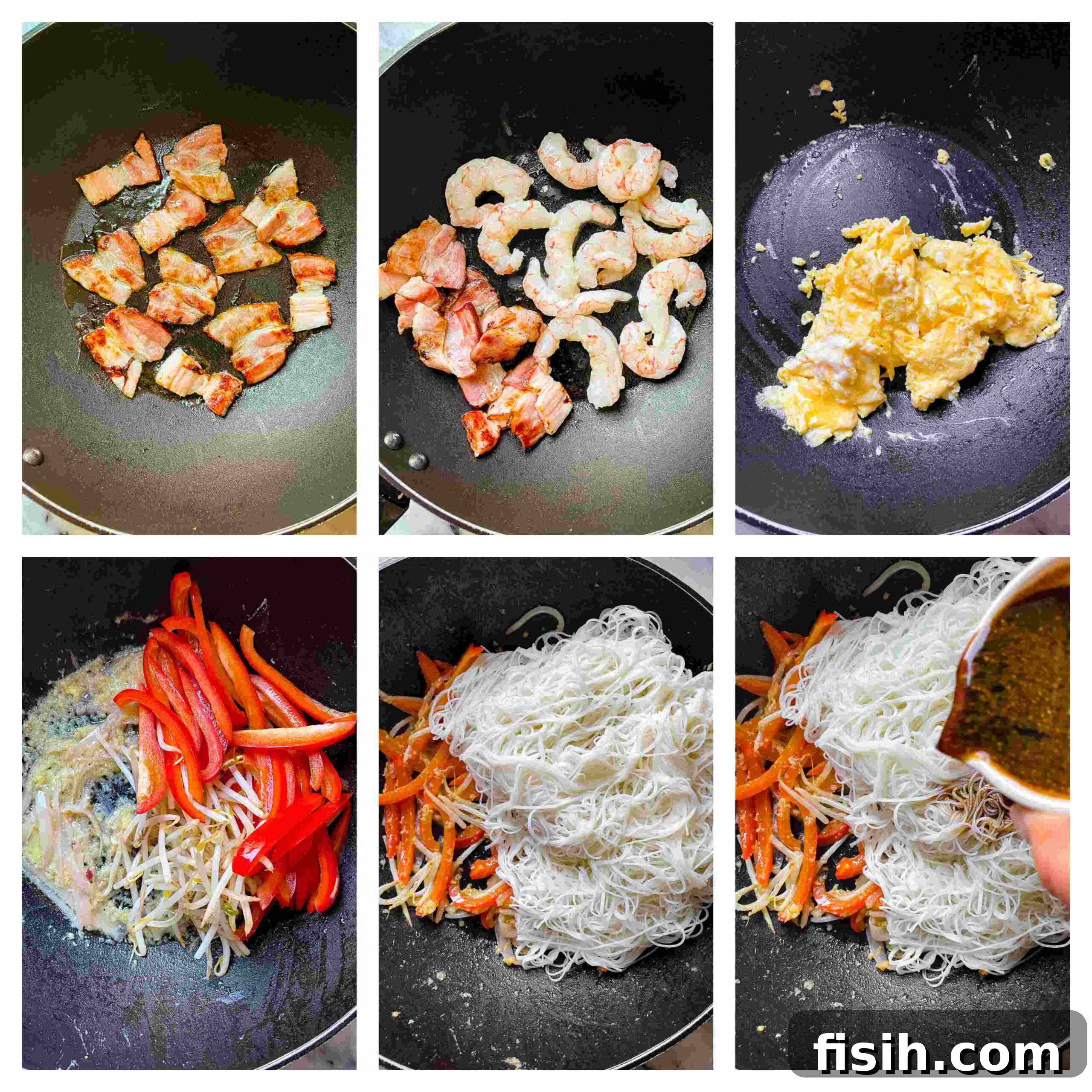
- In a small bowl, mix the Shaoxing wine, soy sauce, curry powder, white pepper, salt, and honey. Set aside. Soak the noodles in boiling water according to package directions until tender, then drain thoroughly.
- In a large wok or a frying pan, heat the vegetable oil over high heat. Add the thinly sliced pork (seasoned with salt) and stir-fry until cooked through and lightly browned. Add the shrimp/prawns and cook for 1-2 minutes per side until pink and opaque. Remove both the pork and shrimp to a plate and set aside.
- Crack the eggs into the same pan and scramble them into large, fluffy pieces. Once cooked, remove them to the same plate with the pork and shrimp.
- To the same pan, add the sliced onion and stir-fry for 2-3 minutes until softened. Then add the minced garlic and grated ginger, cooking for an additional 30 seconds while stirring constantly until fragrant. Add the sliced red pepper and bean sprouts, and stir-fry for 5 minutes until vegetables are crisp-tender.
- Return the drained rice vermicelli to the pan with the vegetables. Pour the prepared sauce evenly over the noodles and toss everything together vigorously to ensure the noodles are thoroughly coated in the curry sauce.
- Finally, return the cooked pork, shrimp, and scrambled eggs to the pan. Gently mix all the ingredients together, being careful not to break up the noodles too much. Taste and adjust seasoning with additional salt or pepper if needed. Garnish generously with fresh green onions and cilantro before serving immediately.
Notes
- This recipe involves several quickly cooked components. For best results and to avoid feeling rushed, prepare all your ingredients (chop, slice, measure) before you begin cooking. This technique is called “mise en place.”
- Pre-mixing the sauce ingredients in a separate bowl also helps streamline the cooking process, allowing you to focus on stir-frying.
- If you are using pork, chicken, or any other meat, ensure it is sliced very thinly. This ensures it cooks quickly and evenly in the high heat of the wok, contributing to the authentic texture of the dish.
- When scrambling the eggs, try to keep them in larger pieces. They will naturally break up a bit during the final mixing, but starting with larger pieces prevents them from turning into a mushy texture in the finished dish.
Nutrition
Calories: 702kcal
|
Carbohydrates: 73g
|
Protein: 15g
|
Fat: 37g
|
Saturated Fat: 13g
|
Polyunsaturated Fat: 5g
|
Monounsaturated Fat: 17g
|
Trans Fat: 0.01g
|
Cholesterol: 127mg
|
Sodium: 1780mg
|
Potassium: 371mg
|
Fiber: 4g
|
Sugar: 5g
|
Vitamin A: 1082IU
|
Vitamin C: 44mg
|
Calcium: 57mg
|
Iron: 3mg
Nutrition information is automatically calculated, so should only be used as an approximation.
Tried this recipe?
Let us know how it was!