
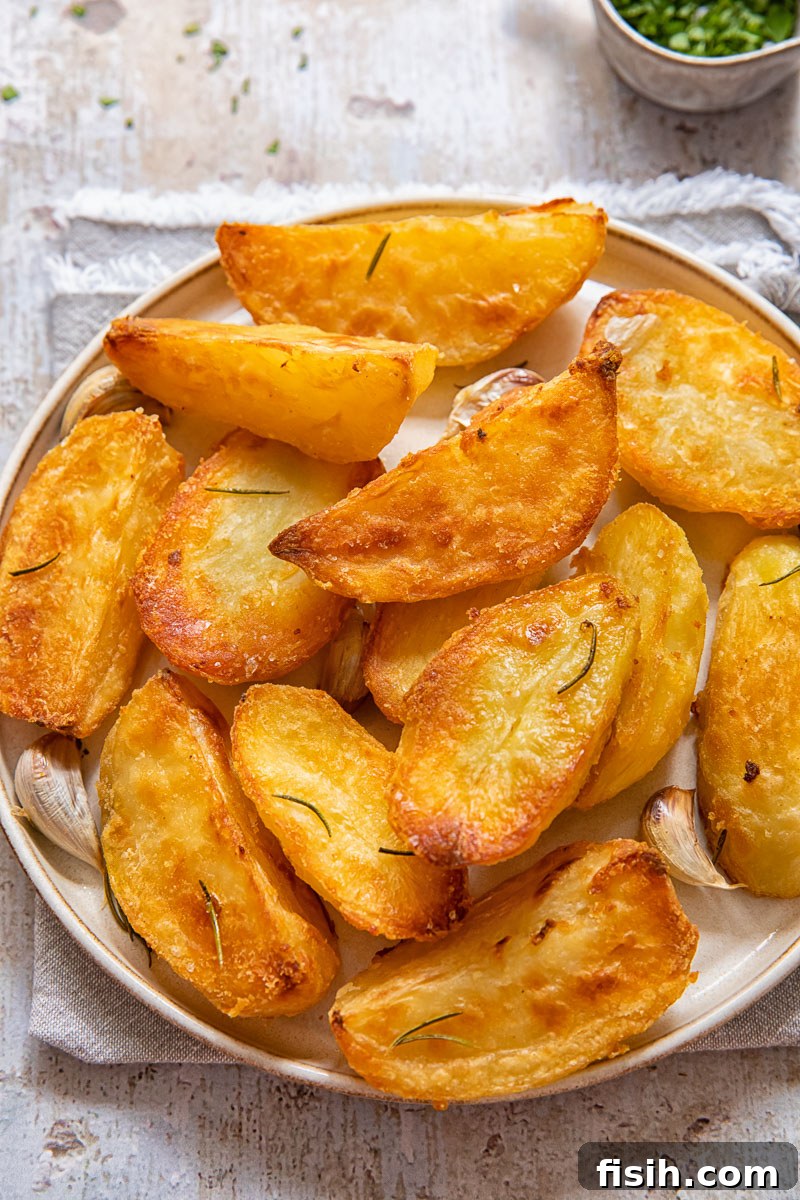
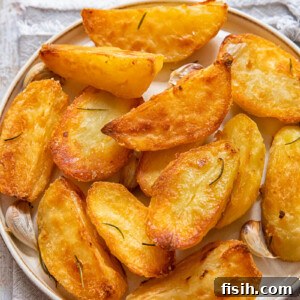
Transform your Sunday roast with truly perfect roast potatoes, guaranteed to score top marks with every family member. Imagine golden, unbelievably crunchy exteriors giving way to a light, cloud-like, fluffy interior – these aren’t just potatoes; they’re gold medalists on a plate, ready to crown your meal with culinary triumph.
Roast potatoes are the quintessential companion to any festive or comforting meal, especially a classic Sunday roast. They nestle beautifully alongside a succulent rosemary and thyme roast chicken or complement the rich, tender textures of a slow-cooked beef pot roast. Forget the pressure, embrace the perfection, and prepare to elevate your cooking skills to champion status.
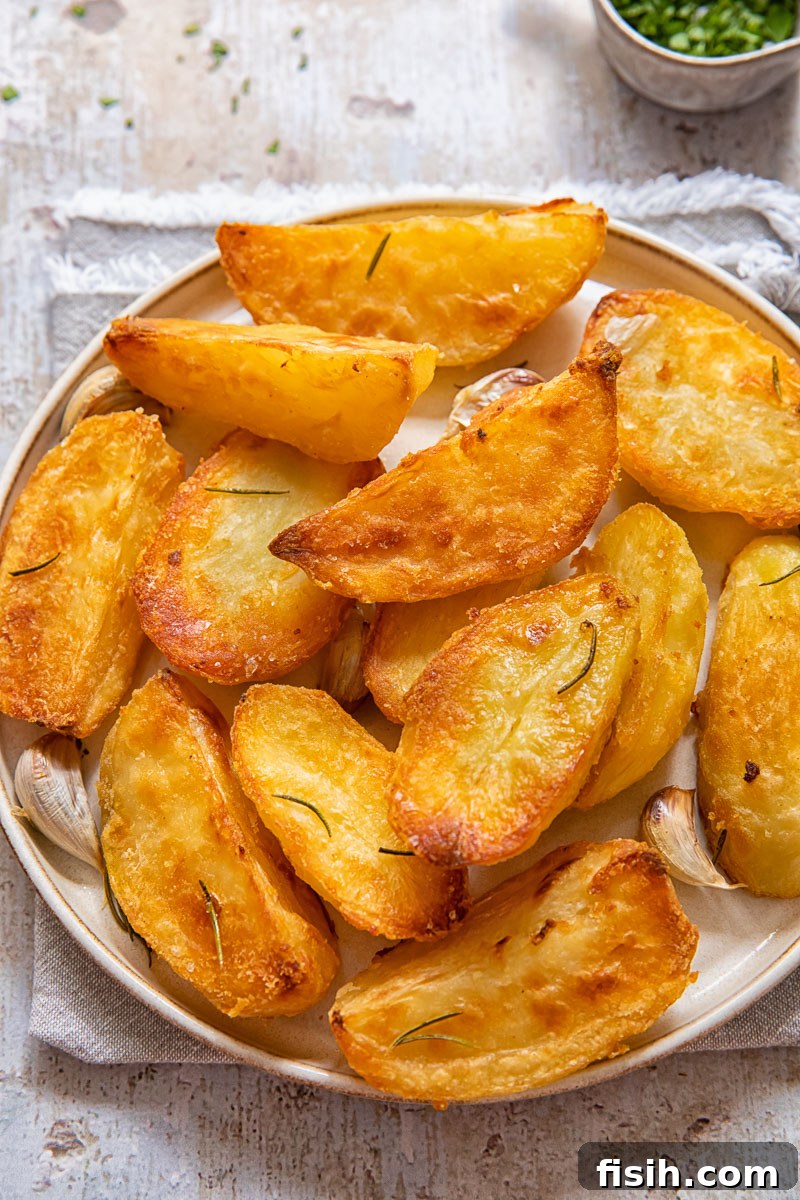
Perhaps last month, your mother-in-law garnered all the praise for her roast potatoes. Now it’s your turn to claim the title of “Champion Potato Roaster.” This comprehensive guide will equip you with all the knowledge and techniques needed to achieve unparalleled crispy, fluffy perfection, ensuring your efforts are met with a chorus of compliments from around the dining table.
The Art of the Roast Potato: More Than Just a Side Dish
At its heart, a roast potato is a simple concept: roughly cut potatoes cooked in hot oil or fat in the oven until gloriously golden and crisp. Yet, this simplicity belies a profound culinary satisfaction. While often, though not exclusively, served alongside roasted meats, it’s hard to imagine a full roast dinner without these crispy delights. For many, a roast potato is not merely an accompaniment; it’s an indispensable component that elevates the entire meal.
While the potato itself originated in the Americas, its journey across the Atlantic and integration into European cuisine led to countless culinary innovations. Though the British are renowned for their pursuit of the perfect roast potato, it’s unlikely they were the first to roast this versatile tuber. Our story begins with the Sunday roast tradition, a culinary ritual steeped in history.
Dating back centuries, the practice involved preparing meat, vegetables, and potatoes together in one pan, left to cook slowly in the oven while families attended church on Sunday mornings. This ingenious method allowed the vegetables and potatoes to absorb the rich juices and fats from the roasting meat, creating what might well have been the earliest forms of roast potatoes. This communal feast, shared after Sunday service, laid the foundation for the beloved tradition we cherish today.
Beyond the British Isles, the roast potato enjoys immense popularity across Europe, appearing in a myriad of regional variations. Consider the vibrant Spanish Patatas Bravas, celebrated for their deliciously crispy texture and zesty tomato sauce. Or delve into German cuisine with Bratkartoffeln, hearty roasted (or fried) potatoes featuring bacon and onion. France offers Parmentier potatoes, small, elegant cubes of roast potato infused with garlic and fragrant herbs, embodying a refined culinary approach to this humble vegetable. Each variation showcases the potato’s incredible adaptability and its universal appeal as a comforting, satisfying dish.
Selecting Your Spud: The Secret to Superior Roasting
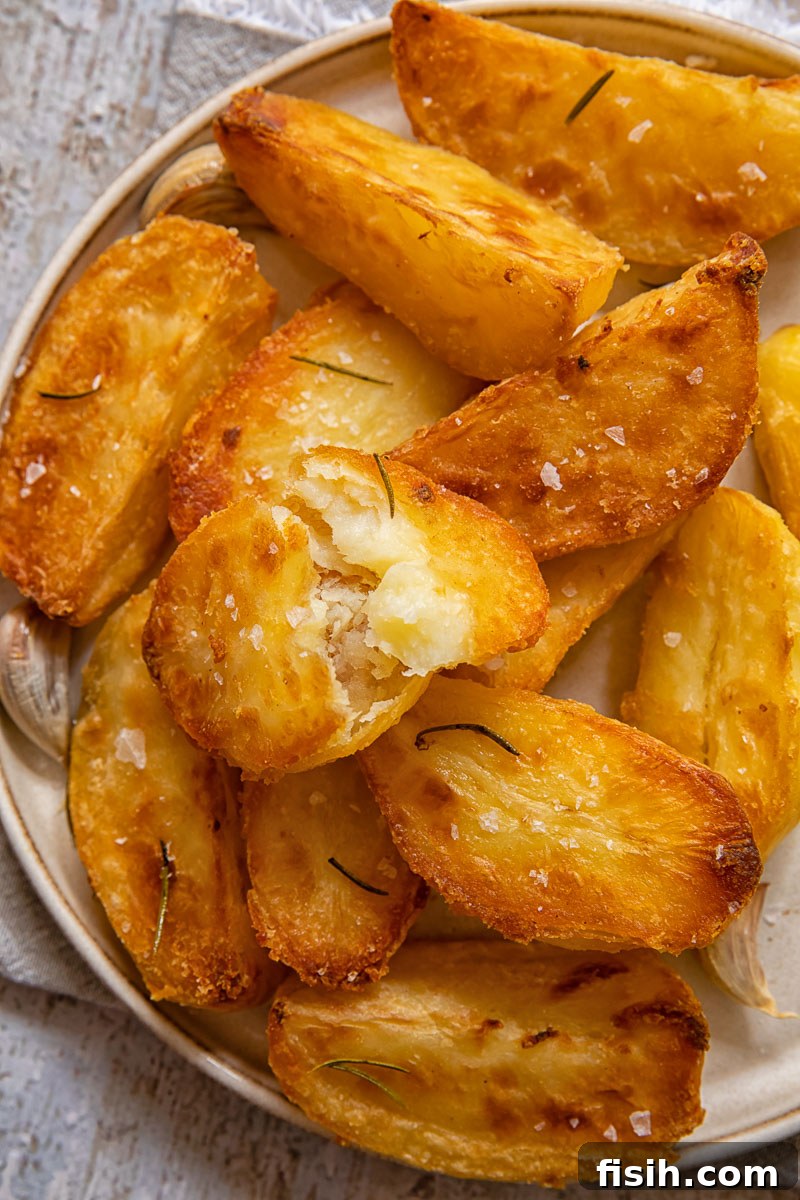
The foundation of a truly perfect roast potato lies in selecting the right variety. For that magical combination of a crunchy exterior and a light, fluffy interior, a floury or starchy potato is your non-negotiable choice. Steer clear of any potatoes labeled ‘waxy,’ as they are destined for a different culinary fate.
Floury potatoes possess a coarser, grainier texture, characterized by a higher starch content. This starch is crucial: when roasted, it breaks down and allows the potato’s surface to become wonderfully crisp, while the interior transforms into that desirable, airy fluffiness. Waxy potatoes, conversely, have a lower starch and higher water content, meaning they tend to become mushy or dense in the middle when roasted, lacking the characteristic ‘shatter’ and fluff.
With over 4,000 potato varieties globally – approximately 200 in the US and 500 in the UK – choosing can seem daunting. However, a few stars consistently shine for roasting. In the UK, the Maris Piper is the undisputed champion, celebrated for its superior roasting qualities. King Edward follows closely in second place, with Desiree rounding out the top three. These varieties deliver exceptional crispness and a superbly fluffy centre.
For potato enthusiasts in the USA, the competition for the top roasting spot often comes down to the Russet and the Yukon Gold. For many, the Russet emerges as the clear winner. Much like the British Maris Piper, Russets boast a high starch content, ensuring an incredibly soft and pillowy interior. Their thinner skin also contributes to an excellent crunch when cooked. While Yukon Golds are beloved for their buttery flavor and creamy texture, they tend to excel in preparations like wedges or mashed potatoes, rather than achieving the same level of exterior crispness as a Russet for traditional roasting.
The Fat Factor: Choosing the Right Oil for Optimal Crisping
The choice of cooking fat is paramount to achieving the ultimate roast potato. The key consideration here is the smoking point—the temperature at which an oil begins to burn and degrade, imparting an unpleasant flavor. A higher smoking point is ideal for the high temperatures required for perfect roasting, ensuring your potatoes develop a beautiful crust without any acrid notes.
- Goose or Duck Fat: These are, without a doubt, my personal favorites for a truly luxurious roast potato experience. While they might be the priciest option and less commonly found in every pantry, the results are simply incomparable. These animal fats create gloriously crackly-crusted potatoes with an incredibly soft, richly flavored interior. Unlike vegetable oils, animal fats are not as readily absorbed, allowing the potato surface to crisp more effectively. Both goose and duck fat have a medium-high smoking point, making them excellent choices for roasting at elevated temperatures.
- Canola, Grapeseed, or Sunflower Oil: These vegetarian-friendly oils are widely accessible and budget-friendly, making them a popular choice for many home cooks. They possess a neutral flavor profile that won’t overpower your potatoes, allowing the natural potato taste to shine. Crucially, these oils boast a fairly high smoking point, making them easy to work with and less prone to burning, ensuring consistent roasting success.
- Olive Oil: While I adore olive oil for its rich flavor and versatility in countless dishes, it’s generally not my top pick for roasting potatoes. Its slightly lower smoking point means it can burn and impart a bitter taste at the high temperatures needed for optimal crisping. Additionally, its distinct flavor can sometimes overshadow the delicate notes of the potato. For best results, save your extra virgin olive oil for finishing dishes or lighter cooking methods.
- Beef Tallow or Lard: For those seeking an intensely savory, traditional flavor, beef tallow (rendered beef fat) or lard (rendered pork fat) are fantastic options. They offer a high smoking point and impart a deep, rich flavor that pairs wonderfully with a Sunday roast. These fats are becoming more readily available and are worth seeking out for their exceptional performance in achieving crispy, flavorful roast potatoes.
Expert Recipe Tips and Notes for Unbeatable Roast Potatoes
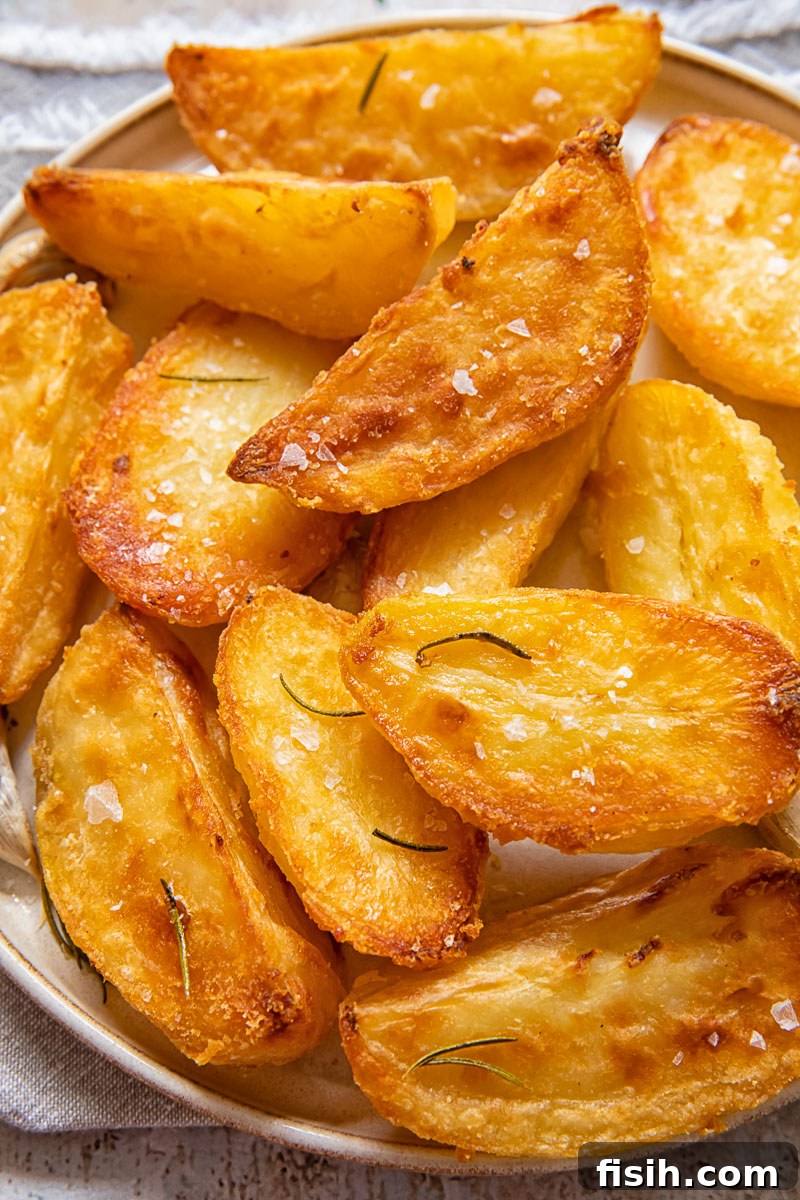
- Potato Perfection Starts with Selection: Always opt for floury or starchy potato varieties, such as Maris Piper or Russet. Waxy potatoes simply won’t yield the desired fluffy interior and crisp exterior. This is the absolute first step to success.
- The Essential Boil: To achieve that magical duality of a crunchy shell and a soft, cloud-like interior, you must peel and then par-boil your potatoes. Do not skip this critical step! Par-boiling softens the potato’s core while creating a roughened surface texture that will become incredibly crispy when roasted.
- Drain and Steam Dry Thoroughly: After boiling, drain the potatoes completely and allow them to steam dry in the colander for at least 5 minutes. Any excess moisture will hinder crisping, leading to soggy spuds. Patience here is a virtue.
- Rough Them Up: This is a game-changer! After steam-drying, gently shake the colander vigorously to ‘rough up’ the par-boiled potatoes. This action creates a floury, mashed-potato-like coating on the surface, significantly increasing the surface area for crisping and ensuring a deeply crunchy crust.
- Choose Your Fat Wisely: While I swear by duck or goose fat for their unparalleled richness and crisping power, any high smoke point oil will yield excellent results. Consider canola, sunflower, or grapeseed oil for reliable performance. Ensure your fat is piping hot in the roasting pan before adding the potatoes.
- A Flour Dusting for Extra Crunch: For an extra layer of delicate crispness, lightly dust the roughed-up potatoes with a tablespoon or two of plain flour before adding them to the hot fat. This fine coating contributes to an even more pronounced crunch.
- Infuse with Flavor: This recipe incorporates whole garlic cloves and rosemary sprigs into the roasting pan. As they roast, the sweet, aromatic notes of garlic and the herbaceous fragrance of rosemary infuse into the potatoes, creating a sublime flavor profile that complements virtually any roast meat, especially a succulent roast leg of lamb. Remember to discard the garlic and rosemary before serving, as their purpose is purely for flavor infusion.
- Don’t Overcrowd the Pan: Give your potatoes space! Overcrowding the roasting pan can lower the temperature and cause the potatoes to steam rather than roast, preventing them from crisping properly. Use two pans if necessary, ensuring a single layer.
Storage and Revival: Enjoying Leftover Roast Potatoes
Without a doubt, a roast potato is at its absolute peak straight from the oven, piping hot and crackling with crispness. However, if you find yourself, like many of us, prone to cooking a generous surplus, fret not! Leftover roast potatoes can be stored in an airtight container in the refrigerator for 2-3 days, ready to be resurrected for another delightful meal.
To truly relive those perfect roast potato moments and restore their glorious crispness, the best method for reheating is undoubtedly in the air fryer. This appliance works wonders, delivering a crisp exterior in a mere 3 to 5 minutes, depending on your specific model. Alternatively, you can reheat them in a hot oven (around 200°C / 400°F) for 10-15 minutes, flipping halfway, or even in a hot pan with a drizzle of oil until golden and heated through.
Frequently Asked Questions About Roast Potatoes
Why aren’t my roast potatoes crispy?
Several factors can prevent crispness. You might be using a waxy potato variety, not par-boiling them sufficiently, not drying them properly after boiling, or overcrowding the roasting pan. Ensure your oil/fat is very hot before adding the potatoes and give them enough space in a single layer to roast, not steam.
Can I make roast potatoes ahead of time?
While best fresh, you can par-boil and rough up the potatoes a few hours in advance. Store them uncovered in the fridge. Alternatively, you can roast them almost fully, then cool and refrigerate. Reheat as described above to finish the crisping process just before serving.
What makes the inside of roast potatoes fluffy?
The key to a fluffy interior is using a starchy potato variety. When par-boiled, the starch granules in these potatoes swell and burst. Then, as the potato roasts, the moisture evaporates, leaving behind a light, airy, and fluffy texture in the centre, encased by the crispy shell.
What should I serve with roast potatoes?
Roast potatoes are incredibly versatile. They are the cornerstone of any Sunday roast, pairing perfectly with beef, chicken, lamb, or pork. Beyond that, they’re fantastic with grilled fish, hearty stews, or even simply as a delicious side dish alongside a fresh salad.
Other Delicious Recipes to Try
- Slow Cooked Pot Roast with Gravy
- Beef Bourguignon Recipe
- Roasted Rainbow Carrots with Pistachios
- Irish Beef Stew
Perfect Roast Potatoes
Ingredients
- 1½ kg / 3 lbs Maris Piper potatoes, peeled and cut in half lengthwise
- 4 tbsp goose or duck fat
- 2 tsp flour
- 1 tsp salt
- 2-3 rosemary sprigs
- 1 head of garlic
Instructions
-
Peel the potatoes and cut the large ones in half lengthwise, ensuring all potatoes are roughly the same size for even cooking. Place the potatoes in a pot with cold water and boil them for 15 minutes until tender but still holding their shape. Drain thoroughly and let them air dry for 5 minutes in a colander, then gently shake the potatoes to rough up the edges a bit.
-
Preheat the oven to 350F/180C. Pour your chosen fat into a sturdy roasting pan and place it in the oven while it’s preheating to ensure it gets piping hot.
-
Carefully remove the hot roasting pan from the oven. Sprinkle the roughed-up potatoes with flour and salt, then add them to the pan with the hot fat. Flip them over gently with tongs or a spatula so they are fully coated in the fat. Add the whole, unpeeled garlic cloves and rosemary sprigs to the pan as well, ensuring they are also lightly coated in oil. Roast for 30 minutes, then flip the potatoes to ensure even browning, and roast for another 30 minutes or until they are deeply golden and crispy all over.
-
Remember, the garlic and rosemary are primarily for flavour infusion during roasting. You can discard them before serving or offer the softened roasted garlic cloves as a delicious extra.
Nutrition
Nutrition information is automatically calculated, so should only be used as an approximation.
Tried this recipe?Let us know how it was!