
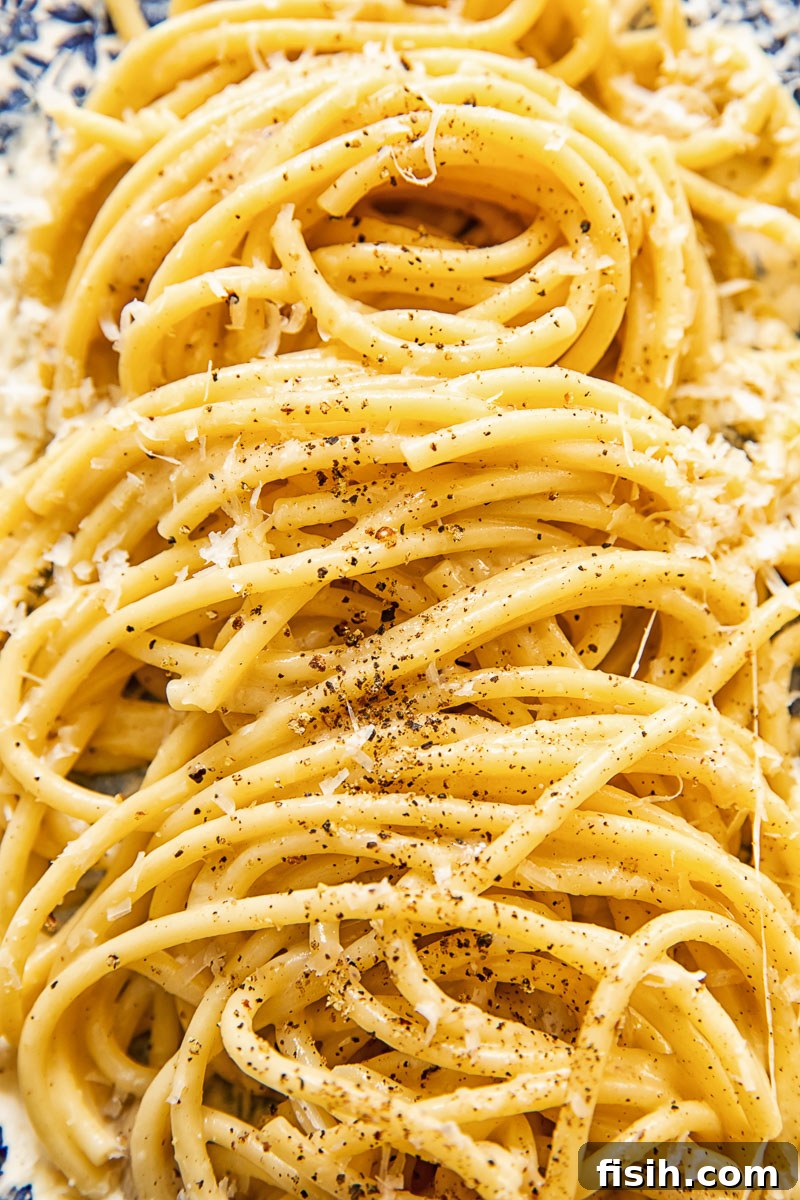
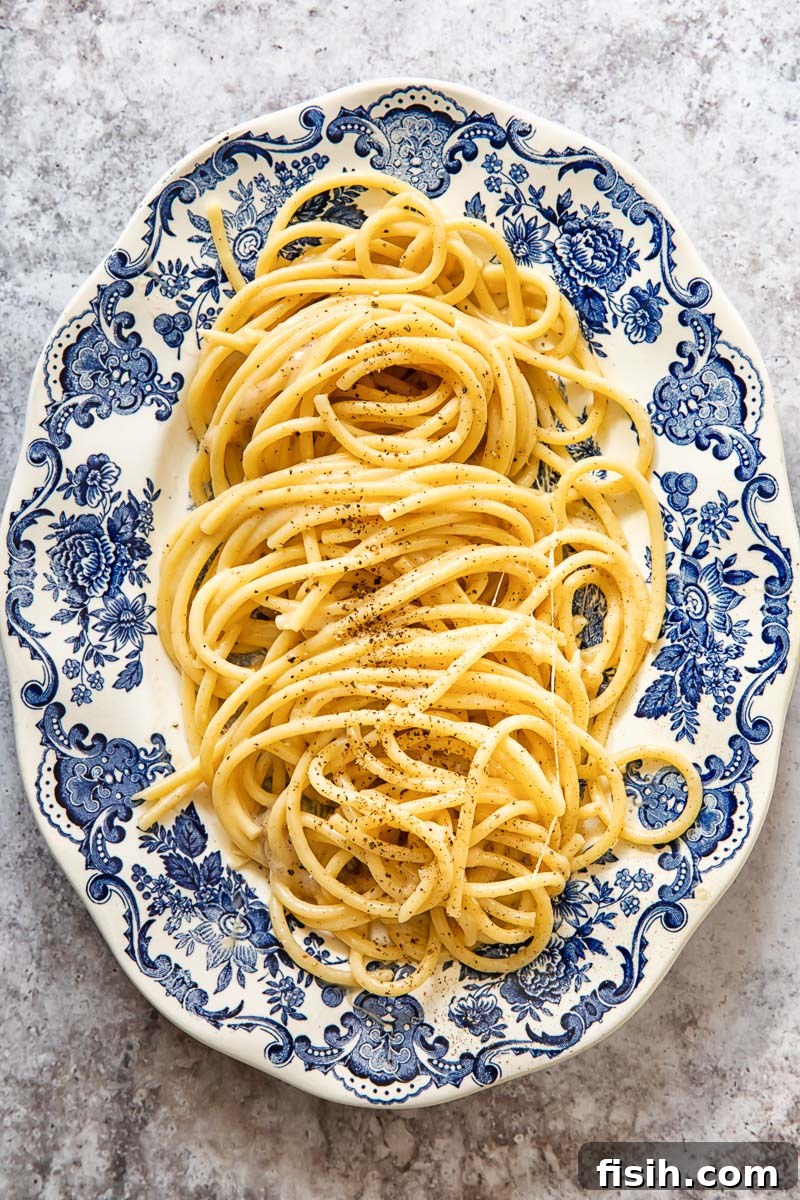
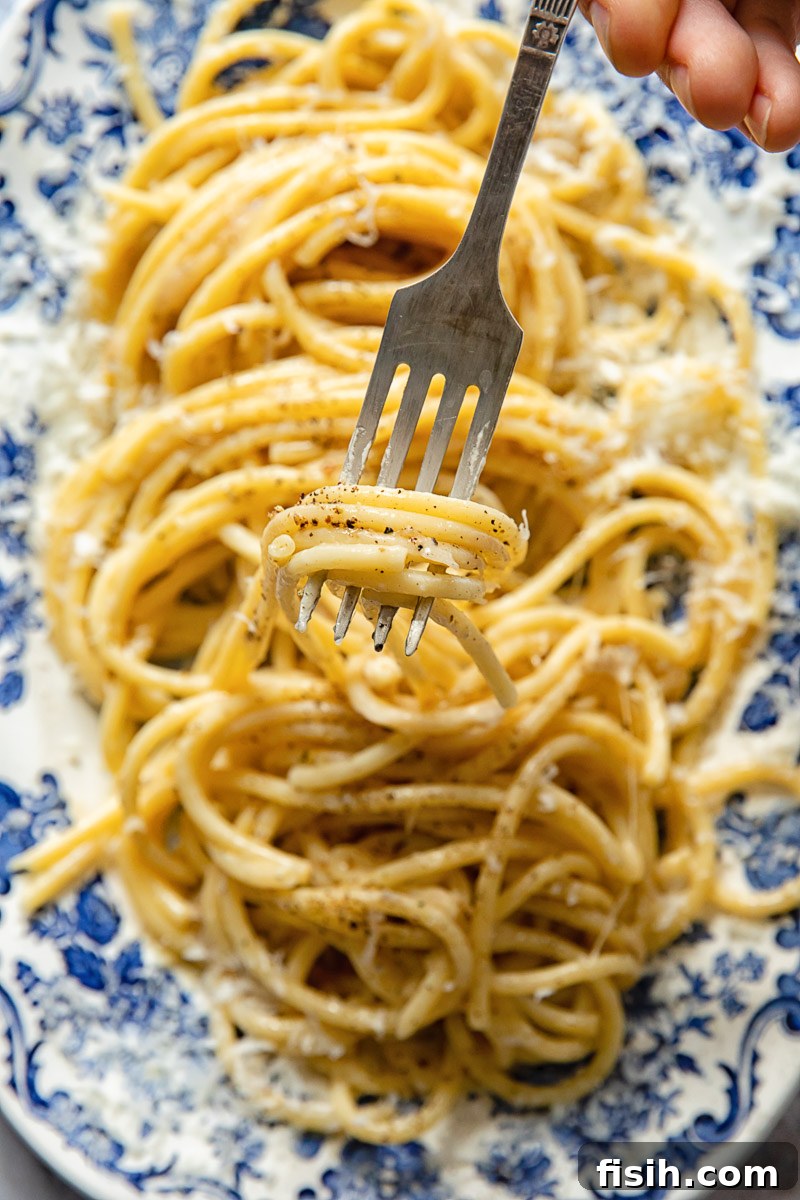
Embrace the culinary magic of Bucatini Cacio e Pepe, a Roman classic that transcends its humble origins to deliver a truly unforgettable pasta experience. This deceptively simple dish, whose name literally translates to “cheese and pepper,” is an elegant alternative to more complex, tomato-based recipes. With just a handful of readily available ingredients, you can whisk your family away to the heart of Rome in under 30 minutes, serving a meal fit for emperors, or at least, very happy diners.
In traditional Italian dining, pasta often serves as a modest first course, a delightful prelude to a more substantial main. This Roman gem is no exception, designed to awaken the palate rather than overwhelm it. To truly capture the spirit of an Italian feast, consider following this exquisite pasta dish with a complementary second course, such as light prosciutto-wrapped creamy pesto chicken parcels or a simple grilled vegetable accompaniment. The key is balance, allowing each dish to shine without competing for attention.
Unveiling the History and Charm of Cacio e Pepe
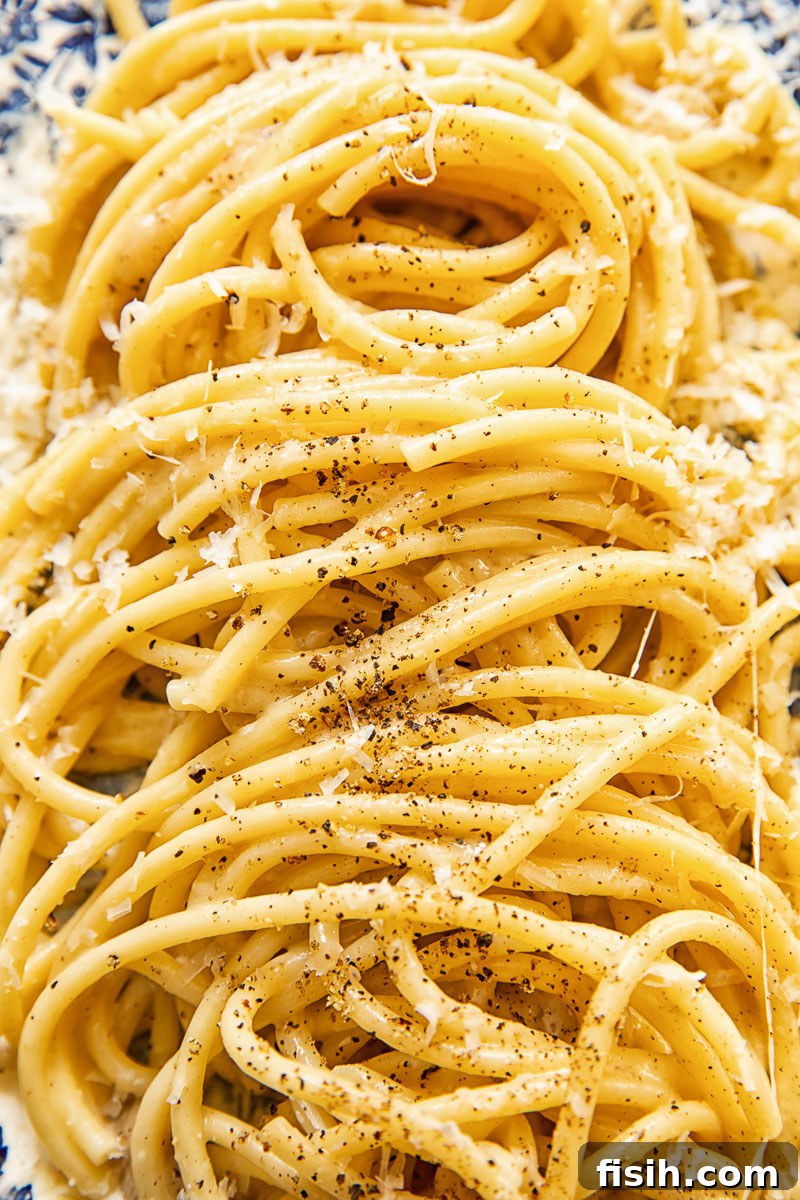
Like many of the world’s most beloved comfort foods, Cacio e Pepe has roots deeply embedded in necessity and resourceful simplicity. Its origins are often traced back to the shepherds of the Lazio region surrounding Rome, who required hearty, non-perishable meals that could be easily prepared with ingredients carried on long journeys. Cheese (cacio), black pepper (pepe), and dried pasta were staples that sustained them, transforming into this iconic dish through centuries of culinary evolution.
From these humble beginnings, Cacio e Pepe ascended to gastronomic fame, celebrated for its robust flavors and elegant simplicity. It’s a testament to the power of quality ingredients and precise technique, demonstrating how three fundamental components can create something truly extraordinary. This dish isn’t just food; it’s a piece of Roman history, a culinary tradition passed down through generations, now cherished in trattorias and home kitchens worldwide.
The authentic Cacio e Pepe recipe calls for just three core ingredients, each playing a vital, irreplaceable role:
Pasta (and its starchy cooking water): While many purists advocate for pici, a thick, hand-rolled spaghetti-like pasta, its availability can be limited outside of Italy. For a more accessible yet equally delightful alternative, bucatini is an excellent choice. Its similar girth provides that satisfying chew, and crucially, its tubular shape offers an increased surface area, creating tiny conduits for the unctuous sauce to cling and seep into. The pasta’s cooking water is not merely for boiling; it’s a golden elixir, rich in starch, essential for emulsifying the sauce and achieving that signature creamy texture.
Black Pepper: With such a minimal ingredient list, every component must sing. Therefore, the quality of your black pepper is paramount. Forget pre-ground pepper that has lost its potency. Invest in whole peppercorns and grind them freshly and coarsely just before use. The vibrant, pungent aroma and a slight textural bite of fresh black pepper are crucial for delivering the dish’s characteristic warmth and defining kick.
Cheese: The traditional and unequivocally correct cheese for this dish is Pecorino Romano. And no, it is emphatically not the same as Parmigiano Reggiano. Pecorino Romano is a hard, salty cheese made from sheep’s milk—a nod to its pastoral origins. Parmigiano Reggiano, conversely, is made from cow’s milk and tends to be less salty and more granular. The saltiness and smoother, less grainy texture of Pecorino Romano are fundamental to both the flavor profile and the silky consistency of a perfect Cacio e Pepe sauce. Its ability to melt smoothly without clumping is unmatched, making it indispensable for achieving that desired creamy emulsion.
This unembellished, pure recipe has gracefully withstood the test of time. The elegantly simple sauce remains as salty, peppery, and incredibly silky as the Roman shepherds would have desired. I implore you to follow the instructions precisely, paying close attention to every detail, for a truly authentic mouthful of Italian pasta that is unparalleled in its understated brilliance.
Mastering the Art of the Cacio e Pepe Sauce
Despite the apparent simplicity of its ingredients, Cacio e Pepe is famously known for being a tricky dish to master on the first attempt. It’s not a forgiving, ‘dump-and-stir’ kind of sauce. The magic lies in a delicate emulsion, a harmonious marriage between starchy pasta water and salty Pecorino Romano cheese. These two ingredients can be reluctant partners, requiring careful coaxing, precise temperatures, and gentle encouragement to unite into a single, smooth, and utterly delicious sauce, often referred to as ‘la crema’.
So, what exactly makes it so challenging? The goal is to create a velvety, glossy sauce that evenly coats every strand of pasta without becoming clumpy, grainy, or watery. This transformation hinges on the starch released from the pasta into its cooking water, acting as a binder, and the fat from the cheese (and a touch of butter, as our recipe includes, for extra richness and stability). Too hot, and the cheese will seize; too cold, and it won’t melt properly. It’s a dance of temperature and technique.
The keys to truly mastering this sublime sauce are threefold:
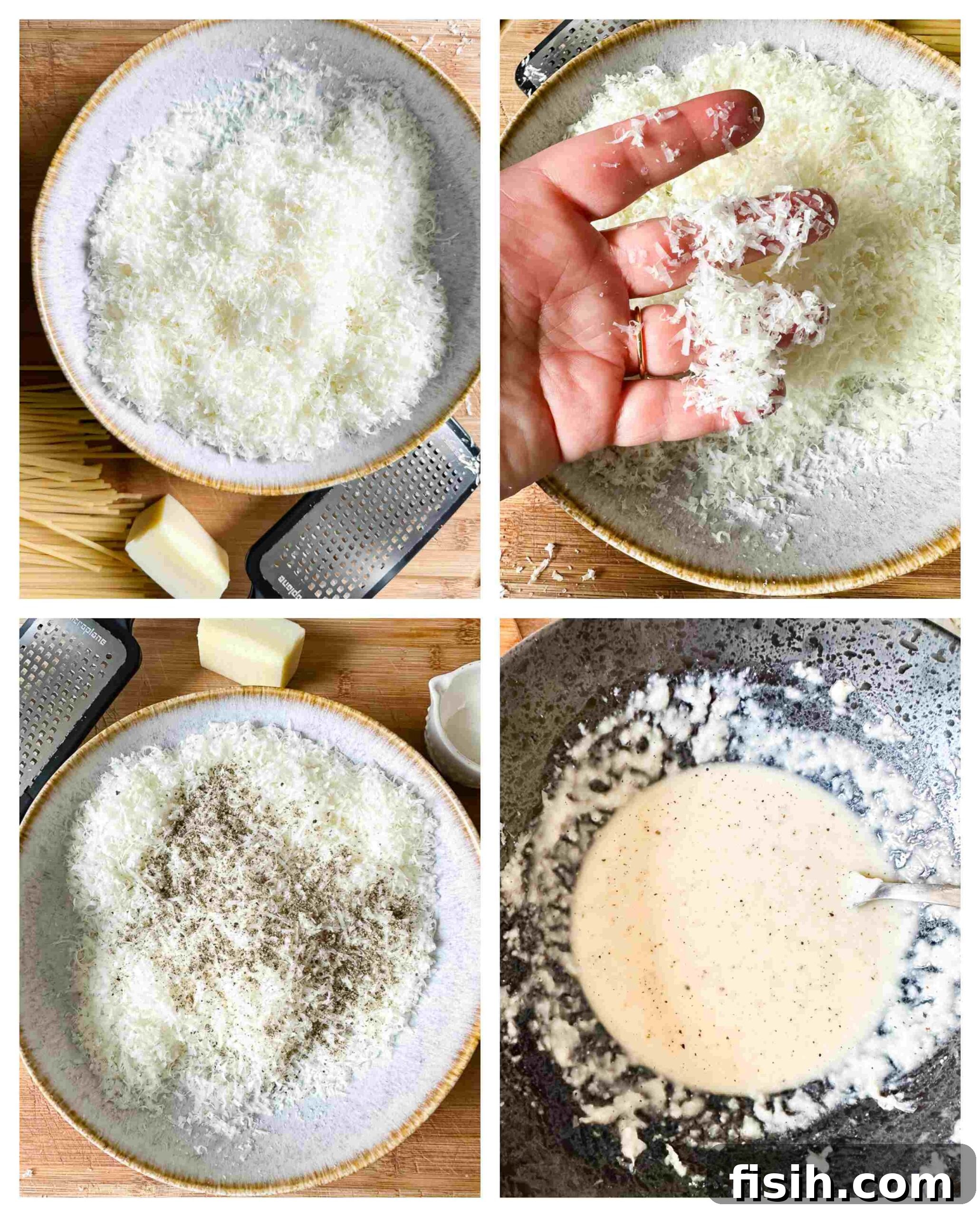
- **The Cheese:** A finely grated, yielding Pecorino Romano is non-negotiable. The finer the grate, the more surface area it presents, allowing it to melt evenly and integrate seamlessly into the liquid without forming lumps. Avoid pre-grated cheese at all costs, as it often contains anti-caking agents that hinder proper emulsification.
- **The Pasta Water:** This isn’t just any water; it’s liquid gold. The water left after cooking the pasta is rich in starch. Crucially, this water must be warm, not boiling hot, when introduced to the cheese. Very hot water can cause the cheese proteins to seize and clump instantly, resulting in a broken, unappetizing sauce. Warm water allows for a gradual, smooth melting and emulsification process.
- **The Environment:** The bowl used for combining the cheese and pasta water should be comfortably warmed. A warmed bowl helps maintain the ideal temperature for the cheese to melt slowly and evenly, encouraging the ingredients to relax and blend into one another without shocking them. This creates the perfect environment for the emulsion to form successfully.
Yes, these might sound like overly exaggerated or fussy steps for such a basic sauce. However, trust me when I say, don’t be tempted to cut corners. Skipping these seemingly small details can lead to a less than perfect result. Take it from a fellow pasta lover; patience and precision are your best allies in achieving Cacio e Pepe perfection.
Essential Recipe Tips and Notes for Success
-
Embrace the Learning Curve: The simplicity of the ingredients belies the nuanced technique required. I’m not ashamed to admit that my first attempts at Cacio e Pepe were far from perfect. It’s a dish that demands practice and a feel for the process. Don’t be discouraged if your first try isn’t flawless; remember, Rome wasn’t built in a day, and neither is perfect Cacio e Pepe mastered overnight. Each attempt is a step closer to perfection.
-
The Delicate Dance of Emulsification: As mentioned, the sauce is notoriously tricky. The critical moment is when the starchy pasta water meets the grated cheese. This union requires gentle persuasion. The pasta water *must* be warm, not piping hot. This controlled temperature allows the cheese to melt slowly and gracefully, rather than seizing into clumps. Furthermore, initiating this blend in a pre-warmed mixing bowl, rather than a sizzling pan on the stovetop, creates an ideal environment. Continuous, gentle whisking in this perfect setting will encourage the fat and starches to emulsify, creating that coveted pale, silken, and cohesive sauce.
-
Troubleshooting a “Broken” Sauce: If your sauce separates into milky water with distinct globs of cheese, it means the emulsion has “broken,” likely due to excessive heat or insufficient whisking. While the texture won’t be right, the flavor will still be delicious! Don’t let a culinary mishap lead to waste. I’ve eaten my share of “broken” Cacio e Pepe with zero shame, and you should too. It’s still a flavorful, comforting meal.
-
Personalizing the Pepper: The recipe suggests 1 teaspoon of freshly ground black pepper per two portions as a starting point. However, Cacio e Pepe is inherently a peppery dish, and personal preference plays a significant role. If you crave a more pronounced, fiery kick, feel free to add a few more generous grinds. Always taste and adjust to your liking.
-
The Unwavering Choice of Pecorino Romano: For authentic flavor and optimal texture, Pecorino Romano is the champion cheese. Its finer, less granular texture compared to Parmigiano Reggiano or Grana Padano allows it to melt more readily and smoothly. This characteristic is a massive advantage in achieving a flawless emulsion, as it integrates into the sauce with far greater ease, ensuring a consistently creamy result.
Storage and Reheating Tips for Cacio e Pepe
Authentic Cacio e Pepe is truly a dish best savored immediately upon preparation. The delicate emulsion of cheese, pepper, and pasta water is at its peak when fresh, coating each strand of pasta in a glossy, silken embrace. As time passes, especially when refrigerated, the sauce tends to tighten, and its creamy texture can diminish.
However, if you find yourself with the delightful dilemma of leftovers, despite the dish’s irresistible nature, you can cover it tightly with cling film and refrigerate it for up to two days. While it won’t quite replicate the magic of a freshly made batch, there are ways to revive it gracefully.
To reheat, the key is gentle warmth and a bit of extra moisture. Add a generous splash of water (or even better, reserved pasta water if you have it) to the cold pasta. Heat it slowly on the stovetop over low heat, stirring continuously, until the pasta is warmed through and the sauce begins to loosen and re-emulsify. Alternatively, for those moments when simplicity is paramount, microwave the pasta in 40-second to 1-minute intervals, stirring between each, until it reaches your desired temperature and consistency. Adding a tiny knob of butter or a sprinkle of extra grated Pecorino Romano during reheating can also help restore some of its lost richness and creaminess.
Explore More Quick and Delicious Pasta Recipes:
- Spaghetti Carbonara
- Three Ingredient Creamy Pasta Sauce
- Homemade Pasta Alfredo
- Spaghetti alla Siciliana
Bucatini Cacio e Pepe
Equipment
-
Colander
-
Large pot
Ingredients
- 200g/1/2 lbs bucatini, or spaghetti
- 1 tsp black pepper, freshly ground
- 80g/3/4 cup/3 oz Pecorino Romano, or Parmigiano Reggiano
- 1 tbsp butter
- 170ml/3/4 cup hot pasta water
Instructions
-
Begin by cooking your chosen pasta, preferably bucatini, in a large pot of generously salted boiling water. To ensure a highly concentrated, starchy pasta water, crucial for our sauce, reduce the amount of water you would typically use by about one-third. Cook the pasta according to the package instructions until it is perfectly al dente.
-
While the pasta cooks, prepare your cheese and pepper. Grate the Pecorino Romano using the smallest holes on your grater. The cheese absolutely needs to be extra fine to achieve a truly silky, lump-free sauce. Do not, under any circumstances, use pre-grated cheese for this recipe. Next, grind your fresh black pepper coarsely and measure out the specified amount.
-
Before draining the pasta, carefully preheat a large mixing bowl. A low setting oven or a minute in the microwave (as I do) works perfectly. This warm environment is critical for the sauce’s success. Add the finely grated cheese and the coarsely ground black pepper to the warmed bowl. Gradually begin to add the warm pasta water, a small splash at a time, while continuously whisking. Continue this process until you achieve a beautifully smooth, béchamel-like sauce, with the cheese fully incorporated. You should use approximately 170ml/3/4 cup of the warm pasta water in total, adjusting as needed for consistency.
-
Once the pasta is al dente, drain it immediately, reserving a little extra pasta water just in case. Add the drained pasta directly into the bowl with your prepared sauce. Using a pair of tongs or two large spoons, gently but thoroughly coat every single strand of bucatini with the creamy sauce. Serve immediately in warm bowls, with an optional extra grating of Pecorino Romano and a fresh sprinkle of black pepper for garnish.
Nutrition
Nutrition information is automatically calculated, so should only be used as an approximation.
Tried this recipe?Let us know how it was!