
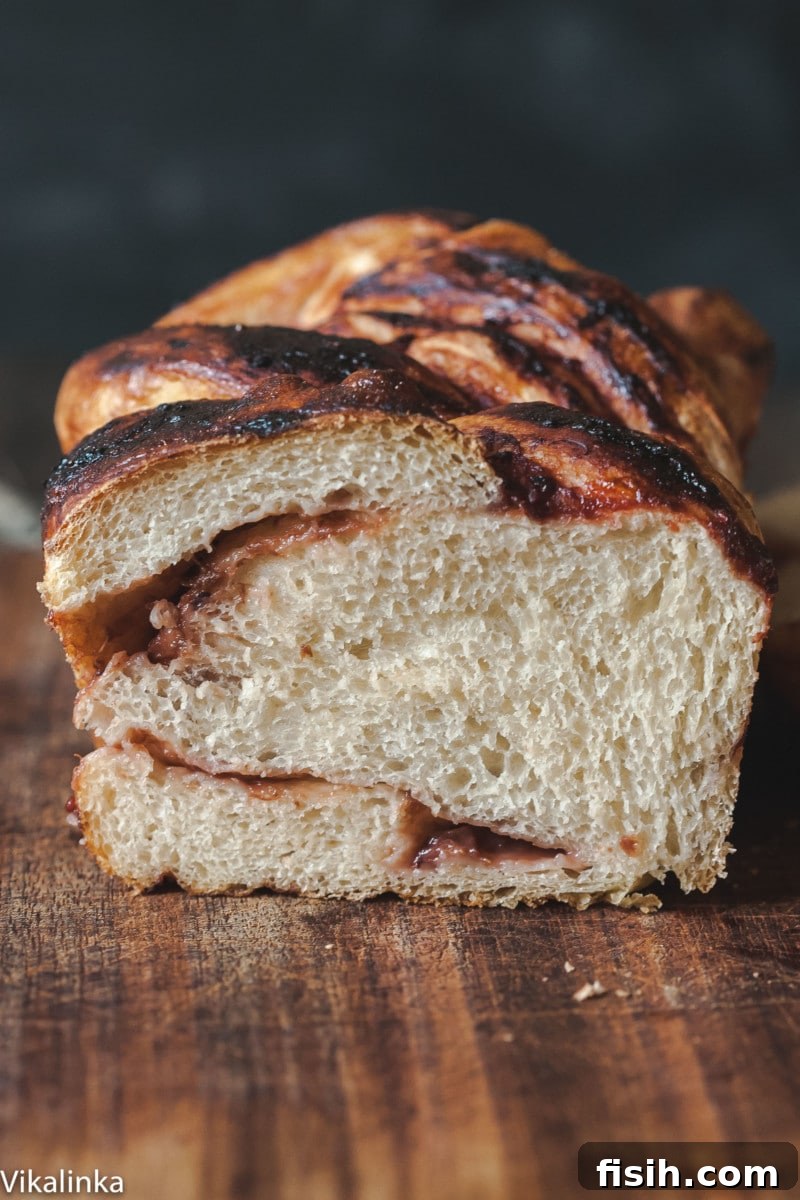
Delightful Rhubarb and Red Currant Jam Swirled Bread: An Easy No-Knead Recipe
There’s a unique satisfaction that comes from creating something beautiful and delicious with your own hands, especially when it involves the comforting aroma of freshly baked bread. This rhubarb and red currant jam swirled bread is not just a treat for the taste buds; it’s a journey into the therapeutic world of baking, a perfect remedy for a busy mind. This versatile loaf, with its elegant swirls of vibrant jam, promises to be a delightful addition to any meal, equally at home with sweet spreads or savory toppings.
The Therapeutic Art of Baking: Finding Grounding in Dough
Do you ever find yourself seeking an activity that calms your spirit and focuses your mind? For many, the answer lies in the tactile, grounding process of baking. There’s something profoundly meditative about mixing ingredients, feeling the dough come alive under your hands, and watching it transform. It’s an earthy, tangible experience that pulls you into the present moment, away from the anxieties of the day. This kind of creation, which often begins with a bit of a mess and requires dedicated effort, culminates in an unparalleled sense of satisfaction and immense pride. While many baking endeavors offer this reward, bread making, in particular, holds a special place, connecting us to age-old traditions and the simple joy of sustenance.
This particular weekend, as I found myself in a contemplative mood, I reflected on how the most beautiful creations often emerge from initial chaos and hard work. It’s a sentiment that resonates deeply with other ongoing projects in my life, which are currently very much in the “mess and work” phase. Yet, seeing this gorgeous loaf of jam swirled bread emerge from the oven instills a powerful sense of hope and courage. It serves as a delicious reminder that sustained effort is rarely in vain; the rewards, much like this perfectly baked bread, will eventually manifest as something truly worthwhile, something one can proudly claim as their own.
A Taste of English Heritage: Inspiration from Dover Castle
This exquisite jam swirled bread was truly a treat, a long-held baking aspiration finally brought to life. The perfect catalyst for this creation appeared during our recent visit to the majestic Dover Castle. As avid explorers of England’s rich history, my partner and I had recently acquired an annual membership with English Heritage. This esteemed trust, established by the British government, is dedicated to safeguarding England’s historic buildings and monuments, offering incredible opportunities to delve into the country’s past.
It’s incredibly refreshing and enriching to embrace the role of a tourist in your own country, discovering hidden gems and appreciating the heritage right on your doorstep. Beyond preserving historical sites, English Heritage also curates and sells a delightful array of traditional British goods, from artisanal jams and flavorful curds to unique spirits. During our visit, while my partner, Brad, opted for a bottle of mead, my gaze landed on a jar of Rhubarb and Red Currant Jam – an instant inspiration for the jam swirled bread I had envisioned. The tartness of rhubarb combined with the delicate sweetness of red currants promised a sophisticated flavor profile, perfect for cutting through the richness of a freshly baked loaf.
The Irresistible Charm of Rhubarb and Red Currant Swirls
We were utterly captivated by this bread – its intoxicating aroma, its wonderfully airy texture, and its overall deliciousness. The beauty of using rhubarb and red currant jam lies in its inherent tartness. Unlike many fruit-filled breads that can lean towards overly sweet, this jam swirled loaf strikes a perfect balance. The vibrant, slightly sharp notes of the jam provide a counterpoint to the subtle sweetness of the bread dough, resulting in a sophisticated flavor that can be enjoyed in countless ways.
Its unique taste profile means this bread isn’t limited to breakfast or dessert. While it’s absolutely heavenly spread with a little extra jam or butter, its balanced flavor makes it an excellent base for glorious sandwiches. Imagine it paired with sharp cheddar cheese, or perhaps a light cream cheese and fresh herbs for a sophisticated savory snack. It’s truly a versatile creation, a testament to the power of thoughtful ingredient choices, making it a perfect accompaniment for any occasion.
Mastering the No-Knead Method: Effortless Perfection in Every Loaf
The secret to this magnificent jam swirled bread lies in its remarkably simple foundation: a variation of my tried-and-true No Time No Knead Bread recipe. This method is a game-changer for home bakers, particularly those who are short on time or new to bread making. The beauty of no-knead bread is its minimal active preparation; most of the work is done by time, allowing the yeast to slowly ferment and develop incredible flavor and texture with very little effort from the baker. This particular adaptation is designed to be even faster, capable of being completed from start to finish in just about two hours.
The expedited rising time is achieved by slightly increasing the amount of active dry yeast. While the original no-knead recipe often calls for a longer, overnight rise, this version delivers a wonderfully airy loaf in a fraction of the time. For this jam swirled bread, I made a small but significant alteration: I doubled the standard rising time for this quick method. This extended rise, though still considerably shorter than traditional bread recipes, allowed the dough to develop an exceptionally soft, pillowy texture that perfectly complements the fruit swirls. The extra time spent waiting is more than worth it for the light, tender crumb that results, making every bite a delight.
Shaping Your Swirl: Tips for a Stunning Loaf
The shaping method for this jam swirled bread is quite straightforward, as demonstrated in the images above. Don’t be alarmed if your initial braid doesn’t look perfectly symmetrical or beautiful right after you twist it. This is a common experience, even for seasoned bakers! The magic truly happens during the second rise. Once you’ve carefully transferred your braided dough into the loaf pan, cover it gently with a clean tea towel and allow it to rise for at least 30 minutes, or until it has noticeably doubled in size. During this crucial period, the yeast gets to work, expanding the dough and smoothing out any imperfections in your braid, transforming it into the gorgeous, evenly-shaped loaf you see in the final photos.
Patience during this final proofing stage is key. A well-risen dough ensures a light, airy crumb and a beautiful appearance. The warmth of your kitchen will aid this process, allowing the dough to puff up beautifully, ready for its bake in the oven. The anticipation builds, knowing that soon, you’ll be pulling out a fragrant, golden-brown loaf with stunning jam swirls that will impress everyone who sees (and tastes) it. This simple shaping technique, combined with the power of yeast, guarantees a bakery-quality result every time.
And then this beautiful outcome!
Rhubarb and Red Currant Jam Swirled Bread Recipe
Rhubarb and Red Currant Jam Swirled Bread
Julia Frey of Vikalinka
35 mins
45 mins
1 hr 20 mins
16 servings
Print Recipe
This recipe yields two loaves: one jam swirled bread and one plain bread. Enjoy the delicious, airy texture, perfect for any time of day!
Ingredients
- 1 package (7 g) active dry yeast
- 500ml (2 cups) lukewarm water (around 105-115°F / 40-46°C)
- 3/4 tbsp salt
- 500g (4 cups) all-purpose flour
- 125ml (1/2 cup) rhubarb and red currant jam, or your favorite tart jam (e.g., cherry, raspberry)
- Additional flour for dusting
Instructions
-
In a small bowl, combine the warm water and active dry yeast. Let it sit for 5-10 minutes until foamy, indicating the yeast is active. This step is crucial for ensuring your bread will rise properly.
-
In the bowl of a stand mixer (or a large mixing bowl if mixing by hand), combine the flour and salt. Create a small well in the center of the flour mixture.
-
Pour the activated yeast mixture into the flour well. Mix with a dough hook attachment on low speed, or by hand with a sturdy spoon, until a shaggy, cohesive dough forms. It will be sticky, but resist the urge to add more flour at this stage. Mix just until combined, avoiding overmixing.
-
Cover the bowl with a clean tea towel or plastic wrap and let the dough rise in a warm place for two hours. After the first hour, gently “punch down” the dough to release air (a few gentle folds are enough), then reshape it slightly and let it rise for the remaining hour. This double rise contributes significantly to the bread’s pillowy soft texture and flavor development.
-
Once the dough has completed its second rise, preheat your oven to 350°F (180°C). Generously grease a standard 9×5 inch (23×13 cm) loaf pan.
-
Carefully cut off approximately one-third of the risen dough. Gently shape this smaller portion into a smooth ball, cover it with a towel, and set it aside. This will bake into a delicious plain loaf, perfect for any topping, alongside or after your jam bread.
-
Lightly flour a clean work surface. Turn out the remaining two-thirds of the dough onto the floured surface. Gently shape it into a rectangular ball by tucking the corners underneath, like an envelope, to create a relatively smooth surface ready for rolling.
-
Using a rolling pin, roll the dough out into a large rectangle, approximately 12×18 inches (30×45 cm). Aim for an even thickness.
-
Evenly spread the rhubarb and red currant jam over the entire surface of the rolled-out dough, leaving a small, clean border (about 1/2 inch or 1 cm) along one of the longer edges. This will help seal the roll.
-
Starting from the longer side where you spread the jam to the edge, carefully and tightly roll the dough into a log. Ensure it’s rolled snugly to prevent large air pockets.
-
Using a sharp knife or bench scraper, cut the rolled log lengthwise down the middle, but do not cut all the way through; leave about an inch (2.5 cm) intact at one end. You will now have two long halves connected at one end.
-
Gently twist the two halves over each other to form an elegant braid, keeping the cut sides facing upwards as much as possible to showcase the vibrant jam swirls. Pinch the ends together firmly to seal the braid.
-
Carefully transfer the braided dough into the prepared loaf pan. Cover it again with a clean tea towel and let it undergo its final rise for at least 30 minutes, or until it has noticeably doubled in size and looks puffy and light. This final proofing is essential for a beautiful, airy texture.
-
Bake in the preheated oven for 45 minutes, or until the top is golden brown and the loaf sounds hollow when tapped on the bottom. If the top browns too quickly, you can loosely tent it with foil.
-
Once baked, remove the loaf from the oven and let it cool in the pan for about 10-15 minutes before carefully transferring it to a wire rack to cool completely. This prevents it from becoming soggy and allows the jam to set.
-
Slice and serve once the bread has completely cooled. This ensures the jam sets properly and the texture is perfect for slicing. Enjoy with coffee, tea, or as part of a brunch spread.
-
Bake the reserved plain loaf either at the same time as the jam swirled bread (if you have two loaf pans) or immediately after, following the same baking temperature and time (adjusting if necessary for a smaller loaf).
Nutrition Information (Approximate per serving)
Calories: 145kcal | Carbohydrates: 31g | Protein: 3g | Fat: 1g | Saturated Fat: 1g | Sodium: 331mg | Potassium: 46mg | Fiber: 1g | Sugar: 5g | Vitamin C: 1mg | Calcium: 7mg | Iron: 2mg
Nutrition information is automatically calculated and should only be used as an approximation.
Tried this recipe?
Let us know how it was in the comments below!