
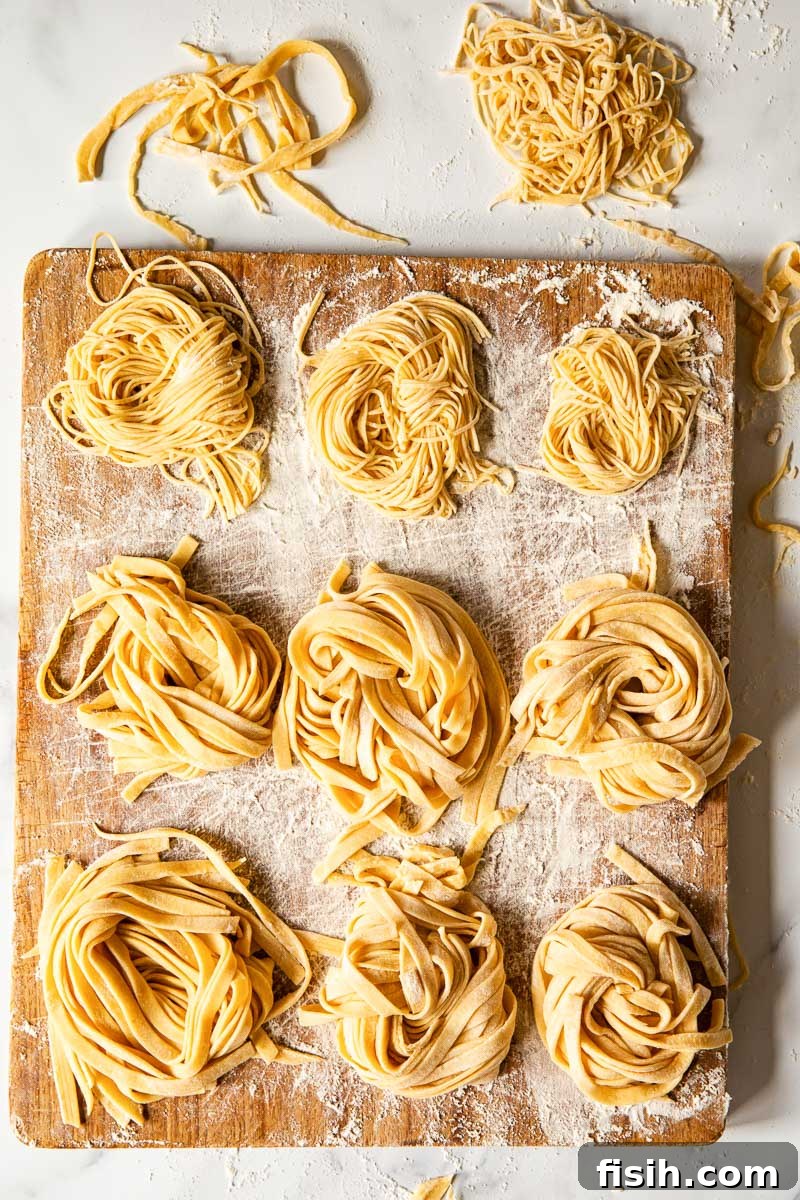
Imagine the rich aroma of freshly made pasta wafting through your kitchen, a true taste of Italy crafted with your own hands. You might think it’s a complicated culinary feat, but mastering authentic Italian fresh pasta is surprisingly simple, requiring just two fundamental ingredients: flour and eggs!
Once you’ve experienced the unparalleled delight of homemade pasta, you’ll want to pair it with equally exquisite sauces. Consider enhancing your dish with a classic Cream Sauce or the ever-popular Bolognese Sauce, both perfect complements to your culinary creation.
Fresh Pasta: The Ultimate Guide to Homemade Italian Delight
For many, the idea of making fresh pasta at home seems daunting, a task best left to seasoned chefs or Italian grandmothers. However, I’m here to tell you that this perception couldn’t be further from the truth. In fact, once you discover just how straightforward and rewarding the process is, you might find yourself questioning why you ever bought dried pasta again.
My own journey with pasta making began much like many Eastern European households – with my grandmother and mother meticulously crafting homemade noodles for comforting chicken noodle soup. Our kitchen was also a hub for creating delicious filled pastas like pierogi and pelmeni, each a staple that brought warmth and flavor to our family meals. While these traditions laid a foundation in dough craftsmanship, the world of authentic Italian pasta remained a mystery until a memorable trip to Southern Italy.
During our Italian adventure, my husband and I decided to immerse ourselves in the local culinary scene by taking a cooking class. It promised to teach us three iconic Italian recipes: Eggplant Parmigiana, Fresh Pasta, and Bolognese Sauce. I initially worried that a four-hour class would be too ambitious to cover such diverse dishes. To my pleasant surprise, the class moved at a perfect pace, demonstrating that none of these Italian classics require an entire day to prepare. The experience was not only enjoyable but fundamentally changed my perspective on homemade pasta, proving that its elegance lies in its simplicity.
Crafting the Perfect Pasta Dough at Home
The foundation of any great fresh pasta lies in its dough, and the basic recipe truly is incredibly simple: typically, 100g of pasta flour to 1 large egg per person. This precise ratio performed flawlessly in the humid, warm climate of Italy. However, upon returning home and acquiring the specialized “00” flour, I quickly realized that variables such as ambient humidity and even the size of eggs can subtly alter the dough’s texture. This is a common experience for home cooks, and it’s part of the beauty and art of pasta making.
Don’t be discouraged if your first attempt doesn’t perfectly mirror the Italian ideal. Factors like the brand of flour, the specific moisture content of your kitchen, and even slight differences in egg size all play a role. The key to success is adaptability. You might need to add a small splash of water to a dry, crumbly dough, or a touch more flour if it feels too sticky. This subtle adjustment is what transforms a good recipe into your personal master recipe, tailored to your kitchen environment.
This brings us to a crucial element in fresh pasta making: understanding and achieving the ideal dough consistency. It’s not just about mixing ingredients; it’s about feeling the dough and guiding it to perfection. You’ll be amazed at how quickly you develop an instinct for it.
Achieving the Ideal Pasta Dough Consistency and Texture
The ideal homemade pasta dough should possess a delicate balance: firm enough to hold its shape, yet pliable enough to be easily worked. If your dough is too soft, you’ll end up with pasta that’s overly sticky and difficult to handle, clinging to surfaces and potentially clumping during cooking. Conversely, if the dough is too hard or dry, it will be tough to roll out and result in a rubbery texture once cooked, lacking the delicate bite that fresh pasta is renowned for.
It’s easy to feel overwhelmed by the quest for the “perfect” texture. You might wonder, “How will I know exactly what consistency will yield the best-tasting fettuccine?” The truth is, there’s no single magic answer that works universally every time. Just like baking bread or mastering any craft, developing a feel for pasta dough comes with practice and experience. Each batch might require minor tweaks based on environmental factors, but I promise you, even your very first attempt at homemade pasta will be a revelation in flavor and texture compared to store-bought options. Embrace the process of trial and error; it’s how you truly become a pasta master.
Mixing Pasta Dough: By Hand vs. Machine – Choosing Your Method
When it comes to mixing pasta dough, you have two primary options, each with its own charm and efficiency: traditional hand-mixing or modern machine assistance. I’ve personally experimented with both methods, and while they each offer a unique experience, they both consistently deliver excellent results. The choice often boils down to personal preference, the amount of pasta you’re making, and whether you enjoy the tactile experience of dough in your hands.
Mixing by Hand: The Traditional Approach
For those who prefer the rustic, traditional method, mixing pasta dough by hand is a simple yet satisfying process. It requires no specialized equipment, just a clean work surface and your hands. Begin by mounding your flour directly onto the counter. Create a deep well in the center of the flour mound, much like a volcano, and crack your eggs directly into this well. Using your fingertips or a fork, gently break the egg yolks and gradually incorporate the flour from the inner walls of the well into the eggs. Continue working the mixture until a cohesive dough forms. This method allows you to truly feel the dough’s development, providing an intimate connection to the pasta-making process. If your dough feels too stiff, add water sparingly, one tablespoon at a time, until you reach the desired pliability.
Mixing by Machine: Efficiency and Ease
If you’re preparing pasta for a larger gathering or simply prefer a less labor-intensive approach, a stand mixer with a dough hook attachment or a food processor can be invaluable. For a stand mixer, combine the flour and eggs in the bowl, then let the dough hook do the work until a smooth, uniform dough comes together. If using a food processor, simply add both ingredients simultaneously, press the ON button, and allow it to run until the mixture forms a ball. With either machine method, keep a close eye on the dough’s consistency, adjusting with a sprinkle of flour or a dash of water as needed. Regardless of your chosen mixing technique, always allow the freshly kneaded dough to rest for at least 20-30 minutes, covered, before proceeding to the shaping stage. This crucial resting period allows the gluten to relax, making the dough much easier to roll and shape into perfect pasta ribbons.
Shaping Your Pasta: From Dough to Delightful Ribbons
The final and arguably most enjoyable step in homemade pasta making is transforming your rested dough into beautiful, edible pasta shapes. While it’s technically possible to shape pasta entirely by hand—a true test of patience involving laborious rolling to an even thickness and then precisely cutting into strips—a dedicated pasta machine truly revolutionizes this process. Investing in a good pasta machine can save you considerable time and effort, ensuring consistently thin sheets and perfectly uniform pasta shapes that would be incredibly difficult to achieve manually.
The Indispensable Pasta Machine
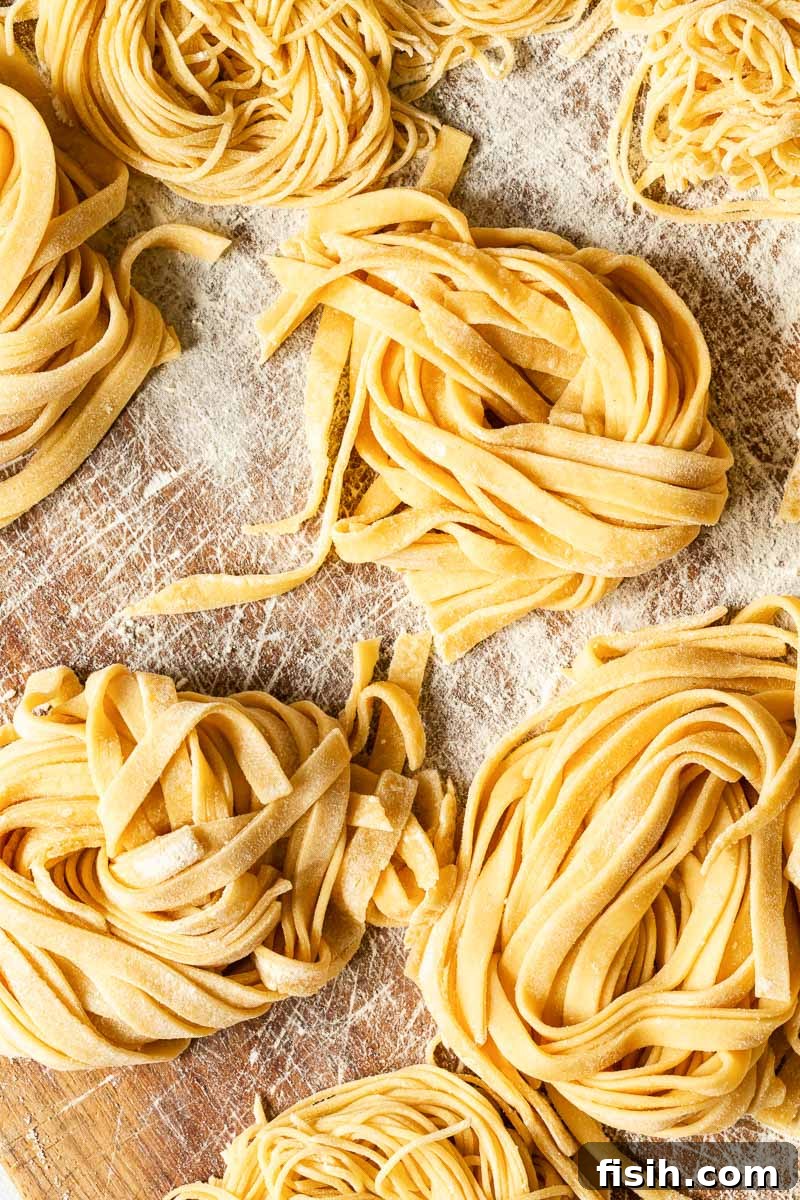
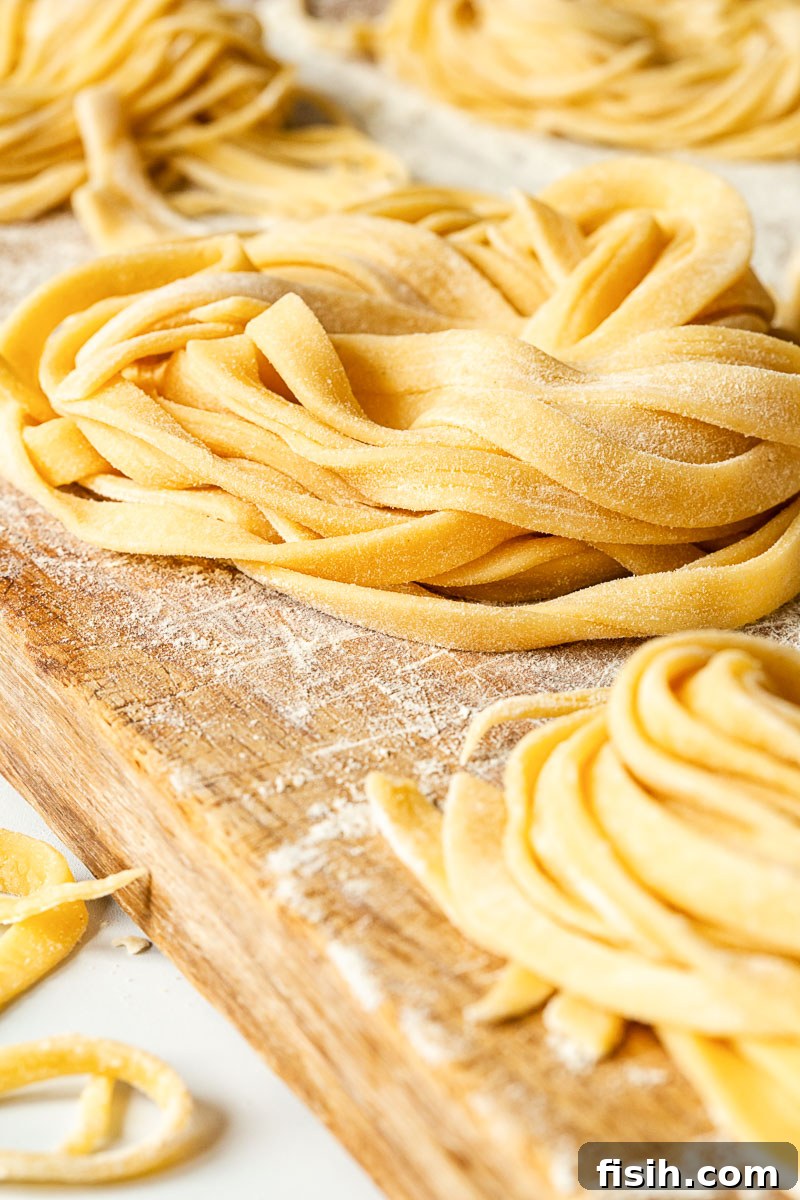
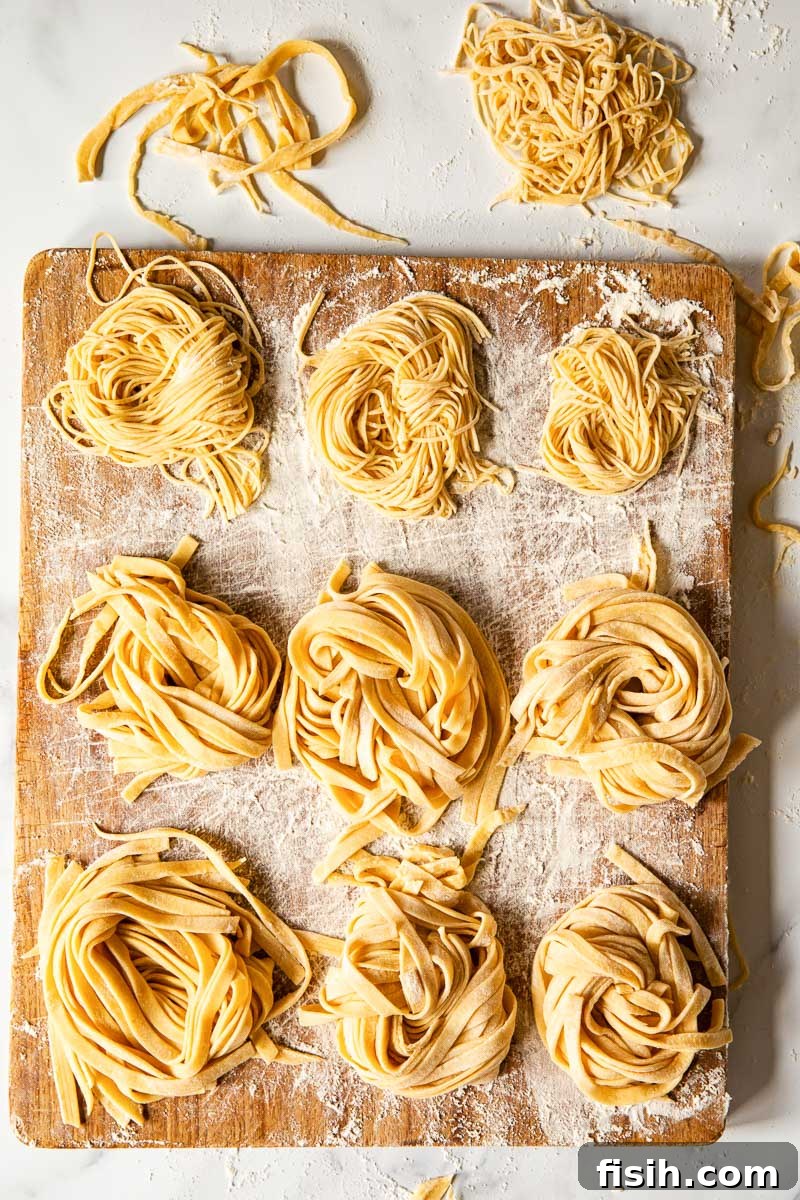
If you’re serious about making fresh pasta, a quality pasta machine is a worthwhile investment that will likely last a lifetime. These machines are remarkably easy to use and store, making the once-tedious task of rolling dough a breeze. My personal favorite is the Marcato Atlas, a robust model that often comes with interchangeable attachments for popular shapes like tagliatelle (also known as fettuccine in Southern Italy) and tagliolini, both of which are featured in the accompanying photos. The convenience and precision offered by such a machine make it an essential tool for any aspiring pasta maker.
A fun historical tidbit: Tagliatelle and fettuccine, despite their different names, refer to the same beloved pasta shape. The distinction simply reflects regional culinary nomenclature across Northern and Southern Italy. If you’re feeling particularly ambitious and decide to hand-cut your tagliatelle, be aware that Italians take their pasta standards seriously! Our Italian cooking instructor, for instance, meticulously measured her tagliatelle strips with a ruler, ensuring they were precisely 6mm-7mm wide. This attention to detail is part of what makes Italian cuisine so revered.
Beyond ribbons, the uncut, thin sheets of pasta emerging from your machine are perfect for crafting other Italian classics, such as the layers in a hearty lasagna recipe. The versatility of fresh pasta dough is truly astounding.
The Actual Shaping Process
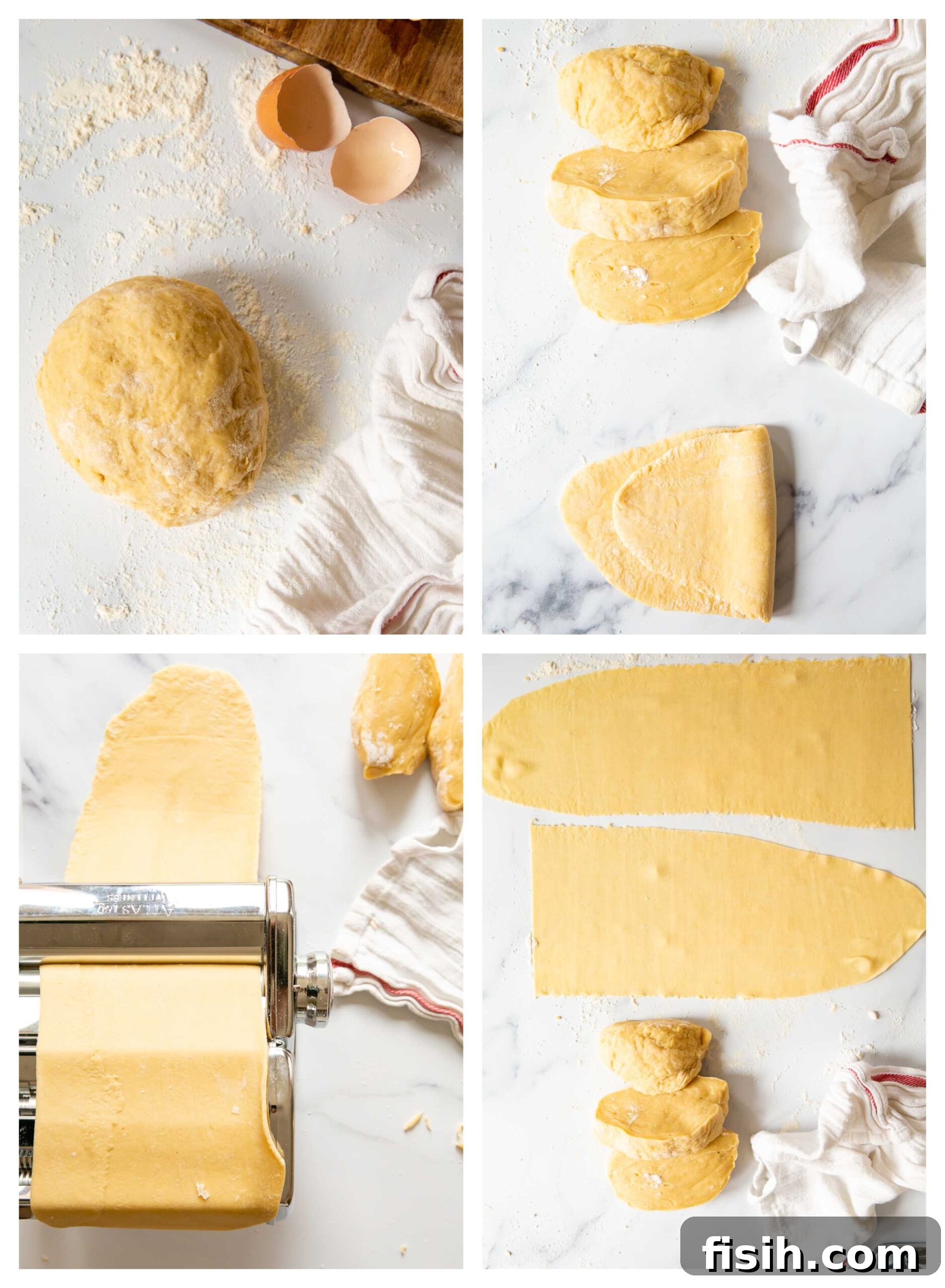
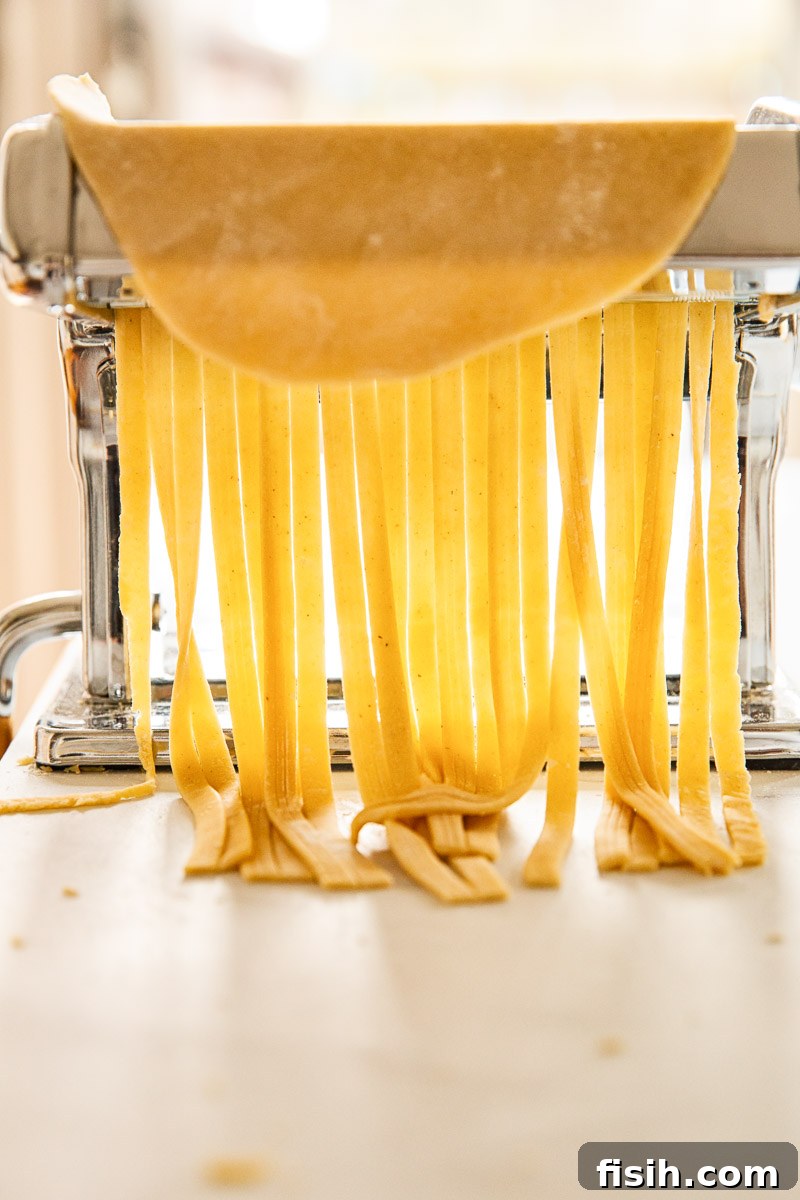
Once your pasta dough has rested, divide it into four equal disks. Before feeding each disk into the pasta machine, lightly dust it with flour to prevent sticking. Keep the remaining dough disks covered under a damp tea towel to prevent them from drying out. Begin by passing a dough disk through the widest setting of your pasta machine. After the first pass, fold the dough in half or in thirds and pass it through the widest setting again. This helps to further knead and strengthen the dough, resulting in a smoother texture. Gradually decrease the roller setting, typically moving to setting 3, and repeat the folding and rolling process. Finally, adjust the setting to 6 or 7, depending on your preferred pasta thickness; I usually opt for setting 6 for tagliatelle/fettuccine and setting 7 for finer pastas like tagliolini or for ravioli. This progressive thinning ensures an even and consistent sheet.
Once you have a long, thin sheet of dough at your desired thickness, cut it in half for easier handling and lightly dust it with flour. Now, switch to your pasta cutting attachment. Feed the pasta sheet through the cutter, and watch as it magically transforms into beautiful, uniform pasta ribbons. Gently gather the freshly cut pasta, dust it lightly with more flour to prevent sticking, and form it into neat nests. Continue this process with the remaining dough disks. While tagliatelle and fettuccine remain my personal favorites, the world of fresh pasta offers endless possibilities for shapes. What’s your favorite?
Feel free to share your thoughts and preferences in the comments below!
Cooking and Storing Fresh Pasta for Ultimate Enjoyment
Once your beautiful fresh pasta is made, the final steps are cooking it to perfection and, if necessary, storing it correctly. Fresh pasta cooks significantly faster than its dried counterpart, so attention to detail here is key to achieving that coveted al dente bite.
Cooking Fresh Pasta: Quick and Delicious
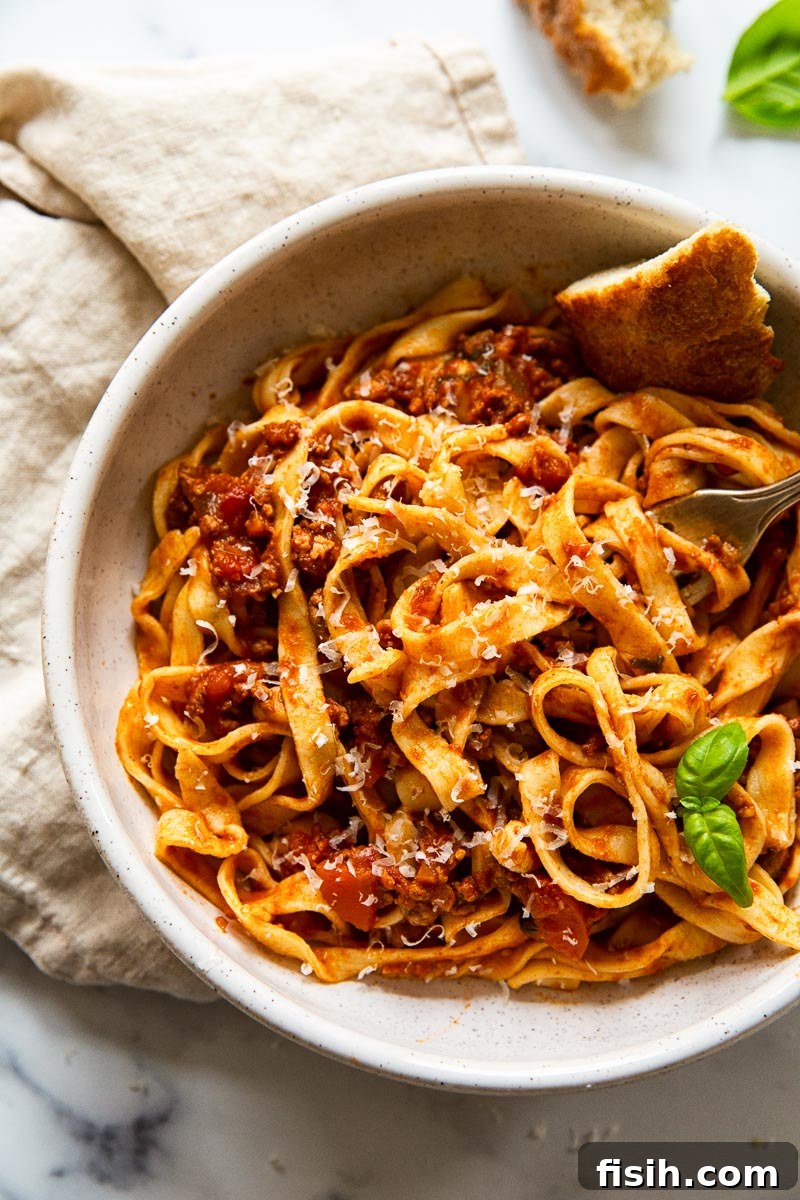
Bring a large pot of generously salted water to a rolling boil. Adding salt to the water is crucial as it seasons the pasta from within. Carefully drop your fresh pasta nests into the boiling water. Unlike dried pasta, fresh pasta usually takes no more than 2-4 minutes to cook, depending on its thickness. For the traditional al dente texture – firm to the bite but not hard – aim for around 3 minutes. Keep a close watch and taste a strand to confirm it’s perfectly done. Once cooked, drain the pasta briefly, reserving a little pasta water, and immediately toss it with your favorite sauce. The starch in the pasta water can help emulsify the sauce, ensuring it clings beautifully to each strand.
Storage Tips for Fresh Pasta
If you don’t plan to cook your fresh pasta right away, proper storage is essential to maintain its quality and prevent it from sticking or spoiling. There are a few effective methods:
- Drying: For short-term storage, you can lightly dust the pasta nests with semolina flour and leave them to air dry on a pasta drying rack for a few hours. This prevents sticking. Once partially dry, they can be stored loosely in an airtight container in the refrigerator for 1-2 days. For longer-term drying, you’ll need to dry them completely, which can take 12-24 hours depending on humidity. Fully dried pasta can be stored in an airtight container at room temperature for several weeks, similar to commercially dried pasta.
- Freezing: Fresh pasta freezes exceptionally well. Arrange the dusted pasta nests in a single layer on a baking sheet and freeze until solid (about 30 minutes to an hour). Once frozen, transfer them to a freezer-safe bag or container. Frozen fresh pasta can be stored for up to 1-2 months. When ready to cook, drop the frozen pasta directly into boiling water; it might take an extra minute or two to cook compared to fresh.
Essential Pasta Making Tips
- **Dough Consistency is Key:** Be attentive to the texture of your dough. It might require slight adjustments with a little extra flour or a splash of water to achieve the perfect firm-yet-pliable feel. Don’t be afraid to trust your instincts.
- **Resting is Crucial:** Always allow your pasta dough to rest for at least 20-30 minutes before rolling and shaping. This resting period is vital; it gives the flour time to fully hydrate and the gluten a chance to relax, ensuring a smooth, elastic dough that’s easy to work with and results in the right tender-chewy texture.
- **The Pasta Machine Advantage:** While not strictly necessary, a pasta machine significantly simplifies the process of making homemade pasta. It ensures perfectly even thickness, saving you considerable effort and guaranteeing uniform cooking. Remember to lightly dust your dough with flour before each pass through the machine to prevent sticking.
- **Hand-Rolling Precision:** If you choose to make pasta by hand, dedicate time to ensuring consistent thickness throughout your pasta sheets. This consistency is essential for all the pasta to cook evenly at the same rate, preventing some pieces from being undercooked while others are overcooked.
- **Preventing Stickiness:** If you’re not cooking your fresh pasta immediately, it’s highly recommended to dry it slightly. This prevents the delicate strands from sticking and clumping together. A pasta drying rack is ideal, but you can also improvise with clean wooden spoon handles or even clothes hangers!
- **Quick Cooking Time:** Fresh pasta cooks incredibly fast – often in just 2-4 minutes for an al dente result. This is much quicker than dried pasta, so stay vigilant and taste test frequently to avoid overcooking.
Favourite Recipes Using Fresh Pasta
- Creamy Tagliatelle with Bacon, Mushroom and Truffle Oil
- Tagliatelle with Pancetta, Basil and Mozzarella
- Seafood Lasagna
- Easy Lasagna Soup
Homemade Fresh Pasta Recipe
Print Recipe
Equipment
-
Marcato Atlas 150 pasta machine
Ingredients
- 400g/3 cups+2 tbsp 00 pasta flour
- 4 large eggs
Instructions
To make pasta dough
-
Empty your flour onto a clean work surface, form a well in the center with your hand, and break eggs directly into the well.Then, using your fingertips or a fork, gently break up the egg yolks and gradually work the eggs into the flour until a cohesive dough forms. If your dough is too stiff, add water one tablespoon at a time for the right consistency.
-
Alternatively, if using a stand mixer with a dough hook attachment, combine the flour and eggs in the mixer bowl and mix until a dough ball forms.
-
For a food processor, add both ingredients simultaneously, switch it on, and let it run until the mixture forms a dough ball.
-
With any method, monitor the dough consistency carefully and adjust with more flour or water as needed. Cover the pasta dough and let it rest for 30 minutes before shaping.
To shape pasta
-
Slice the rested pasta dough into 4 equal disks. Lightly dust each dough disk with flour before feeding it through a pasta machine to prevent sticking. Keep the remaining dough covered.Start with the widest setting on your pasta machine. After the first pass, fold the dough over and send it through the machine again. Then, change the setting to 3 and repeat the process. Finally, adjust to setting 6 or 7, depending on your desired thickness (I prefer 6 for fettuccine and 7 for finer pasta like tagliolini or ravioli).
-
Once the dough sheet reaches the desired thickness, cut it in half if it’s too long, and lightly dust with flour. Switch to the pasta cutting attachment and feed the sheets through to create beautiful pasta ribbons.Dust the cut pasta with flour and gently gather it into nests. Repeat with the rest of the dough.
To cook fresh pasta
-
Cook the fresh pasta in a large pot of boiling salted water for 3 minutes for an al dente finish. Drain, then mix immediately with a sauce of your choice.
Nutrition Information
Calories: 427kcal |
Carbohydrates: 77g |
Protein: 16g |
Fat: 5g |
Saturated Fat: 2g |
Cholesterol: 164mg |
Sodium: 64mg |
Potassium: 168mg |
Fiber: 3g |
Sugar: 1g |
Vitamin A: 238IU |
Calcium: 40mg |
Iron: 5mg
Nutrition information is automatically calculated, so should only be used as an approximation.
Tried this recipe?Let us know how it was!
Making fresh pasta at home is a culinary journey that rewards you with incredible flavor and a deep sense of satisfaction. It’s an art form passed down through generations, yet accessible to anyone willing to get their hands a little dusty with flour. With just two simple ingredients and a bit of practice, you can transform your kitchen into an Italian trattoria, serving up delicious, authentic pasta that will impress family and friends alike. So, roll up your sleeves, embrace the process, and savor the magic of homemade pasta!