
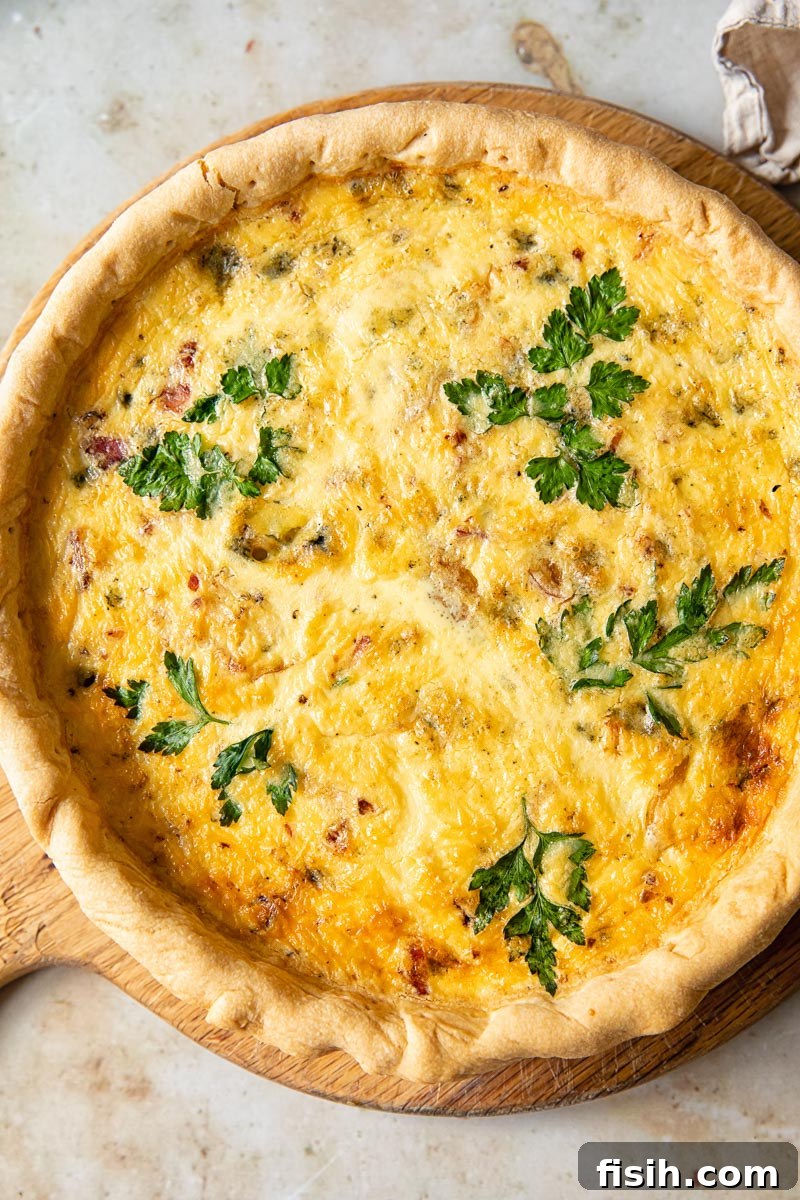
The Ultimate Bacon, Blue Cheese, and Caramelized Onion Quiche: A Culinary Adventure
Prepare your senses for an unforgettable culinary journey. Our **Bacon, Blue Cheese, and Caramelized Onion Quiche** recipe is designed to ignite your tastebuds and elevate your home cooking skills. It’s a symphony of flavors—richly cheesy, delightfully salty, and perfectly tangy—a truly sensational savory tart that promises to be a showstopper.
To complement the indulgent richness of this robust quiche, we highly recommend serving it alongside a vibrant Summer Tomato Salad with Fresh Herbs. The crisp, refreshing notes of the salad provide a beautiful contrast, balancing the dairy-forward decadence of your homemade masterpiece.
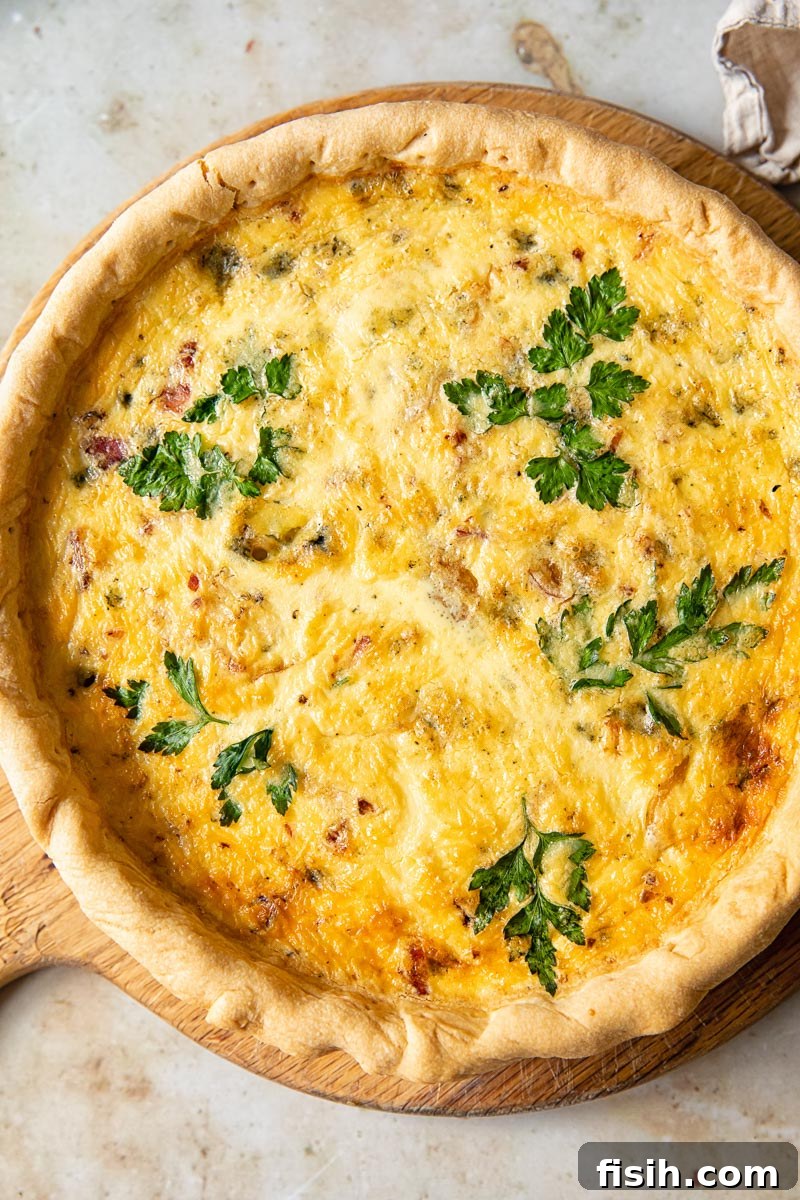
Embrace the Divide: Why Quiche Reigns Supreme
Few dishes spark as much debate as quiche. Like Marmite, tequila, or cilantro, it firmly occupies a ‘love it or hate it’ position in the culinary world. Yet, for devotees like my husband, whose unwavering enthusiasm inspired this bold recipe, a well-made quiche is nothing short of perfection.
Our featured combination of Stilton cheese and smoky bacon is a flavor powerhouse. The intense, pungent notes of the blue cheese, paired with the deep, cured essence of the bacon, create a formidable alliance that delivers a powerful taste punch. Adding delicate threads of expertly caramelized onion introduces a nuanced sweetness, providing an exquisite counterpoint to these two dominant forces and elevating the quiche to a gourmet experience.
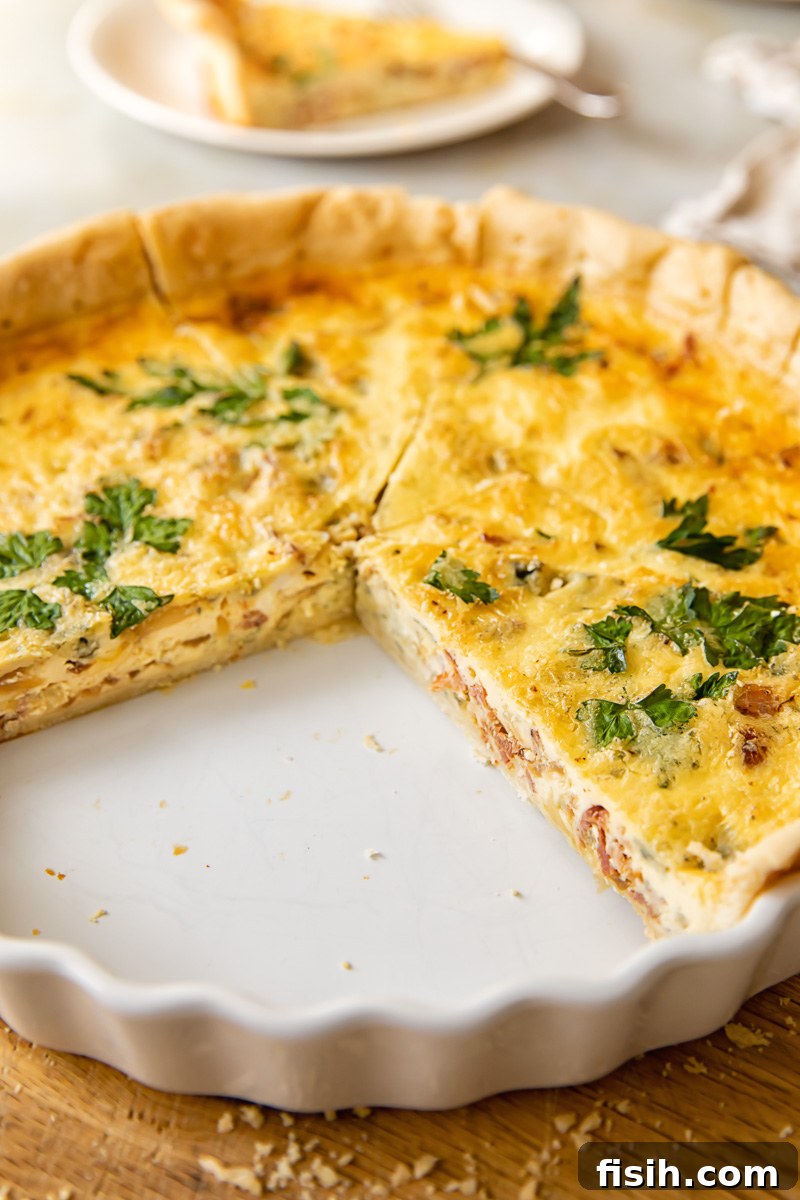
Mastering the Art of Quiche: From History to Homemade Perfection
The journey of quiche begins not in France, but in medieval Germany, where it was known as ‘kuchen’—a humble tart made with bread dough, bacon, eggs, and cream custard. As territories shifted and the region was claimed by France, it became known as Lorraine, giving birth to the iconic Quiche Lorraine.
Today, quiche is recognized globally as an open-faced savory tart, typically featuring a rich egg and custard mixture, often enhanced with cheese and various delectable fillings chosen by the baker. Regardless of your personal stance on quiche, achieving a “table-top triumph” requires adherence to a few universally accepted principles:
- Flawless Filling: The custard filling must be beautifully set and smooth, boasting a silky texture. Avoid a rubbery or watery consistency at all costs.
- Harmonious Ratios: The balance between eggs and cheese is paramount. Careful, thoughtful proportions are the secret to a rich yet not overwhelming flavor profile.
- Perfect Pastry: The crust should be evenly golden-brown and delightfully crisp. A bitter, burnt crust or a soggy, slack base is simply unacceptable.
While crafting a quiche from scratch can seem like a labor-intensive endeavor, it’s a highly rewarding process that can be easily managed. We recommend a strategic, three-stage approach to mitigate any kitchen fatigue and ensure a relaxed, enjoyable baking experience:
- Stage One: The Foundation. Prepare and blind bake your pastry shell. Alternatively, for a time-saving solution, feel free to use a high-quality store-bought pastry. This step can be completed a day or two in advance.
- Stage Two: Flavor Development. Cook your chosen fillings, such as the bacon and caramelized onions for this recipe. Like the pastry, these can be prepped ahead of time and stored.
- Stage Three: Assembly and Bake. Whisk together the custard, assemble the components within the pre-baked crust, and then bake to golden, creamy perfection.
By breaking down the process, you transform a seemingly complex recipe into an achievable and enjoyable culinary project.
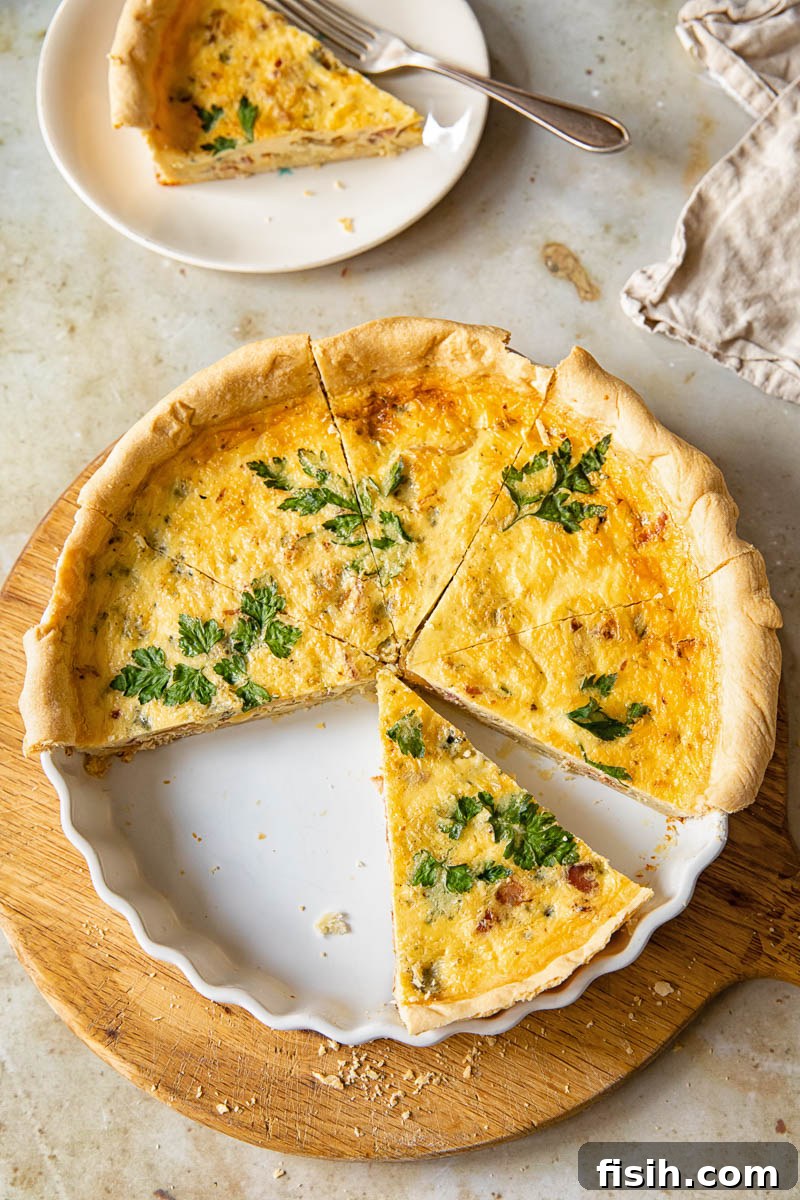
The Endless World of Quiche Variations and Debates
The versatility of quiche is boundless, leading to countless recipe deviations and sparking passionate debates among quiche connoisseurs. Is it best served piping hot or elegantly cold? Should it be enjoyed with fingers for a casual bite, or with a knife and fork as a refined meal?
Then there’s the filling conundrum: what constitutes an acceptable ingredient (like classic ham), and what is an absolute culinary faux pas (like, perhaps, tuna)? And the ever-present question: **is a crustless quiche truly a quiche?** Choose your allegiance, for the quiche debates are fierce!
Interestingly, the name ‘Lorraine’ does not refer to a graceful French lady, but rather means ‘famous army’—a fitting etymology for such a polarizing dish. To bear the esteemed title of Quiche Lorraine, a tart must traditionally contain Swiss cheese and bacon. However, there’s absolutely no harm in adapting your quiche to your personal taste, perhaps by using sharp Cheddar cheese and savory ham instead. You simply cannot claim the authentic ‘Lorraine’ moniker.
Quiche is also an ingenious way to incorporate more vegetables into your diet. My children, for instance, have always adored a comforting cheese and broccoli quiche, preferring it warm and, surprisingly, served with a side of baked beans! As I mentioned, quiche has a knack for sparking unique preferences. I, on the other hand, lean towards a more refined combination of creamy goat’s cheese and sun-kissed tomatoes, served at a delightful room temperature, accompanied by a crisp green salad.
And let’s not forget the **crustless quiche** discussion. Some purists argue it’s merely a frittata in disguise. Yet, many champion it as a fantastic option for those seeking a gluten-free meal or a lighter, low-carb alternative. Which side of this culinary fence do you stand on?
Essential Quiche Recipe Tips and Notes
- Pastry Perfection: While making pastry from scratch is a rewarding skill, don’t hesitate to use a high-quality store-bought shortcrust pastry for a quicker and equally delicious result. There’s no shame in a clever shortcut!
- Prep Ahead Strategy: Baking a quiche from scratch is an investment of your time, but you can significantly reduce the effort on baking day by dividing the preparation into stages. The pastry can be made and even blind-baked, and your bacon and onions can be cooked up to two days in advance, stored in the refrigerator until you’re ready to assemble.
- The Magic of Blind Baking: This crucial step involves partially baking the pastry case before adding the wet filling. This technique, cherished by pastry chefs, creates a barrier that prevents the crust from becoming soggy. Skipping this step is a common pitfall, leading to a “swampy” quiche base. Ensure your crust is firm and lightly golden before pouring in the custard.
- Unleash Your Creativity: The world of savory quiche fillings is truly endless. Explore classic combinations like ham and cheese, seasonal delights such as brie and cranberry, or earthy wild mushroom blends. Feel free to raid your fridge and experiment with unexpected pairings—minced beef and kimchi, anyone? Let your imagination and available ingredients guide you!
Storage, Leftovers, and Reheating Best Practices
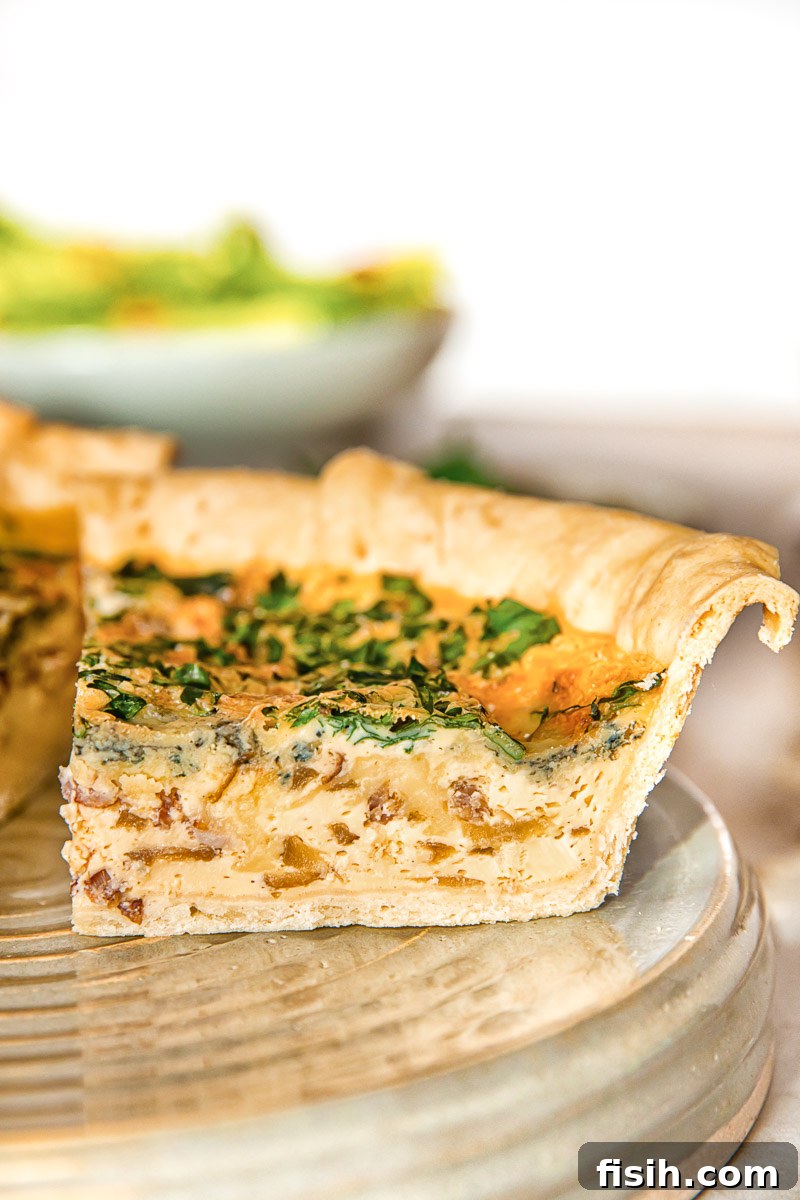
One of the many charms of this bacon quiche is its versatility: it’s equally delicious whether served warm straight from the oven or chilled to perfection. For optimal freshness, cover your quiche tightly and store it in the refrigerator, where it will remain delectable for 2-3 days.
While convenient, we generally advise against freezing quiche. The delicate balance of ingredients, particularly the custard and the pastry, can compromise their texture and integrity upon thawing, leading to a less satisfying experience.
If you prefer your quiche warm, you can gently reheat individual slices or the whole tart in an oven preheated to 350°F (175°C) for approximately 15 minutes. Keep a close eye on the crust, as it can brown quickly and potentially burn. A common solution is to loosely cover the quiche with aluminum foil during reheating, which prevents the crust from scorching. However, be mindful that this method can sometimes trap moisture, running the risk of a slightly soggy pastry—a delicate balance to achieve!
More Egg-cellent Recipes to Try
- Easy French Omelette with Bacon, Potatoes and Zucchini
- Healthy Mini Frittatas
- Chorizo Breakfast Hash with Eggs and Feta
- Turkish Eggs (Cilbir)
Bacon, Stilton and Caramelised Onion Quiche Recipe
By Julia Frey of Vikalinka
Prep Time: 40 mins
Cook Time: 1 hr 40 mins
Total Time: 2 hrs 20 mins
Servings: 8
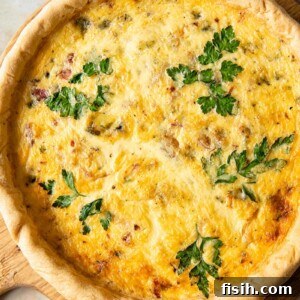
My bacon, blue cheese and caramelised onion quiche recipe will challenge your tastebuds and improve your cooking skills.
Pin Recipe
Print Recipe
Equipment
- Food processor
- Pie dish
Ingredients
For the shortcrust pastry
- 250g / 1 3/4 cup + 1 tbsp plain flour
- 125g / 1/2 cup + 1 tbsp cold unsalted butter, cubed
- 1 tsp salt
- 3 tbsp ice cold water
For the filling
- 1 onion, sliced
- 6 strips streaky bacon
- 100g / 3.5 oz Stilton cheese, or any other blue cheese
- 5 large eggs
- 200ml / 1 cup double/heavy cream
- 100ml / 1/3 cup whole milk
- Salt and pepper to taste
- 3-4 parsley sprigs, for garnish (optional)
Instructions
- Prepare ahead: The pastry, caramelized onion, and cooked bacon can all be prepared up to 2 days in advance and stored in the refrigerator until needed.
- Make the Pastry: In a food processor, combine the flour, salt, and cold cubed butter. Pulse until the mixture resembles coarse crumbs. Gradually add the ice-cold water, one tablespoon at a time, pulsing until the mixture starts to come together and feels slightly heavier. It won’t form a solid ball yet.
- Chill the Dough: Transfer the mixture from the food processor to a large bowl. Gently bring the dough together with your hands to form a shaggy ball, being careful not to overwork it. Wrap it in plastic wrap, then gently press it into a disk shape. Chill in the refrigerator for at least 20 minutes.
- Roll out the Pastry: Remove the chilled pastry from the refrigerator and let it sit at room temperature for at least 20 minutes to become pliable. Attempting to roll out very cold dough will cause it to crack. On a lightly floured surface, roll the dough into a 12-inch circle. If cracks appear, simply pinch them back together. Carefully drape the rolled pastry over your rolling pin and transfer it to a 9-inch pie plate. Patch any tears as needed.
- Shape and Chill: Once the pie plate is lined, fold the overhanging edges of the pastry under to create a thicker rim. Crimp the edges decoratively. Chill the lined pie crust in the fridge for another 20 minutes. Preheat your oven to 400°F (200°C).
- Blind Bake the Crust: Remove the chilled pie crust from the fridge. Prick the bottom all over with a fork. Line the crust with parchment paper and fill it with baking beans (or dry rice/lentils). Blind bake for 20 minutes at 400°F (200°C). After 20 minutes, carefully remove the baking beans and parchment paper, then bake for an additional 5 minutes. The crust should appear pale and partially baked, and a slight shrinkage is normal.
- Prepare the Filling: While the crust is blind baking, cook the onion and bacon. In a frying pan, cook the streaky bacon until it’s crispy and the fat has rendered. Remove the bacon to a plate. In the same pan, add the sliced onion. If the pan is too dry, add a touch of oil. Cook over low heat for 15-20 minutes, stirring occasionally, until the onions are deeply caramelized and tender. (Note for US/Canada cooks: UK bacon is leaner. If using fattier bacon, discard most of the rendered fat, leaving about 1 tbsp for the onions.) Allow the cooked bacon to cool, then chop it into pieces.
- Make the Custard: Crumble the Stilton cheese with a fork (or grate other types of cheese). In a large bowl, whisk together the eggs, double/heavy cream, and whole milk. Season generously with salt and pepper.
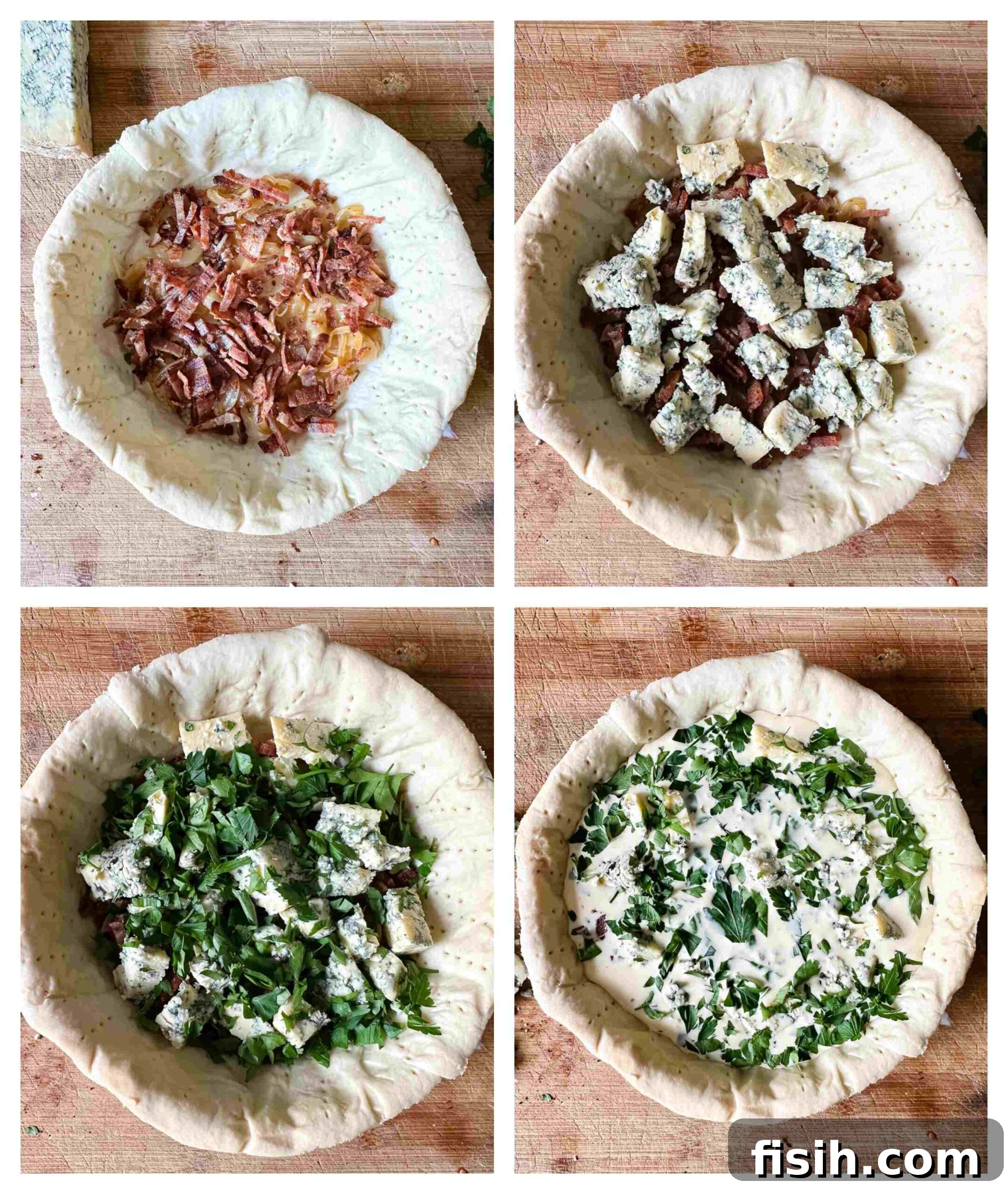
- Assemble and Bake: Reduce the oven temperature to 325°F (160°C). Scatter half of the crumbled blue cheese over the base of the blind-baked pastry crust. Layer the caramelized onions and chopped bacon over the cheese, then top with the remaining cheese. Arrange the parsley sprigs on top of the cheese if using. Carefully pour the egg mixture over the filling, trying not to disturb the layers too much.
- Final Bake: Bake in the preheated oven for 35-40 minutes, or until the quiche filling is set but still has a slight wobble in the center. Be careful not to overbake, as this can result in a dry, rubbery texture.
Video Guide
Nutrition Information (per serving, approximate)
Calories: 409 kcal |
Carbohydrates: 27g |
Protein: 11g |
Fat: 29g |
Saturated Fat: 17g |
Polyunsaturated Fat: 2g |
Monounsaturated Fat: 8g |
Trans Fat: 1g |
Cholesterol: 175mg |
Sodium: 893mg |
Potassium: 172mg |
Fiber: 1g |
Sugar: 2g |
Vitamin A: 1056 IU |
Vitamin C: 2mg |
Calcium: 126mg |
Iron: 2mg
Nutrition information is automatically calculated and should only be used as an approximation.
Tried this delightful recipe?
We’d love to hear about your experience! Share your thoughts and photos in the comments below.