
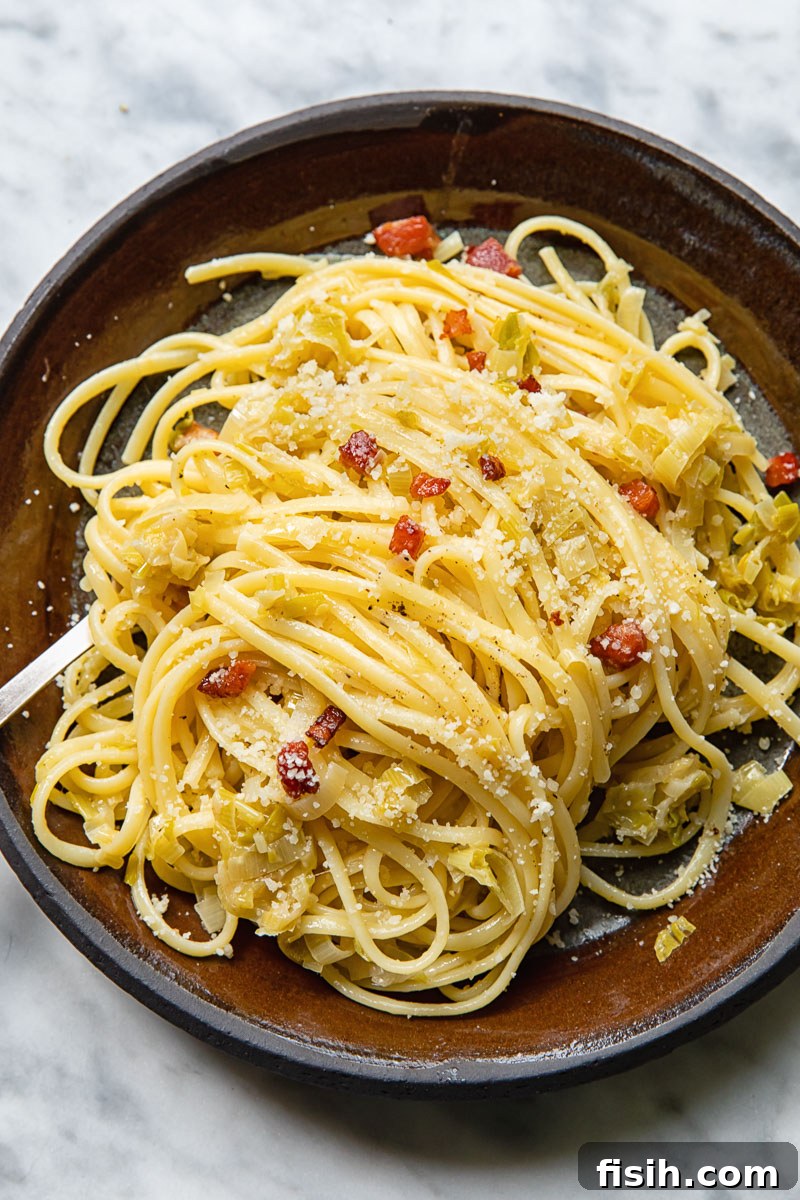
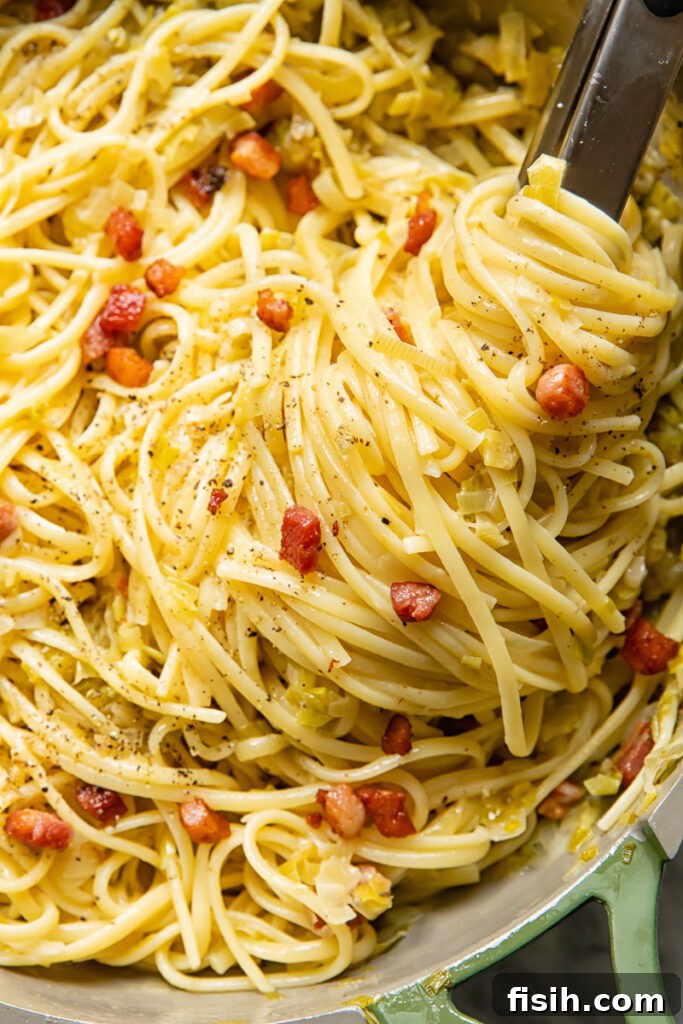
In the culinary world, some dishes effortlessly capture hearts and palates with their simplicity and profound flavors. This Caramelized Leek and Pancetta Linguine is precisely one such gem. With just five core ingredients, it masterfully transforms humble leeks into a sweet, creamy foundation, interwoven with smoky pancetta (or bacon) and perfectly cooked linguine. The result is a deeply satisfying and balanced plate that, for many, evokes a comforting sense of nostalgia. It’s truly a testament to how uncomplicated ingredients can create something extraordinary, proving that deliciousness doesn’t always require a complex recipe.
For those times when your kitchen calls for a brighter, perhaps vegetarian, long pasta dish to herald the arrival of spring, consider a vibrant alternative. Our Quick Roasted Cherry Tomato and Basil Fettuccine bursts with plump, juicy flavors, radiating the warmth and freshness of sunshine.
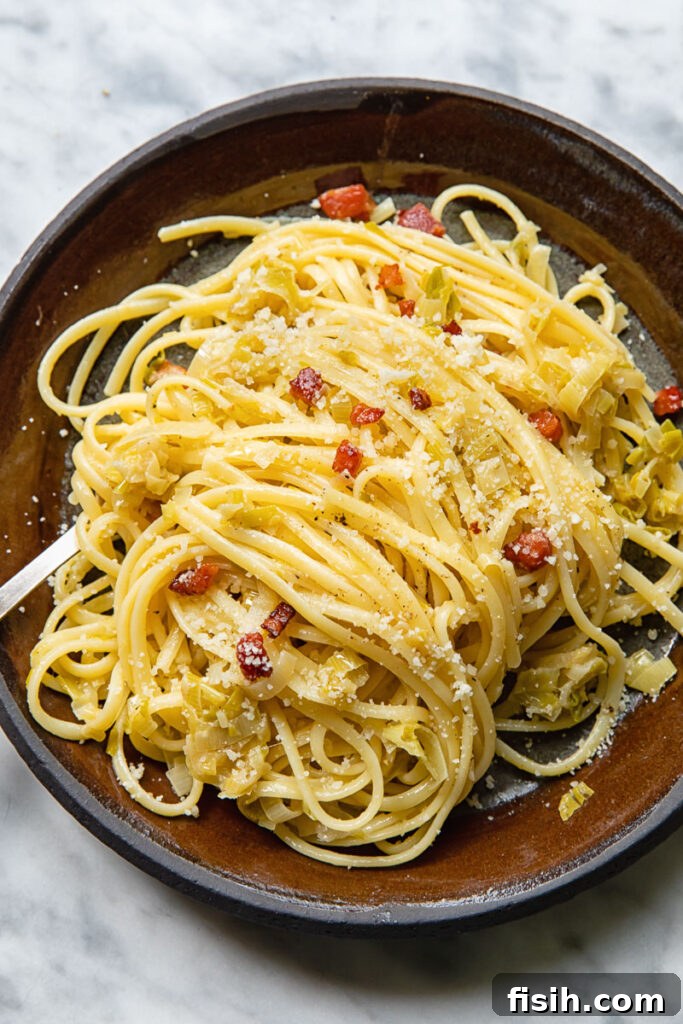
But let’s return to the heartwarming embrace of this particular linguine dish. The notion of nostalgia attached to it came straight from my teenage daughter, who described it as reminiscent of “simple dinners from childhood.” And I can certainly see her point. As a parent, I often found myself serving a variety of spaghetti or linguine dishes when my children were younger. These meals frequently served a dual purpose: providing hearty sustenance while subtly incorporating nourishing green vegetables and bite-sized pieces of meat. This Leek and Pancetta Linguine perfectly embodies that comforting, wholesome, and delightfully straightforward approach to family dining, making it a timeless addition to any recipe repertoire.
The Versatility of Leeks in Cooking
Leeks, with their elegant, long, and pale stalks, are more than just visually appealing; they are a truly versatile vegetable. A close relative to onions and garlic, they share a similar aromatic quality when raw, possessing a distinct, slightly pungent scent. However, their true magic unfolds during cooking, where they transform into a milder, sweeter, and incredibly tender ingredient. This inherent sweetness makes them invaluable in a variety of culinary applications.
Beyond being a fantastic substitute when you’re out of onions, leeks excel at lending sweet undertones and a delicate creaminess to the foundations of soups and stews. Our Chicken Vegetable Soup and Hearty Turkey Stew vividly illustrate how leeks elevate these comforting classics, adding depth without overpowering other flavors. Their ability to soften and almost melt into a dish makes them a chef’s secret weapon for creating rich, nuanced broths.
Moreover, leeks frequently take center stage in heartwarming, wintry recipes that evoke a sense of home and comfort. Consider the beloved Chicken and Leek Pie, where their sweet creaminess perfectly balances the savory chicken. They also shine alongside fish, as demonstrated in our Baked Cod with Mustard Sauce, adding a refined touch to seafood. Leeks can also be prepared as a delightful side dish on their own—grilled, sautéed, or roasted until they are wonderfully soft, almost syrupy in texture. This transformation makes them a sophisticated accompaniment to any main course, highlighting their natural sweetness and silky texture.
Essential Guide: How to Prepare and Clean Leeks for Cooking
Leeks are undeniably delicious, but they come with a reputation for being a bit “grubby.” Their layered structure, much wider and more intricate than an onion, can easily trap soil, sand, and grit, which is why a thorough cleaning is paramount before cooking. Skipping this crucial step can lead to an unpleasant gritty texture in your finished dish. Here’s my tried-and-true approach to ensure your leeks are perfectly clean and ready for culinary transformation:
- Trim the Ends: Begin by cutting off the tougher, darker green sections of the leek. You’ll notice where the leaves start to separate and deepen in color; this is typically where the fibrous part begins. Next, trim off the root end, removing any stringy bits while keeping the base intact enough to hold the layers together initially.
- Slice Lengthways: With the ends trimmed, carefully slice each leek lengthwise down the middle. This action opens up the leek, exposing all its inner layers. This is a critical step for effective cleaning.
- First Rinse Under Running Water: Take the halved leeks and place them under cool running tap water. While doing so, gently fan out the layers with your fingers. Allow the water to run freely through each layer, dislodging any trapped dirt or sand. You’ll likely see grit washing away during this stage.
- Slice Again for Cooking: Once rinsed, lay the leek halves flat on your cutting board and slice them crosswise into small semi-circles, or your desired shape for the recipe. This further breaks down the layers and makes them easier to handle and clean.
- Final Wash in a Colander: Transfer the now-sliced leeks into a colander. Give them a second, thorough rinse under running water, agitating them with your hands to ensure any remaining specks of grit are completely washed away. Shake off excess water or pat them dry with a clean kitchen towel before cooking.
For those who prefer to minimize food waste, the darker green leaves you initially trimmed off can be saved. While I personally tend not to use them in this particular dish as they can absorb flavors differently, they are excellent for adding depth to homemade vegetable or chicken stocks. Simply collect them in a bag and freeze until you’re ready to make your next batch of stock.
Recipe Tips and Notes for Perfect Caramelized Leek and Pancetta Linguine
- Embrace Simplicity: This dish truly shines because of its minimal ingredient list. With just a handful of high-quality components, the creamy, sweet leeks are allowed to take center stage, creating a truly simple yet profound pleasure for your taste buds. Don’t be tempted to overcrowd the flavors; the beauty lies in the harmony of these few elements.
- Mastering Leek Caramelization: The secret to this recipe’s incredible depth of flavor lies in properly caramelizing the leeks. This slow, gentle cooking process isn’t just about softening them; it’s about drawing out their natural sugars and transforming them into a concentrated, buttery sweetness that permeates the entire dish. Cook them over very low heat for approximately 30 minutes, stirring occasionally. Patience here is key; rushing this step will compromise the final taste.
- Pancetta vs. Bacon – Choosing Your Smoky Flavor: I prefer using smoked pancetta for its balanced meat-to-fat ratio, which renders beautifully and imparts a rich, smoky flavor without being overly greasy. However, if pancetta isn’t readily available, good quality thick-sliced, smoked bacon is an excellent and worthy substitute. The goal is to get crispy, flavorful meat bits and rendered fat to cook the leeks in. In a pinch, even finely cubed ham can work, though it will offer a milder flavor profile.
- The Art of Seasoning: Do not underestimate the power of generous seasoning with salt and freshly cracked black pepper. Salt not only enhances the overall taste but critically helps to suppress any latent bitterness in the leeks while amplifying their inherent sweetness. Pepper, on the other hand, introduces a subtle warmth and a delightful dimension of spice, perfectly complementing the mild, creamy texture of the leeks and pasta. Taste as you go and adjust as needed.
- Pasta Perfection: Choose a good quality linguine that will hold up to the creamy sauce. Cook it al dente, meaning it should still have a slight bite to it. Overcooked pasta can become mushy and diminish the dish’s texture. Remember to reserve some of that starchy pasta cooking water – it’s your secret weapon for creating a silky-smooth sauce that beautifully emulsifies with the leeks and cheese.
- Quality Cheese Matters: While Parmesan is the classic choice, opting for a good quality, freshly grated Parmesan Reggiano will make a noticeable difference. Its nutty, salty, and umami notes perfectly complement the sweetness of the leeks and the smokiness of the pancetta. Avoid pre-grated cheeses, which often contain anti-caking agents that can hinder melting and flavor.
Delightful Serving Suggestions for Your Linguine
This creamy leek, pancetta, and linguine recipe is a wonderfully self-contained meal, offering a harmonious blend of starchy carbohydrates, nourishing green vegetables, and satisfying protein. It truly stands on its own as a complete and balanced plate. However, for those who, like me, appreciate a little something extra, especially a fresh accompaniment, there are several delightful options.
For salad enthusiasts, a light and vibrant side can cut through the richness of the pasta beautifully. I often opt for either a crisp Warm Zucchini Salad, which adds a fresh, earthy counterpoint, or for something more substantial and textural, a classic Tuscan Panzanella Salad. The latter, with its juicy tomatoes, crunchy bread, and fresh herbs, provides a delightful contrast in both flavor and texture.
And let’s be honest, for many, myself included, almost every pasta dish feels incomplete without a side of bread. When my son is home, garlic bread is practically a non-negotiable accompaniment! To ensure I’m always prepared for this demand, I try to keep either some homemade No-Knead Focaccia Bread or a pre-prepared batch of Air Fryer Garlic Bread in reserve. These crusty, flavorful breads are perfect for soaking up any remaining sauce and completing the ultimate comfort food experience. A simple green salad with a vinaigrette dressing is also always a good choice if you’re looking for something quick and fresh.
Storage and Leftovers: Tips for Your Pasta
While freshly made pasta, especially long pasta like linguine, is almost always at its best straight from the pan, circumstances sometimes lead to leftovers. It’s a common observation that pasta dishes can lose some of their magic upon reheating, often becoming a bit stickier or less vibrant than their initial serving. Despite this, with a few careful considerations, you can still enjoy this delicious leek and pancetta pasta for a second meal.
If you find yourself with an overestimation of servings, this flavorful leek and pancetta pasta will keep well in an airtight container in the refrigerator for up to 3 days. When it comes to reheating, avoid the microwave if possible, as it can often dry out the pasta and make the sauce uneven. Instead, gently reheat the pasta on the hob (stovetop) over low to medium heat. If the linguine appears a bit sticky or the sauce seems too thick, add a splash of water, or even better, a small amount of vegetable or chicken stock, stirring constantly until it regains its creamy consistency. This helps to loosen the pasta and revive the sauce, bringing it closer to its original delectable state.
More Creamy Pasta Recipes to Savor
- Homemade Pasta Cream Sauce: A fundamental recipe for elevating any pasta dish.
- Easy Carbonara: A classic Italian favorite, simple yet incredibly rich.
- Prosciutto Wrapped Chicken Alfredo: A gourmet twist on a beloved creamy pasta.
- Indulgent Truffle Mac and Cheese: Elevate your comfort food experience with luxurious truffle notes.
Caramelised Leek and Pancetta (Bacon) Linguine
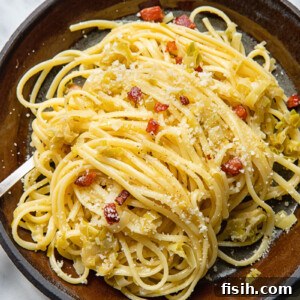
Sweet and buttery leeks ribbon through a smoky, pancetta-studded pasta for a satisfying and balanced plate of… nostalgia, apparently!
Ingredients
- 200g/7oz smoked cubed pancetta, or thickly cut bacon
- 3 leeks, sliced and cleaned
- 2 tbsp unsalted butter
- 50g/½ cup Parmesan cheese, freshly grated
- 500g/½ lb linguine pasta
- Salt and freshly ground black pepper to taste
Instructions
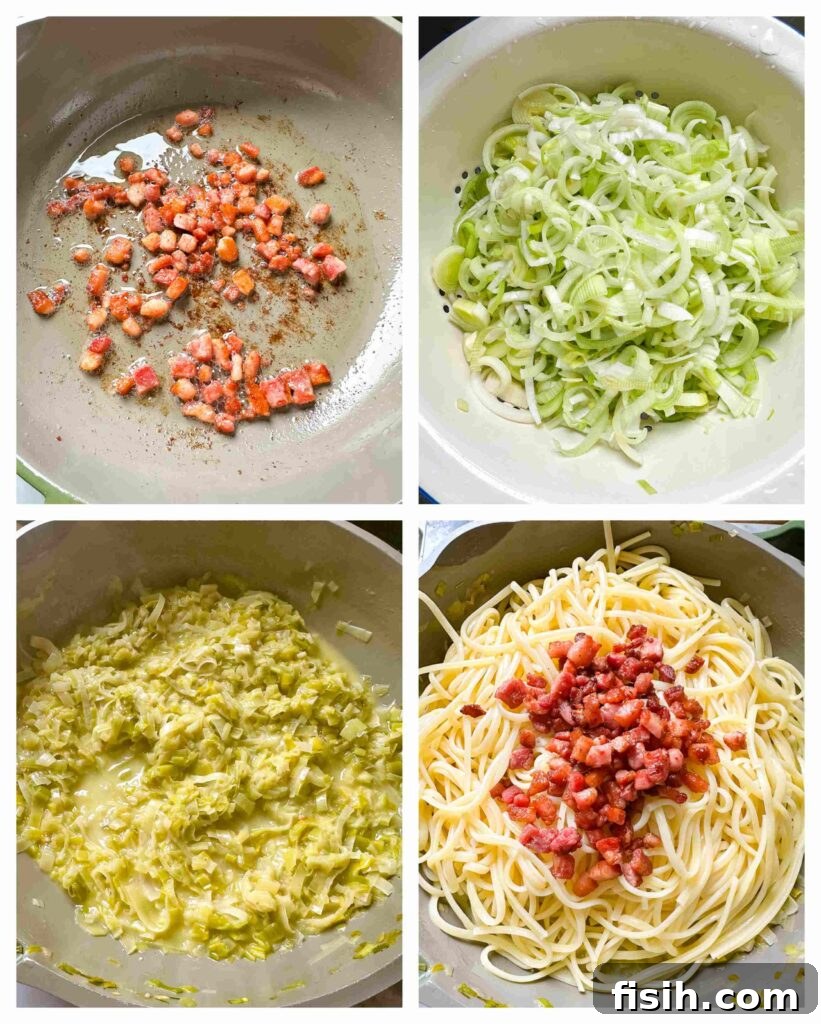
- In a large, heavy-bottomed pan, fry the cubed pancetta over medium-low heat. Cook for about 10-15 minutes, allowing the fat to render and the pancetta to become crispy. (Note: if using bacon, this process will be quicker.) Once crispy, remove the pancetta with a slotted spoon and set aside, leaving the rendered fat in the pan.
- While the pancetta cooks, prepare your leeks. Slice the white and light green parts of the leeks into half-moons. Place them in a colander and rinse thoroughly under cold water, fanning out the layers to remove any trapped grit. Pat them as dry as possible with a clean kitchen towel.
- Bring a large pot of salted water to a rolling boil on the stove. Once boiling, add the linguine and cook according to package directions until al dente. Before draining, reserve about 1/2 cup of the starchy pasta water.
- Add the cleaned and dried leeks to the pan with the rendered pancetta fat. Begin caramelizing the leeks over very low heat. This is a slow process but essential for developing their sweet flavor; expect it to take around 30 minutes. Stir occasionally to prevent sticking. Towards the end of the caramelization, stir in the butter until melted and fully incorporated, adding an extra layer of richness.
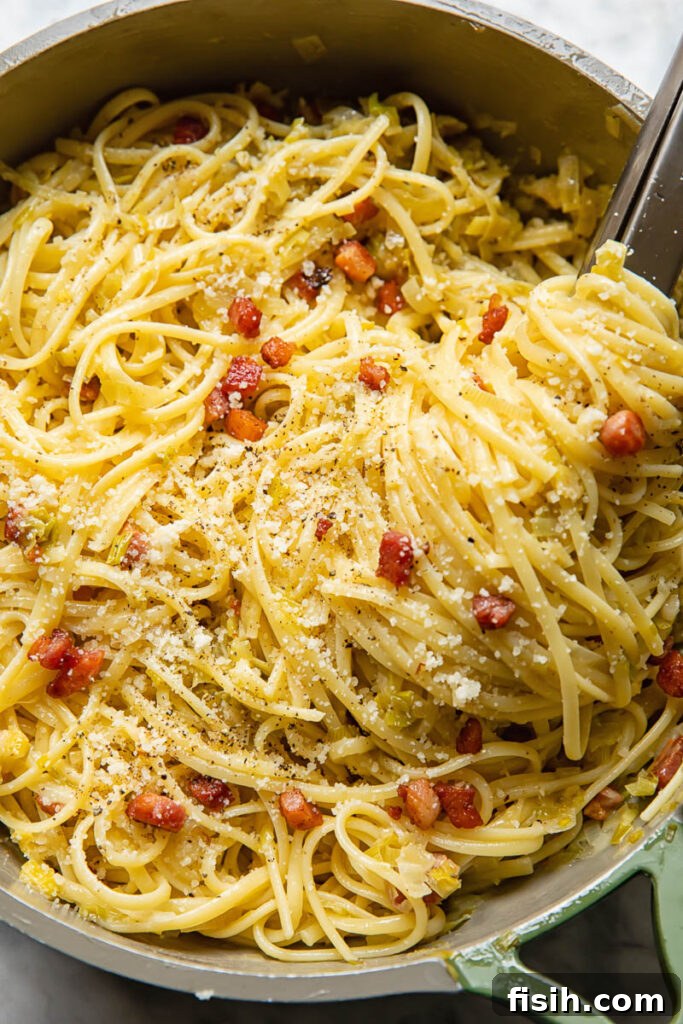
- Once the pasta is cooked, drain it and immediately add it directly to the pan with the caramelized leeks. Pour in the reserved 1/2 cup of pasta water and toss everything together to combine. Next, add the freshly grated Parmesan cheese and the crispy pancetta. Stir vigorously until the cheese has melted and created a luscious, creamy sauce that coats all the linguine. Season generously with salt and freshly ground black pepper to taste. Serve immediately and enjoy!
Nutrition
Calories: 559 kcal | Carbohydrates: 53g | Protein: 19g | Fat: 30g | Saturated Fat: 12g | Polyunsaturated Fat: 4g | Monounsaturated Fat: 11g | Trans Fat: 0.3g | Cholesterol: 57mg | Sodium: 884mg | Potassium: 359mg | Fiber: 3g | Sugar: 4g | Vitamin A: 1404IU | Vitamin C: 8mg | Calcium: 204mg | Iron: 2mg
Nutrition information is automatically calculated, so should only be used as an approximation.