
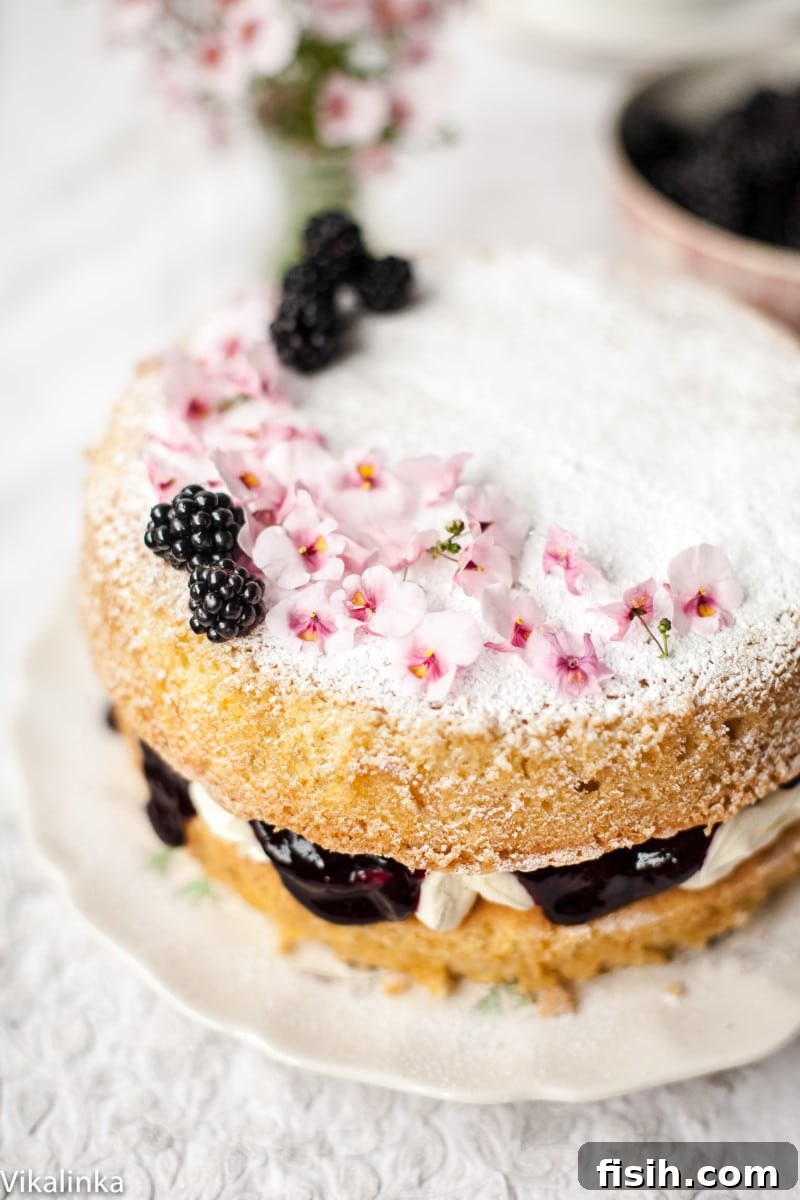
The Victoria Sponge Cake is a true British icon, celebrated for its perfect blend of simplicity and elegance. This timeless dessert features two delicate, buttery sponge cakes embracing a luscious cream filling, often paired with a vibrant fruit compote or jam, and elegantly finished with a gentle dusting of icing sugar. It’s a dessert that evokes warmth, nostalgia, and the comforting tradition of afternoon tea.
If you’re a passionate home baker constantly seeking new challenges and delightful recipes, you might also enjoy exploring my
Naked Cake with Crushed Strawberries
for another exquisite creation.
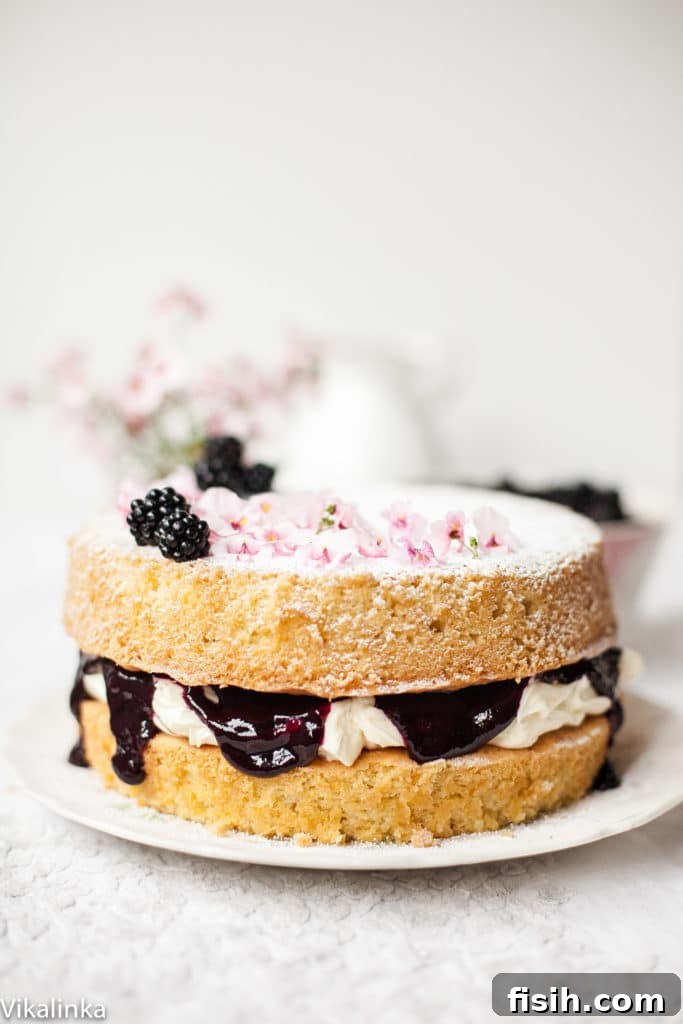
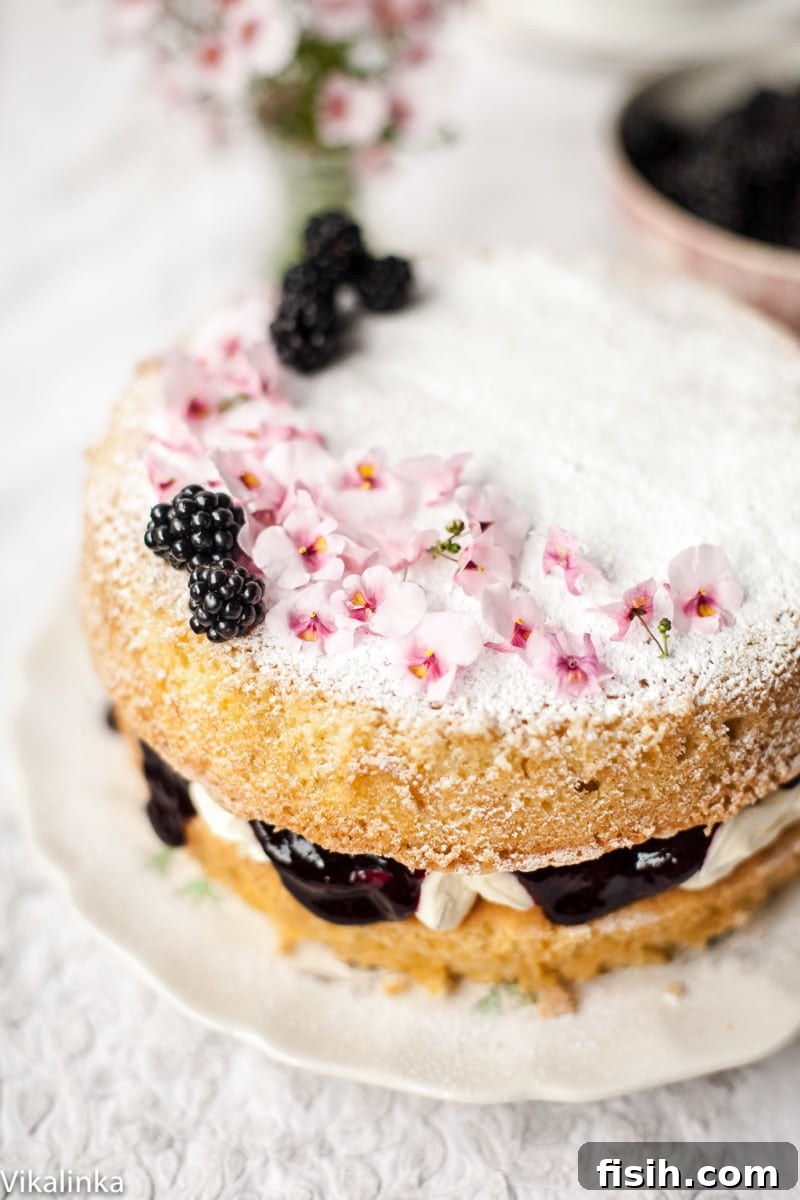
While the classic Victoria sponge recipe traditionally calls for a filling of either rich buttercream or airy whipped cream alongside sweet strawberry jam, I love to infuse familiar favorites with my own unique flair. Today, I’m thrilled to share a delightful personal twist on this beloved classic. Instead of the usual strawberry, my rendition features a vibrant, homemade blackberry compote, perfectly complemented by a light and luxurious mascarpone cream.
The inspiration for this particular berry swap came from a wonderfully successful day of blackberry picking with my children. We spent a glorious afternoon foraging, quickly filling our containers with an abundance of wild, ripe blackberries. Returning home, we knew these precious berries deserved a special treatment, and what better way to celebrate them than by incorporating their rich, slightly tart flavor into a fresh Victoria sponge cake, enjoyed during a relaxing afternoon tea?
What is Victoria Sponge Cake? A Timeless British Tradition
Named in honor of Queen Victoria, who reportedly favored a slice of this delightful cake with her afternoon tea, the Victoria sponge, also affectionately known as Victoria sandwich, is arguably the quintessential British cake. Its roots are deeply embedded in the ritual of afternoon tea, which became fashionable during Queen Victoria’s reign. This simple yet sophisticated cake perfectly embodies the elegance and charm of this cherished tradition.
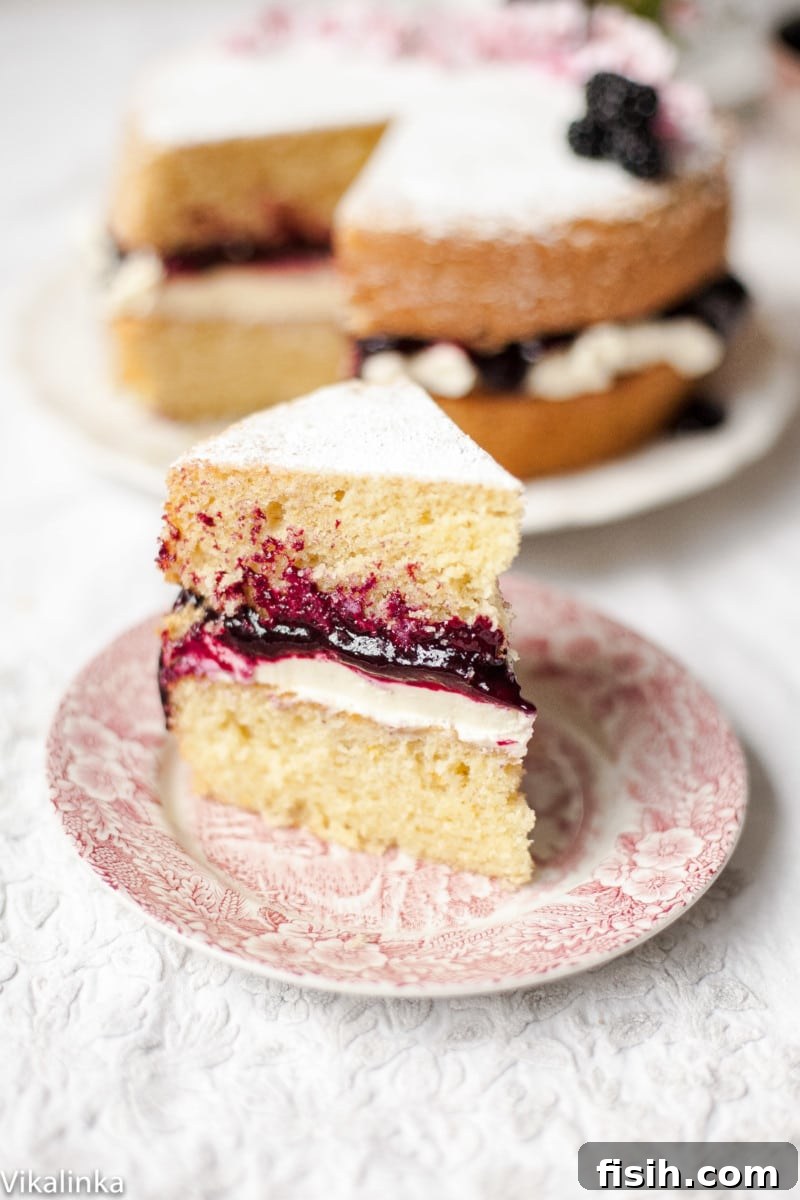
You’ll find variations of Victoria sponge gracing the counters of countless tea rooms, coffee shops, and cafes across the UK. However, as any true baking enthusiast will attest, the homemade version stands unparalleled. The magic of a Victoria sponge lies in its deceptively simple construction: two airy, tender sponge cakes delicately embracing a layer of cream and fruit jam. This straightforward combination creates a flavor profile that is both comforting and utterly glorious.
Elevating this traditional delight further, our recipe swaps the conventional strawberry jam for a homemade blackberry compote and the standard whipped cream for a rich, silky mascarpone cream. This innovative pairing transforms the familiar into an extraordinary culinary experience, a cake so irresistible you’ll want to savor it time and time again.
Mastering the Classic Sponge Cake Recipe: Secrets to a Fluffy Success
The classic British sponge cake is renowned for its light texture and straightforward preparation, but achieving perfection does require a few key techniques. The fundamental batter typically consists of equal weights of butter, sugar, eggs, and flour – a method often referred to as the “creaming method” or the “all-in-one” method in its more modern adaptations.
Traditionally, British recipes often call for self-rising flour, which already contains leavening agents. While this simplifies the process, I personally prefer to use all-purpose flour and add my own leavening agents (baking powder and baking soda). This allows for greater control over the rise and texture, ensuring a consistently light and tender crumb. Whether you use self-rising or all-purpose flour, understanding the role of each ingredient is crucial for a successful bake. High-quality unsalted butter, fine caster sugar, and large, fresh eggs are the cornerstones of an exceptional sponge.
Baking Your Victoria Sponge: Step-by-Step Techniques for Perfection
The true secret to an incredibly soft, delicate, and airy Victoria sponge lies in the mixing process. It all begins with creaming your softened butter and fine caster sugar together. This step is more than just combining ingredients; it’s about incorporating air into the mixture, which is vital for the cake’s light texture. Continue creaming until the mixture becomes pale, light, and wonderfully fluffy, indicating that sufficient air has been incorporated.
Next, introduce the eggs one by one, ensuring each is thoroughly beaten into the mixture before adding the next. This gradual addition prevents the batter from curdling and helps maintain its emulsified structure. After the eggs, you’ll gently fold in your sifted dry ingredients – the flour, baking powder, baking soda, and a touch of salt – along with any flavoring agents like vanilla or lemon zest. Be careful not to overmix at this stage; overworking the gluten in the flour can lead to a tough cake.
A crucial indicator of a well-mixed batter is the sugar’s dissolution. You want the caster sugar to be completely dissolved, ensuring a smooth and tender crumb. A simple test: rub a small amount of batter between your fingers. If it feels smooth and grit-free, you’re on the right track.
**A pro tip for perfect sponge batter:** The final consistency of your batter should strikingly resemble a light and airy buttercream. This visual cue is a reliable indicator that you’ve achieved the ideal texture for a wonderfully light and moist sponge cake. Properly prepared batter is the foundation of a great Victoria sponge.
Storage and Leftovers: Keeping Your Victoria Sponge Fresh
Like most freshly baked cakes, Victoria sponge is undeniably at its peak on the day it’s baked. The sponges are incredibly tender, and the fillings are at their freshest and most vibrant. However, this delightful cake can certainly be enjoyed for a few days following its creation, provided it’s stored correctly.
Due to the delicate cream filling, refrigeration is essential to prevent spoilage and maintain food safety. Store your Victoria sponge cake in an airtight container in the refrigerator. This helps to keep the cream fresh and prevents the cake from absorbing unwanted odors. When ready to serve, allow the cake to come to room temperature for about 20-30 minutes before slicing. This helps to soften the sponge and cream, enhancing its flavor and texture. Enjoying it slightly chilled can also be a refreshing treat on a warm day.
More Delightful Sponge Cake Recipes to Explore
-
Frostbitten Raspberry Cake
– Advanced -
Rose Rhubarb Layer Cake
– Advanced -
Blackberry Tea Cake
– Easy -
Cherry and Apricot Sponge Cake
– Easy
Victoria Sponge Cake with Blackberry Compote
Victoria Sponge Cake is a classic for a reason. Luscious cream filling, layered with homemade blackberry compote, then sandwiched between two buttery sponge cakes and finished off with a dusting of icing sugar. Simple, elegant, and irresistibly delicious.
Prep: 10 mins | Cook: 50 mins | Total: 1 hr | Servings: 8
Ingredients
For the blackberry compote
- 150g / 1 1/2 cup blackberries
- 100g / 1/2 cup sugar
- 2 tbs water
For the cake
- 250 g / 1 cup butter, softened and unsalted
- 250 g / 1 1/3 cup caster sugar
- 4 eggs, large
- 1 tsp vanilla bean paste or extract
- 250 g / 1 3/4 cup flour
- 2 1/2 tsp baking powder
- 1/2 tsp baking soda
- 1/2 tsp salt
- zest of 1 lemon
For the mascarpone cream
- 250 ml / 1 cup mascarpone, chilled
- 1/4 cup icing sugar
- 175 ml / 3/4 cup double/heavy cream
- 1 tsp vanilla bean paste
Instructions
For the blackberry compote
- In a small saucepan, combine blackberries, sugar, and water. Cook over low heat for 15 minutes until the syrup thickens and coats the back of a spoon.
- Remove from the heat and carefully transfer the mixture to a food processor or blender. Process until smooth.
- For a silky smooth compote, push the mixture through a fine sieve to remove any seeds. Set aside and allow to cool completely.
For the cake
- Preheat your oven to 180°C (350°F). Grease two 8-inch (20cm) round cake pans and line the bottoms with parchment paper. Set aside.
- In the bowl of a stand mixer fitted with the paddle attachment, cream together the softened butter and caster sugar until the mixture is very light, pale, and fluffy. This should take several minutes.
- Add the eggs one by one, beating well for about a minute after each addition to ensure they are fully incorporated and the mixture remains smooth.
- Stir in the vanilla bean paste (or extract) and fresh lemon zest.
- In a separate bowl, whisk together the sifted flour, baking powder, baking soda, and salt.
- Gradually add the dry ingredients to the wet ingredients in the mixer bowl. Mix on a low speed until just combined, being careful not to overmix. Stop the mixer occasionally to scrape down the sides and bottom of the bowl with a spatula.
- Divide the batter evenly between the two prepared cake pans. For perfectly sized cakes, you can weigh the batter in each pan.
- Bake in the preheated oven for 30-35 minutes, or until a cake tester inserted into the center comes out clean.
- Remove the cakes from the oven and let them cool in their pans on a wire rack for 20 minutes. After 20 minutes, carefully invert them onto the wire rack to cool completely before assembling.
For the mascarpone cream
- In a mixing bowl, whip the chilled mascarpone with the icing sugar and vanilla bean paste for 1-2 minutes until well combined and smooth.
- Pour in the chilled double/heavy cream and continue to whip for another 2 minutes until the cream is stiff and holds its shape. Be careful not to over-whip, or it may curdle.
Cake assembly
- Place one cooled sponge cake layer on your serving plate or cake stand. Evenly spread the mascarpone cream over the top of this bottom layer.
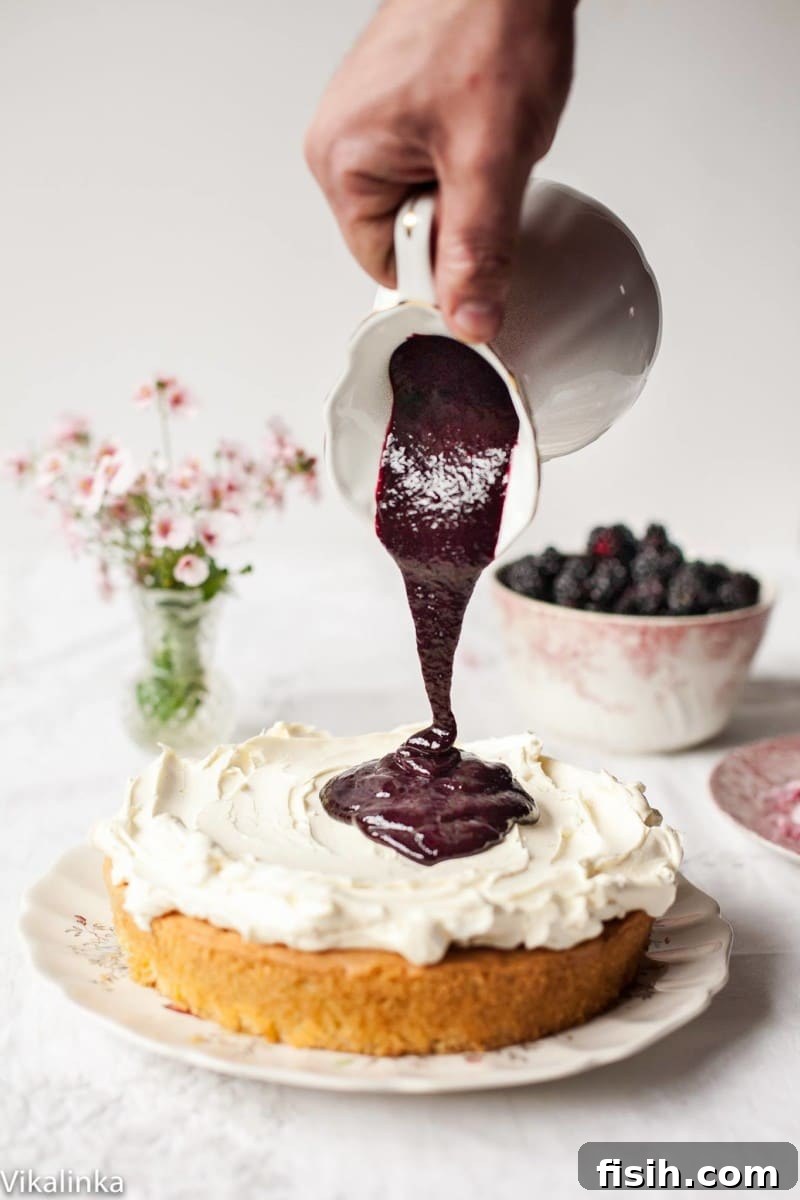
- Carefully pour the cooled blackberry compote over the mascarpone cream. Gently spread it with an offset spatula, leaving a small border of cream around the edge for a neat finish.
- Carefully place the second sponge cake layer on top. For a traditional finish, dust the top of the cake generously with icing sugar using a fine sieve.
- Slice and serve immediately, or chill until ready to enjoy.
Notes
For US readers and to prevent mascarpone cream from separating: It’s often helpful to whip the heavy cream to soft peaks separately before gently folding it into the mascarpone and icing sugar mixture. This ensures a more stable and less prone-to-separate cream.
Nutrition
Calories: 756kcal | Carbohydrates: 69g | Protein: 9g | Fat: 50g | Saturated Fat: 20g | Cholesterol: 143mg | Sodium: 578mg | Potassium: 286mg | Fiber: 2g | Sugar: 42g | Vitamin A: 2042IU | Vitamin C: 5mg | Calcium: 158mg | Iron: 2mg
Nutrition information is automatically calculated and should only be used as an approximation.
We hope you enjoy this delightful twist on a classic!