
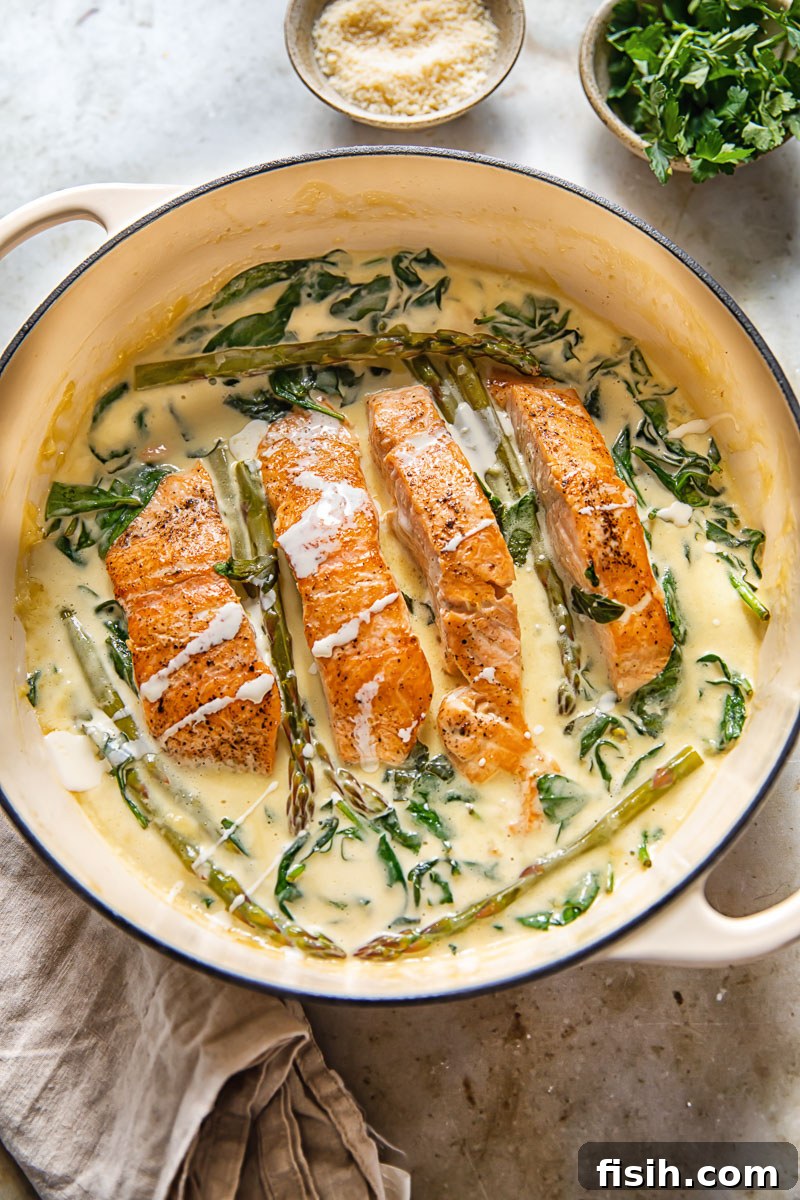
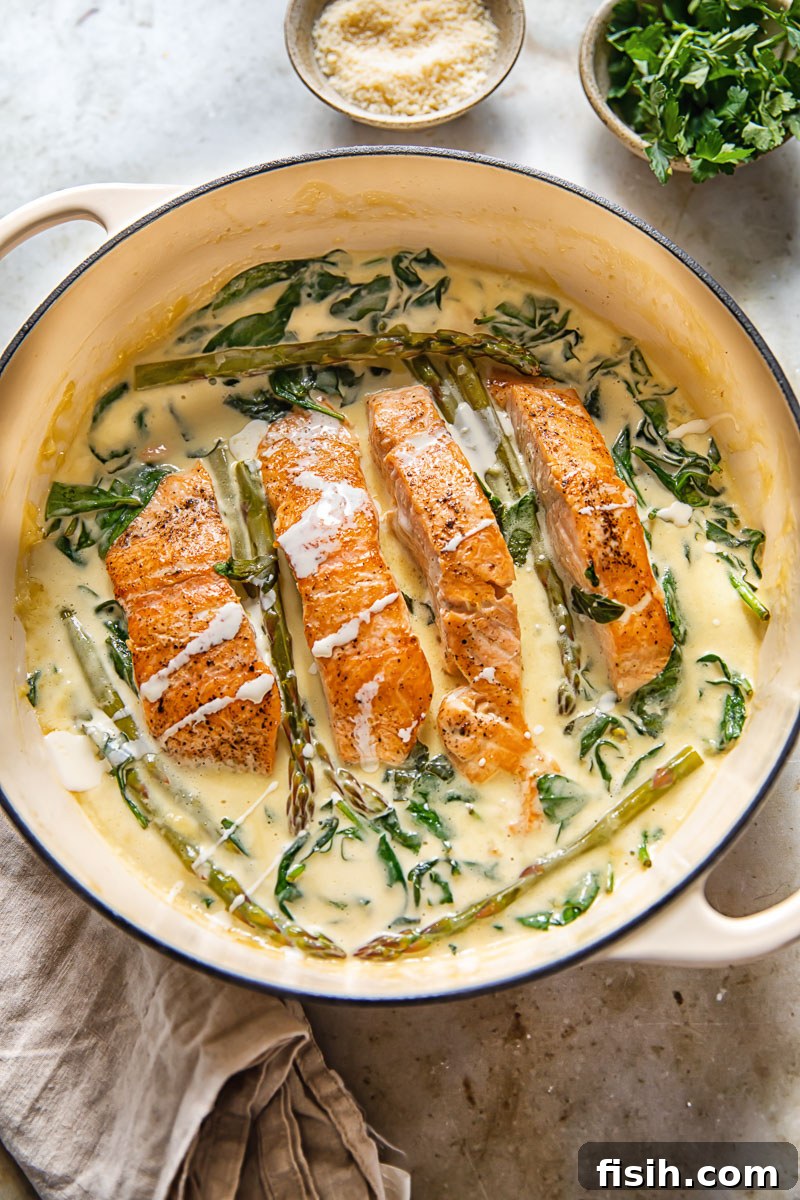
Feast like royalty with this exquisite Salmon Florentine with Spinach and Asparagus recipe. This dish brings together tender, flaky salmon fillets and a luxuriously rich, creamy sauce, making for a meal that feels utterly decadent yet is surprisingly simple to prepare and packed with nutrition. It’s an elegant choice that promises to impress, whether for a special occasion or a sophisticated weeknight dinner.
Enhance your meal by serving this delightful creation with homemade fresh pasta for a truly authentic experience, or opt for additional greens and a side of Pan Fried Zucchini with Basil and Pecorino for a lighter, equally flavorful accompaniment.
The Royal Origins of ‘À la Florentine’
The term “à la Florentine” evokes images of grand European courts and culinary sophistication. While historical facts can sometimes be elusive, the popular narrative attributes the origin of this elegant culinary style to one of Europe’s most influential and fascinating figures: Catherine de Medici. Hailing from the vibrant city of Florence, Italy, Catherine spent the majority of her life at the French court after marrying the less-than-dominant King Henry II.
Legend has it that Catherine, accustomed to the refined Florentine cuisine, brought her personal team of Italian chefs to France. These innovative chefs, eager to please their queen and introduce Italian culinary traditions, created dishes that incorporated her favorite ingredients from home, particularly spinach. Thus, the “à la Florentine” style was born, characterized by dishes served with spinach and a rich, creamy sauce. This tale, whether entirely factual or charmingly embellished, perfectly captures the spirit of elegance and tradition that defines this exquisite dish.
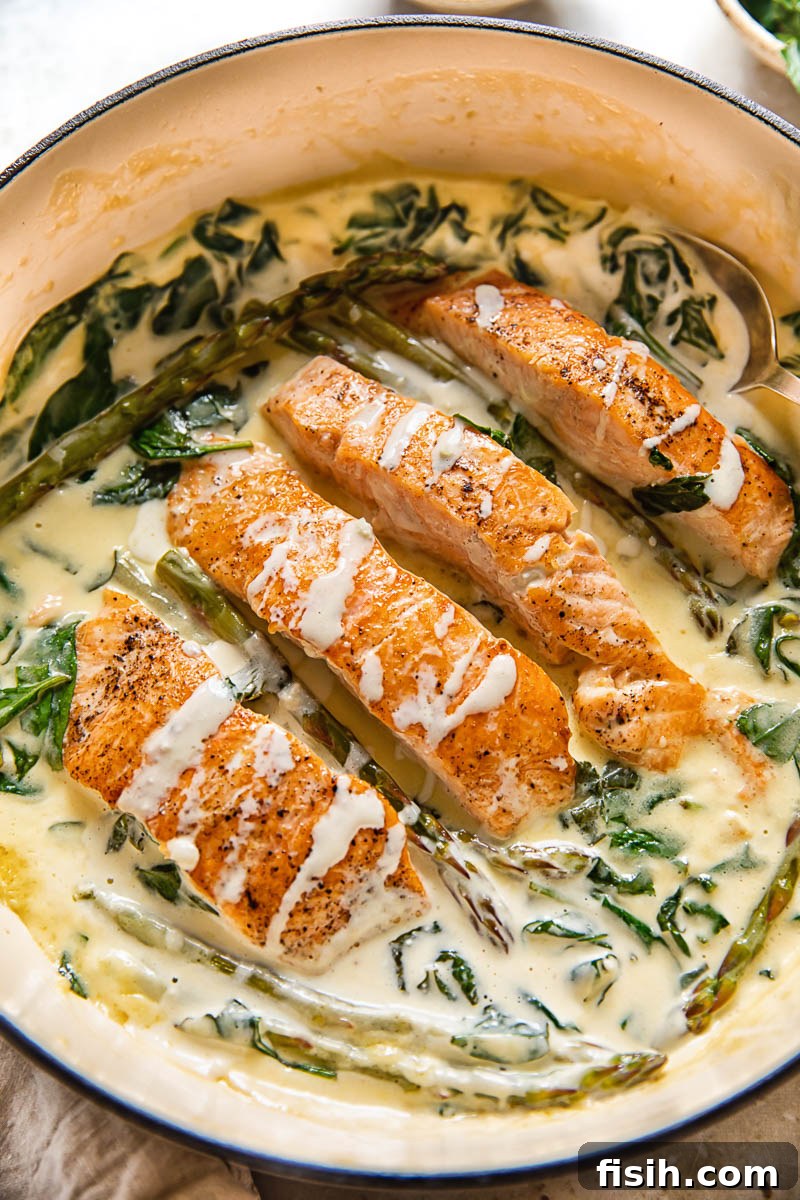
To me, Salmon Florentine perfectly encapsulates a sense of refined taste. The textures are smooth, delicate, and luxurious, while the flavors are both bold and exquisitely creamy. The beautiful pink hue of the salmon adds to its visual appeal, making it a truly captivating dish.
What Exactly Is Salmon Florentine?
Salmon Florentine takes the beloved classic Florentine preparation and elevates it by featuring luscious salmon fillets as the star protein. Traditionally, Florentine dishes are often associated with breakfast and brunch menus, frequently served over soft, yolky poached eggs, much like a classic Eggs Benedict. However, this interpretation brilliantly showcases how the creamy, spinach-laden Florentine sauce can beautifully complement other proteins, transforming it into a versatile and sophisticated meal for any time of day.
While eggs are a morning staple for many, and chicken is a common go-to, salmon offers a unique and appealing alternative. The richly-colored, fleshy fillets of salmon are an absolute charm, providing a delightful contrast in texture and a depth of flavor that marries exquisitely with the vibrant spinach and creamy sauce. This dish offers a wonderful departure from the usual, presenting a gourmet experience that is both nourishing and deeply satisfying.
Crafting the Perfect Florentine Sauce
The heart of any Florentine dish is its signature sauce: an incredibly indulgent yet surprisingly light, creamy concoction. While it frequently graces brunch tables alongside poached eggs, its versatility and elegant profile make it suitable for any meal. Imagine this silken sauce draped over tender chicken, delicate white fish, or even simple pasta – it’s a recipe for culinary sophistication.
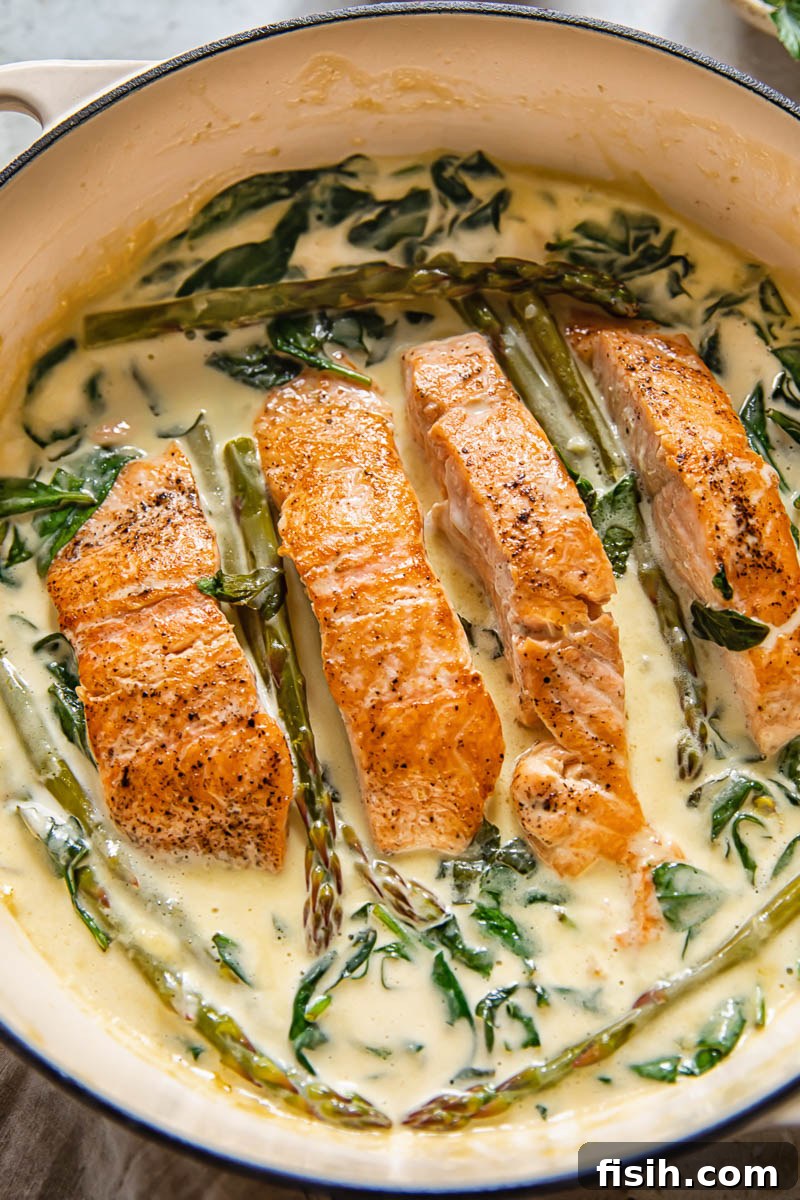
To genuinely earn its “à la Florentine” status, the sauce must contain several key ingredients: wilted spinach, dry white wine, rich cream, butter, and freshly grated Parmesan cheese. The resulting sauce is typically milky-white, boasting a silken texture, and beautifully interspersed with threads of vibrant green spinach. For an added layer of subtle sweetness and aromatic depth, I personally like to sauté finely chopped shallots and a touch of garlic before building the sauce. This small addition introduces a nuanced complexity that truly elevates the dish.
The beauty of Florentine sauce lies not just in its exquisite taste and texture, but also in its ability to transform simple ingredients into a meal fit for royalty. It’s a testament to how classic culinary techniques, combined with quality ingredients, can create something truly memorable. Each spoonful offers a harmonious blend of creamy richness, a hint of acidity from the wine, savory notes from the cheese, and the earthy freshness of the greens.
Expert Tips for a Flawless Salmon Florentine
Achieving a Crispy, Golden Sear on Your Salmon
- For salmon that boasts a beautifully crisp skin and a golden-brown sear, preparation is key. Always begin by thoroughly patting the uncooked salmon fillets dry with paper towels. This crucial step removes any excess moisture from the surface, preventing the fish from steaming in the pan and ensuring you achieve that desirable crust. Once dry, season generously with salt and pepper to enhance its natural flavors.
- Don’t shy away from using a high heat when searing. A hot pan is essential for developing a deep, golden glaze on the salmon. Skipping this initial sear means missing out on two vital elements: firstly, a beautifully caramelized exterior brings a more profound, savory depth to the overall sauce; and secondly, it creates a delicate, flavorful crust on the outside of the fish while locking in moisture, ensuring the inside remains incredibly fleshy and tender.
Choosing and Using Wine for Deglazing
- The classic combination of fish and white wine is timeless for a reason. When it comes to deglazing your pan, any dry white wine will work wonderfully to lift those flavorful browned bits from the bottom. Personal favorites often include Cabernet Sauvignon or Pinot Grigio. I often keep an open bottle of Vermouth in my kitchen specifically for cooking, as it imparts a lovely herbaceous note. If you prefer an alcohol-free option, lemon juice or a good quality chicken or vegetable stock can achieve a similar deglazing effect and add richness to the sauce.
The Indispensable Role of Fresh Parmesan
- For a truly regal Florentine sauce, bypass pre-grated Parmesan. This convenience product often lacks the vibrant flavor and creamy texture of freshly grated cheese, tending to be dry and losing its intensity quickly. Investing in a good quality block of Italian hard cheese, like Parmigiano Reggiano, is a luxurious yet economical choice. A little freshly grated Parmesan goes a very long way, imbuing your sauce with an unparalleled nutty, savory depth that elevates the entire dish to royal status with just a sprinkle.
Embracing and Customizing Your Greens
- While traditional Florentine sauce strictly calls for spinach, the addition of asparagus is a personal touch that I find works beautifully in this creamy creation. Its crisp-tender texture and slightly earthy flavor provide a delightful contrast. Plus, who can argue with incorporating extra nutrient-rich vegetables into a meal? If spinach isn’t your preference, don’t hesitate to experiment with other leafy greens such as nutrient-packed kale or peppery rocket (arugula) for delicious alternatives.
Preventing Overcooked Salmon
- After its initial sear, the salmon only needs about another five minutes to finish cooking gently within the simmering sauce. It’s crucial to avoid overcooking, as salmon can quickly become dry and lose its delicate texture. Keep a close eye on it, and if you notice the fillets beginning to break apart, remove the pan from the heat immediately. The goal is perfectly cooked, whole, bronzed fillets bathing elegantly in the creamy sauce.
Serving Suggestions for Your Salmon Florentine
This Salmon Florentine with Spinach and Asparagus is a complete and satisfying meal on its own, but its versatility means it pairs beautifully with a variety of sides to round out your dining experience. For a truly hearty and comforting meal, serve it alongside freshly made pasta, allowing the creamy sauce to coat every strand. If you’re looking for lighter options, steamed rice or quinoa can soak up the delicious sauce without overpowering the delicate flavors. Roasted or mashed potatoes also make excellent accompaniments, adding a comforting touch. Don’t forget a crusty baguette or artisanal bread for dipping into every last drop of that incredible Florentine sauce. A simple green salad with a light vinaigrette can also provide a refreshing counterpoint to the richness of the dish.
Storage and Leftovers: Enjoying Your Dish Again
Should you find yourself with delightful leftovers, this Salmon Florentine can be easily stored and enjoyed later. Place any remaining salmon and sauce in an airtight container and refrigerate for up to two days. When it’s time to reheat, the key is to do so gently to prevent the salmon from drying out. Preheat your oven to a low 135°C (275°F). Transfer the portion to an oven-proof dish, cover it loosely with foil, and reheat for about 15 minutes, or until the salmon is warmed through. This low-and-slow method helps retain the fish’s moisture and tender texture.
Alternatively, for a quick and inventive lunch, try enjoying the cold salmon on an open-faced sandwich. Spread a thin layer of zesty horseradish on a slice of sourdough bread, flake the chilled salmon with a fork, and pile it generously on top. Any leftover asparagus spears can be added as a fresh, crisp topping, creating a gourmet sandwich experience.
Variations and Customizations
While this recipe for Salmon Florentine is perfect as written, feel free to customize it to your preferences. You can experiment with different types of fish, such as cod or halibut, for a similar delicate flavor. If you’re not a fan of asparagus, try adding peas, green beans, or even mushrooms for an alternative vegetable boost. For a dairy-free version, use coconut cream and a plant-based Parmesan substitute, though the flavor profile will shift slightly. A pinch of red pepper flakes can introduce a subtle heat, or fresh herbs like dill and chives can add extra brightness at the end.
Try These Other Delicious Salmon & Sauce Recipes
- Baked Salmon with Rose Wine Cream Sauce
- Tuscan Salmon with Parmesan Cream Sauce
- Salmon Piccata in Lemon Caper Sauce
- Pan Seared Salmon with Mustard Cream Sauce
Salmon Florentine with Spinach and Asparagus
Recipe by Julia Frey of Vikalinka
Feast like Italian royalty with this delicious salmon in a decadently creamy Florentine sauce with spinach and asparagus.
Prep Time: 5 mins
Cook Time: 25 mins
Total Time: 30 mins
Servings: 4
Ingredients
- 4 (120g/4 oz) each piece salmon fillet pieces
- Salt and black pepper, to taste
- 1 tbsp olive oil
- 1 tbsp butter
- 1 shallot, or 1/2 small onion, finely diced
- 2 cloves garlic, minced
- 80ml/1/3 cup dry white wine (e.g., Cabernet Sauvignon, Pinot Grigio, or Vermouth)
- 125ml/1/2 cup chicken or fish stock
- 250ml/1 cup double/heavy cream
- 50g/1/2 cup freshly grated Parmesan cheese
- 125g/4 oz asparagus, tough ends removed and cut into bite-sized pieces
- 30g/1 cup fresh spinach
- Salt to taste
Instructions
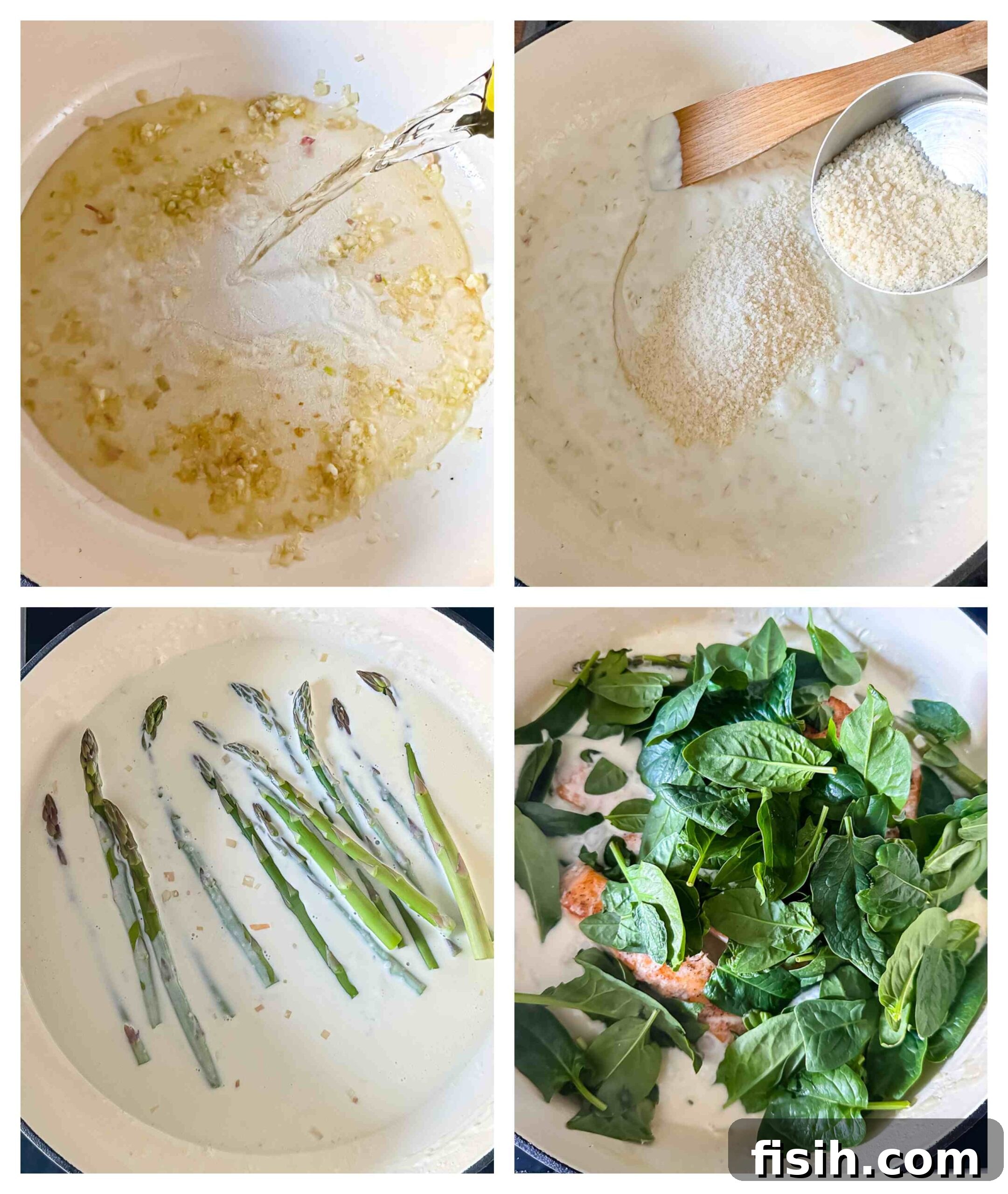
- Prepare and Sear the Salmon: Thoroughly pat the salmon fillets dry with a paper towel to remove excess moisture. Season both sides generously with salt and pepper. Heat the olive oil in a large frying pan over medium-high heat. Once hot, place the salmon fillets in the pan, skin side up (if applicable, for crispier skin, start skin side down). Sear for approximately 6-7 minutes, or until golden brown and a crispy crust forms. The salmon does not need to be cooked through at this stage. Carefully remove the seared salmon to a plate and set aside.
- Build the Florentine Sauce Base: To the same pan (do not clean it, as the fond adds flavor), add the butter and the diced shallot. Sauté over low heat for about 5 minutes until the shallot softens and becomes translucent. Add the minced garlic and continue to sauté for another 30 seconds until fragrant. Deglaze the pan by pouring in the dry white wine, scraping up any browned bits from the bottom of the pan with a wooden spoon. Let the wine simmer for about 3-5 minutes, allowing the liquid to reduce by half.
- Finish the Sauce and Combine: Pour in the chicken or fish stock and the heavy cream. Stir well, then add the freshly grated Parmesan cheese, stirring until the cheese is fully incorporated and the sauce begins to thicken slightly. Add the prepared asparagus to the sauce and cook for 5 minutes, allowing it to become crisp-tender.
- Add Salmon and Spinach: Gently return the seared salmon fillets to the pan, nestling them into the sauce. Add the fresh spinach, placing it around and over the salmon. Cover the pan with a lid and let the sauce simmer over low heat for an additional 5 minutes, or until the salmon is cooked through to your desired doneness and the spinach has wilted. Taste the sauce and season with additional salt as needed.
- Serve: Serve immediately, perhaps with fresh pasta, rice, or crusty bread to soak up the glorious sauce.
Nutrition Information (Approximate)
Calories: 532 kcal | Carbohydrates: 7g | Protein: 32g | Fat: 40g | Saturated Fat: 20g | Polyunsaturated Fat: 5g | Monounsaturated Fat: 13g | Trans Fat: 0.1g | Cholesterol: 154mg | Sodium: 928mg | Potassium: 840mg | Fiber: 1g | Sugar: 4g | Vitamin A: 2098 IU | Vitamin C: 5mg | Calcium: 228mg | Iron: 2mg
Nutrition information is automatically calculated and should be used as an approximation.