
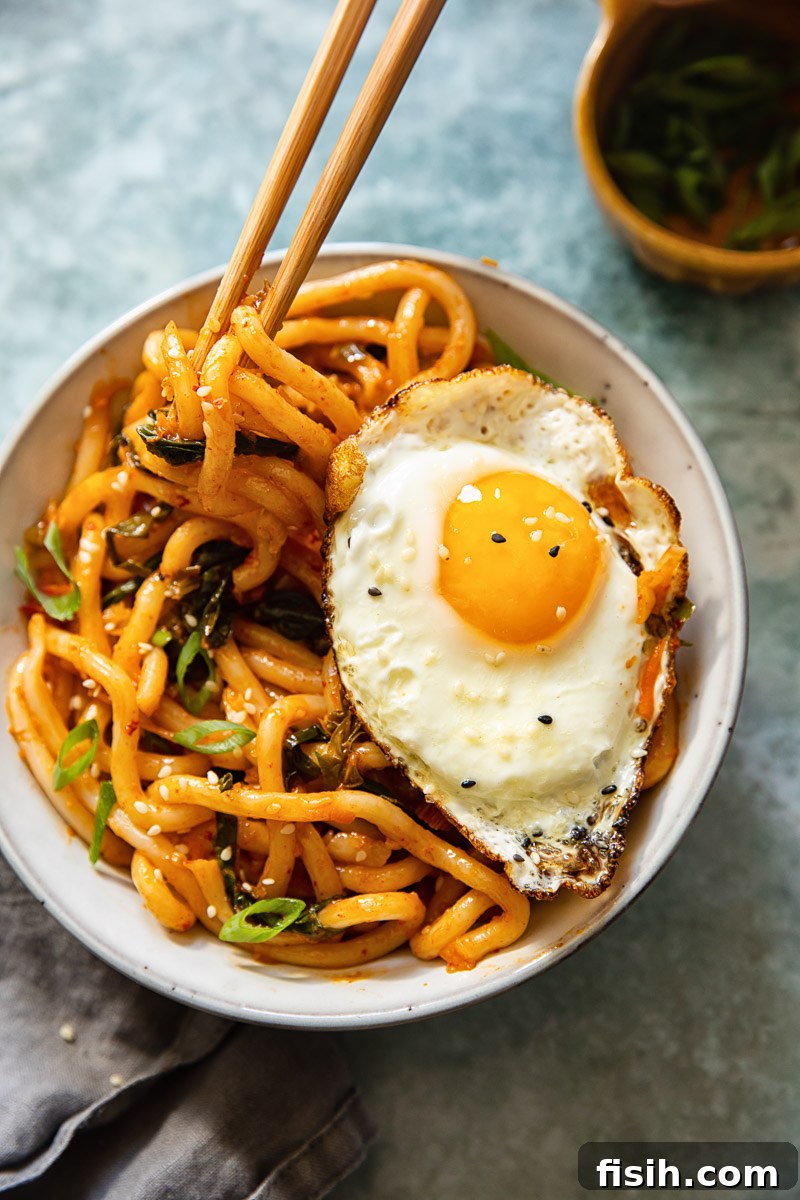
Experience an explosion of flavor and spice with these incredible kimchi noodles. Designed for convenience, this quick and easy recipe consistently delivers a satisfying and memorable meal that will become a regular favorite in your kitchen.
Kimchi’s versatility extends far beyond just noodles. Discover more delightful recipes, such as our vibrant Kimchi Fried Rice, to explore the endless possibilities of this Korean culinary staple.
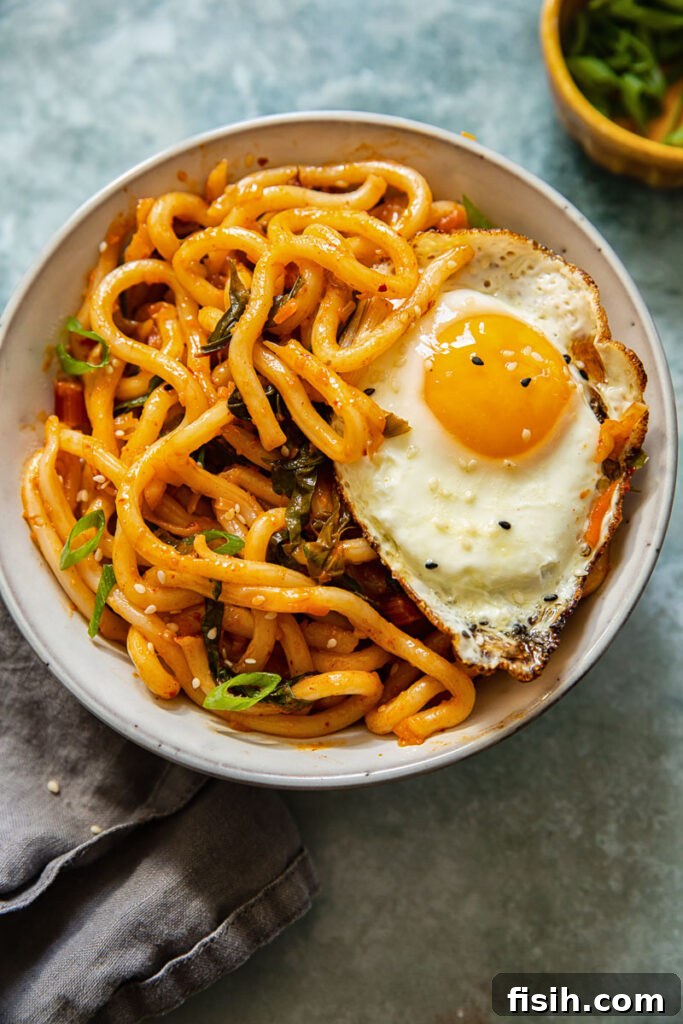
Kimchi has solidified its place as a constant in my pantry, and for good reason. Its unique, potent flavor profile possesses the remarkable ability to elevate any dish from ordinary to utterly spectacular. Whether you’re looking to add a spicy kick to your morning eggs or infuse a rich, tangy depth into a weeknight stir-fry, kimchi consistently delivers.
It forms the flavorful foundation for this delightfully simple yet incredibly delicious noodle stir-fry. By harnessing the intense, pre-developed flavors of kimchi and other key ingredients, we can achieve a truly stunning meal on your table in as little as 10 minutes. This recipe is perfect for those busy evenings when you crave something wholesome, spicy, and satisfying without the lengthy preparation.
Understanding Kimchi: The Heart of Our Dish
Kimchi, a cornerstone of Korean cuisine, boasts a rich history spanning countless generations. It stands as a spectacular testament to the global tradition of fermented vegetables, revered not only for its incredible flavor but also for its profound cultural significance. At its core, kimchi typically consists of Napa cabbage, meticulously salted and then fermented with an aromatic blend of garlic, ginger, chili flakes (gochugaru), and often other ingredients like radishes, scallions, and various seasonings. This intricate fermentation process gives kimchi its characteristic potent, tangy, spicy, and umami-rich flavor profile.
In recent years, kimchi has surged in global popularity, transcending its traditional Korean roots to become a beloved ingredient in kitchens worldwide. Its immense flavor depth makes it incredibly versatile; it can be enjoyed hot or cold, as a standalone side dish, or seamlessly incorporated into a myriad of recipes. Beyond its culinary appeal, kimchi is also celebrated for its nutritional benefits, particularly its probiotic richness, similar to other fermented foods like sauerkraut. These beneficial bacteria are known to support gut health and overall well-being.
The marriage of kimchi and noodles is a culinary pairing that likely emerged in the early days of Korean culinary innovation. This combination is simply perfect: kimchi provides the vibrant spice, tangy notes, and complex flavors, while the noodles offer a comforting, satisfying base, transforming the dish into a truly filling and wholesome meal. Whether you prefer thick udon, delicate ramen, or chewy glass noodles, kimchi elevates them all.
This deceptively simple recipe yields surprisingly complex and delicious results, especially considering how rapidly it comes together. The secret lies in the kimchi itself, which has already undergone the arduous process of fermentation. This means all the deep, layered flavors are pre-developed and ready to be enjoyed, significantly cutting down on your cooking time while maximizing taste. It’s truly a testament to the power of well-prepared ingredients.
A recipe this quick, easy, and bursting with flavor deserves a regular spot at your dinner table. It’s perfect for weeknights, quick lunches, or whenever you need a flavorful boost. Let’s delve into the simple steps to create these irresistible kimchi noodles!
Crafting Your Kimchi Noodles: A Simple Guide
When I first prepared this recipe, I was genuinely astonished by how quickly it came together, transforming basic ingredients into a sensational meal. While the ingredient list might appear a bit extensive, the assembly process is incredibly straightforward, involving just a few key steps. The beauty of this dish lies in the power of fermented kimchi and potent aromatics to deliver maximum flavor with minimal effort.
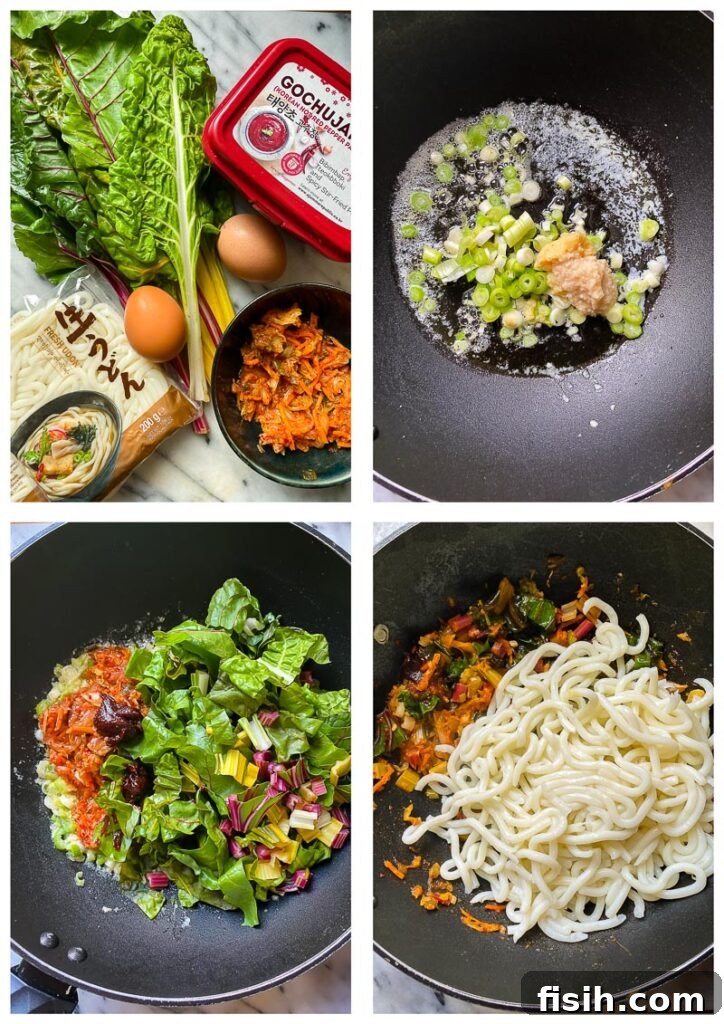
Begin by heating a tablespoon of butter or oil in a large frying pan or a wok over medium heat. Once shimmering, add the minced ginger, garlic, and the sliced white parts of your green onions. Stir-fry these aromatic vegetables for approximately 30 seconds, or until they become fragrant and slightly softened. This quick sauté releases their intense flavors, forming a critical aromatic base for your noodles.
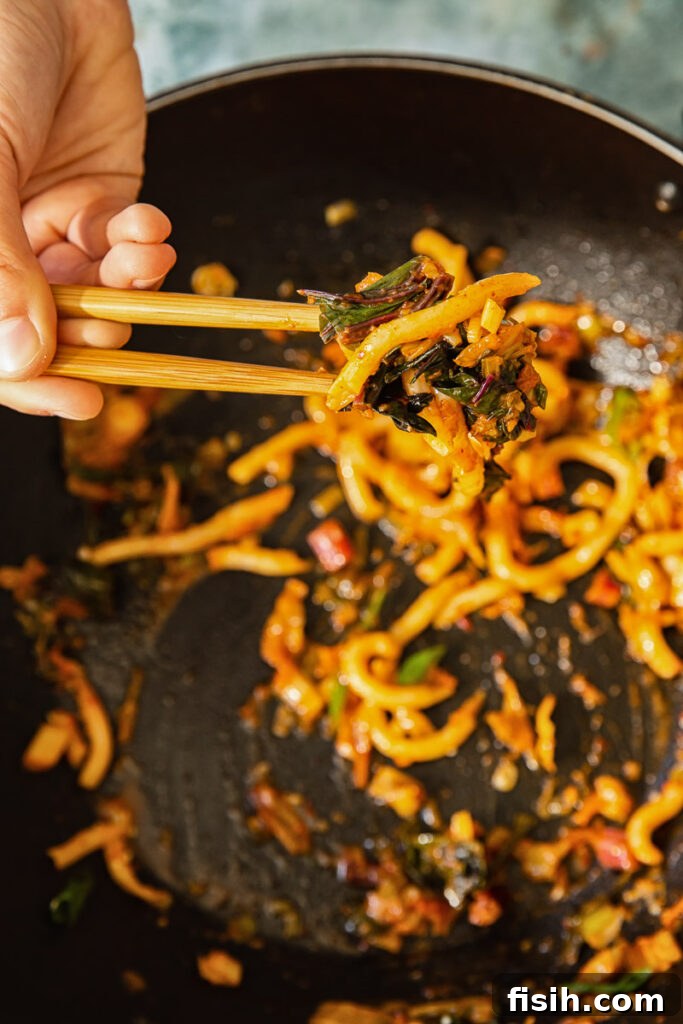
Next, introduce the star of the show: kimchi. Add about 80g (or 1/2 cup) of kimchi, along with 100g (or 2 cups) of your chosen leafy greens—sliced Swiss chard, fresh spinach, or crisp bok choy all work wonderfully. Incorporate 2 teaspoons of Gochujang paste at this stage. Gochujang is a Korean fermented chili paste that adds a vibrant depth of spicy-sweet-savory flavor. Give everything a thorough stir to ensure all the ingredients are well combined and the vegetables begin to wilt slightly, absorbing the rich flavors.
Now, it’s time for the noodles. Add 400g (or 14oz) of pre-cooked udon noodles (or your preferred noodle type) to the pan, along with 1 tablespoon of honey and 1 tablespoon of soy sauce. Continue to warm everything over medium heat, gently tossing and stirring, until the noodles are thoroughly heated through and coated evenly with the flavorful sauce. The honey provides a subtle sweetness that balances the spice and tang of the kimchi and gochujang, while soy sauce adds essential umami.
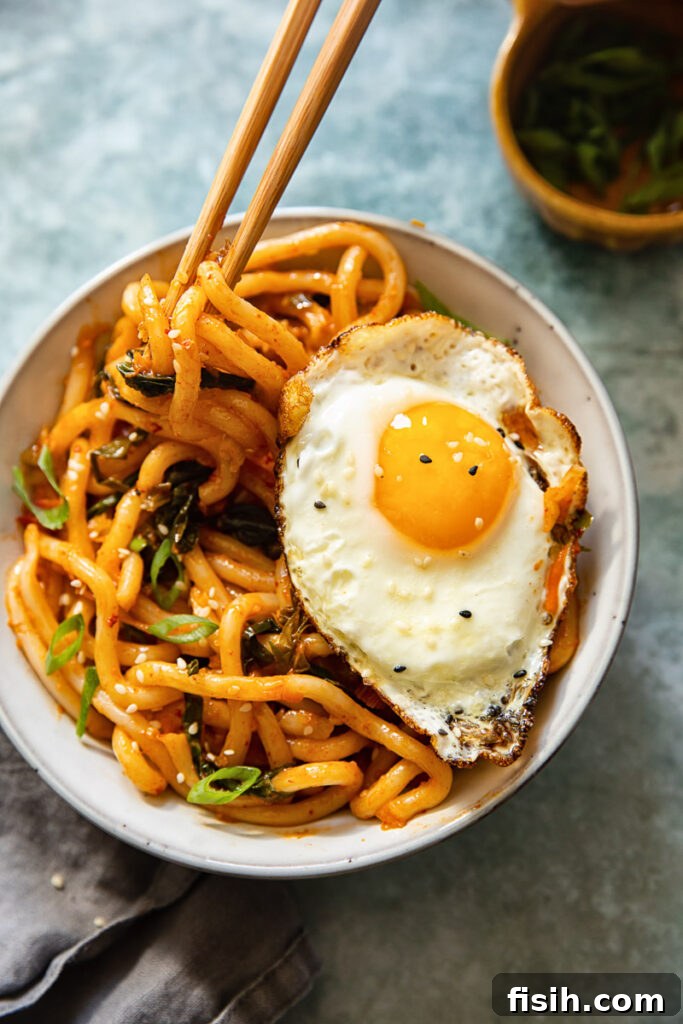
While your noodles are warming, quickly fry two (or more, if you desire) eggs in a separate pan. I am a firm believer that a fried egg, especially with a slightly runny yolk, is the perfect accompaniment to kimchi noodles. The rich, creamy yolk beautifully complements the spicy, savory flavors of the dish, adding an extra layer of indulgence and protein.
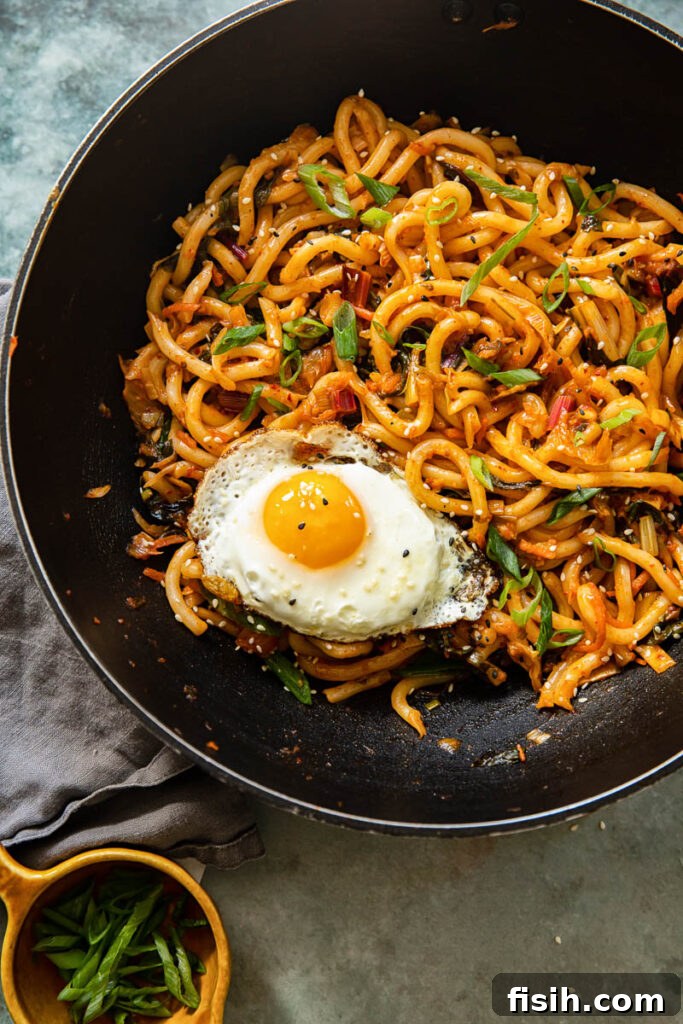
To serve, artfully arrange the fried eggs on top of the warm noodles. Finish with a generous sprinkle of the remaining sliced green onions and a scattering of toasted sesame seeds to taste. These garnishes not only add a burst of fresh color and texture but also enhance the overall flavor profile. And just like that, your incredibly flavorful and satisfying kimchi noodles are ready to be devoured!
Expert Recipe Tips and Notes for Perfect Kimchi Noodles
- Noodle Choice & Preparation: Using pre-cooked noodles is key to making this a lightning-fast recipe. However, if you opt for uncooked noodles, simply boil them according to package instructions before you begin stir-frying. Start them a few minutes before you add ingredients to the pan to ensure they are ready simultaneously.
- Variety of Noodles: While I prefer udon noodles for their delightful chewiness and ability to soak up the sauce, feel free to experiment with any type of noodle you enjoy. Ramen, rice vermicelli, soba, or even spaghetti can all work beautifully, each offering a slightly different texture and mouthfeel.
- Seasoning & Saltiness: Kimchi and soy sauce are inherently salty ingredients. It’s often unnecessary to add extra salt during cooking. Always taste the final product before adding any additional seasoning. You might find it perfectly balanced already!
- Mise en Place is Key: This recipe comes together incredibly quickly once you start cooking. To ensure a smooth and stress-free process, have all your ingredients prepped and ready—ginger and garlic minced, green onions sliced, kimchi chopped, and vegetables prepared—before you even turn on the stove. This organized approach, known as mise en place, makes the cooking flow effortlessly.
- Spice Level Adjustment: The amount of Gochujang paste can be adjusted to your personal preference. For a milder dish, use less; for an extra fiery kick, feel free to add a bit more. The kimchi itself also contributes to the spice, so consider its heat level.
- Add Protein: For a more substantial meal, consider adding thinly sliced chicken, pork, or tofu when you stir-fry the aromatics. Ensure any raw protein is cooked through before proceeding with adding the kimchi and vegetables.
Elevating Your Meal: Serving Suggestions
As a robust one-pan meal, these kimchi noodles are utterly satisfying on their own, requiring no additional dishes to complete your dinner. They offer a perfect balance of carbohydrates, protein (especially with the egg), and vegetables, making them a complete and wholesome option for any night of the week.
However, if you’re looking to expand the meal or add a touch more elegance, I recommend keeping with a vibrant, flavorful theme. A wonderful accompaniment would be a lovely roasted vegetable dish, like our savory Miso Aubergine (Eggplant). The rich, umami flavors of miso-glazed eggplant would complement the spicy tang of the kimchi beautifully, creating a harmonious vegetarian feast. Alternatively, a crisp, refreshing cucumber salad or a light seaweed soup could also offer a delightful contrast.
When I serve this dish, I always love to finish it with a generous sprinkling of toasted sesame seeds for a nutty crunch and, crucially, freshly sliced green onions. The vibrant green of the onions adds an immediate burst of color and a fresh, pungent counterpoint to the rich, spicy noodles, elevating both the visual appeal and the flavor profile of the dish. Don’t underestimate the power of these simple garnishes!
Storage and Reheating Kimchi Noodles
Leftovers are a rare occurrence when these delicious kimchi noodles are on the menu! However, should you find yourself with extra portions, they can be easily stored and enjoyed later. Place any leftover noodles in an airtight container and refrigerate them. They will keep perfectly for 2-3 days, making them an excellent option for meal prepping a quick and flavorful lunch.
While a microwave offers a quick and convenient way to reheat kimchi noodles, for the absolute best results, I recommend returning them to a wok or a large frying pan. Add a tiny splash of oil (or even a tablespoon of water or broth to prevent sticking and add moisture) and reheat over medium heat. Stir occasionally to ensure even heating, allowing the flavors to meld beautifully once more, until the noodles are piping hot all the way through. This method helps maintain their texture and prevents them from drying out.
Explore More Delightful Noodle Stir-Fries
- Miso Noodles with Tenderstem Broccoli
- Spicy Peanut Noodles with Cabbage and Carrots
- Prawn Noodle Stir Fry
- Beef Chow Mein
- Quick Gochujang Noodles with Beef
Kimchi Noodles
Julia Frey of Vikalinka
5
10
15
4
Ingredients
-
1
tbsp
oil,
or butter -
1
tbsp
ginger (minced) -
1
tbsp
garlic (minced) -
2-3
green onions (white parts sliced, green parts reserved for garnish) -
80g / 1/2 cup
kimchi (chopped) -
100g / 2 cups
Swiss chard, spinach or bok choy (sliced) -
2
tsp
Gochujang paste
-
400g / 14oz
pre-cooked udon noodles -
1
tbsp
honey -
1
tbsp
soy sauce
-
2
eggs - sesame seeds (for garnish)
Instructions
-
Heat the butter or oil in a wok or a large frying pan over medium heat. Add the minced ginger, garlic, and sliced white parts of the green onion. Stir-fry for about 30 seconds until fragrant. Then, add the chopped kimchi, sliced Swiss chard (or spinach/bok choy), and the Gochujang paste. Stir thoroughly to combine all ingredients and allow the vegetables to begin wilting.
-
Add the pre-cooked noodles along with the soy sauce and honey to the pan. Toss everything gently over medium heat, allowing the noodles to warm through completely and absorb the rich flavors of the sauce.
-
Meanwhile, fry the eggs in a separate pan to your desired doneness. Once the noodles are hot and ready, top each serving with a freshly fried egg. Sprinkle generously with the reserved green onions and toasted sesame seeds before serving. Enjoy immediately!
Nutrition
Calories:
268
kcal
|
Carbohydrates:
41
g
|
Protein:
12
g
|
Fat:
7
g
|
Saturated Fat:
1
g
|
Polyunsaturated Fat:
1
g
|
Monounsaturated Fat:
3
g
|
Trans Fat:
0.02
g
|
Cholesterol:
82
mg
|
Sodium:
1038
mg
|
Potassium:
194
mg
|
Fiber:
4
g
|
Sugar:
10
g
|
Vitamin A:
1757
IU
|
Vitamin C:
9
mg
|
Calcium:
41
mg
|
Iron:
2
mg
Nutrition information is automatically calculated and should be used as an approximation only.
Tried this recipe?
Let us know how it was!