
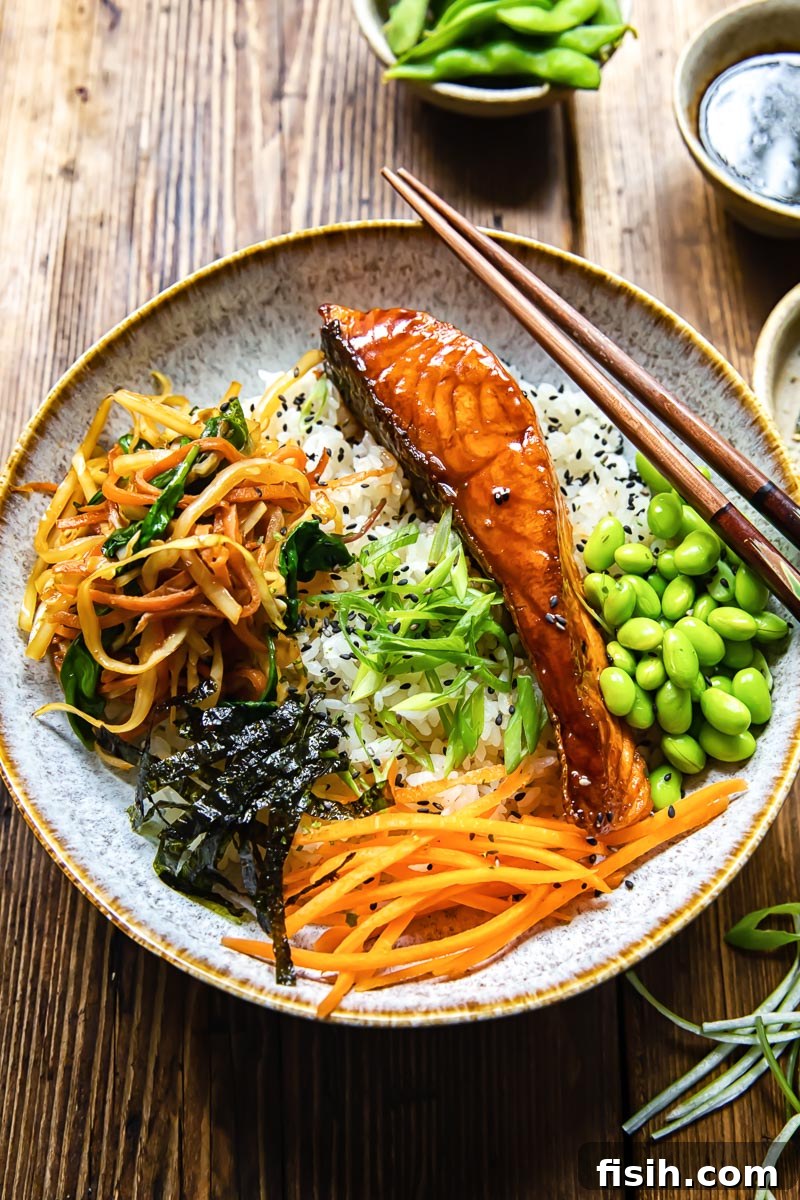
Mastering Homemade Teriyaki Salmon Donburi Bowls: A Healthy and Flavorful Japanese Classic
Discover the art of creating exquisite, restaurant-quality donburi bowls right in your own kitchen. This comprehensive guide will walk you through crafting a fresh and satisfying Teriyaki Salmon Donburi, a beloved Japanese rice bowl dish that’s surprisingly easy to master. In just around 30 minutes, you can transform simple ingredients into a vibrant, flavorful, and healthy meal that rivals your favorite takeout.
If your palate craves the rich, savory-sweet notes of teriyaki, explore its versatility with other fantastic recipes like Beef Teriyaki or Teriyaki Meatballs!
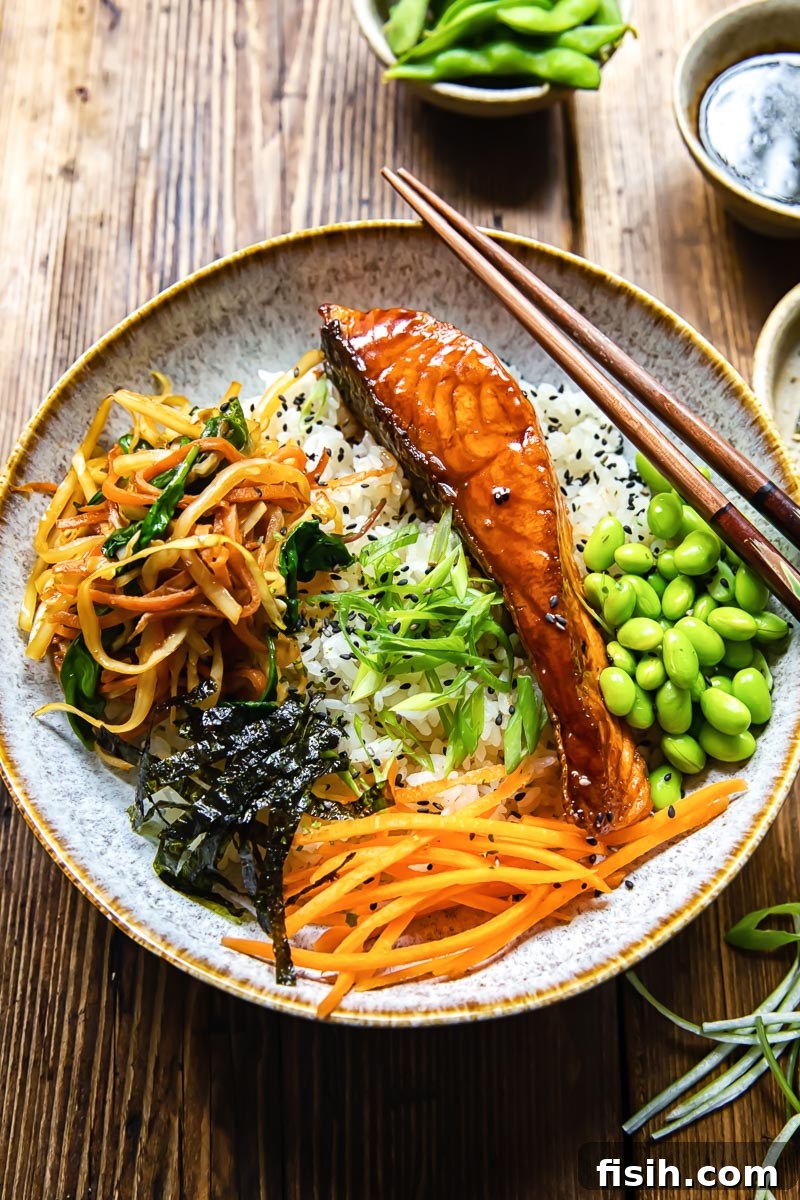
Japanese cuisine has earned a special place in my family’s heart over recent years. There’s an undeniable comfort and excitement that comes with exploring its diverse flavors. When the evening calls for a quick yet delicious dinner, we often find ourselves reaching for Japanese-inspired meals more than any other. Our journey began with the delicate art of sushi, but it wasn’t long before we uncovered a vast array of other dishes we absolutely adore. Among these culinary treasures, donburi stands out as a true family favorite.
Donburi is more than just a meal; it’s a canvas for creativity and a testament to the beauty of Japanese culinary simplicity. Its inherent flexibility means it can be adapted to suit any taste or dietary preference, making it a perfect choice for busy weeknights or a delightful weekend indulgence. This guide focuses on a particularly popular and healthy rendition: the Teriyaki Salmon Donburi, packed with tender salmon, crisp stir-fried vegetables, and perfectly cooked rice.
What is Donburi? The Ultimate Japanese Rice Bowl
At its core, “Donburi” (丼) translates simply to “bowl,” but in the culinary world, it refers to a Japanese “rice bowl dish” where various savory ingredients are served over a bed of freshly cooked rice. This simple definition belies the incredible variety and depth of flavor that can be found in donburi creations.
The beauty of donburi lies in its versatility. You can literally fill your rice bowl with anything you love. For instance, my kids are particularly fond of donburi topped with succulent teriyaki salmon, juicy chicken, or tender duck. The possibilities are truly endless, catering to every palate and preference. Personally, I love to load mine with generous heaps of stir-fried vegetables and crown it with a sprinkle of furikake, a delightful Japanese seasoning blend of toasted sesame seeds, nori (seaweed), salt, and other flavorful elements. This adds an irresistible umami kick and a textural contrast that makes every bite a joy.
Beyond its delicious taste and often lean profile, donburi is also celebrated for its stunning visual appeal. Assembling a donburi bowl is an artistic endeavor, much like painting a picture. Each bowl becomes a unique masterpiece, reflecting the fresh, vibrant ingredients chosen. This combination of flavor, health, and beauty ensures that donburi bowls remain a perpetually exciting and satisfying meal option.
The Heart of the Bowl: Perfect Japanese Rice
Since rice is the foundation and namesake of this dish, understanding which type to use and how to prepare it correctly is paramount. Growing up in a European household, I, like many others, once thought “rice is rice.” It wasn’t until I spent a year in the Philippines that I truly grasped the vast world of rice varieties and their specific culinary applications.
For donburi, the ideal choice is a short-grain, sticky rice, often labeled as “sushi rice” or “Japanese rice” in supermarkets. This type of rice is known for its plump grains, slightly sweet flavor, and a characteristic stickiness that makes it perfect for holding chopsticks and absorbing the rich flavors of the toppings. Its texture is crucial for the authentic donburi experience, providing a satisfying chew and a comforting base for your meal.
If genuine sushi or Japanese rice is hard to find, suitable substitutes include other short-grain varieties like Italian Arborio rice, typically used for risotto, Spanish bomba rice, a staple for paella, or even Thai sticky rice. While these alternatives offer a similar texture, true Japanese short-grain rice will provide the most authentic flavor profile.
Cooking Your Japanese Rice to Perfection
Achieving perfectly cooked, fluffy, and slightly sticky rice is simpler than you might think. Here are a few reliable methods:
1. Stovetop Method (Classic & Reliable)
- Rinse the Rice: Place the sushi rice in a fine-mesh sieve and rinse under cold running water until the water runs clear. This removes excess starch, preventing overly gummy rice.
- Soak (Optional but Recommended): For best results, transfer the rinsed rice to a pot, add water (typically 1.25 cups of water for 1 cup of rice), and let it soak for 20-30 minutes. This helps the grains cook more evenly.
- Cook: Bring the rice and water to a boil over medium-high heat. Once boiling, reduce the heat to the lowest setting, cover tightly with a lid, and simmer for 15-20 minutes, or until all the water is absorbed.
- Rest: Remove the pot from the heat and let it rest, still covered, for another 10-15 minutes. Do not lift the lid! This steaming period allows the rice to finish cooking and become perfectly fluffy.
- Fluff: Gently fluff the rice with a rice paddle or fork before serving.
2. Rice Cooker Method (Effortless)
This is arguably the easiest method. Simply rinse the rice thoroughly, add it to your rice cooker pot with the appropriate amount of water (follow your rice cooker’s specific instructions, usually a 1:1 ratio for sushi rice), and press the “cook” button. The cooker will automatically switch to “warm” when done. Let it rest for 10-15 minutes before opening and fluffing.
3. Instant Pot Method (Speedy & Convenient)
My preferred method, as highlighted in my Instant Pot Coconut Rice recipe, offers a quick and consistent result. Rinse the rice, add it to the Instant Pot with water (a common ratio is 1:1, or 1 cup rice to 1 cup water), cook on high pressure for 5 minutes, then allow a natural pressure release for 10 minutes before quick releasing any remaining pressure. This yields beautifully cooked sticky rice every time.
Star of the Show: Flavorful Teriyaki Salmon
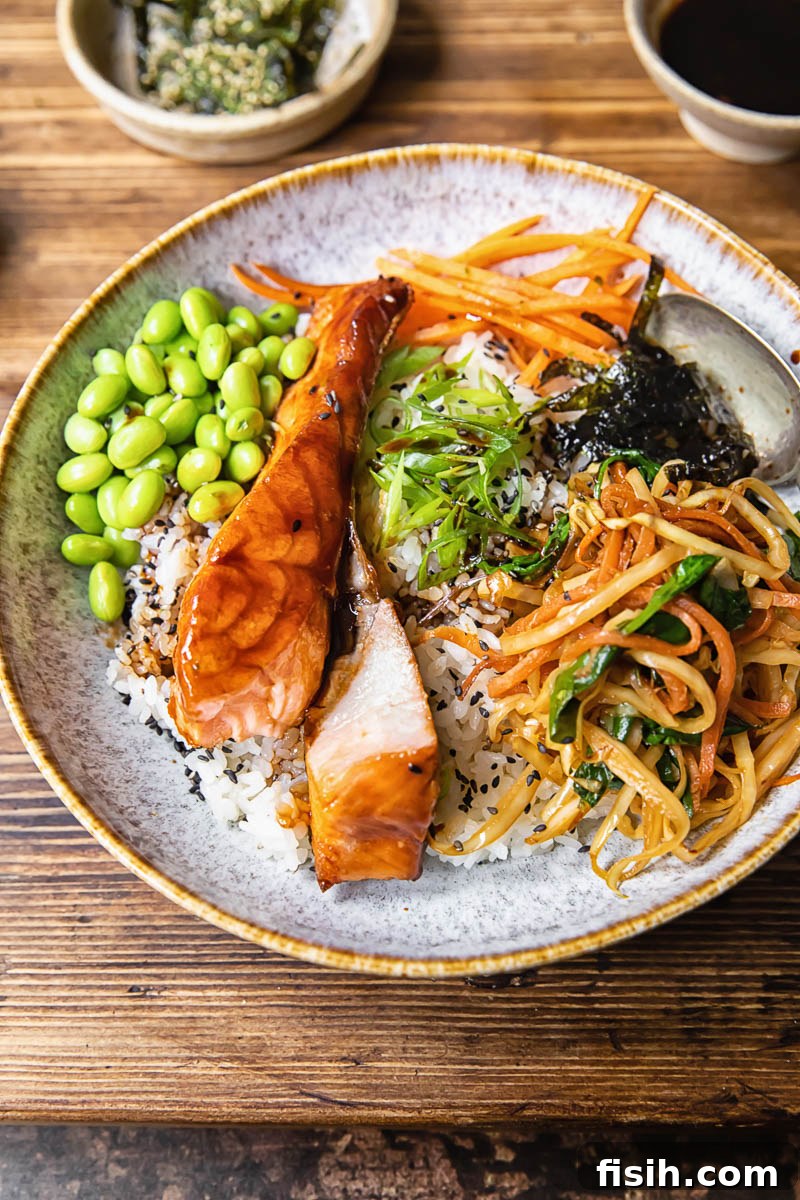
Our Teriyaki Salmon Donburi truly shines with perfectly cooked, glazed salmon. Teriyaki, a staple in Japanese cooking, refers to a cooking method where food is broiled or grilled with a glaze of soy sauce, mirin, and sugar. The result is a beautifully caramelized, sweet, and savory dish.
Preparing and Cooking Your Salmon
- Choose Your Salmon: Opt for high-quality salmon fillets, about 120g (4 oz) each. Skin-on salmon is excellent for pan-searing, as the skin becomes deliciously crispy, adding another layer of texture. If using frozen salmon, ensure it’s fully thawed and patted dry before cooking.
- The Teriyaki Glaze: While many pre-made teriyaki marinades are available, a simple homemade glaze of teriyaki marinade, light soy sauce, mirin (Japanese sweet cooking wine), and a touch of sugar creates an authentic and balanced flavor. Whisk these ingredients together until the sugar dissolves.
- Pan-Searing for Perfection:
- Heat a tablespoon of vegetable oil in a frying pan over medium-high heat.
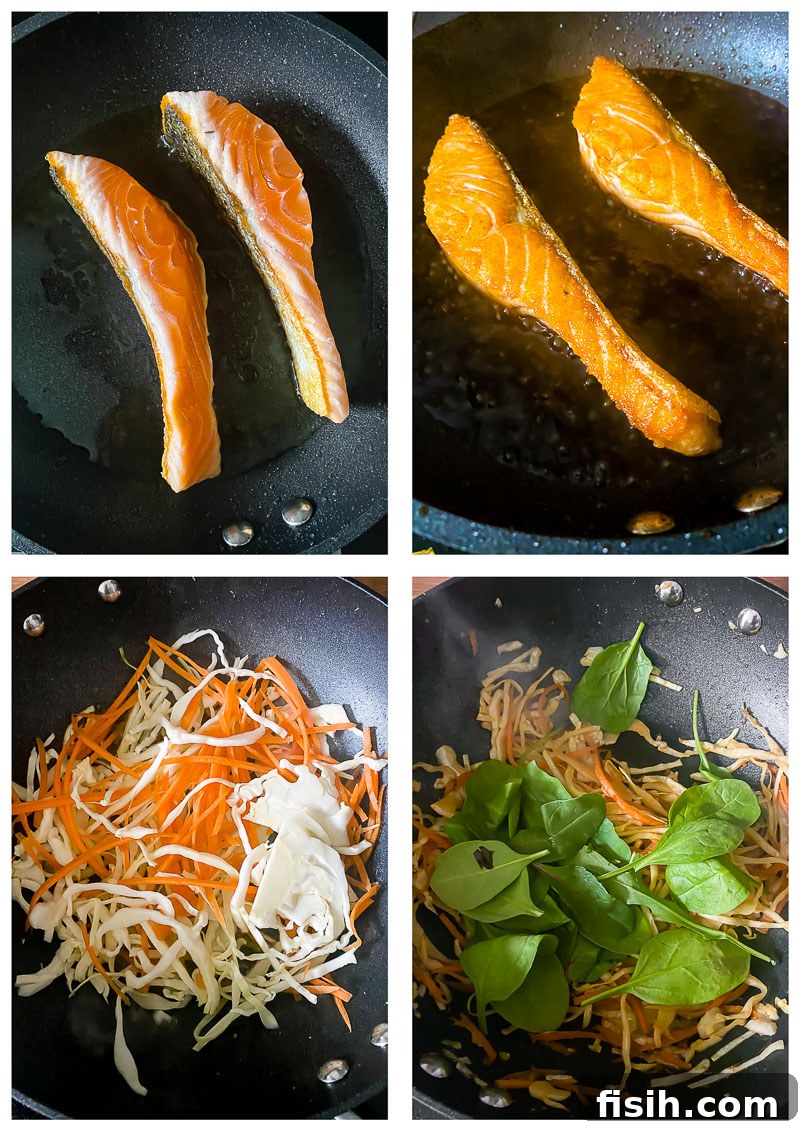
- Place the salmon fillet skin-side up (flesh side down) first and cook for 2-3 minutes to get a nice sear.
- Flip the salmon onto one side and cook for about 1 minute, then repeat on the other side for another minute.
- Finally, place the salmon top-side up (skin side down if using skin-on) and cook for another 2 minutes, or until the fish is nearly cooked through and golden on all sides. This method ensures an even cook and beautiful color.
- Glazing: Pour the prepared teriyaki sauce into the pan with the salmon. Let it simmer gently. Tilt the pan to one side and use a spoon to baste the salmon continuously with the sauce. Continue simmering and basting until the sauce thickens into a glossy, rich glaze that coats the salmon beautifully. This process should only take a few minutes.
- Rest: Remove the salmon from the heat and keep it warm while you prepare the vegetables. Allowing it to rest briefly helps the juices redistribute, ensuring a tender and moist fillet.
Vibrant Stir-Fried Vegetables
Beyond the salmon, a medley of fresh, crisp-tender vegetables adds essential nutrition, color, and texture to your donburi bowl. While wilted spinach is a common choice in donburi, the selection truly comes down to your personal preference and what you have on hand.
I particularly enjoy a combination of thinly shredded cabbage, julienned carrots, and fresh spinach. These vegetables cook quickly and absorb flavors beautifully. The preparation is straightforward:
- Flavor Base: In a separate pan or a wok, heat another tablespoon of vegetable oil. Add grated fresh ginger and minced garlic, stir-frying briefly for just a few seconds until fragrant. Be careful not to burn the garlic.
- Add Vegetables: Toss in the thinly sliced cabbage and carrots. Stir-fry for 2-3 minutes over medium-high heat. The goal is for the vegetables to soften slightly but still retain a pleasant crunch.
- Season and Finish: Add a tablespoon of soy sauce and the spinach. Continue cooking for another minute or two, stirring constantly, until the spinach wilts and the vegetables are cooked to your desired tenderness. The key is to keep them vibrant and not overcook them.
Feel free to experiment with other vegetables. Mushrooms add an earthy umami, while broccoli florets provide a lovely bite and vibrant green color. Bell peppers, snap peas, or even thinly sliced zucchini work wonderfully too. This is an excellent opportunity to “forage” through your fridge and use up any fresh produce you have, making your donburi unique every time.
Elevating Your Donburi with Thoughtful Toppings
What truly elevates a good donburi bowl to an exceptional one are the thoughtful finishing touches – the additional toppings added just before serving. These extras introduce layers of flavor, texture, and visual appeal that make each bite an experience.
- Furikake Seasoning: My absolute favorite topping is furikake seasoning. This Japanese rice seasoning blend typically contains toasted sesame seeds, dried seaweed (nori), salt, sugar, and sometimes bonito flakes or shiso. It offers an incredible burst of umami and a delightful crunch. Sprinkle it generously over the entire dish right before serving.
- Fresh Julienned Carrots: My teenagers convinced me to try thinly sliced, julienned raw carrots, and now I can’t imagine these rice bowls without them. They add a refreshing crunch, a touch of sweetness, and a vibrant splash of color.
- Black Sesame Seeds: These tiny seeds provide a subtle nutty flavor and a sophisticated visual contrast against the other ingredients.
- Sliced Green Onions (Scallions): Thinly sliced green onions (scallions) are indispensable. They bring a fresh, slightly pungent bite and a beautiful pop of bright green, enhancing both flavor and presentation.
- Nori Strips: If you’ve ever made sushi at home, you might have leftover nori sheets. These dried seaweed sheets add a distinct umami flavor and a delicate crispness. I like to cut them into narrow strips with kitchen shears and scatter them over the bowl.
- Edamame Beans: For an extra boost of protein, fiber, and vibrant green color, add defrosted edamame beans. They contribute a satisfying texture and a mild, sweet flavor. You can use shelled edamame directly in the bowl or serve them in their pods on the side as a simple appetizer.
- Pickled Ginger (Gari): A small amount of pickled ginger can offer a tangy, palate-cleansing contrast, much like it does with sushi.
Recipe Tips for a Perfect Donburi
- Precision with Carrots: Achieving long, thin carrot strips (julienne) is essential for both aesthetics and texture. While challenging with just a knife, a julienne peeler makes this task simple and quick.
- Embrace Vegetable Versatility: While carrots, cabbage, and spinach work beautifully, this recipe is incredibly adaptable. Feel free to use whatever fresh vegetables you have in your fridge, such as mushrooms, broccoli, thinly sliced cucumber, bell peppers, or snap peas.
- Don’t Skip the Toppings: The toppings are not mere garnishes; they are integral to the donburi experience. They add crucial layers of flavor, contrasting textures, and visual appeal that make the dish feel complete and utterly satisfying.
- Attention to Detail: A hallmark of Japanese cooking is its meticulous attention to detail. To achieve restaurant-quality donburi, take the time to prepare your vegetables carefully. Consistent slicing, especially for the stir-fried components, ensures even cooking and an appealing presentation.
- Balance of Flavors: Taste your teriyaki sauce and adjust sweetness or saltiness as needed. The balance of savory, sweet, and umami is key.
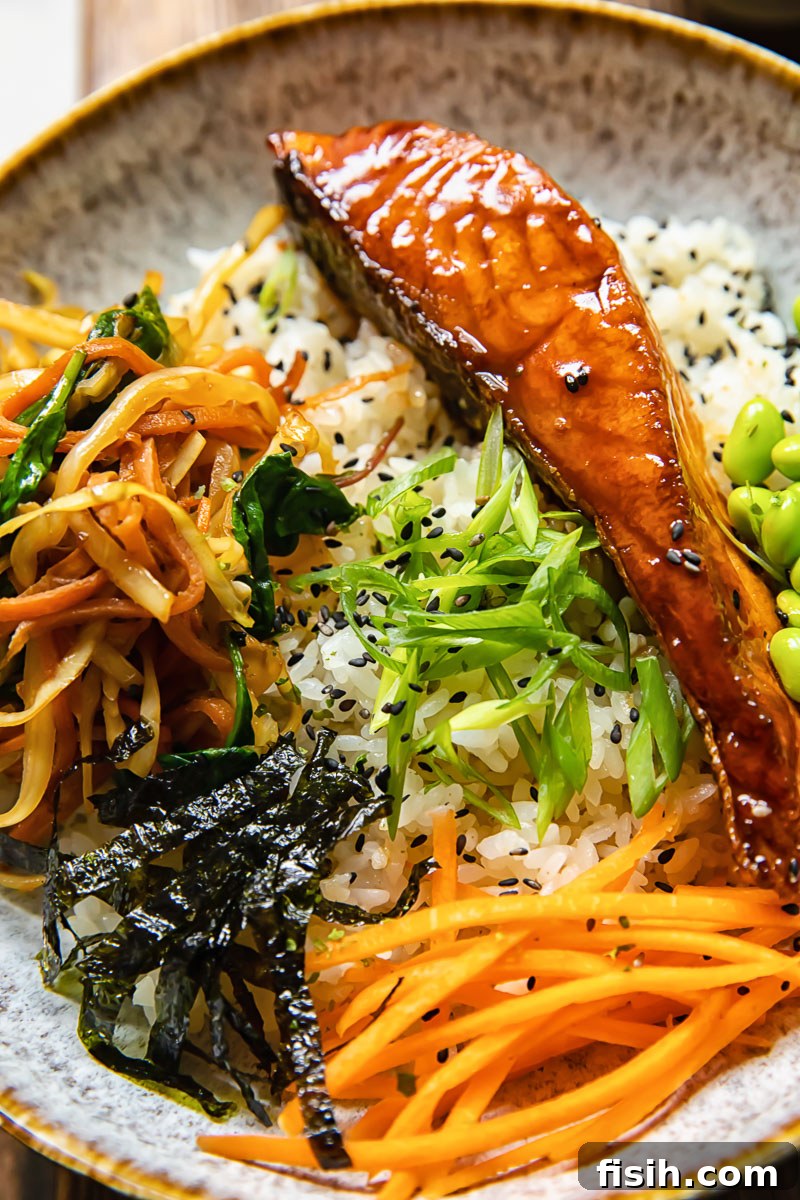
Assembling and Serving Your Donburi Bowls
Unlike a cold poke bowl, a donburi bowl is meant to be enjoyed warm, highlighting the freshly cooked ingredients and their combined aromas. It’s best served immediately in individual, deep bowls, which are specifically designed to showcase the layers of ingredients.
The assembly is part of the experience, creating a visually appealing and balanced meal:
- Start with Rice: Pile a generous portion of your perfectly cooked, warm sticky rice into the bottom of each bowl.
- Add Vegetables: Arrange the vibrant stir-fried vegetables neatly over one side of the rice.
- Place Salmon: Carefully place the glazed teriyaki salmon fillet on top of the vegetables or beside them.
- Drizzle Sauce: Drizzle any remaining glossy teriyaki sauce from the pan over the salmon and rice. This adds extra flavor and moisture.
- Finish with Toppings: Scatter your chosen additional toppings – green onions, fresh julienned carrots, black sesame seeds, furikake, nori strips, and edamame beans – artfully over the entire bowl.
For an authentic experience, enjoy your donburi with chopsticks, savoring each harmonious bite.
Storage and Leftovers
While donburi bowls are undeniably delicious when freshly made, the delicate nature of cooked rice means it doesn’t store particularly well after being mixed with other ingredients. For optimal taste and texture, this is truly a meal that shines brightest when enjoyed immediately.
If you find yourself with more ingredients than you can eat in one sitting, the best approach for leftovers is to store the components separately. This allows each ingredient to maintain its quality:
- Salmon: Cooked salmon can be stored in an airtight container in the refrigerator for 3-4 days.
- Stir-fried Vegetables: The cooked vegetables will keep well in an airtight container in the fridge for even longer, typically 4-5 days.
- Rice: It’s recommended to cook fresh rice whenever you plan to assemble a new donburi bowl. While cooked rice can be refrigerated for a day, its texture can become hard, and it loses its characteristic stickiness. Reheating rice also requires careful handling to prevent bacterial growth.
By keeping the ingredients separate, you can quickly reheat the salmon and vegetables and then combine them with freshly made rice for a near-identical experience the next day.
More Japanese Recipes to Explore
If you enjoyed making this Teriyaki Salmon Donburi, you’ll love exploring other authentic and flavorful Japanese dishes:
- Chicken Yaki Udon
- Udon Noodle Soup
- Chicken Katsu Curry
- Shoyu Chicken (Soy Sauce Chicken)
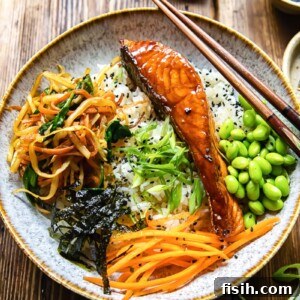
Teriyaki Salmon Donburi Bowl
Equipment
-
Julienne peeler
-
Frying pan
-
Wok
Ingredients
- 210g / 1 cup sushi rice
- 2 pieces salmon fillet, 120g / 4 oz each
- 4 tbsp teriyaki marinade
- 2 tbsp light soy sauce
- 2 tsp mirin
- 1 tsp sugar
- 1 tbsp vegetable oil
- 1 clove garlic
- 100g / 1 cup cabbage, sliced
- 1 carrot, julienned
- 30g / 1 cup spinach
- 1 tbsp soy sauce
Toppings
- 2 green onions, sliced
- 40g / 1/4 cup edamame beans, optional
- 1/2 carrot, julienned
- 1 tbsp furikake seasoning, optional
- 1 sliced nori sheet, optional
Instructions
-
Get the rice cooking using either a stovetop method, rice cooker, or Instant Pot. Refer to the “Perfect Japanese Rice” section above for detailed instructions.
-
Prepare the teriyaki sauce by mixing the teriyaki marinade, light soy sauce, mirin, and sugar in a small bowl. Slice the cabbage and julienne one large carrot. Grate the ginger and mince the garlic. Set aside until needed.
-
Heat 1 tbsp of vegetable oil in a frying pan. Place the salmon fillets flesh side down (or skin side up if preferred for searing) and cook for 2-3 minutes. Flip the salmon onto one side and cook for 1 minute, then repeat on the other side. Finally, place the fish skin-side down (if using skin-on) and fry for 2 minutes longer, until all sides are golden and the fish is nearly cooked all the way through. Next, add the pre-mixed teriyaki sauce to the pan and let it simmer. Tilt the pan on one side and scoop some of the sauce, then baste the salmon with it. Continue simmering and basting until the sauce turns thick and glossy. Take off the heat and keep warm.
-
In another pan or a wok, heat 1 tbsp of vegetable oil and add grated ginger and minced garlic. Stir-fry briefly for a few seconds until fragrant. Then add the sliced cabbage and carrots. Continue stir-frying the vegetables for 2-3 minutes over medium-high heat. Add the soy sauce and spinach and continue cooking for a few minutes longer until the vegetables have softened but still retain their bite.
-
Assemble the donburi bowls by dividing the cooked rice among two bowls. Arrange the teriyaki salmon and stir-fried vegetables on top of the rice. Drizzle the teriyaki sauce from the salmon pan all over the rice and salmon. Add the sliced green onions, fresh julienned carrots, and black sesame seeds on top. You can also add defrosted edamame beans and sliced nori if you wish, as they are optional but highly recommended for extra flavor and texture.
Notes
- For more detailed information about the delicious toppings you can add to your Donburi Bowls, please refer to the “Elevating Your Donburi with Thoughtful Toppings” section in the body of the post.
- The carrots should be cut into long, thin strips for the best texture and appearance. A julienne peeler will make this task far easier than a knife.
- Although this recipe uses carrots, cabbage, and spinach, almost any fresh vegetable can be incorporated into a donburi bowl. This is a fantastic opportunity to use up any vegetables currently in your refrigerator!
- The toppings may seem like optional extras, but they are crucial for adding significant flavor and texture to the dish, making the meal feel complete.
- Take the time to prepare the vegetables properly, especially slicing carefully to ensure uniform sizes for even cooking and an appealing presentation.
Nutrition
Nutrition information is automatically calculated, so should only be used as an approximation.
Tried this recipe?Let us know how it was!