
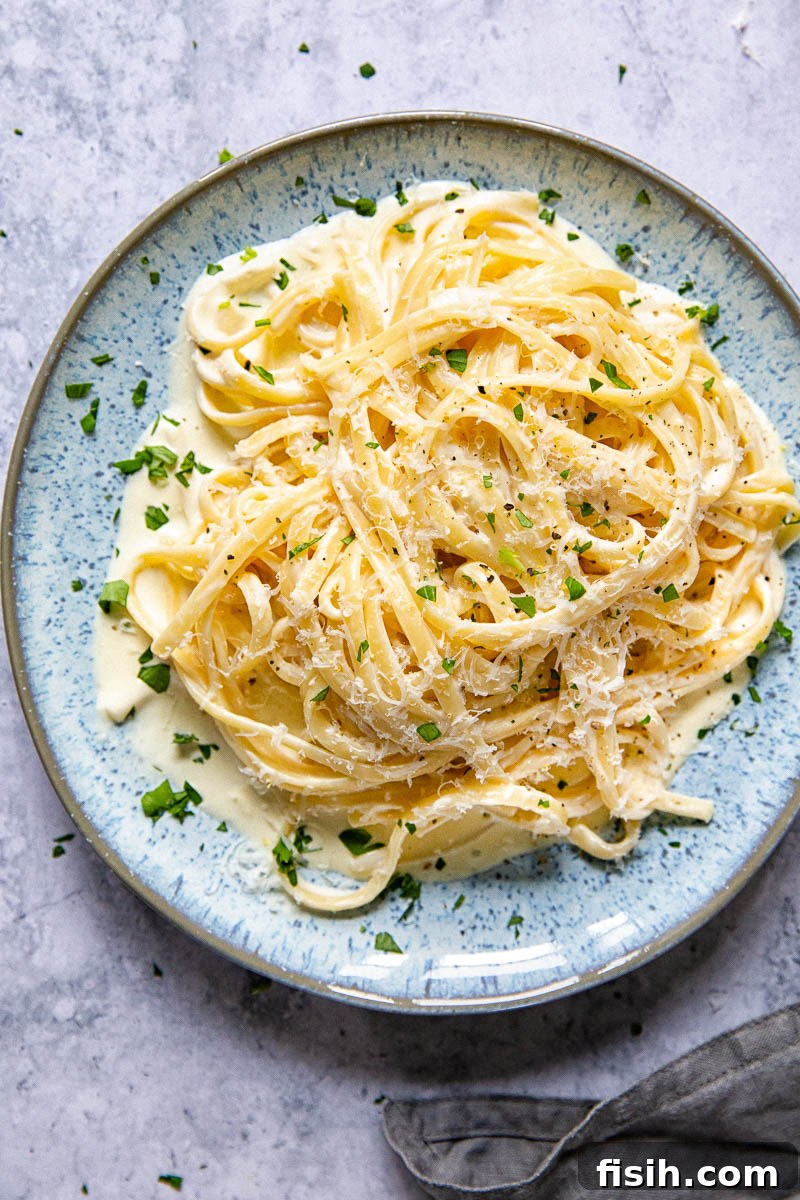
Effortless Elegance: The Ultimate 10-Minute Creamy Pasta Sauce Recipe
Indulge in the sheer luxury of a perfectly smooth, rich pasta cream sauce that gracefully coats every long, slender strand of al dente pasta. This exquisite dish, a testament to simplicity and authentic Italian flavor, can be yours in under 10 minutes with just two core ingredients: premium cream and genuine Parmesan cheese. It’s a culinary marvel that proves extraordinary taste doesn’t require endless effort or a complicated ingredient list.
Once you’ve mastered the foundational art of this basic yet brilliant cream sauce, you unlock a world of culinary possibilities. Elevate your pasta experience by thoughtfully incorporating fresh vegetables and succulent proteins. Imagine the vibrant flavors of tender peas and crispy pancetta, as showcased in our Pancetta and Peas Pasta, a perfect next step in your pasta journey.
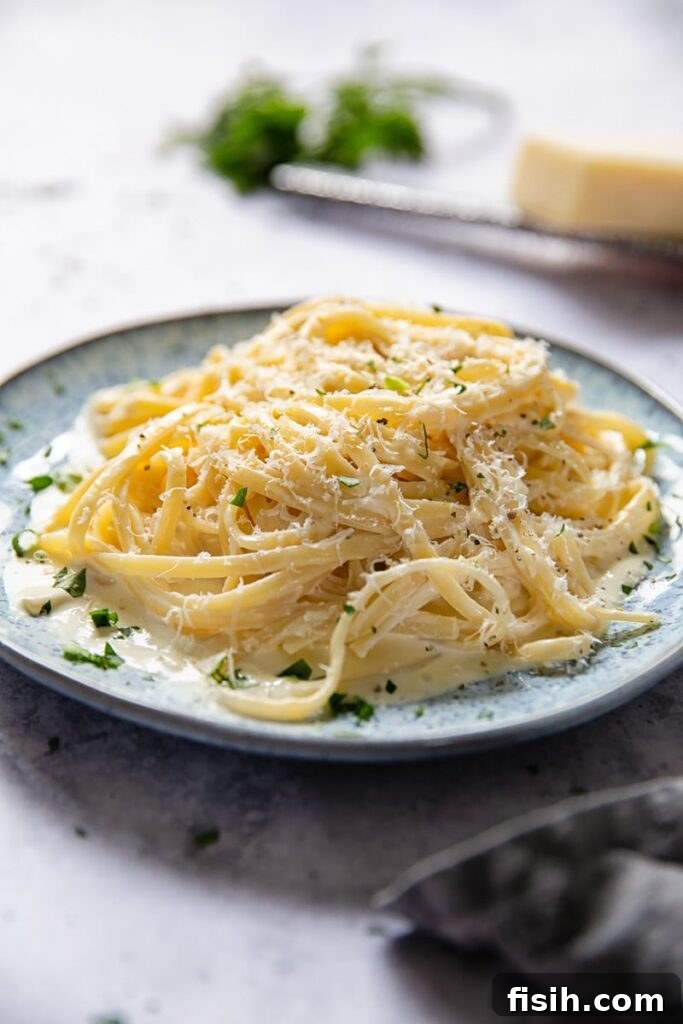
My culinary mission began with a very personal motivation. As my children prepared to leave home for university life here in the UK, a common parental worry loomed large: would they manage to feed themselves properly without my constant guidance? My determination grew to equip them with a repertoire of simple, foundational recipes they could effortlessly prepare, ensuring they’d always enjoy a satisfying, homemade meal.
The criteria for these essential student recipes were clear: minimal ingredients to keep costs down, budget-friendly choices to suit a student’s modest finances, and a straightforward preparation process that wouldn’t intimidate a novice cook. If a recipe was too complex or costly, I knew it would gather dust in their recipe books rather than finding its way to their plates.
This creamy pasta sauce recipe immediately topped my list. It embodies everything I sought: it’s incredibly affordable, astonishingly quick to assemble, and delightfully easy to execute. Beyond its inherent simplicity, its greatest strength lies in its remarkable adaptability. It serves as the perfect canvas for whatever treasures might be lingering in a student fridge—crispy bacon, earthy mushrooms, sweet peas, or even, well, let’s hope not Jello shots! The idea was to create a versatile base that could transform into a unique meal with whatever add-ins were available.
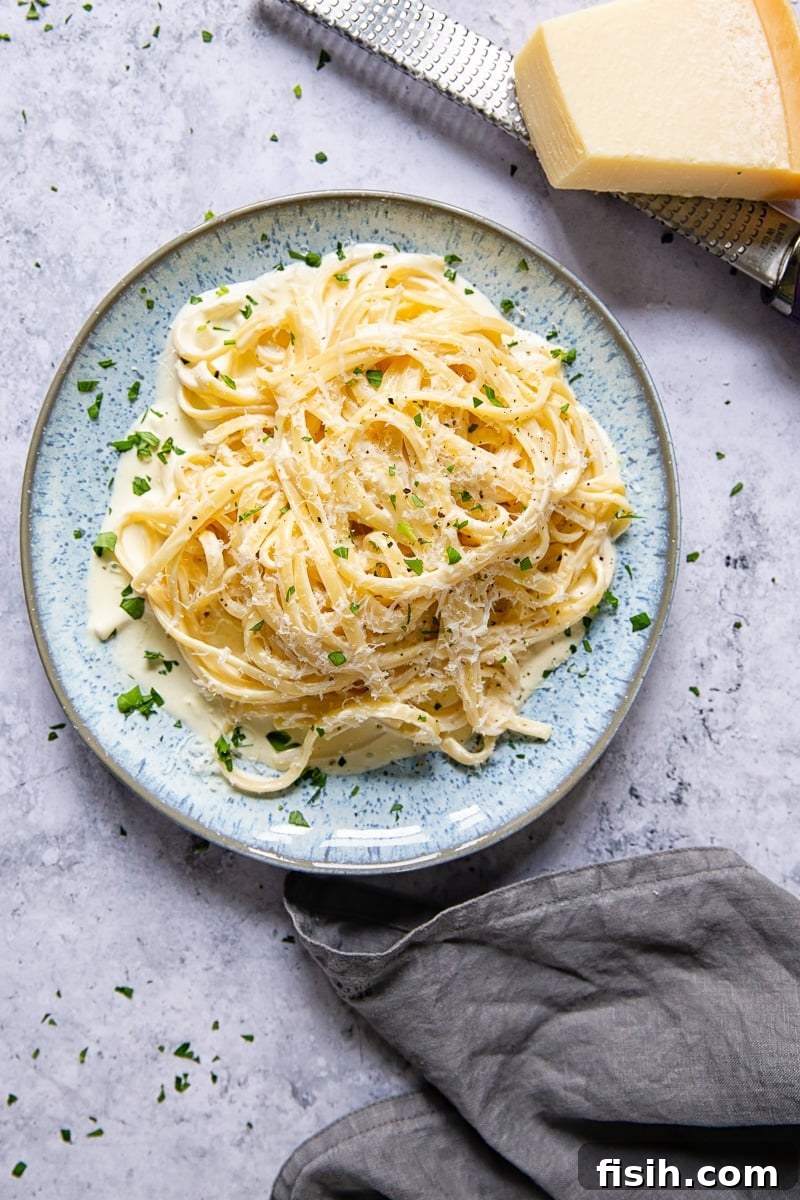
The Art of Simplicity: Choosing Your Ingredients Wisely
When a recipe boasts such a short ingredient list, the quality of each component becomes paramount. For this authentic pasta cream sauce, you’ll need only three stellar items: your chosen pasta, luxurious cream, and authentic Parmesan cheese. It’s a celebration of quality over quantity, where each ingredient shines.
You’ll notice a deliberate absence of common additions like garlic, stock, or flour. There’s a good reason for this minimalist approach: garlic, while delicious, can easily overpower the delicate, nutty notes of quality Parmesan. Stock, too, would dilute the rich intensity of the sauce. And as for milk and flour? They are often used as thickeners, but they would compromise the slender, velvety texture we aim for, creating a heavy sauce rather than a sumptuously flowing one. Our goal is pure, unadulterated creaminess, achieved naturally.
Selecting the Perfect Pasta
Let’s talk pasta. For an authentic Italian experience, I always advocate for 100% durum semolina pasta, ideally made in Italy. This type of pasta, when cooked to an impeccable al dente, delivers that coveted, slightly firm bite and satisfying chewiness that is the hallmark of well-prepared Italian cuisine. While I personally favor long pasta shapes like fettuccine or tagliatelle for cream sauces, as they beautifully capture and hold the rich liquid, the specific shape is ultimately secondary to the quality and proper cooking. The key is that delightful resistance to the bite, ensuring your pasta isn’t mushy but perfectly textured.
The Cream: Foundation of Flavor
Next, the cream. I exclusively use heavy cream (or double cream, as it’s known in the UK). With a generous fat content of at least 36%, heavy cream is crucial for achieving that luxuriously rich, decadent, yet wonderfully pourable sauce. This high fat content allows the sauce to emulsify beautifully, creating a silky texture without the need for additional thickeners. Lighter creams simply won’t yield the same depth of flavor or desirable consistency, making heavy cream an indispensable element for this recipe’s success.
The Parmesan: A Non-Negotiable Choice
Finally, Parmesan cheese. Here, I cannot stress this enough: *always* opt for a block of authentic, hard Parmesan cheese and grate it fresh. Resist the temptation of pre-grated varieties. Allow me to elaborate on why this distinction is so vital:
- Texture Compromise: Pre-grated Parmesan often contains anti-caking agents, which prevent the cheese from clumping in the bag. However, these agents also hinder the cheese from melting smoothly and fully incorporating into your sauce, often resulting in a grainy or claggy texture rather than the desired silken finish.
- Flavor Loss: The moment cheese is grated, its surface area increases dramatically, exposing it to air and causing it to dry out and lose its nuanced flavor much more rapidly. This means you’ll need to use significantly more pre-grated cheese to achieve the same taste intensity, making it a false economy despite its initial perceived convenience.
- Superior Taste: Simply put, freshly grated Parmesan from a quality block delivers a depth of flavor, a sharper saltiness, and a more complex umami profile that simply cannot be matched by its pre-grated counterpart. The difference is truly astounding.
I genuinely implore you to make the small investment in a block of authentic Parmesan (Parmigiano Reggiano, if possible) from your local supermarket and grate it as needed. The transformative impact on your sauce will be immediately noticeable and profoundly rewarding, cementing this simple sauce as a recurring favorite in your kitchen.
Mastering Pasta: Essential Chef’s Techniques for Perfection
Pasta and sauce recipes are cherished for their speed and ease, making them regular staples in many households. But are we truly extracting the maximum potential from these dishes, achieving that restaurant-worthy quality every time? Often, the subtle techniques employed by professional chefs make all the difference. Here’s a concise checklist of vital pasta know-how that can elevate your home cooking:
- Salt Your Pasta Water Generously: This is non-negotiable. Pasta needs to absorb salt directly from the cooking water to develop its inherent flavor; otherwise, it will taste bland, regardless of how flavorful your sauce is. Think of it as seasoning the pasta from the inside out. As a general rule, your pasta water should taste like the sea. Crucially, do not add oil to the pasta water! Oil creates a slick coating on the pasta strands, causing your beautiful sauce to slip right off instead of adhering properly.
- Cook Pasta to Al Dente: This Italian phrase translates to “to the tooth” and describes pasta that is firm to the bite but still tender. It means draining your pasta just before it becomes too soft or mushy. Properly cooked al dente pasta offers a pleasant chewiness and holds its structure better when mixed with sauce.
- Reserve the Starchy Pasta Water: Before draining your pasta completely, always scoop out about a cup of the starchy cooking water. This liquid is your secret weapon! It’s loaded with starch released from the pasta, which acts as a natural emulsifier and thickener for your sauce.
- Incorporate Pasta Water into the Sauce: After combining your al dente pasta with the sauce, splash in some of that reserved starchy water. Pasta is inherently “thirsty” and will absorb much of your sauce, potentially making it too thick or dry. The pasta water helps loosen the sauce, creating a silkier texture and ensuring the sauce lovingly clings to every strand. It’s the key to that glossy, restaurant-quality finish.
- Combine Pasta and Sauce Before Serving: Never serve sauce merely spooned on top or alongside your pasta. For optimal flavor and texture, the hot, freshly drained pasta should be tossed directly with the sauce in a pan or large bowl. This allows the pasta to fully absorb the sauce’s flavors, ensuring every bite is perfectly coated and harmonious.
Now that you’re armed with these professional pasta cooking tips, you can confidently apply your enhanced skills to a vast array of pasta sauce recipes. For another delightful creamy pasta experience, consider our incredibly fast 10-minute Homemade Alfredo Sauce, or the indulgent Creamy Tagliatelle with Bacon and Mushrooms. Even if you’re exploring tomato-based dishes, these same foundational pasta tips apply; our Tomato and Mascarpone Pasta offers a creamy counterpoint with bright tomato and basil notes. And for those avoiding dairy, a delicious Tagliatelle with Pancetta recipe can be easily adapted by simply omitting the cheese.
Essential Recipe Tips and Notes
- Always strive to use the highest quality ingredients you can access. Their impact on the final flavor profile of such a simple dish is immense.
- Invest in a good block of Parmesan cheese. It’s a versatile staple that extends beyond pasta, enhancing everything from Caesar salad to roasted vegetables.
- Using heavy cream (or double cream in the UK) with its high fat content naturally thickens the sauce, eliminating the need for flour or corn starch and preserving the sauce’s pure texture.
- When combining the cream and cheese, maintain a low heat. This gentle approach ensures the cheese melts smoothly and evenly into the cream, preventing any graininess or splitting.
- And a tip so crucial it deserves another mention: always reserve some pasta water! It’s truly the magic ingredient for achieving the perfect sauce consistency and helps the sauce adhere beautifully to the pasta.
Serving Suggestions and Perfect Pairings
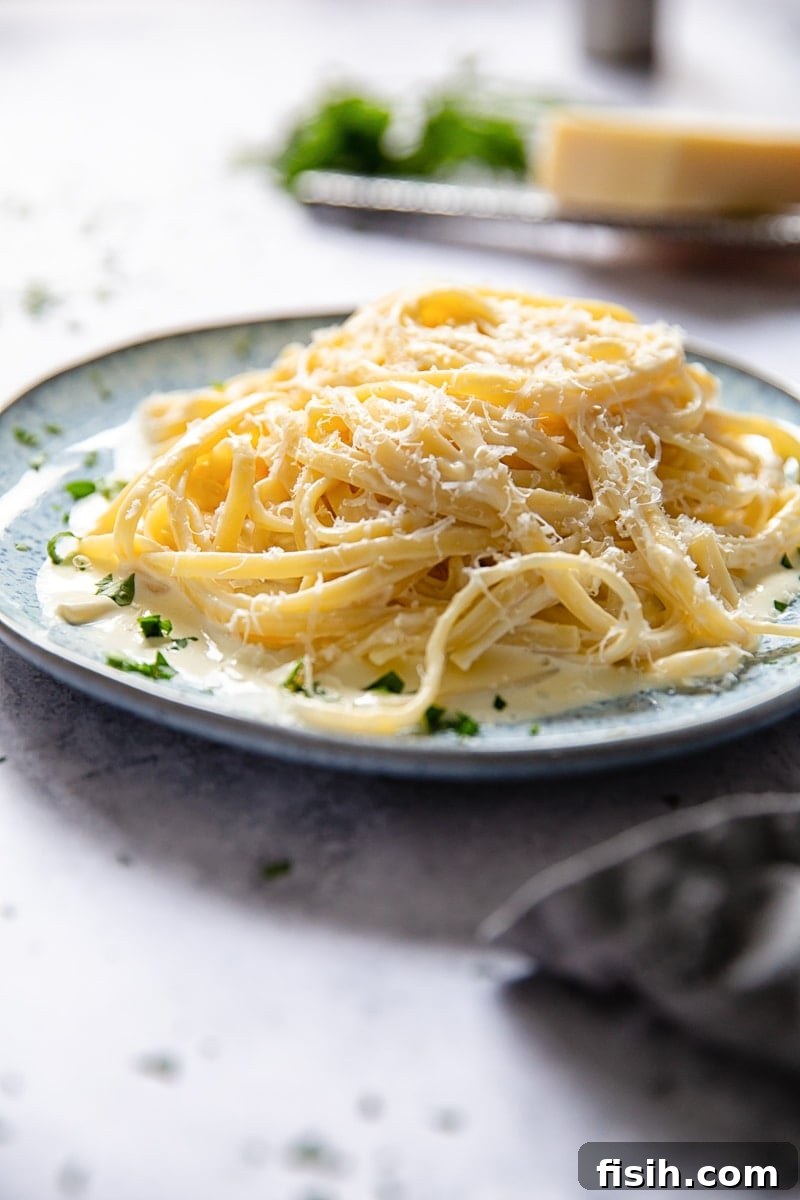
A rich and luxuriously smooth white sauce like this one finds its ideal partner in long pasta shapes such as fettuccine, tagliatelle, or linguine. Their broad surfaces and elegant length are perfectly designed to capture and hold every drop of the creamy sauce. However, there’s absolutely no culinary judgment if you choose to use up leftover short pastas like penne, fusilli, or charming conchiglie (those gorgeous shell shapes!)—they will still deliver a delicious experience.
When curating the perfect accompaniment for such a decadent and creamy pasta, I consider three key elements for my side dishes:
- Texture: I look for something crunchy or crisp to provide a delightful contrast to the pasta’s softness.
- Color: A vibrant splash of color is essential, adding visual appeal and making the meal more inviting.
- Flavor: The ideal side should offer a sharp or fresh counterpoint to the richness of the cream, balancing the palate.
With these principles in mind, I highly recommend serving this pasta with bright, crisp sides such as Lemon Garlic Green Beans with Parmesan, a refreshing Caprese Salad, or perfectly roasted Tenderstem Broccoli with a Lemon-Garlic Vinaigrette. These carefully chosen elements don’t just add a burst of flavor; they beautifully balance the plate, both visually and nutritionally, creating a harmonious meal.
Of course, if culinary balance and nutritional considerations aren’t your top priority (and sometimes they shouldn’t be!), then absolutely, enthusiastically add a generous serving of Air Fryer Garlic Bread to your plate. Because some indulgences are simply too good to resist!
Did you know that in traditional Italian dining, pasta is typically served as the primo piatto, or the first course, rather than the main event? It’s presented in modest portions, designed to whet the appetite and leave ample room for the secondo piatto, the main course, which is usually a hearty meat or fish dish. This culinary philosophy is one I wholeheartedly embrace!
For my classic Italian main course following this creamy pasta, I would undoubtedly choose a mouthwatering, tender Pork Osso Buco, slow-cooked to perfection, or a vibrant, caper-heavy Salmon Piccata. The contrast in textures and flavors between the creamy pasta and these robust main dishes creates an unforgettable meal experience.
Which would you choose to follow this delightful pasta?
Storage and Leftovers: A Fresh Approach
When a truly exceptional pasta sauce takes less time to prepare than boiling the pasta itself, the question of leftovers becomes less pressing. There’s little incentive to store and reheat when a fresh batch is so quick and easy. Furthermore, leftover pasta that has spent a night in the fridge often loses its desirable texture and vibrancy, becoming a rather unappetizing shadow of its former glory. For the best experience, this simple creamy pasta sauce is truly meant to be enjoyed fresh, directly from the pan.
More Creamy Pasta Inspirations
- Chicken and Bacon Pasta: A hearty and flavorful dish, perfect for a family meal.
- Orzo Pasta with Roasted Butternut Squash: A delightful vegetarian option with sweet and savory notes.
- Creamy Salmon Pasta with Mixed Greens: Elegant and nutritious, a quick dinner for seafood lovers.
- Easy Carbonara Sauce: Another classic Italian creamy sauce, surprisingly simple to master.
- Tagliatelle with Truffle Sauce: For a touch of gourmet indulgence, rich with earthy truffle flavor.
Rating: 4.83 out of 5 stars (based on 52 votes)
Creamy Pasta Sauce
By Julia Frey of Vikalinka
Prep Time: 5 mins
Cook Time: 10 mins
Total Time: 15 mins
Servings: 6
Print Recipe
Equipment
- Saucepan
- Fine grater
Ingredients
- 500ml / 2 cups double cream / heavy cream
- 50g / 1/2 cup Parmesan cheese, freshly grated
- Salt, to taste
Instructions
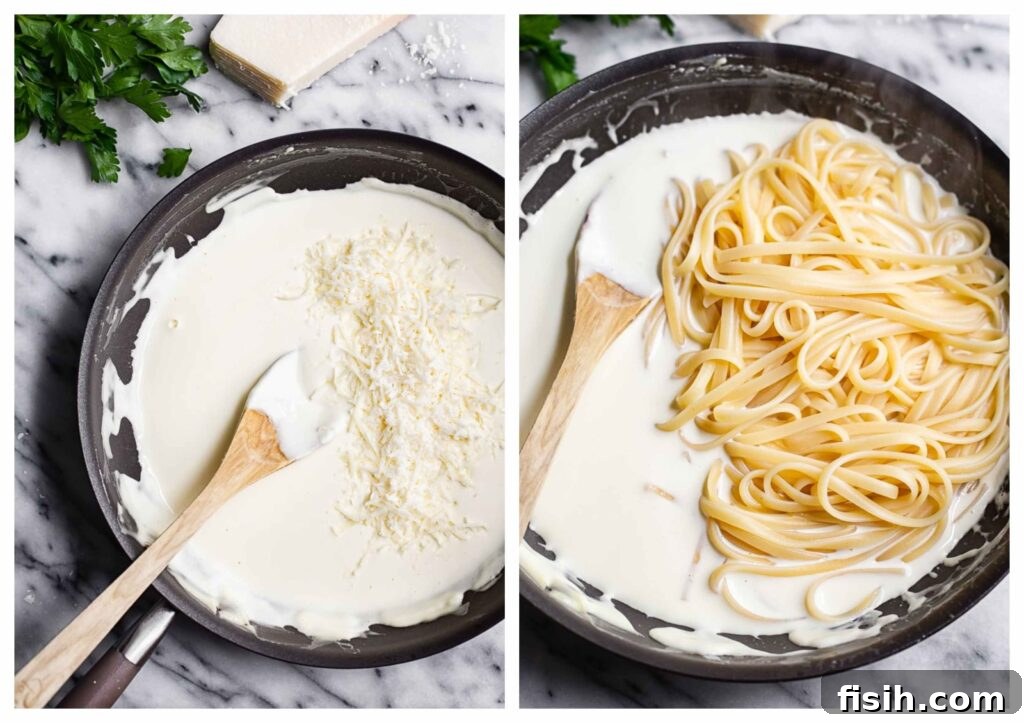
- Heat the cream in a pan over low heat, ensuring it does not boil.
- Remove the pan from the heat and whisk in the freshly grated Parmesan cheese until it is completely melted and the sauce is smooth. Taste the sauce and adjust with salt as needed. (Salt is a critical ingredient here, so do not omit it.)
- To dress the pasta, add the cooked pasta directly to the pan containing the sauce. Gently shake the pan or toss with tongs to ensure the pasta is thoroughly coated with the sauce. Add up to 1/3 cup of the reserved pasta water to achieve your desired sauce consistency, loosening it if necessary.
- Serve immediately to enjoy the sauce at its best.
Video
Notes
- While 100% durum semolina pasta from Italy might be slightly pricier, its superior quality and ability to cook perfectly al dente make it well worth the investment for an authentic taste.
- Always salt the water used to boil your pasta; this is crucial for seasoning the pasta from within and preventing blandness. Avoid adding oil, as it can prevent the sauce from adhering to the pasta.
- The high fat content in heavy or double cream eliminates the need for additional thickeners like flour or corn starch, ensuring a naturally perfect, smooth sauce.
- Remember to reserve some pasta water before draining! This starchy liquid is essential for adjusting the sauce’s consistency and adding a creamy finish.
- Always dress your hot pasta with the sauce immediately before serving. This ensures the pasta absorbs the flavors and remains moist and delicious, preventing it from drying out.
Nutrition
Nutrition information is automatically calculated, so should only be used as an approximation.
Tried this recipe? Let us know how it was!