
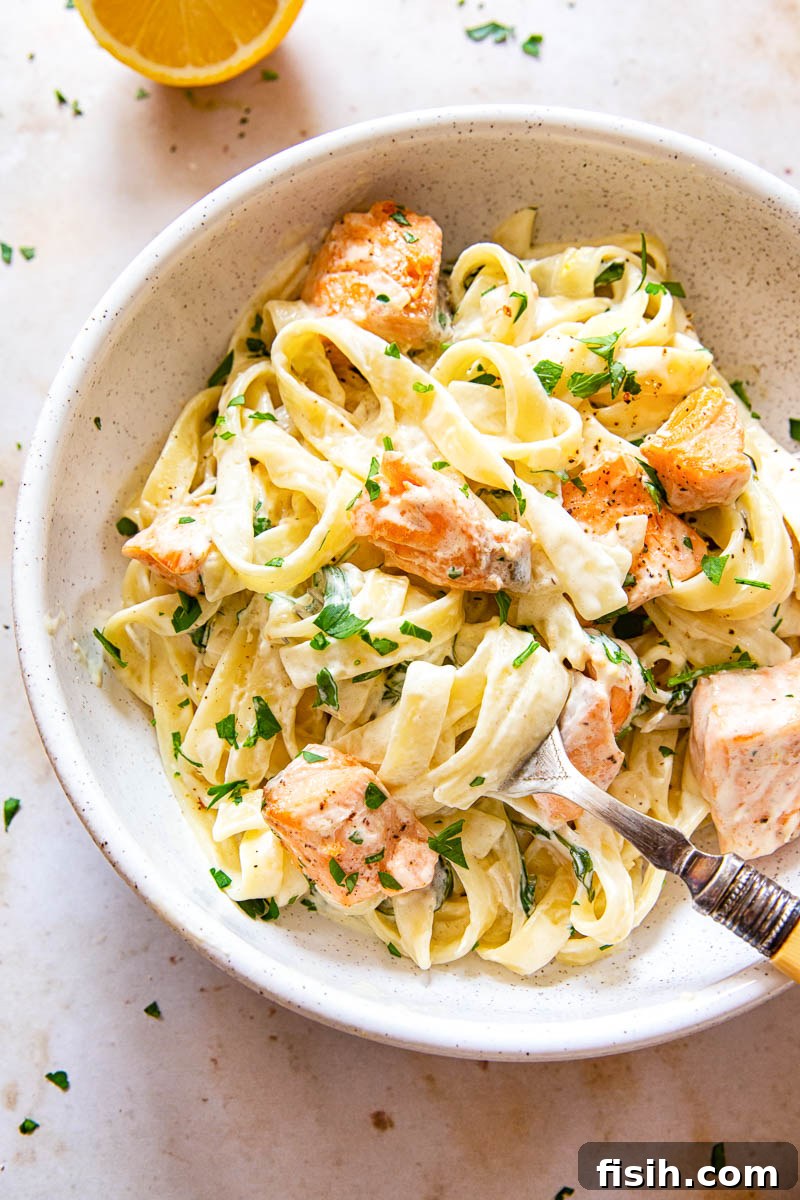
Welcome to your new favorite weeknight dinner: Creamy Salmon Pasta with White Wine Sauce and Fresh Greens. This isn’t just a meal; it’s a vibrant symphony of flavors and textures, starring succulent salmon, a luxurious white wine cream sauce, and a generous mix of fresh spinach, peppery arugula, and zesty watercress. The best part? This gourmet-tasting dish can be on your table in under 30 minutes, making it an ideal choice for busy evenings when you crave something both comforting and incredibly satisfying.
If you’re a fan of rich pasta dishes featuring healthy seafood, you’ll also adore our Pasta with Smoked Salmon, another quick and delicious option that perfectly highlights the versatility of this fantastic fish.
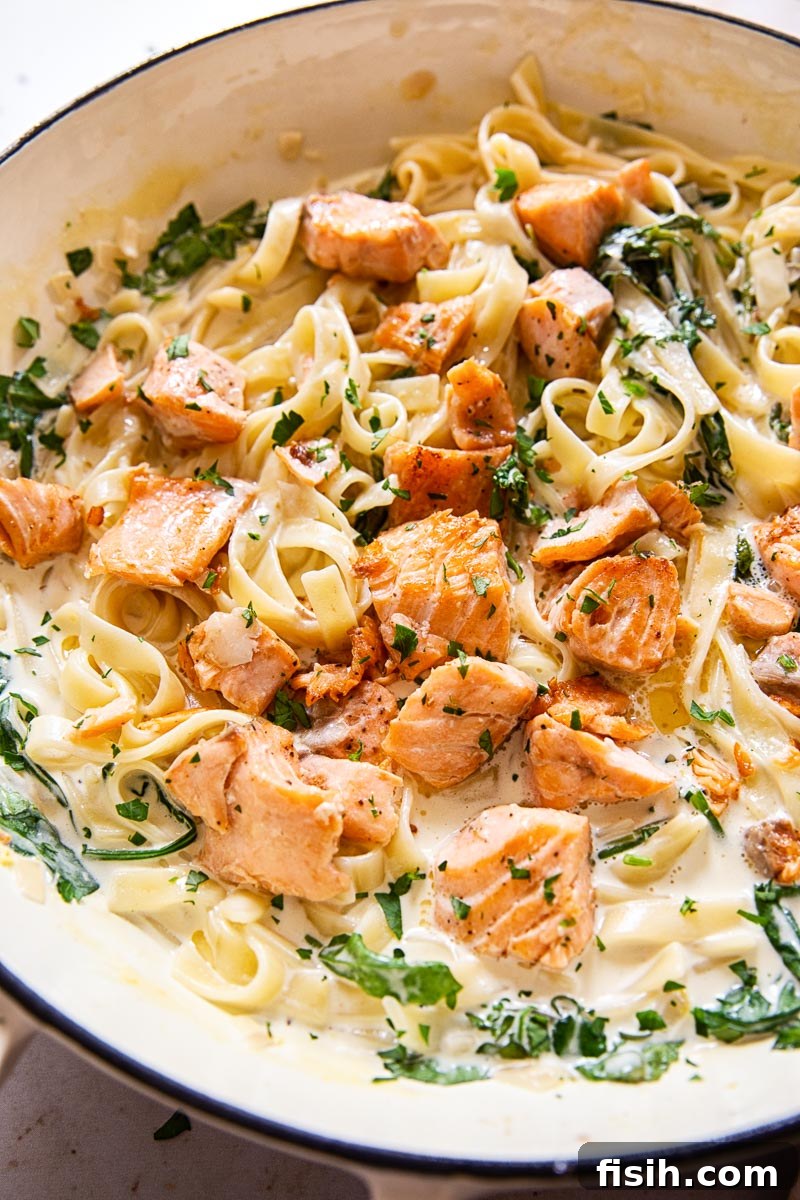
Why Salmon is Your Best Friend in the Kitchen
Salmon stands out as a culinary marvel for many reasons. Its delicate, mild flavor and buttery texture make it exceptionally approachable, even for those who might be hesitant about eating fish. Unlike some stronger-tasting seafood, salmon lacks that pronounced “fishy” aroma, making it a universal crowd-pleaser. This versatile fish is not only delicious but also a nutritional powerhouse, packed with essential omega-3 fatty acids, powerful antioxidants, and a wealth of vitamins like D and B12.
Years ago, when I aimed to incorporate more fish into my family’s diet, salmon was my starting point, and it quickly became a beloved staple. My kids and husband now can’t get enough of its rich taste and health benefits. This success continually inspires me to explore new and exciting ways to prepare it, keeping our meals fresh and engaging.
While salmon is undeniably a premium ingredient, its rich flavor means a little goes a long way. This creamy salmon pasta recipe is a brilliant example of stretching that delicious taste further. Requiring only half a pound of salmon, it generously serves at least four people, transforming a potentially pricey ingredient into an accessible and economical weeknight dinner solution. It’s a testament to smart cooking and maximizing flavor without breaking the bank.
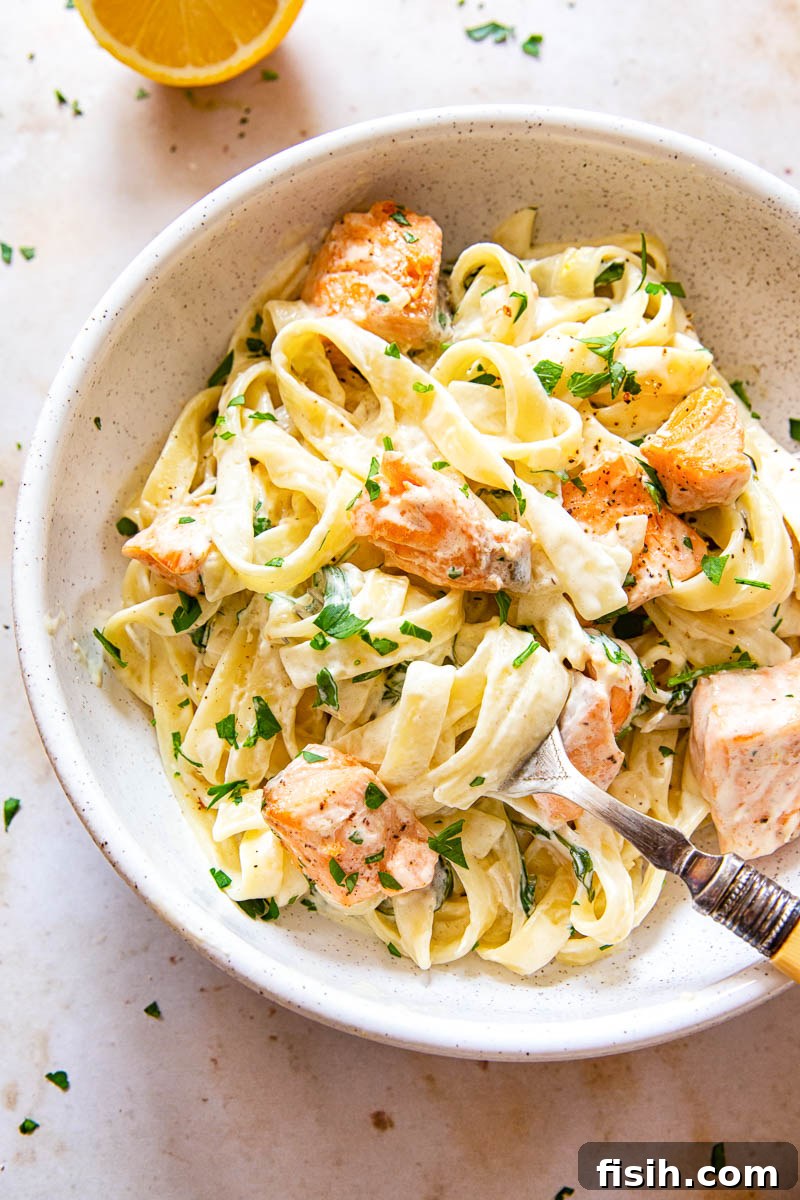
Crafting the Perfect Creamy Salmon Pasta
The inspiration for this exquisite pasta dish comes from one of my all-time favorite salmon preparations: baking it in foil with a luxurious white wine cream sauce. That method is wonderfully easy, consistently delicious, and always impresses. For this pasta rendition, I took that core idea and adapted it for a quicker, stovetop approach.
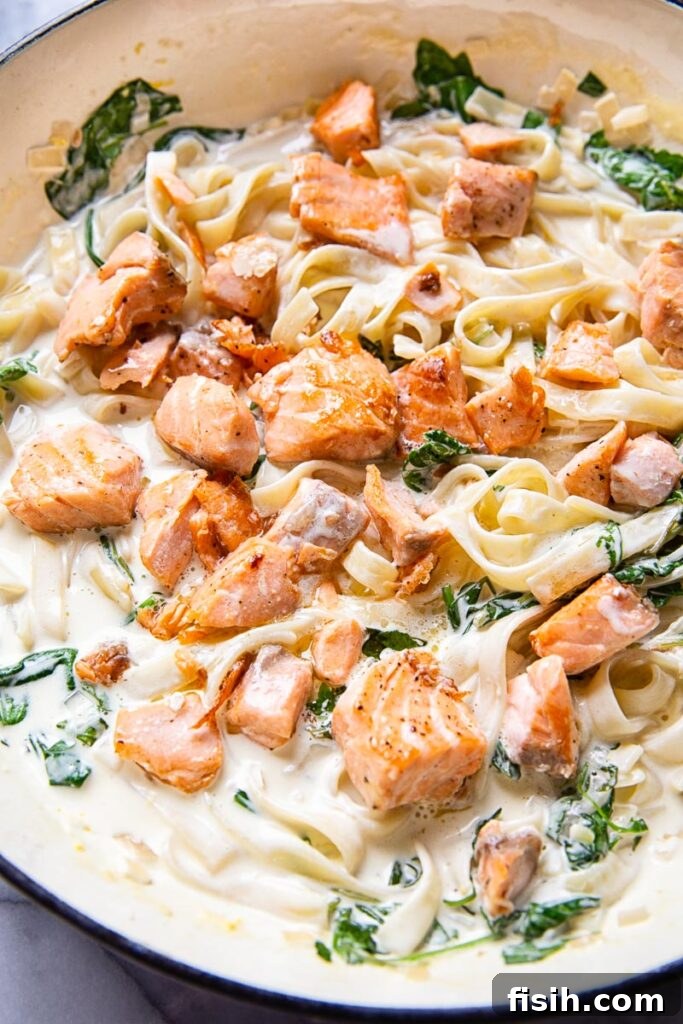
The process begins with a beautifully seasoned salmon fillet, seared in a skillet to achieve a delicious golden crust and lock in its rich flavors. This searing technique adds a depth of taste that simply boiling or baking cannot replicate. Once cooked and flaked, the salmon takes a backseat while we build the star of the show: the creamy white wine sauce.
Into this velvety sauce, we introduce a generous medley of fresh, vibrant greens – spinach, peppery arugula, and crisp watercress. These greens are not merely for aesthetics; they infuse the dish with fresh, slightly sharp notes that perfectly cut through the richness of the cream sauce, adding vital nutrients and, of course, a stunning burst of color. Finally, the perfectly cooked pasta is tossed into this glorious sauce, and topped with the tender, flaky salmon bits. The result is a simple, yet incredibly tasty and impressive meal that feels both wholesome and indulgent.
Video Guide: Creamy Salmon Pasta with Mixed Greens
Watch our step-by-step video to see how easily this delicious pasta comes together in minutes.
Choosing the Best Salmon for Your Pasta
When it comes to selecting salmon for your pasta, or any dish, quality truly makes a difference. My general advice is always to purchase the best quality salmon your budget allows. The primary factor to consider is the source: whenever possible, opt for wild-caught salmon over farmed varieties. Wild salmon often boasts a richer flavor, firmer texture, and a more vibrant color, reflecting its natural diet and environment. While farmed salmon can be more readily available and cheaper, wild salmon offers superior taste and nutritional benefits.
The world of salmon varieties can seem daunting, but here’s a quick guide:
- Sockeye Salmon (Red Salmon): Widely considered to be one of the best for its deep red color, firm texture, and intense flavor. It is often more expensive due to its wild-caught nature.
- Pink Salmon: A fantastic second choice, especially when looking for a more budget-friendly wild-caught option. It has a lighter color and milder flavor than sockeye.
- Coho Salmon (Silver Salmon): Known for its bright red-orange flesh, medium-firm texture, and delicate flavor. It’s an excellent all-around choice.
- Atlantic Salmon: Almost exclusively farmed, Atlantic salmon has a milder flavor and fattier texture. If choosing farmed, look for sustainably raised options.
As for Atlantic versus Pacific salmon, the best choice often depends on your location. If you live closer to the Pacific coast, Pacific varieties (sockeye, pink, coho) will likely be fresher. Conversely, if you’re near the Atlantic, responsibly farmed Atlantic salmon might be a good option. Ultimately, prioritize freshness and sustainable sourcing from your local fishmonger or trusted grocery store.
The good news for this pasta recipe is that you don’t necessarily need the most expensive cut of salmon. The robust flavors from the white wine cream sauce, garlic, shallots, and fresh greens all contribute significantly to the overall taste, allowing even a slightly less premium fillet to shine beautifully. This makes it a smart choice for an elevated yet accessible meal.
Expert Tips for a Flawless Pasta Dish
- Achieving the Perfect Sear: When searing salmon, ensure your skillet or frying pan is heated to medium-high or high heat before adding the fish. A sufficiently hot pan creates a beautiful, crispy crust and locks in moisture. If the pan isn’t hot enough, the salmon will steam instead of sear, resulting in a less desirable texture.
- Choosing Your White Wine: The wine you use for the cream sauce doesn’t need to be expensive, but it absolutely must be dry. Sweet wines will alter the delicate balance of the sauce, introducing unwanted sweetness. Excellent dry white wine options include Pinot Grigio, Sauvignon Blanc, Chardonnay, or even a dry vermouth if you prefer to cook without alcohol.
- The Magic of Pasta Water: Before draining your cooked pasta, always reserve about a cup of the starchy cooking water. This “liquid gold” is crucial for thickening your sauce and helping it emulsify. The starch and salt in the water bind with the cream, creating a silky-smooth, cohesive sauce that clings beautifully to the pasta, enhancing both flavor and texture.
- Ideal Pasta Shapes: This rich cream sauce pairs wonderfully with long, sturdy pasta shapes. Tagliatelle, fettuccine, or linguine are excellent choices as their flat, broad surfaces provide ample area for the sauce to adhere. If you prefer short pasta, opt for thick, textured shapes like penne, rigatoni, or orecchiette, which have ridges or cups that effectively capture and hold the creamy sauce.
- Seasoning Your Pasta Water: It’s a non-negotiable rule in Italian cooking: always generously salt your pasta water. The water should taste like the sea. This step is vital because it allows the pasta to absorb flavor from the inside out as it cooks. Salting the pasta after cooking only seasons the surface, whereas salting the water ensures every strand is imbued with savory goodness.
- Cooking to Al Dente Perfection: Aim for ‘al dente’ pasta, meaning it should be tender but still have a slight, pleasant chew to it. Overcooked pasta becomes soft and mushy, losing its integrity. A good trick is to set a timer for one minute less than the package instructions recommend, then taste-test for desired doneness.
- Taste and Adjust Seasoning: Before serving, always taste your finished pasta dish and adjust the salt and pepper as needed. Salt is a fundamental flavor enhancer in pasta dishes, bringing all the other ingredients to life. Don’t be shy about adding a final pinch if you feel it’s lacking.
Creative Substitutions and Variations
One of the true joys of this creamy salmon pasta is its incredible adaptability. The base white wine cream sauce acts as a blank canvas, inviting you to personalize it with your favorite ingredients and flavors.
- Greens Galore: While our recipe calls for a mix of spinach, arugula, and watercress, feel free to use your preferred combination or stick to a single green. Kale, Swiss chard, or even finely chopped collard greens would also work, though some might require a longer cooking time to soften.
- Adding More Vegetables: Enhance the nutritional value and texture by incorporating other vegetables. Sweet peas, asparagus tips, or tender broccoli florets make fantastic additions. Remember that denser vegetables like broccoli may need to be blanched or sautéed separately before being added to the sauce to ensure they cook evenly and retain their vibrant color, much like in our lemon garlic pasta recipe. For a touch of Mediterranean flair, roasted red bell peppers are a delightful choice.
- Tomato Twist: Tomatoes add a bright, acidic counterpoint to the rich cream sauce. Sun-dried tomatoes offer an intense, concentrated flavor and are easy to toss in. For a truly elevated experience, I highly recommend roasting cherry tomatoes until they burst with sweetness, then adding them to the pasta. Their natural juices will blend beautifully with the sauce.
- Protein Power: If you’re out of salmon or simply want to try something different, this recipe is incredibly versatile with other proteins. Succulent chicken breast (sliced or shredded), tender shrimp, or even pan-seared scallops would be magnificent substitutes, each offering a unique texture and flavor profile to the creamy sauce. For a vegetarian option, consider adding sautéed mushrooms or cannellini beans for a hearty touch.
- Herb & Spice Enhancement: Experiment with fresh herbs beyond parsley. Dill pairs exceptionally well with salmon, while fresh thyme or a hint of chives can elevate the sauce. A pinch of red pepper flakes can add a subtle warmth and gentle heat, balancing the richness.
Perfect Serving Suggestions
To truly complete your creamy salmon pasta experience, consider these serving suggestions that enhance its flavors and textures:
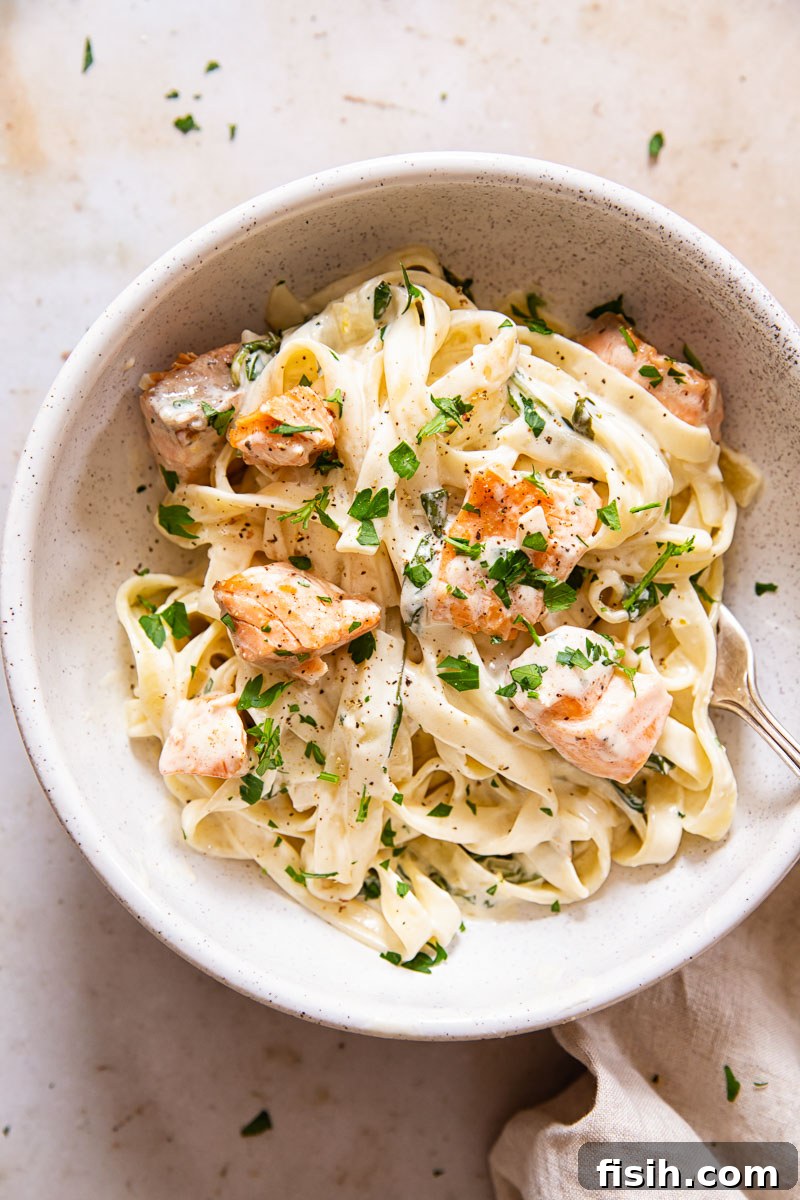
- Garnish for Freshness: A generous sprinkle of freshly ground black pepper adds a pleasant kick, while chopped fresh parsley brightens the dish with its herbaceous notes, providing a delightful contrast to the rich sauce. For an extra pop of color and citrusy aroma, a bit of lemon zest grated over the top is always a welcome addition.
- The Parmesan Debate: While traditional Italian cuisine rarely pairs cheese with seafood pasta, I confess to enjoying a light dusting of fresh Parmesan cheese on mine. The nutty, salty notes of good quality Parmesan can surprisingly complement the salmon and cream, but feel free to omit it if you prefer to stay true to classic rules. A milder, less assertive hard cheese like Pecorino Sardo might also be an interesting alternative.
- Light and Zesty Side Salads: A rich, creamy pasta dish like this one truly benefits from side dishes that are lighter and add a refreshing zest. A crisp green salad with a vinaigrette dressing is always a good idea. Consider pairing it with a Tuscan Panzanella Salad, with its vibrant tomatoes, cucumber, and crusty bread, or a classic Caprese Salad, featuring fresh mozzarella, ripe tomatoes, and fragrant basil, drizzled with balsamic glaze. These salads offer a much-needed acidic contrast to the pasta’s creaminess.
- Crusty Bread for Sopping: And of course, no pasta meal is truly complete without something to soak up every last drop of that delicious sauce. Garlic Bread, with its crispy edges and aromatic butter, is always a crowd-pleaser and a perfect accompaniment. A simple crusty baguette or focaccia would also be ideal.
- Beverage Pairings: Continue the white wine theme with a glass of crisp, dry white wine like a Sauvignon Blanc, Pinot Grigio, or even an unoaked Chardonnay. For non-alcoholic options, sparkling water with a lemon twist or a light herbal iced tea would be refreshing choices.
Storage and Leftovers: Maximizing Your Meal
Pasta often reigns supreme as a weeknight dinner hero, but when it comes to leftovers, it can sometimes let us down. The perfectly “al dente” texture we strive for when fresh can become softer after cooling and reheating. However, this creamy salmon pasta is far too delicious to waste!
If you have any leftovers, store them in an airtight container in the refrigerator for up to 3 days. To reheat, gently warm in a microwave or on your stovetop in a saucepan over medium heat. To prevent the sauce from becoming too thick or dry, add a splash of water, milk, or chicken broth as it warms. Stir frequently until heated through. While the pasta won’t retain its exact fresh texture, the flavors will still be wonderfully satisfying.
Freezing pasta dishes that have already been tossed in a sauce, as this one has, is generally not recommended. Freezing can alter the texture of the cream sauce, sometimes causing it to curdle or separate upon reheating. Additionally, the pasta itself tends to become overcooked and mushy when thawed and reheated. For the best quality and enjoyment, it’s best to savor this creamy salmon pasta fresh and consume any leftovers within a few days from the refrigerator.
More Delicious Salmon Recipes to Explore
If you’re looking to further expand your repertoire of salmon dishes, here are some other fantastic recipes that showcase the versatility and flavor of this incredible fish:
- Teriyaki Salmon with Bok Choy: A delightful one-pan dinner featuring a sweet and savory glaze.
- Salmon en Croûte (Salmon in Pastry): An elegant dish where salmon is baked in a flaky pastry crust.
- Salmon Fishcakes in Creamy White Wine Sauce: A comforting and flavorful way to enjoy salmon, perfect for a light lunch or dinner.
- Asian Salmon with Carrot and Cucumber Slaw: A fresh, vibrant, and healthy meal with bright, crisp flavors.
- Chicken Broccoli Alfredo: While not salmon, this creamy pasta dish is a testament to rich sauces and can inspire further variations.
Salmon Pasta with Mixed Greens
Print Recipe
This salmon pasta with white wine cream sauce is only made better by a bunch of spinach, arugula and watercress greens mixed in for more flavour and a pop of colour.
Ingredients
- ½ kg / 1 lb pasta (such as tagliatelle, fettuccine, or linguine)
- 1 shallot, finely chopped
- 1 clove garlic, minced
- 1 tbsp butter
- 200g / 7oz salmon fillet, skin removed and checked for bones
- 125ml / ½ cup dry white wine
- 250ml / 1 cup double/heavy cream
- 80g / 2 cups mixed greens (such as spinach, arugula, watercress)
- ½ lemon, zest and 1 tbsp juice
- ¼ tsp salt, or to taste
- 1 tbsp fresh parsley, chopped (for garnish)
- Optional: Freshly ground black pepper for serving
Instructions
- Cook the pasta in a large pot of generously salted boiling water according to package instructions until al dente. Before draining, reserve about 1 cup of pasta water.
- While the pasta cooks, pat the salmon fillet dry. Remove any skin and check for residual bones, then cut the salmon into bite-sized pieces. Season generously with salt and pepper.
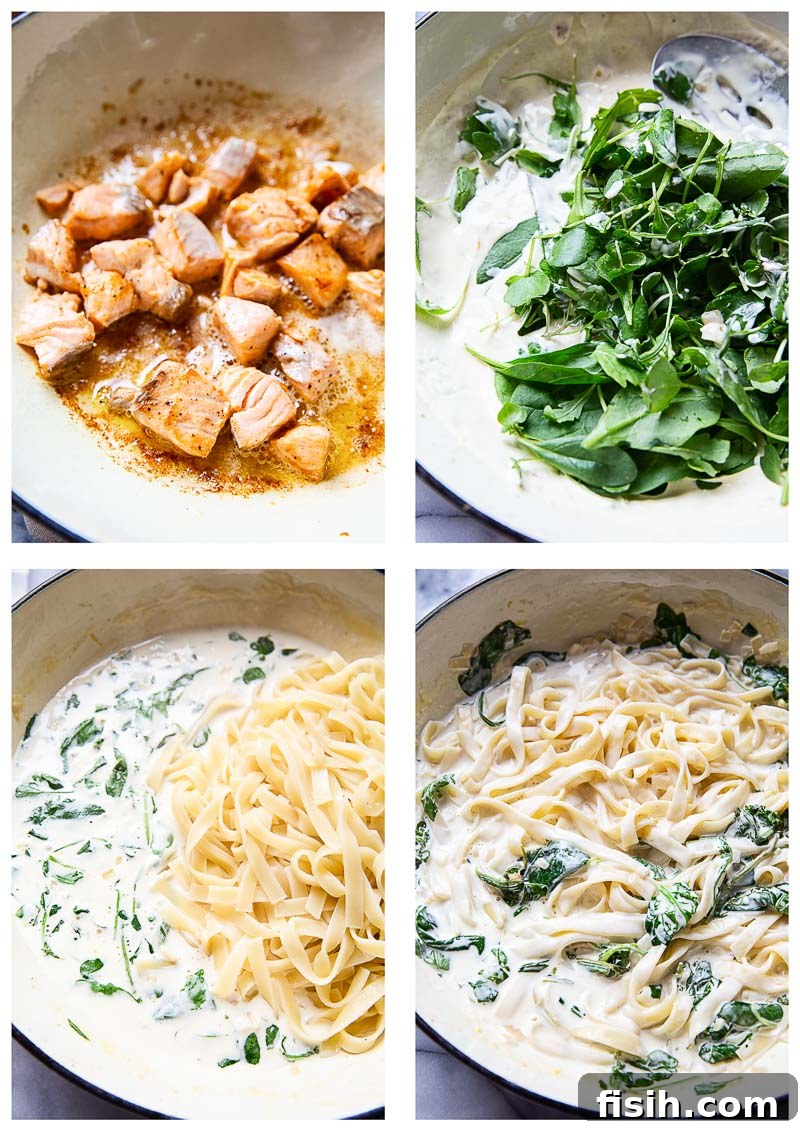
- In a large skillet or frying pan, melt 1 tbsp butter over medium-high heat. Once hot, add the salmon pieces and sear on all sides until cooked through and lightly golden, about 2-3 minutes total. Be careful not to overcook. Remove the salmon to a separate plate.
- To the same pan (no need to clean), add 1 tbsp olive oil (if needed), chopped shallots, and minced garlic. Sauté over low heat for 1-2 minutes until fragrant and softened.
- Increase the heat to medium, then pour in the dry white wine. Let it simmer and reduce by about half for 5-7 minutes, allowing the alcohol to cook off and the flavors to concentrate.
- Stir in the heavy cream, mixed greens, salt, lemon zest, and lemon juice. Cook for 1-2 minutes until the greens wilt and the sauce is gently warmed through.
- Add the drained pasta to the sauce and toss well to combine, ensuring every strand is coated. If the sauce seems too thick, add a little reserved pasta water, a tablespoon at a time, until it reaches your desired consistency.
- Serve immediately, topped with the seared salmon pieces, a sprinkle of fresh chopped parsley, and a generous crack of black pepper. Enjoy!
Video
For a visual guide, watch our comprehensive video tutorial on making this delicious salmon pasta.
Notes
- Reserve some of the pasta water before you drain the pasta to add later to the sauce. Pasta water holds on to salt and starch and it therefore adds both flavour and creaminess when added to the sauce.
- Because you want to sear the salmon, make sure it’s added to a large skillet or frying pan over medium-high heat or high heat.
- A sauce like this works well with long but sturdy pasta shapes, which is why I made mine with tagliatelle, which does a good job of holding the sauce.
- The white wine you use doesn’t have to be expensive, but does need to be dry. A sweet wine will alter the taste of the pasta sauce. Wines like pinot grigio, sauvignon blanc and chardonnay are all good options.
Nutrition (per serving)
- Calories:
- 515 kcal
- Carbohydrates:
- 60 g
- Protein:
- 18 g
- Fat:
- 21 g
- Saturated Fat:
- 11 g
- Cholesterol:
- 81 mg
- Sodium:
- 162 mg
- Potassium:
- 479 mg
- Fiber:
- 3 g
- Sugar:
- 3 g
- Vitamin A:
- 1989 IU
- Vitamin C:
- 10 mg
- Calcium:
- 64 mg
- Iron:
- 2 mg
Nutrition information is automatically calculated and should only be used as an approximation.
Tried this recipe? Let us know how it was! We love hearing from you.