
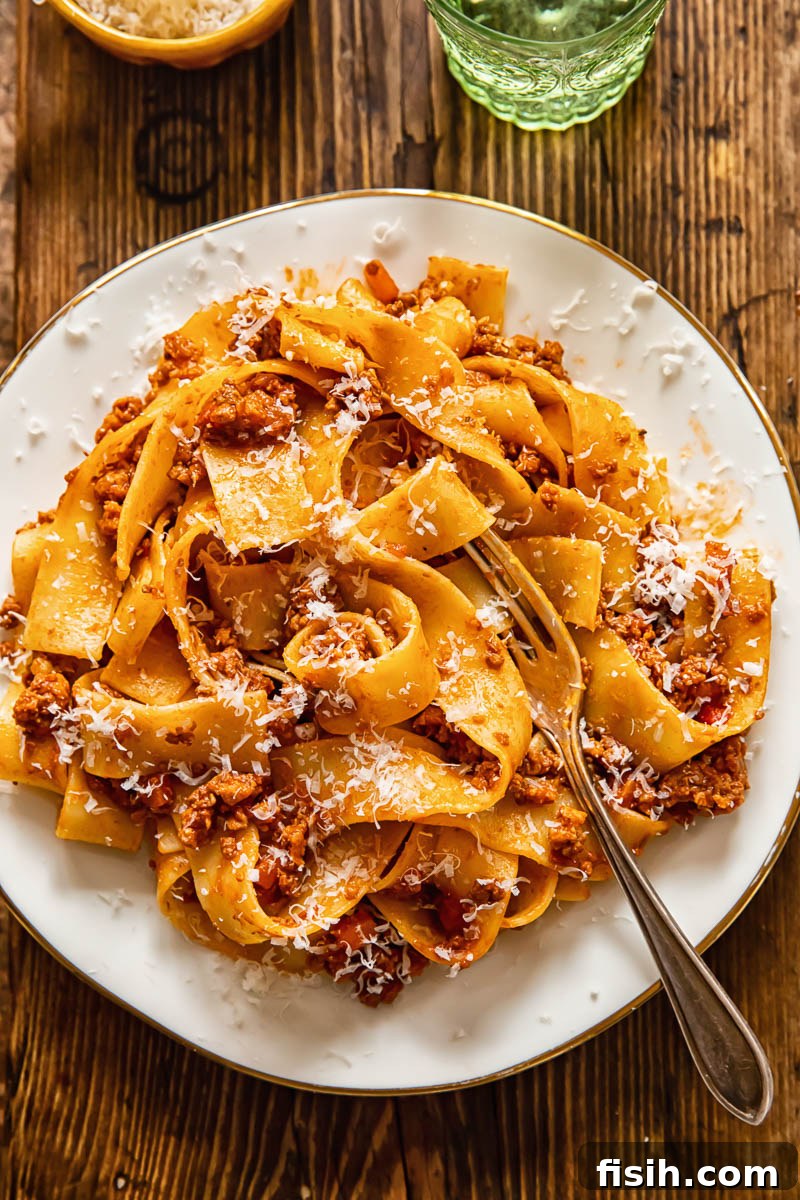
Embark on a culinary journey to the rolling hills and sun-drenched vineyards of Tuscany with this truly tantalizing Tuscan Ragu. Rich in vibrant tomato, magnificently meaty, and the quintessential partner to hearty pasta, this authentic recipe invites you to create your own masterpiece in your kitchen.
Complete your Italian feast by pairing this ragu with a refreshing Tuscan Panzanella Salad or delightful Mushroom Crostini. These complementary dishes will elevate your dining experience, immersing you deeper into the flavors of Italy.
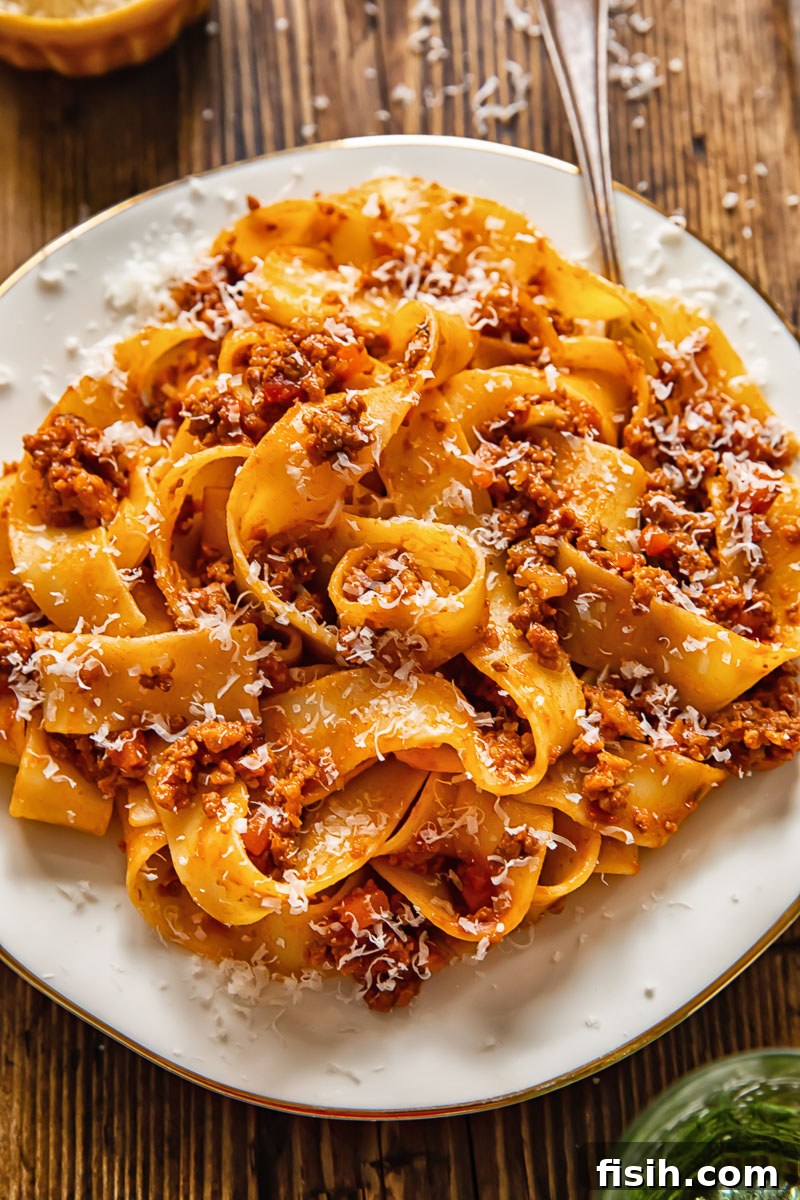
Tuscany, the undisputed Renaissance capital of the world, effortlessly evokes dreamy scenes of picturesque landscapes drenched in golden sunshine. It’s a region where every vista inspires, and every corner of its history is brimming with masterpieces – not just in art and sculpture, but most certainly in food. Imagine a paradise of fresh produce: vines heavy with plump, juicy grapes, ancient olive groves yielding glistening olives, and platters overflowing with locally cured meats and exquisite cheeses, all savored with a fine glass of wine and an unparalleled view.
For those moments when the wanderlust for Tuscany strikes, and a physical trip isn’t possible, this Tuscan Ragu offers a sensory escape. With every spoonful, it transports you straight to the heart of this inspiring Italian region, allowing you to taste the essence of its vibrant culinary traditions.
What is Ragu? A Culinary Clarification
Here’s a common culinary conundrum for you: Ragu is not always Bolognese, but Bolognese is a type of Ragu. How is this possible, and why does it matter? If you possess even a basic understanding of Italian cuisine and its rich regional diversity, you might solve this pronto.
At its core, “ragu” literally translates to ‘meat sauce’. This broad definition encompasses a vast array of slow-cooked meat sauces found across Italy. Bolognese, on the other hand, is a specific type of ragu originating from the Emilia-Romagna region, particularly Bologna. While both are hearty meat sauces, they are distinct. In fact, if you travel to Italy and ask for ‘spaghetti bolognese’, you’ll likely be met with a blank stare. Italians typically serve Bolognese with wider, flatter pasta like tagliatelle, which better holds the rich sauce, and the dish known as “spaghetti bolognese” in many parts of the world is largely an invention outside of Italy.
The type of meat used in ragu varies significantly from one Italian region to another. For instance, my Venetian Chicken Ragu offers a lighter twist, traditionally made with succulent duck but adapted here with more accessible chicken thighs. This regional variation highlights the diversity within Italian cooking.
This particular Tuscan Ragu recipe artfully combines ground beef with flavorful pork sausage. This blend is not only easily accessible for home cooks but also consistently proves to be a family favorite. However, for those seeking a more adventurous ragu di carne that truly reflects Tuscan tradition, consider using rabbit or even wild boar. These game meats are deeply characteristic of the Tuscan countryside, offering an even more authentic and robust flavor profile.
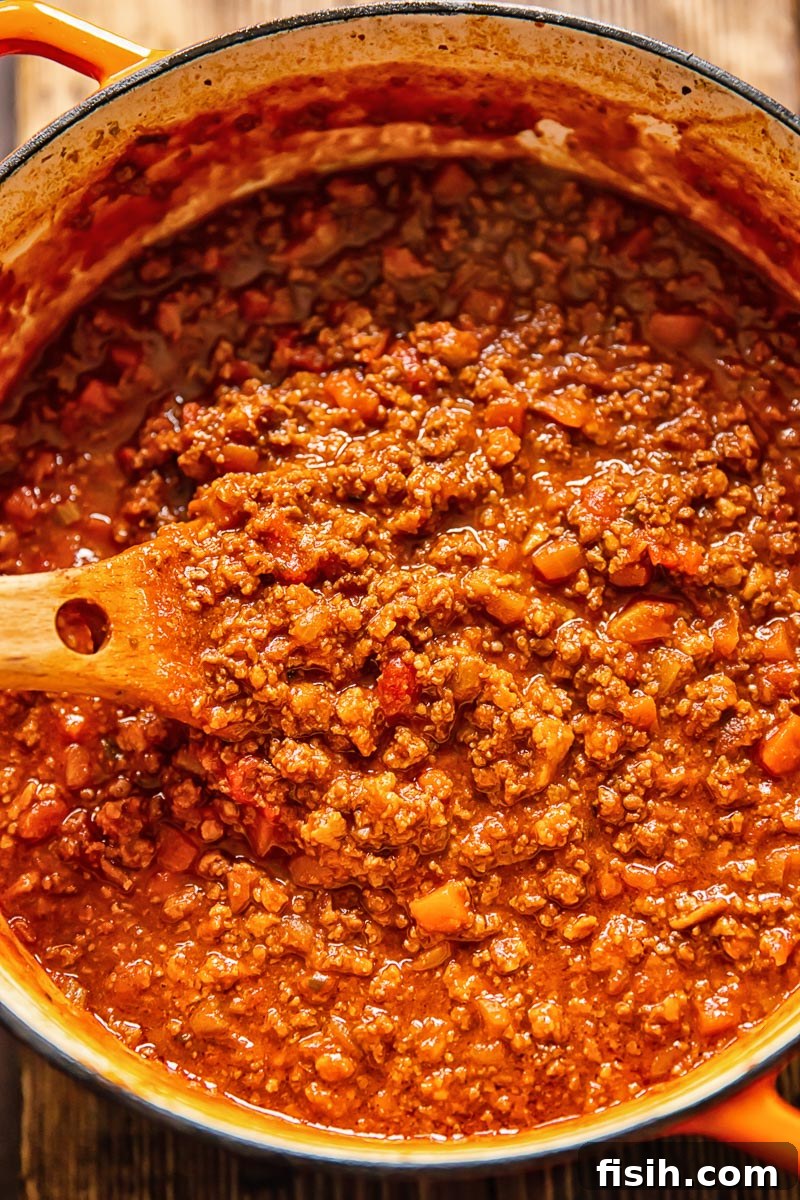
Yet, a truly exceptional ragu is more than just meat. Two other pivotal elements define its character: soffritto and, perhaps most importantly, patience.
Soffritto, meaning ‘slow fried’, refers to the invisible trinity of finely diced onion, carrot, and celery. This aromatic base is the unsung hero, forming the foundational layer of flavor for countless Italian dishes, including rich tomato and meat sauces, comforting stews, and nourishing soups like Pasta e Fagioli. It’s also a clever way to subtly incorporate essential vegetables into a meal, often unnoticed by the most veg-averse diners.
And then there is patience. A truly magnificent ragu cannot be rushed. It demands time – ample time – to allow the distinct flavors of the meat, vegetables, aromatic herbs, and wine to harmoniously meld and develop into a cohesive, complex symphony. This slow, gentle simmering is the only pathway to achieving the intense depth and nuanced complexity that define an authentic Tuscan Ragu, transforming simple ingredients into a profound culinary experience.
The Essence of Tuscan Flavors
Imagine summer days in Tuscany, averaging 11 hours of glorious sunshine. This abundant sun is the secret ingredient behind the region’s extraordinary agriculture, resulting in an explosion of fresh, vibrant produce. Think bountiful heaps of glistening olives, deep garnet-colored sun-dried tomatoes bursting with concentrated flavor, nutrient-rich cavolo nero (also known as Tuscan kale), and aromatic, vibrant basil. Beyond these, Tuscany is renowned for its diverse beans, exquisite cheeses like Pecorino, succulent Chianina steak, and, of course, its world-famous wines – particularly Chianti and Brunello di Montalcino, which often find their way into the region’s cooking.
Tuscan fare is characterized by its freshness, heartiness, and unwavering honesty. It’s a cuisine built upon native ingredients, celebrated for their natural flavors and simple, yet profound, preparations. It’s no surprise that countless recipes have been created from this rich pantry. If your appetite is whetted for more Tuscan delights, I encourage you to explore my blog further, perhaps starting with a warming bowl of Tuscan Chickpea Soup!
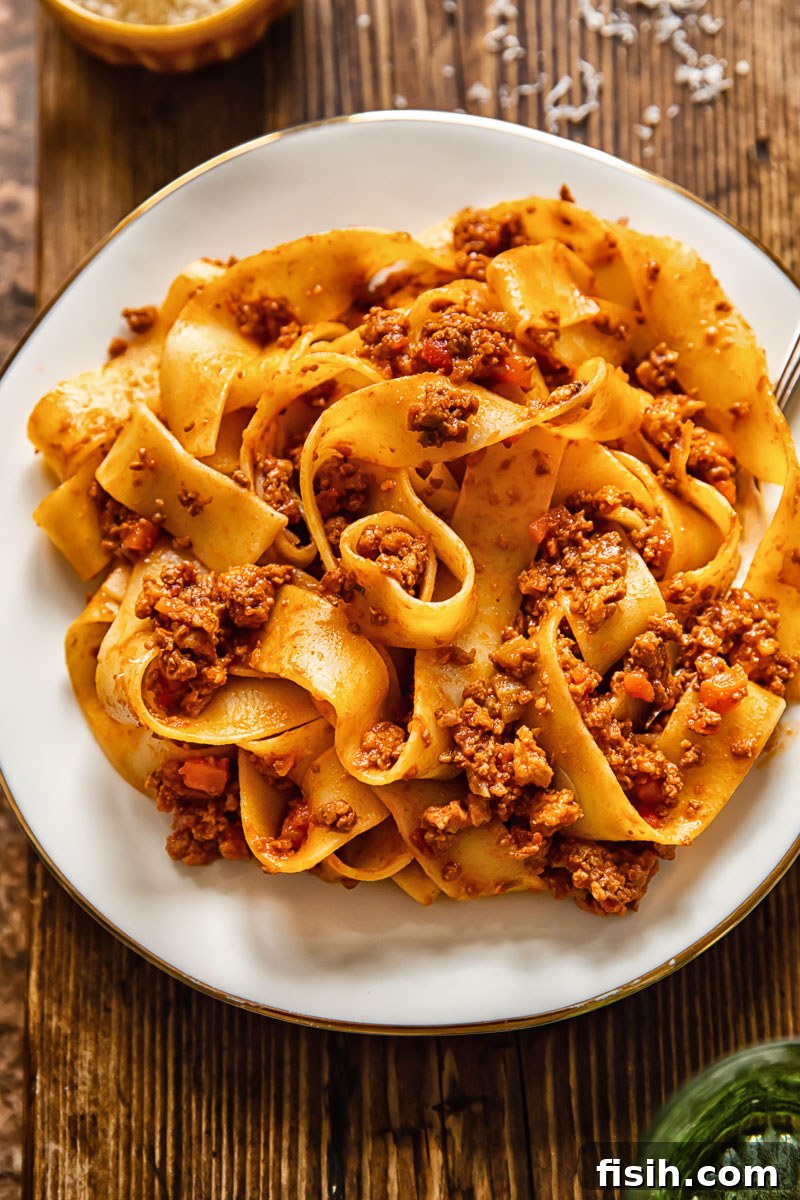
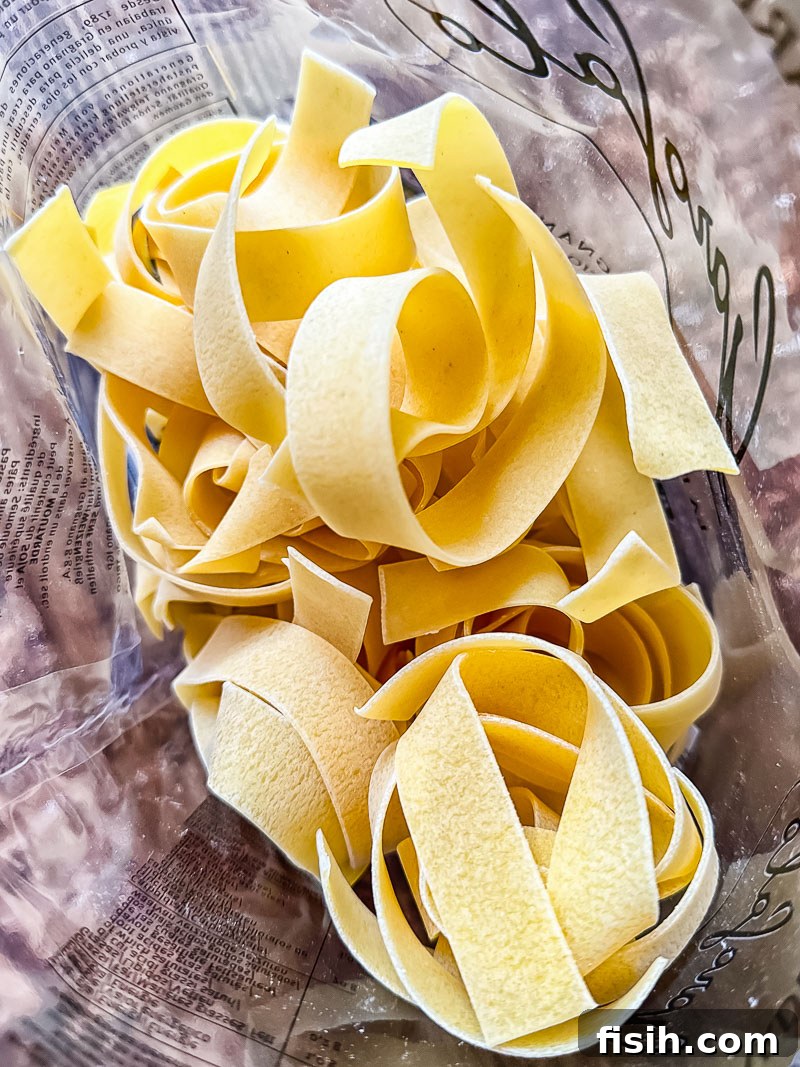
When it comes to pasta pairings for ragu, the most iconic choice you’ll encounter throughout Tuscany is pici. This rustic, hand-rolled pasta, resembling thicker spaghetti, boasts a wonderfully chewy texture that is ideal for gripping robust sauces. If you are fortunate enough to find pici, it is the absolute best vehicle for this rich Tuscan ragu. If pici isn’t readily available, fear not; widely accessible pappardelle, with its broad, flat ribbons, serves as an excellent alternative, perfectly cradling every bit of this hearty, meaty sauce.
Expert Recipe Tips and Notes for Perfect Ragu
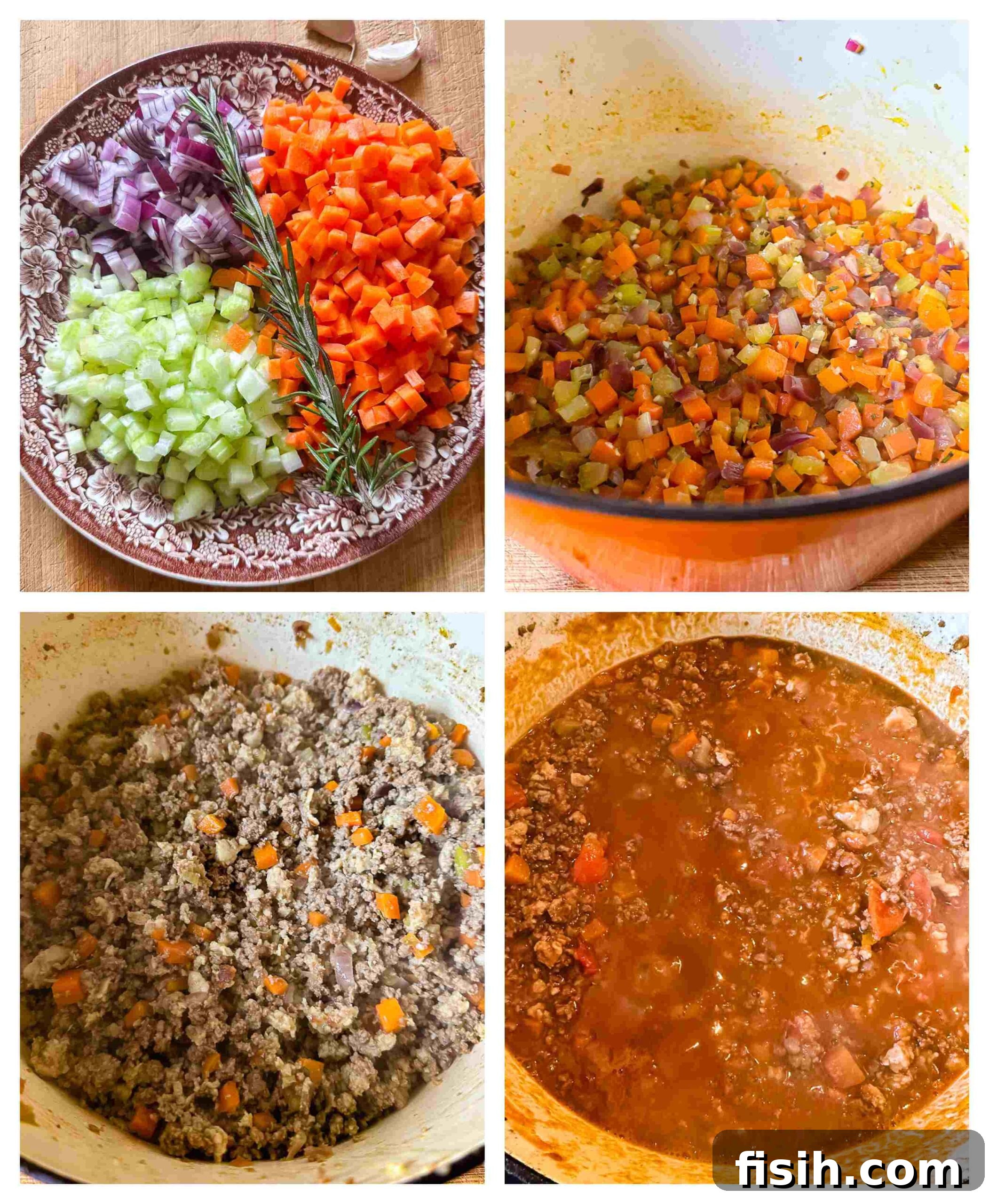
- The soffritto is not just a quick sauté. It is crucial to cook your diced onions, carrots, and celery over low heat for a minimum of 10 minutes, allowing them to soften without browning. This slow cooking extracts their inherent sweetness and earthy flavors, infusing the olive oil and setting a deeply aromatic foundation for your rich sauce.
- What truly distinguishes this particular ragu di carne as Tuscan is the inclusion of pork sausage. For unparalleled depth of flavor and a truly authentic taste, always opt for a decent quality pork sausage. The herbs and spices within the sausage will significantly contribute to the overall complexity of the ragu.
- While traditional ragu often features basil, I find that rosemary offers a unique and delightful pairing with the pork and beef blend in this Tuscan variation. Its robust, piney notes complement the richness of the meats beautifully. However, if you prefer, fresh basil also creates a classic and delicious flavor profile with beef and tomato. The choice is yours to personalize.
- There are few ingredients more emblematic of Italian cooking than red wine. In ragu, it serves multiple vital functions: it deglazes the pan, capturing all the flavorful browned bits (fond) from the bottom; it helps to tenderize the meat during the long simmer; it maintains moisture; and most importantly, it adds incredible depth and dimension to the sauce. I genuinely couldn’t imagine a ragu without it. However, if alcohol is not an option, you can substitute the wine with an equal amount of good quality beef stock, though the flavor profile will be slightly different.
- The ultimate secret to an extraordinary ragu lies in the simmer. That low, subtle bubble, just barely breaking the surface, is where the magic happens. It’s a tantalizing torture of patience, coaxing out and melding all the diverse flavors into a cohesive, velvety sauce. Aim to simmer for as long as you can bear, but for a truly remarkable result, a minimum of 1.5 hours is essential, with 2-3 hours being ideal. The longer it simmers, the richer and more profound the flavor will become.
Storage and Leftovers: Ragu That Gets Better With Age
This Tuscan Ragu recipe is perfect for making in large batches – a true “double-or-nothing” approach! Unless you’re hosting a grand Italian-style family gathering, you’ll likely have plenty of ragu to spare. This is excellent news, as ragu is one of those dishes that tastes even better the next day, and it freezes exceptionally well.
For freezing, allow the sauce to cool completely. Then, portion it into airtight, freezer-safe containers or heavy-duty freezer bags. Properly stored, your homemade ragu can be kept in the freezer for up to 6 months. When you’re ready to use it, simply defrost it in the refrigerator overnight before reheating gently on the stovetop. This makes it incredibly convenient for quick weeknight meals. You can transform it into your Best Lasagne Recipe or, for a low-carb alternative, try my Stuffed Spaghetti Squash Recipe.
Beyond freezing, ragu also makes for truly fantastic leftovers! The flavors deepen and meld even further after a day or two in the fridge. Simply cover the leftover sauce and store it in the refrigerator for 2-3 days. When reheating, I generally avoid keeping any leftover pasta, as it can become soggy. Instead, I find it best to reheat the sauce gently on the stovetop while cooking a fresh batch of pasta, ensuring every meal is as perfect as the first.
More Tuscan-Inspired Recipes to Explore
- Tuscan Chicken in Saffron Cream Sauce
- Kale Pesto Pasta with Pangrattato
- Pan Fried Zucchini with Basil and Pecorino
- Italian Antipasti Platter
Tuscan Ragu
Julia Frey of Vikalinka
20 mins
2 hrs
2 hrs 20 mins
10
Equipment
-
Cast iron Dutch oven
Ingredients
- 1-2 tbsp olive oil
- 1 onion, chopped
- 2 ribs celery, diced
- 2 carrots, chopped
- 2-3 cloves garlic, minced
- 1 sprig fresh rosemary, leaves only, chopped
- 900g / 2lbs beef mince (ground beef)
- 450g / 1lb good quality pork sausage, casing removed
- 250ml / 1 cup dry red wine, anything you like but not cooking wine
- 400g / 14oz canned chopped tomatoes
- 500ml / 17½ oz tomato passata or crushed tomatoes
- 3 tbsp tomato paste
- salt to taste
- 1/2 tsp black pepper
Instructions
- In a large and deep frying pan or a Dutch Oven, heat 1 tbsp of olive oil. Add the diced onions, carrots, celery, minced garlic, and chopped rosemary leaves. Cook on low heat for 10 minutes, ensuring the vegetables soften without browning. This slow sauté creates the essential soffritto base. Next, add the ground beef and pork sausages. Break up the meats with a spatula and brown them thoroughly until no pink remains, stirring continuously to ensure even cooking.
- Pour in the red wine and increase the heat to medium. Allow the wine to simmer for about 10 minutes, reducing slightly and deglazing the pan. Then, add both the canned chopped tomatoes, tomato passata (or crushed tomatoes), and tomato paste, along with a pinch of salt and black pepper. Bring the sauce to a gentle simmer. Once simmering, reduce the heat to low, cover the pot with a lid, and cook the ragu for a minimum of 1.5 hours. Stir occasionally to prevent sticking. If the sauce becomes too thick during simmering, add a splash of water or beef stock. At the end of the cooking time, you should have a rich, thick, and very meaty sauce. Taste and adjust seasoning with more salt or pepper if needed. Serve hot with your preferred pasta.
Video
Nutrition
Nutrition information is automatically calculated and should only be used as an approximation.